

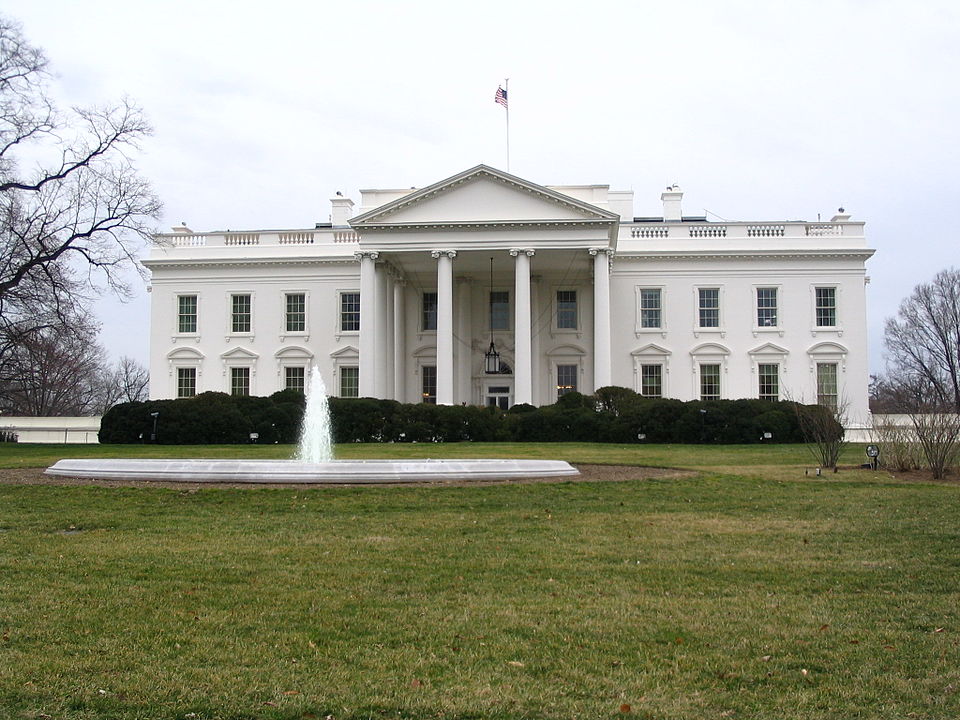
A federal judge on Tuesday ordered an immediate halt to construction on President Trump’s proposed White House ballroom, delivering a major legal setback to a project the administration has promoted as both a historic expansion and a national security upgrade.
U.S. District Judge Richard Leon ruled that Trump does not have the legal authority to proceed with the estimated $400 million project without explicit approval from Congress, siding with preservation groups that had challenged the effort in court.
“No statute comes close” to granting the president the authority he claims, Leon wrote, blocking further construction until lawmakers authorize the project.
“The President of the United States is the steward of the White House for future generations of First Families,” Leon added. “He is not, however, the owner!”
The ruling stems from a lawsuit brought by the National Trust for Historic Preservation, which argued that the administration bypassed required oversight from Congress and federal planning bodies, including the National Capital Planning Commission. The case had raised broader concerns about executive authority and the preservation of the White House’s historic character.
Trump has repeatedly defended the ballroom project as a long-overdue upgrade to the White House, arguing that existing spaces are too small to host large diplomatic events and state functions.
“For 150 years, they’ve wanted to build a ballroom at the White House. Other presidents have wanted it,” Trump said recently. “When we have dignitaries coming like President Xi of China or anybody else, we have very small rooms. They’re not big enough to handle the kind of capacity that you need.”
The president has also emphasized that the ballroom would be funded entirely through private donations and personal contributions, insisting that “not one dime of government money” is being used for the above-ground structure.
But the project has drawn intensified scrutiny in recent days after Trump revealed that the ballroom would sit atop a previously undisclosed underground military complex.
“Now, the military is building a massive complex under the ballroom, and that’s under construction, and we’re doing very well,” Trump said aboard Air Force One over the weekend, attributing the public disclosure to a lawsuit that brought details into the open.
He described the ballroom as heavily fortified, with “all bullet-proof glass” and “drone-proof roofs, ceilings,” adding, “Unfortunately, we’re living in an age when that’s a good thing.”
Trump has also suggested the above-ground structure would effectively serve as a protective layer for what lies beneath.
“The ballroom essentially becomes a shed for what’s being built under the military, including from drones and including from any other thing,” he said.
That revelation has fueled further debate over the true scope and purpose of the project, with critics arguing that the combination of a major structural addition and a secretive military component raises both legal and transparency concerns.
Architectural critics have also questioned aspects of the design, while preservationists warn that the addition could alter the historic integrity of the White House complex.
Tuesday’s ruling now throws the project’s future into uncertainty. Construction cannot resume unless Congress steps in to authorize the plan—an outcome that could prove politically contentious given the growing controversy surrounding both the ballroom and the underground development tied to it.
This is a breaking news story. Please check back for updates.




U watch bet said judge visits Ballroom once done & built
Wait for a wave of Trump posts this weekend.