
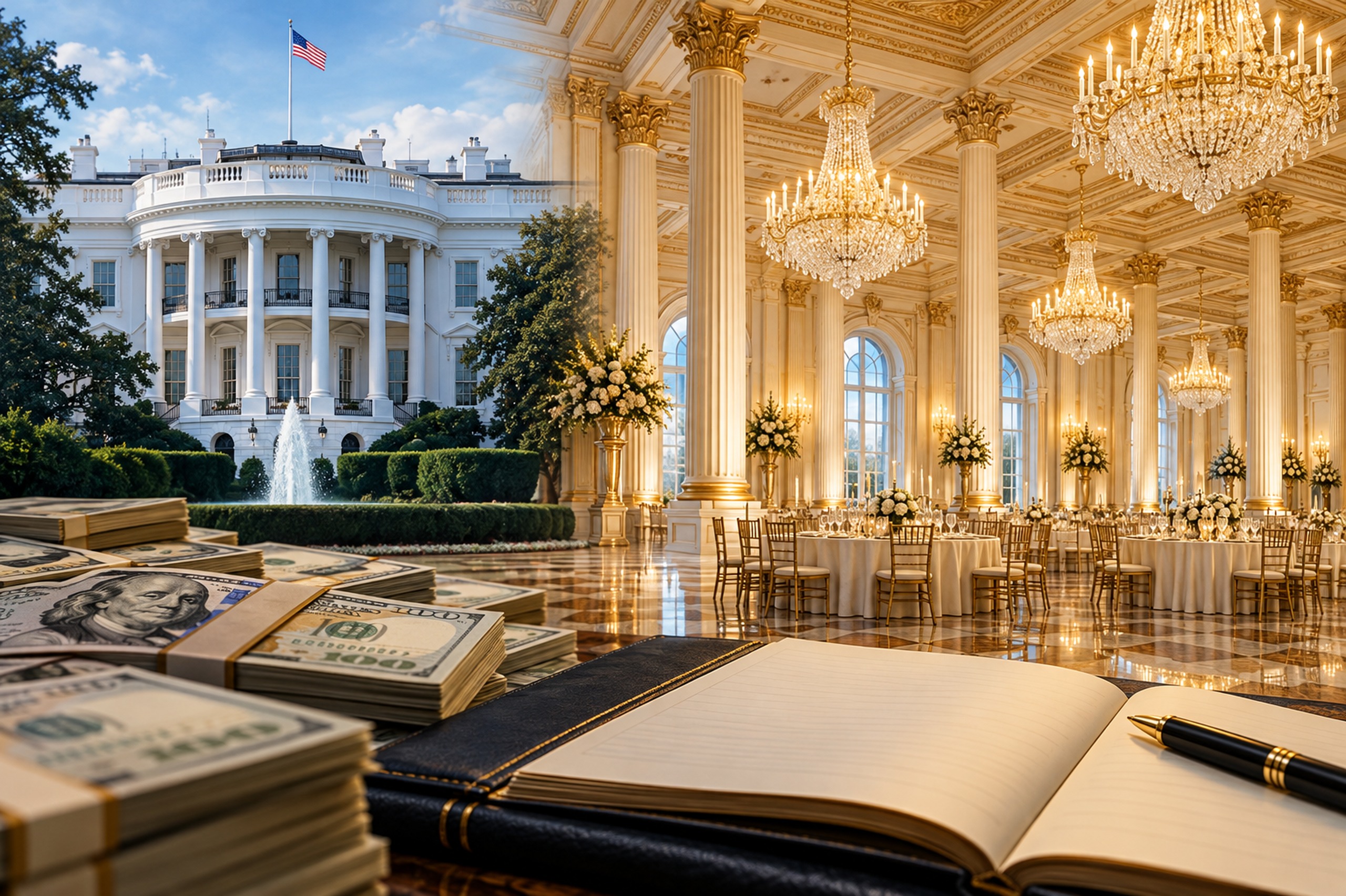
Some of America’s biggest companies are helping bankroll President Donald Trump’s White House ballroom — and newly revealed records show the size of their commitments.
Apple, Nvidia, the Adelson family and Dish Network co-founder Charles Ergen each committed $25 million, according to a Washington Post investigation published Thursday.
The report, also covered by Mediaite, cites an internal fundraising spreadsheet documenting more than $300 million in contributions and commitments.
The revelations add fuel to a dispute Democrats have been pursuing for months: whether companies with business before the administration are using donations to a presidential priority to gain access or influence.
The White House denies improper influence and says private donors are sparing taxpayers the construction bill.
Who’s Footing The Bill?
The reported donor list includes technology giants, defense contractors, Republican megadonors and people connected to senior administration officials.
Among the largest reported contributions and commitments:
| Donor | Reported Amount |
|---|---|
| Apple | $25 million |
| Nvidia | $25 million |
| Adelson family | $25 million |
| Charles Ergen | $25 million |
| $22 million | |
| Laura & Isaac Perlmutter Foundation | More than $20 million |
| Lockheed Martin | $10 million |
| Microsoft | $10 million |
| RHI II LLC | $10 million |
| Palantir Technologies | $10 million |
| Comcast | $7.5 million |
| Amazon, Cisco, Meta and T-Mobile | $5 million each |
Google’s contribution stems from the settlement of Trump’s lawsuit over YouTube’s suspension of his account following the January 6 Capitol riot, according to the reporting.
Other contributors include Small Business Administration Administrator Kelly Loeffler and her husband, who committed $5 million, and Commerce Secretary Howard Lutnick’s son Brandon, whose contribution was approximately $2.5 million.
Why Democrats Are Raising Alarms
For Democratic critics, the issue extends beyond the ballroom’s price tag. It concerns the overlap between its benefactors and companies seeking federal contracts, regulatory approvals or favorable outcomes in enforcement cases.
Sen. Elizabeth Warren, D-Mass., and Rep. Dave Min, D-Calif., previously questioned corporate donors about whether any agreements or expectations of government favors accompanied their contributions. Their inquiry also sought information about how donations were solicited and the amounts involved.
Sen. Richard Blumenthal, D-Conn., has separately pressed previously undisclosed donors about why their contributions remained secret and whether Trump or his representatives offered anything in exchange. Those inquiries predate Thursday’s revelations.
Donor anonymity is another sticking point. In February, Warren and other Democratic senators reported that the Trust for the National Mall, which handles ballroom donations, declined to release identifying donor information, citing federal disclosure rules. Democrats argue that limited disclosure makes potential conflicts harder to scrutinize.
According to the Post’s reporting, as summarized by Mediaite, approximately half the contributors had federal contracts during Trump’s second term. The reporting does not establish that donations secured favorable treatment.
Ergen’s contributions have drawn particular scrutiny because part of his commitment followed Federal Communications Commission Chairman Brendan Carr’s decision to drop an investigation involving Dish’s parent company, according to the Post.
The timing has fueled questions about potential conflicts, but it does not by itself establish an exchange of donations for government action.
White House Pushes Back
Trump has said he and private supporters would pay for the project. The Post reported that his name did not appear on the contributor list it obtained.
White House spokesman Davis Ingle rejected the criticism and vowed to identify whoever disclosed the records.
The administration will “relentlessly pursue those responsible for this cowardly leak while continuing to protect all those who give,” Ingle told the Post.
“The same critics who are alleging fake conflicts of interests, would also complain if American taxpayers were footing the bill for these long-overdue renovations,” he said.