

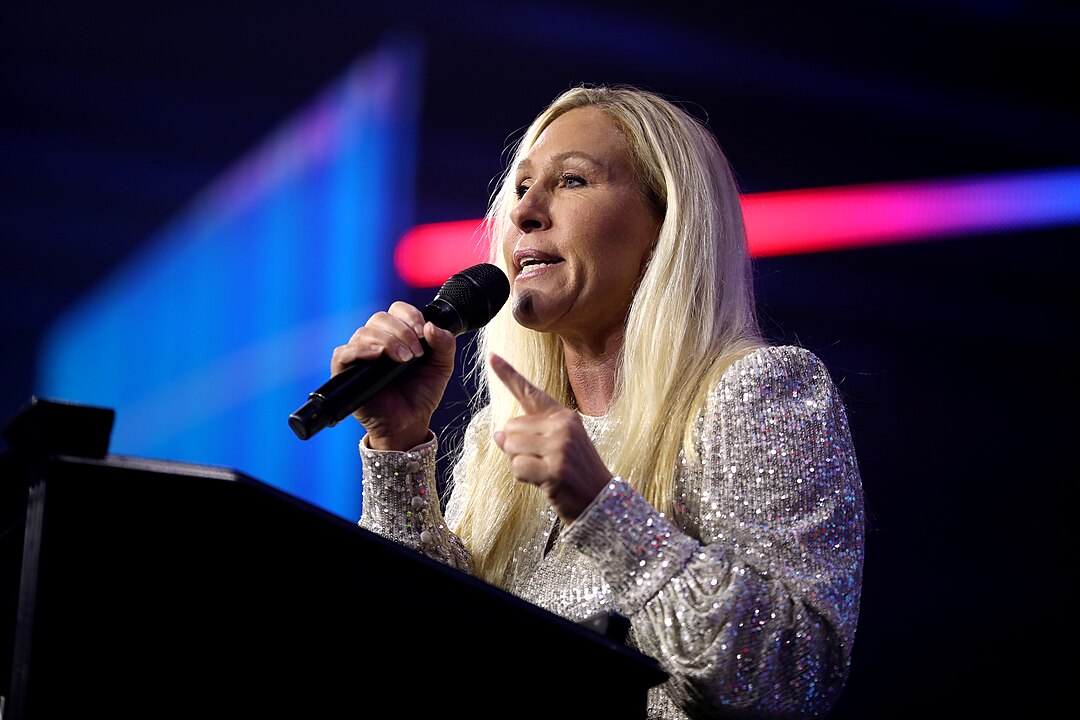
CNN contributor and veteran Republican strategist Scott Jennings delivered a blunt assessment of Rep. Marjorie Taylor Greene (R-GA) during a rare appearance on ABC’s This Week, arguing that Greene’s recent attacks on President Donald Trump stem more from personal frustration than from any serious ideological break within the MAGA movement.
Jennings appeared on the program to promote his new book when anchor Jonathan Karl asked him about what Karl described as a “burgeoning split” inside MAGA-world — a narrative increasingly pushed by legacy media outlets eager to frame Republican politics as unstable heading into a pivotal election year.
“The, kind of, divide in MAGA,” Karl said. “Which is a relatively new phenomenon — I mean, there was always a little bit there, but …if I were to say what the most surprising story [of the year] was, I would say Marjorie Taylor Greene becomes not just a Trump critic, but a—”
Jennings interrupted with a jab that immediately cut through the premise.
“MTG becomes a lib!” Jennings said.
While clearly tongue-in-cheek, the comment underscored what many Republicans see as an overreaction to Greene’s recent criticisms of Trump and the party leadership. In recent months, Greene has publicly complained about what she characterizes as broken promises from Republican leadership, lack of follow-through on conservative priorities, and Trump’s decision not to endorse her for a potential statewide run in Georgia.
Jennings suggested that the dispute is less about policy and more about political disappointment.
“She got a little bent out of shape because the president wouldn’t support her for a statewide office in Georgia — which she was going to lose if she had gotten into it, by the way,” Jennings said. “And so she goes off the deep end.”
Greene’s criticism of Trump has surprised many grassroots conservatives, given her long history as one of his most vocal and reliable defenders in Congress. Her sharp turn has included public complaints about Republican leadership, warnings about “uniparty” influence, and suggestions that the party has failed to fully deliver on the America First agenda — rhetoric that has resonated with some activists but raised eyebrows among party strategists.
That unease only deepened following Greene’s unexpected announcement that she would resign from Congress, a move that stunned allies and critics alike. While Greene framed her departure as a rejection of what she called a broken institution, many Republicans interpreted it as a sign of frustration rather than a serious realignment within the conservative movement.
Jennings, for his part, rejected the idea that Greene’s break signals meaningful fractures within MAGA or the Republican base more broadly.
“Look, I don’t think these divisions and all this fraying are as big a deal as some people make it out to be,” Jennings said. “Trump is still extraordinarily popular among Republicans. He’s the strongest party boss in the modern era. And he can get his allies in Congress to do most anything he wants them to do — which is why I think in the coming year they really ought to spend some time trying to codify … his executive orders and some of the other initiatives that he’s had, really try to make it stick and really fight it out.”
Jennings argued that Republicans would be better served focusing on governing and locking in Trump-era policies rather than amplifying internal disagreements that the media is eager to exploit.
“Because I think a lot of the things he did would actually be pretty popular political debates to have,” he added.



There’s an old adage re Hell and a woman scorned . . .
MTG has chosen the Liz Cheney fork in the road (and will probably end-up in the same condition, same circumstances as Liz).
I really thought anyone that pissed off Democrats like she did was a good thing. Now she’s taking her ball and going home. Very disappointing.
Turns out she was more invested in her own endeavors than remaining loyal to the repair of our nation’s future.