

A move with far-reaching implications…
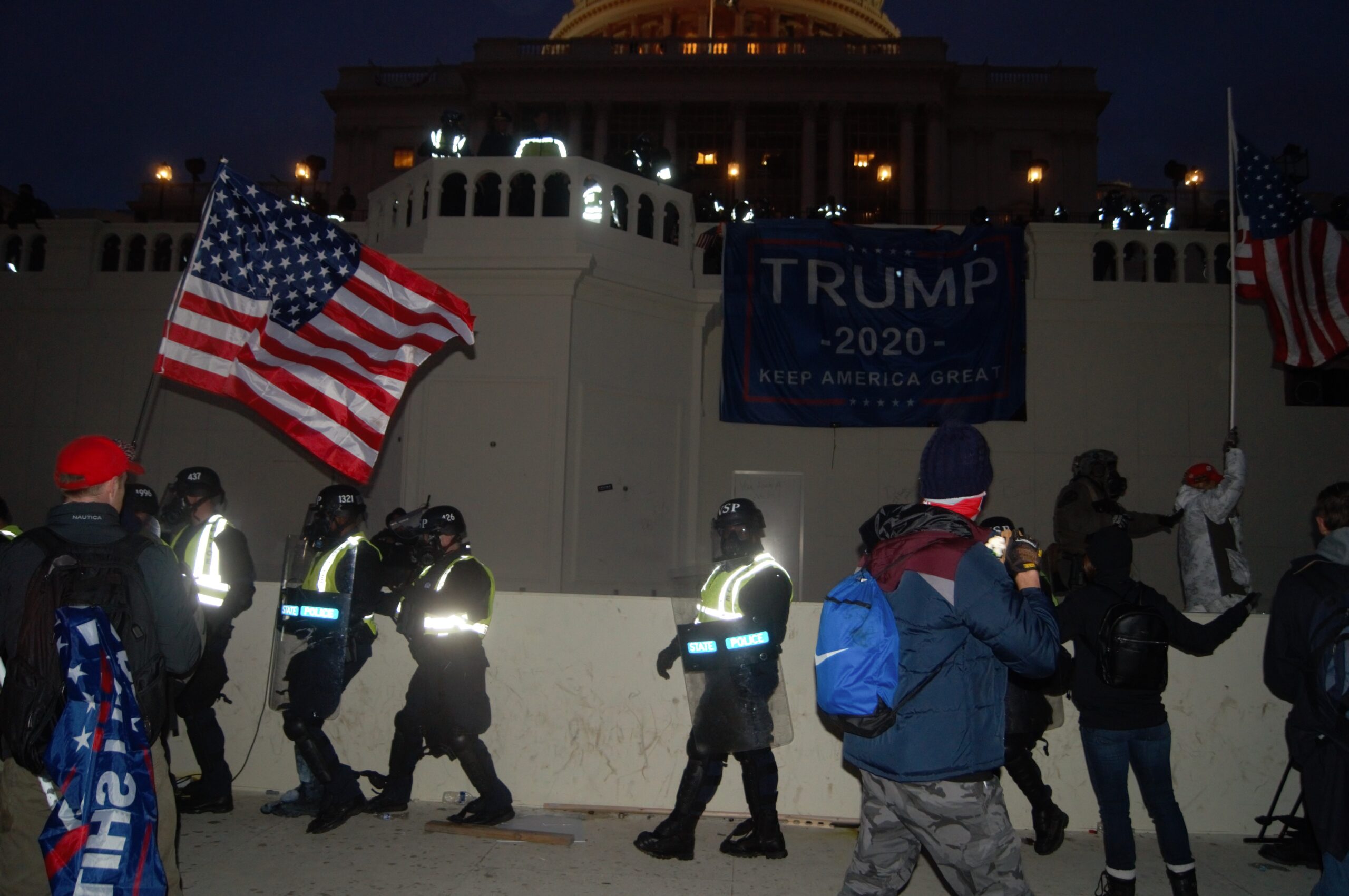
U.S. District Judge James Boasberg on Wednesday ordered the federal government to refund two Jan. 6 defendants—both pardoned by President Donald Trump—for restitution payments and fines they paid in their earlier criminal cases, marking a reversal from the judge’s decision just months ago.
In a memo order, Boasberg detailed the legal path that led to the outcome for Cynthia Ballenger and her husband, Christopher Price. The couple was tried and convicted on misdemeanor charges tied to the events of Jan. 6, 2021, and ordered to pay hundreds of dollars in assessment fees and restitution. Boasberg’s order “clears the way” for both to be refunded in full.
The shift, Boasberg wrote, stems from a key procedural development: an appeals-court decision and the timing of Trump’s pardon, which was issued while their case was pending before the U.S. Court of Appeals for the D.C. Circuit.
“Having viewed the question afresh, the court now agrees with the defendants,” Boasberg said.
A pardon wasn’t the whole story
Ballenger and Price were actively appealing their convictions when Trump returned to office for a second term and issued a sweeping pardon covering roughly 1,500 Jan. 6 defendants. After the pardon, they sought to recover the $570 each they had already paid in restitution and fees.
In July, Boasberg denied that request, relying on precedent that a pardon alone does not automatically entitle a defendant to recover money or property lost because of a conviction. He reiterated that point again in Wednesday’s order:
“By itself, defendants’ pardon therefore cannot unlock the retroactive return of their payments that they ask for here,” he wrote, emphasizing that his earlier reasoning on this question “remains unchanged.”
Instead, he explained, the decisive factor was what happened next at the appellate level. Because the cases were pending when Trump granted the pardon, the pardon effectively mooted their appeals and led the D.C. Circuit to vacate their convictions altogether—meaning the convictions were treated as void.
“So even if defendants’ pardon does not entitle them to refunds, the resulting vacatur of their convictions might,” Boasberg wrote. “In plain English, vacatur — unlike a pardon — ‘wholly nullifie[s]’ the vacated order and ‘wipes the slate clean.’”
Why the refund question still mattered legally
Boasberg went beyond the basic “refund or not” question and addressed two issues often raised when courts order the federal government to pay money: the Appropriations Clause (which generally requires congressional authorization before money is paid out) and sovereign immunity (the principle that the government cannot be sued without consent).
He concluded the court still has the authority to reverse the payments in these circumstances.
“Because the court could order defendants to pay assessments and restitution, it can order those payments reversed,” he said. “Those are two sides of the same action, and sovereign immunity does not stand in the way.”
He summed up the principle this way: “When a conviction is vacated, the government must return any payments exacted because of it.”
Political and public reaction
The order is likely to resonate beyond the courtroom. Many Trump allies have argued that the Justice Department’s Jan. 6 prosecutions were overbroad, particularly for misdemeanor cases, and that defendants should not continue to bear financial penalties once their convictions are wiped away.
At the same time, Democrats have sharply criticized Trump’s pardons. Earlier this year, the late ranking Democrat on the House Oversight Committee, Rep. Gerald Connolly, argued in a letter that the pardons let Jan. 6 participants “off the hook” for an estimated $2.7 billion in estimated damages to the U.S. Capitol.
Time for Boastburger and his partisan fellows to resign. Not fit to wear his robe.
I DO NOT UNDERSTAND something…
A “Judge” is a “JUDGE – Not a “prosecuting LAWYER” !!!!!!
A “Judge” sits in “JUDGEMENT” of C A S E S brought BEFORE HIM!
He is NOT the one who BRINGS THE CASES, bue is a NEUTRAL, UN-BIAS Party!
Yet, ALL THESE DEM JUDGES are the ones who have been BRINGING THE CASES to the COURT SYSTEM to be TRIED simply by being the ORIGINATORS of the action by saying, as an example, that “TRUMP is barred from taking this action or THAT action! If a judge wants to bar Trump from being president, them let a PROSECUTER “WITH STANDING”, in the DISTRICT that is AFFECTED by Trump’s action BRING THE CASE TO COURT to try to stop it… NOT the JUDGE !!!!
He needs to go far far away and take all these rogue judges with him. Pergatory would work.
I spelled it wrong, purgatory.
All Trump supporters who did nothing more than walk into the capital, should be made whole from the personal finances of the Jan 6 committee members.
2.7 Billion dollars in damages ???
This sounds more like what Antifa did in Portland to the Government buildings that they torched 🔥