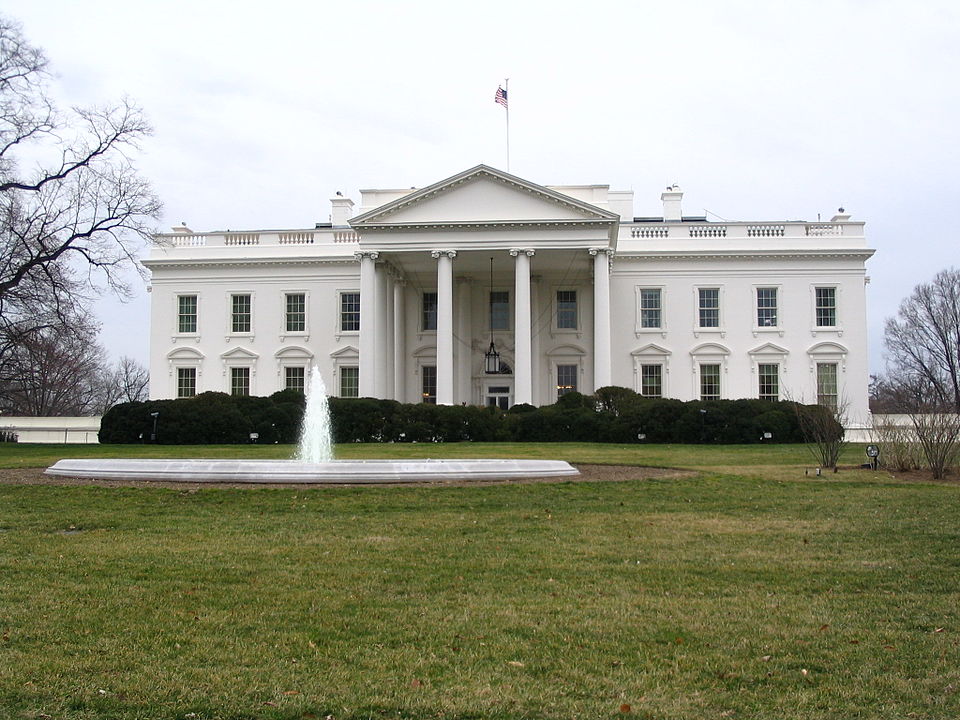

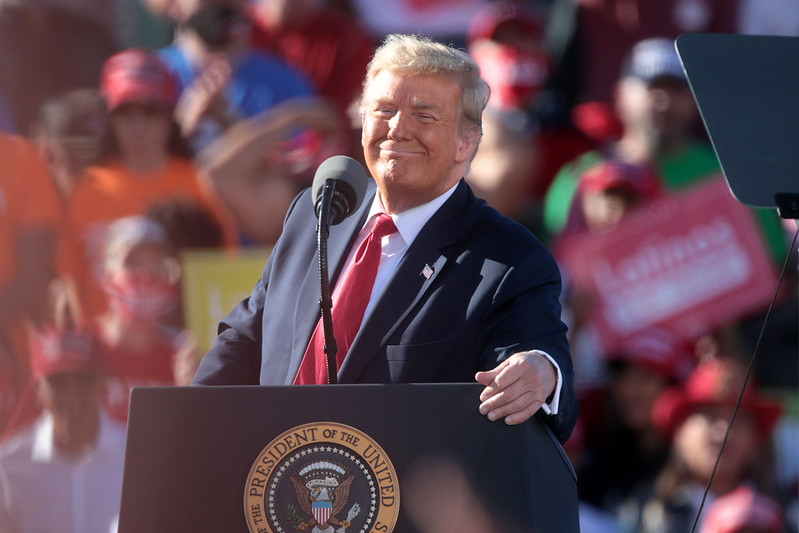
President Donald Trump said Monday that White House physicians helped treat Rep. Neal Dunn, a Florida Republican, after the congressman received what Trump described as a “terminal” medical diagnosis — an episode Trump and House Speaker Mike Johnson framed as a dramatic intervention that helped save Dunn’s life.
The president and Johnson recounted the story during remarks at the White House, saying Dunn had continued working in Congress despite what they characterized as a dire prognosis.
“He would be dead by June,” Trump told reporters, describing the severity of the diagnosis Dunn had reportedly received before receiving treatment.
Johnson said the situation came to Trump’s attention after he informed the president about Dunn’s condition. According to Johnson, Trump quickly suggested involving White House medical staff to evaluate the congressman.
“The man has a new lease on life. He acts like he’s 30 years younger,” Johnson said, describing Dunn’s recovery after treatment.
Johnson explained that White House physicians helped coordinate care for the Florida lawmaker and arranged for him to receive treatment at Walter Reed National Military Medical Center, the premier military hospital that frequently treats senior government officials and members of Congress.
According to Johnson, Dunn underwent emergency surgery shortly after the White House doctors became involved.
Trump praised the speed and professionalism of the medical team, calling the White House physicians “miracle workers.”
“I said, I have to call them. And I called the two doctors. They’re both great. And they immediately went over to see the congressman, and he was on the operating table like two hours later,” Trump added.
Dunn, who represents Florida’s 2nd Congressional District in the state’s Panhandle, is himself a physician. Before entering politics, he served as an Army surgeon and later worked in private medical practice. His medical background has often shaped his work in Congress, particularly on issues involving healthcare policy and veterans’ services.
First elected in 2016, Dunn has served five terms in the House of Representatives and has been a reliable conservative vote on fiscal issues, national defense, and social policy.
In January, Dunn announced that he would not seek reelection in 2026, signaling the end of his congressional career. At the time, he framed the decision as an opportunity to step away from Washington and spend more time with his family.
“I want to pass the torch to new conservative leaders, return home to Panama City, and spend more precious time with my family and our beloved grandchildren,” Dunn said in a statement announcing his retirement.
He also reflected on his legislative priorities during his time in Congress.
“It has been my greatest honor to fight for lower taxes, our military and veterans, the unborn, healthcare innovation, and policies that empower Americans over bureaucracy and addressing threats from Communist China, Russia and others,” he added.
Dunn’s departure comes during a cycle that is already seeing a significant number of lawmakers opt not to run again. As of mid-March, 60 House members have announced they will not seek reelection in the 2026 election cycle, according to the U.S. House of Representatives Press Gallery’s “Casualty List.”
That total includes 23 Democrats and 37 Republicans.
Several of those lawmakers are leaving to pursue other offices, including gubernatorial and U.S. Senate bids. Others are retiring outright after years in public service.
Among Republicans, some departures have come through electoral defeat. Rep. Dan Crenshaw of Texas, for example, recently lost his primary race to state Rep. Steve Toth.
While Dunn’s decision to retire was announced before the details of his health episode were publicly discussed, the account shared by Trump and Johnson Monday offered new insight into the medical crisis he faced earlier this year — and the role White House doctors played in coordinating the emergency treatment that both men say dramatically improved his outlook.