

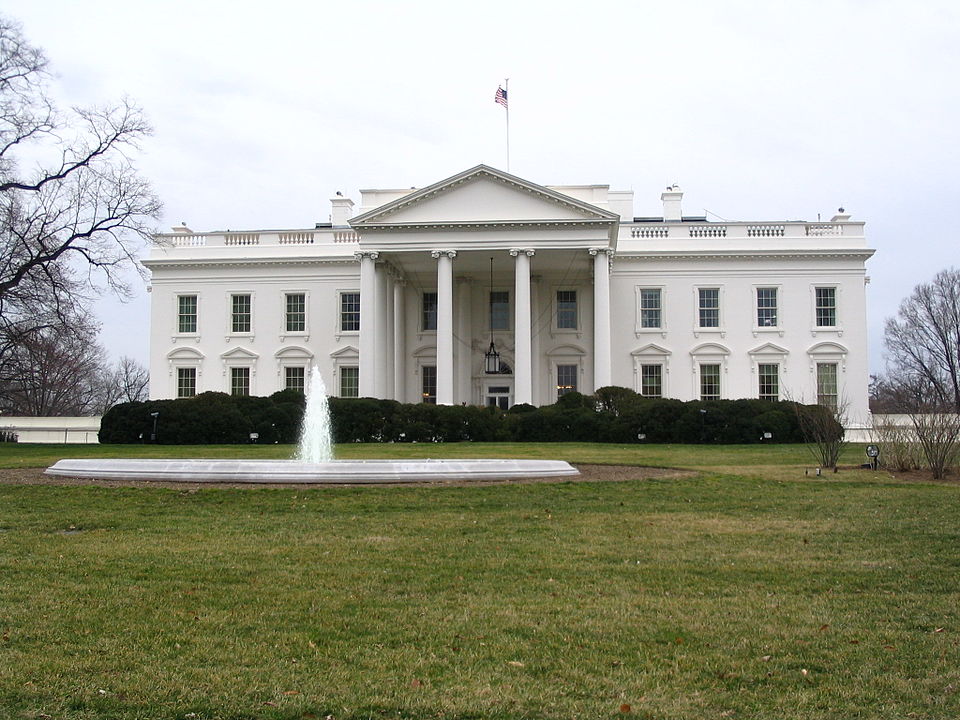
The attempted shooting at the White House Correspondents’ Dinner is rapidly reshaping the debate over President Donald Trump’s long-controversial plan to build a new White House ballroom — with even some Democrats signaling a shift in tone.
Sen. Jacky Rosen (D-Nev.), who had previously opposed aspects of the project, acknowledged Monday that lawmakers may now need to reconsider it — not as a political issue, but as a security necessity.
“Do we need a ballroom? Well, that we can discuss that,” Rosen said in an interview. “This isn’t about Donald Trump. It is really about safety. It’s really about safety.”
The $400 million, 90,000-square-foot ballroom proposal — which would replace the demolished East Wing — has drawn criticism for months over cost, transparency, and historical preservation concerns. But Saturday night’s attack, in which an armed suspect attempted to storm the event before being stopped, has injected new urgency into the conversation.
President Trump wasted little time connecting the incident to his long-standing push.
“I didn’t want to say this but this is why we have to have all of the attributes of what we’re planning at the White House,” Trump told reporters shortly after the shooting. “It’s actually a larger room, and it’s much more secure.”
Security concerns take center stage
Trump allies argue the incident underscores a glaring vulnerability: Washington lacks a truly secure venue capable of hosting large gatherings of top officials.
Sen. Lindsey Graham (R-S.C.) is now moving quickly to capitalize on that argument, pushing legislation that would fund the project and include additional security infrastructure beneath the ballroom, including a Secret Service annex.
“It’s very difficult to have a bunch of important people in the same place unless it’s really, really secure,” Graham said. “The times in which we live are unusual… I’ve never felt the sense of threat that exists today.”
The Justice Department echoed that urgency in a late-night court filing, arguing that the shooting should end legal delays blocking the project.
“This Court should never have enjoined this Project, but now, after the Saturday night attempted assassination… reasonable minds can no longer differ — The injunction must be dissolved,” the administration wrote.
The DOJ went even further, warning that halting the project “greatly endangers the lives of all Presidents, current and future.”
Democrats show signs of movement — with caveats
While many Democrats remain skeptical, Rosen’s comments suggest cracks in the previously unified opposition.
She emphasized that large events inherently carry risk and that stronger protections may be necessary.
“You can’t harden each and every [event],” she said, “but you want to try to be sure that they’re as safe as possible.”
Still, Rosen cautioned that the ballroom alone is not a silver bullet.
“One ballroom isn’t the answer to this,” she said.
She also criticized how the project has been handled, particularly the demolition of the East Wing — which housed the first lady’s office and other staff — without what she described as proper congressional process.
“What I object to is it didn’t go through any of those processes before the demolition,” Rosen said. “What was lost… that should have been preserved for history?”
Other Democrats, including Sen. John Fetterman (D-Pa.), have gone further, openly urging their party to reconsider outright opposition to the project.
GOP divisions emerge over funding
Despite broad Republican support for the concept, divisions are emerging over how to pay for it.
Sen. Rick Scott (R-Fla.), a longtime Trump ally, pushed back against using taxpayer dollars, insisting the project should remain privately funded.
“We have $39 trillion of debt,” Scott said. “Maybe we ought to stop spending money.”
Trump has previously maintained that private donors would cover the ballroom’s cost, though critics have raised questions about transparency.
Legal battle intensifies
The project remains tied up in court after a federal judge ruled the administration lacked proper congressional approval, limiting construction to below-ground work while the case proceeds.
The National Trust for Historic Preservation sued last year after the East Wing was torn down, arguing the project violated preservation laws.
Now, in the wake of the shooting, the administration is urging the court to reverse course — or at least signal it would do so — calling the lawsuit “frivolous” and “dangerous.”
A turning point?
Saturday’s attack — the third assassination attempt against Trump since 2024, according to the administration — may prove to be a pivotal moment in the debate.
What was once dismissed by critics as an expensive and unnecessary expansion is now being reframed by supporters as a critical national security upgrade.
And with even some Democrats beginning to acknowledge the security argument, the political battle over the ballroom may be entering a new phase.
Whether that shift is enough to overcome legal hurdles and funding disputes remains to be seen — but after this weekend, the question is no longer just whether the White House needs a ballroom.
It’s whether Washington can afford not to have one.