

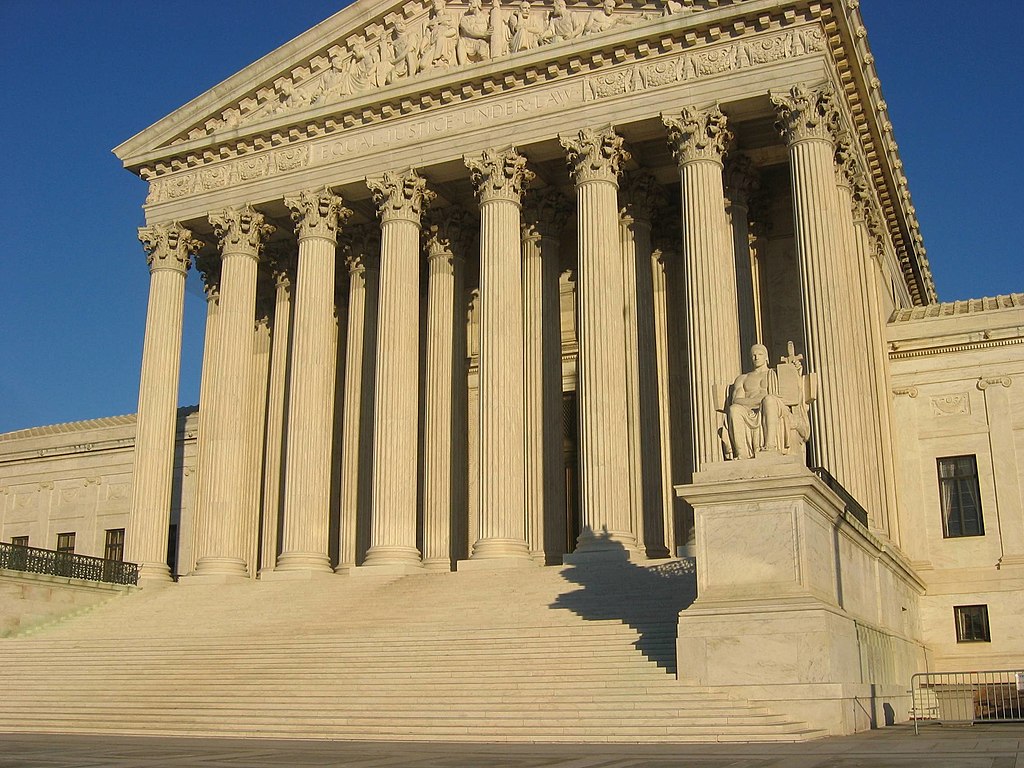
The Supreme Court on Tuesday dealt President Donald Trump one of the biggest legal defeats of his second term, ruling that his executive order restricting birthright citizenship violates the Constitution’s 14th Amendment and cannot take effect.
In a 5-4 decision, Chief Justice John Roberts joined Justices Amy Coney Barrett, Elena Kagan, Sonia Sotomayor and Ketanji Brown Jackson in holding that the Constitution guarantees automatic U.S. citizenship to nearly everyone born on American soil, regardless of their parents’ immigration status. Justice Brett Kavanaugh dissented on the constitutional question but agreed the order could not be enforced under current federal law.
The ruling effectively ends Trump’s effort to reinterpret the Citizenship Clause through executive action, preserving a constitutional principle that has been recognized for more than a century.
Court Reaffirms 14th Amendment
Writing for the majority, Roberts concluded that the 14th Amendment’s Citizenship Clause protects nearly all children born in the United States.
The Court relied heavily on longstanding constitutional precedent, including the landmark 1898 decision in United States v. Wong Kim Ark, which has long been understood to guarantee birthright citizenship except in narrow circumstances, such as children born to foreign diplomats or hostile occupying forces.
Trump’s executive order, signed on his first day back in office, sought to deny automatic citizenship to children born in the United States unless at least one parent was either a U.S. citizen or lawful permanent resident.
The administration argued that the phrase “subject to the jurisdiction” of the United States excludes children born to parents who are in the country illegally or temporarily. Most constitutional scholars, lower courts and ultimately the Supreme Court rejected that interpretation.
A Signature Trump Policy Falls
Birthright citizenship became one of the defining legal battles of Trump’s second-term immigration agenda.
The president made the policy a centerpiece of his Day One executive actions, arguing that ending what he called “birth tourism” and removing incentives for illegal immigration would strengthen border security.
The order never took effect after federal judges across the country blocked it, finding it likely violated the Constitution. The Supreme Court previously addressed procedural questions surrounding nationwide injunctions in the litigation but postponed deciding the constitutional merits until this term.
Trump even attended oral arguments at the Supreme Court in April—an unprecedented move for a sitting president—and later acknowledged publicly that he expected the administration faced an uphill battle before the justices. (RELATED: Trump Makes Unprecedented Move and Attends SCOTUS Hearing On Birthright Citizenship)
White House Defended Order
Throughout the litigation, the Trump administration maintained that the executive order was constitutional.
White House Press Secretary Karoline Leavitt repeatedly argued that birthright citizenship, as currently interpreted, conflicts with the original meaning of the 14th Amendment and said the administration intended to defend the policy all the way to the Supreme Court.
Senior White House adviser Stephen Miller, one of the administration’s chief architects of its immigration agenda, also argued before the decision that the Constitution does not require automatic citizenship for children born to illegal immigrants or temporary visitors.
As of Tuesday afternoon, the White House had not yet released a detailed official response to the ruling.
Major Constitutional Defeat
The decision represents one of the most significant judicial setbacks of Trump’s second presidency.
While the administration has secured victories before the Court on several executive power disputes, Tuesday’s ruling preserves one of the nation’s oldest constitutional guarantees and leaves any change to birthright citizenship largely in the hands of Congress or a future constitutional amendment rather than presidential action.
This is a breaking news story. Please check back for updates.


People come to this country to have their babies here then return to their countries and abuse our system since they do not have allegiance to or love for our way of life nor history of what makes us a great country
If a pregnant person breaks in to my garage and drops her kid there that does NOT make that kid a car OR a member of my family. Period.
I double dog dare any of the dissenters to explain to us mere mortals how someone ILLEGALLY in our Republic magically grants ‘birthright’ citizenship to a kid they have here. They won’t even try since any explanation they can come up with would be without common sense.