


President Donald Trump has selected Dr. Heidi Overton, a senior White House domestic policy adviser and physician, to lead the Food and Drug Administration as the agency confronts battles over vaccines, drug prices, food additives, and abortion medication.
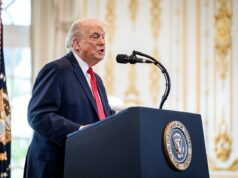
Trump announced the nomination Wednesday, describing Overton as a trusted problem-solver who would accelerate medical innovation, lower prescription costs, and advance Health and Human Services Secretary Robert F. Kennedy Jr.’s “Make America Healthy Again” agenda.
Overton currently serves as deputy director of the White House Domestic Policy Council, where she has helped formulate and promote several of the administration’s most consequential health initiatives.
If confirmed by the Senate, she would succeed Dr. Marty Makary, who left the agency in May after a turbulent tenure marked by internal disputes and disagreements over the direction of federal health policy.
Kyle Diamantas, who previously led the FDA’s Human Foods Program, is serving as acting commissioner.
A Physician With Deep White House Ties
Overton is a board-certified physician in public health and general preventive medicine. She earned her medical degree from the University of New Mexico School of Medicine and a doctorate in clinical investigation from the Johns Hopkins Bloomberg School of Public Health.
She previously trained as a general surgery resident at Johns Hopkins and advocated for greater price and quality transparency in health care.
During medical school, then-New Mexico Gov. Susana Martinez appointed Overton to the University of New Mexico Board of Regents, where she held voting and fiduciary responsibility for the university and its health system.
Overton first entered the Trump White House as a fellow in 2019, working in the Office of American Innovation and on the Domestic Policy Council. Between Trump’s terms, she served as chief policy officer at the America First Policy Institute and helped lead its Center for a Healthy America.
Her biography from the conservative organization emphasizes her work on health-care transparency, fentanyl, public health and policies designed to give patients greater control over medical decisions.
The appointment would place a committed administration loyalist at the head of an agency that regulates products representing roughly one-fifth of American consumer spending.
Overton Helped Shape Trump’s Health Agenda
Overton has appeared alongside Trump during major health policy announcements, including the administration’s efforts to negotiate “most favored nation” agreements with drug companies. The policy seeks to tie American prescription prices to the lower prices paid in other developed countries.
She was also involved in Trump’s controversial effort to revise the childhood vaccination schedule and separate the combined measles, mumps and rubella vaccine into three individual shots.
Major medical organizations have generally supported the combined MMR vaccine, which has been used for decades and reduces the number of clinical visits and injections required for full immunization. Critics fear that splitting the vaccine could create delays and lower vaccination rates.
Overton’s role in the policy is likely to become a focus of her Senate confirmation hearing, particularly as lawmakers question how she would handle pressure from Kennedy and other administration figures skeptical of established federal vaccine recommendations.
Trump praised Overton as a “rockstar” who would advance medical cures, innovation and lower drug prices.
Kennedy also supports the nomination, giving Overton an important ally inside the Department of Health and Human Services, which oversees the FDA.
Difficult Issues Await New Commissioner
The next FDA commissioner will inherit an unusually difficult collection of unfinished projects.
The agency continues to face pressure over its regulation of COVID-19 vaccines and other immunizations, including questions about which populations should receive updated shots and what evidence manufacturers must provide.
Medication abortion will present another immediate test. Pro-life organizations want the FDA to impose tighter restrictions on mifepristone, including limits on prescriptions issued through telehealth and pills delivered through the mail.
Overton has previously used the term “teleabortion” when discussing remote access to abortion medication, drawing concern from abortion-rights organizations that expect her to revisit the drug’s rules.
The FDA must also determine how aggressively it will regulate ultraprocessed foods, chemical additives, and synthetic dyes. Those issues are central to Kennedy’s MAHA movement but can conflict with the deregulatory approach traditionally favored by Republican lawmakers and industry groups.
Other pending questions involve flavored electronic cigarettes, peptide treatments, psychedelics, antidepressant warnings, and efforts to shorten the approval process for new drugs.
Overton would therefore have to balance three competing forces: Trump’s desire for faster approvals and lower prices, Kennedy’s campaign against corporate influence in food and medicine, and Republican demands for reduced federal regulation.
Management Experience Likely to Draw Scrutiny
Overton’s supporters point to her medical education, policy background, and proximity to presidential decision-making. They argue that she understands Trump’s priorities and can coordinate more effectively with the White House than an outside nominee.
Critics are expected to focus on her limited experience running an organization comparable to the FDA.
The agency employs thousands of scientists, physicians, inspectors, lawyers, and regulatory specialists. It oversees prescription drugs, medical devices, vaccines, tobacco products, much of the nation’s food supply, and other consumer goods.
Axios reported before her selection that some health policy observers worried Overton’s nomination could unsettle FDA career employees and pharmaceutical investors, while other potential candidates possessed more direct executive management experience.
The criticism will likely feature prominently when she appears before the Senate Health, Education, Labor and Pensions Committee.
Makary, Overton’s predecessor and a former Johns Hopkins colleague, was confirmed in March 2025 by a 56-44 Senate vote. Overton will seek confirmation from a chamber still controlled by Republicans but divided over the administration’s vaccine policies.
Her nomination signals that Trump wants the FDA led by someone already embedded in his White House rather than an agency insider or pharmaceutical executive.
If the Senate agrees, Overton will take control of one of the federal government’s most powerful scientific agencies — and become responsible for turning the administration’s sprawling health agenda into enforceable policy.


He better get someone who cares about our food, pharmaceuticals, get these foreign foods and medicine out of America we need to do our own like it was years ago never had this garbage we have now, just like all military weapons, vehicles, all made here in America No where else and nothing of of defense put on any internet connection anywhere in the world, plus get back every bit of American property that was sold to any foreign country never sell our land to any foreign company rent yes but that’s it our farmers need to be able to plant all that we need, use non violent prisoners to work on the farms for their stay in prison and to pick the items, that way we don’t need immigrants here to cheat, steal, kill, taking Taxpayers money that needs done Immediately save this Country or resign