
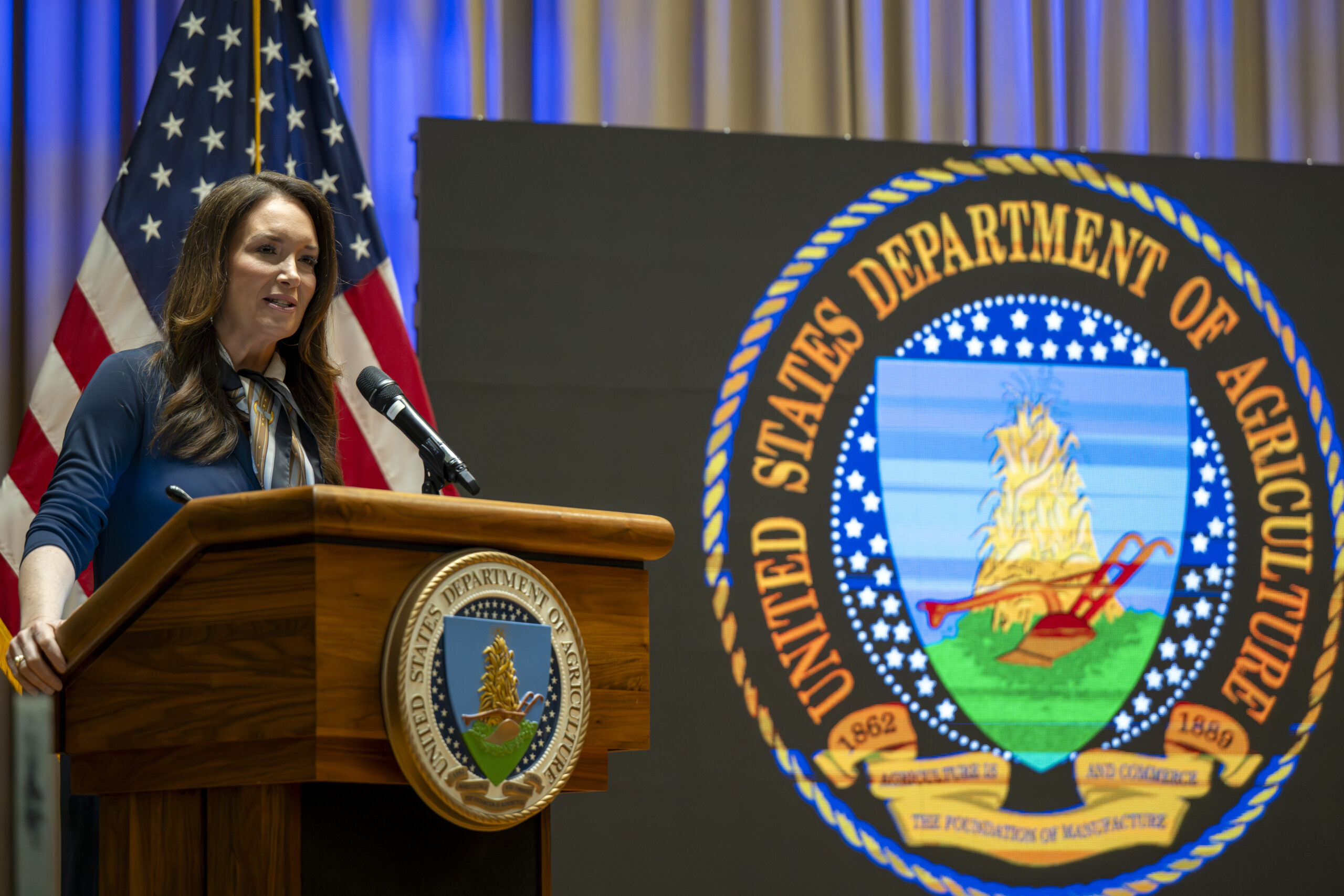
A federal judge has barred Agriculture Secretary Brooke Rollins from sending all-staff religious messages that treat Christianity as the shared faith of her workforce, ruling Thursday that her official Christmas and Easter emails likely violated the First Amendment’s Establishment Clause.
Issued by U.S. District Judge Trina Thompson, an appointee of former President Joe Biden, the 21-page preliminary injunction stems from a May 13 lawsuit filed by the National Federation of Federal Employees and six Department of Agriculture workers over mass emails sent from Rollins’ official government account to roughly 100,000 USDA employees.
The Agriculture Department blasted the order as “a completely unprecedented attempt to muzzle a Cabinet Secretary” and announced it is weighing an immediate appeal.
The Holiday Messages at the Center of the Dispute
Since taking office in February 2025, Rollins sent several holiday messages to the entire department. While earlier Independence Day and Thanksgiving notes included general references to God’s protection and gratitude, the court focused squarely on two subsequent messages that spoke on behalf of the entire workforce’s religious beliefs:
- Dec. 23, 2025 (Christmas): Rollins distributed a video message via her official email discussing the birth of Jesus and referring to him as “our Savior” and humanity’s savior.
- April 5, 2026 (Easter): She emailed all USDA staff celebrating Christ’s resurrection, describing Easter as the foundation of “our faith,” tying the resurrection to the agency’s mission, and attaching an illustration of the empty tomb reading “Christ is Risen.”
Judge Thompson ruled that because employees cannot realistically ignore emails from the head of their agency — which routinely carry critical policy and operational updates — using collective language like “our Savior” and “our faith” from the top of the chain of command created “coercive pressure” to conform.
Where the Court Drew the Line
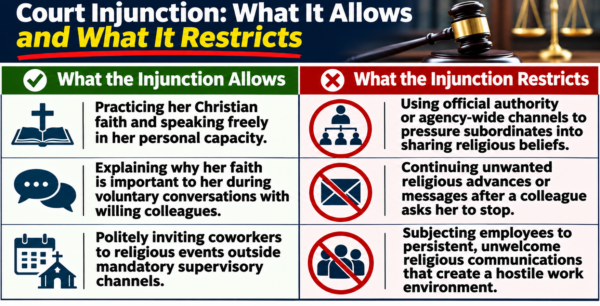
Rather than banning faith in the federal workplace altogether, Judge Thompson modeled her injunction directly on the USDA’s own existing religious expression rules — drawing a sharp distinction between voluntary personal conversations and top-down official broadcasts:
2 Competing Principles: Workplace Coercion vs. Religious Liberty
The lawsuit highlights an ongoing clash over the Trump administration’s broader effort — including 2025 Office of Personnel Management workplace guidance and the creation of a White House Faith Office — to ensure federal workers do not have to hide their religious beliefs on the job.
- Workers’ & Union’s Argument: Six USDA employees — including Buddhist, atheist, and Pagan workers — alleged the secretary’s emails made them feel like workplace outsiders, with some claiming supervisors warned that objecting could hurt their standing, particularly since no comparable messages were sent for non-Christian holidays.
- The Administration’s Defense: Government attorneys argued Rollins never ordered any worker to pray, attend services, or profess Christian beliefs, pointing to the long American tradition of presidents and Cabinet officials invoking God in holiday proclamations.
What Happens Next
Unless an appellate court pauses the order, Secretary Rollins must abide by the injunction while the lawsuit moves forward — setting up a major appellate test over where a Cabinet official’s personal religious freedom ends and unconstitutional workplace pressure begins.
READ NEXT: A Brief Encounter With Evil