
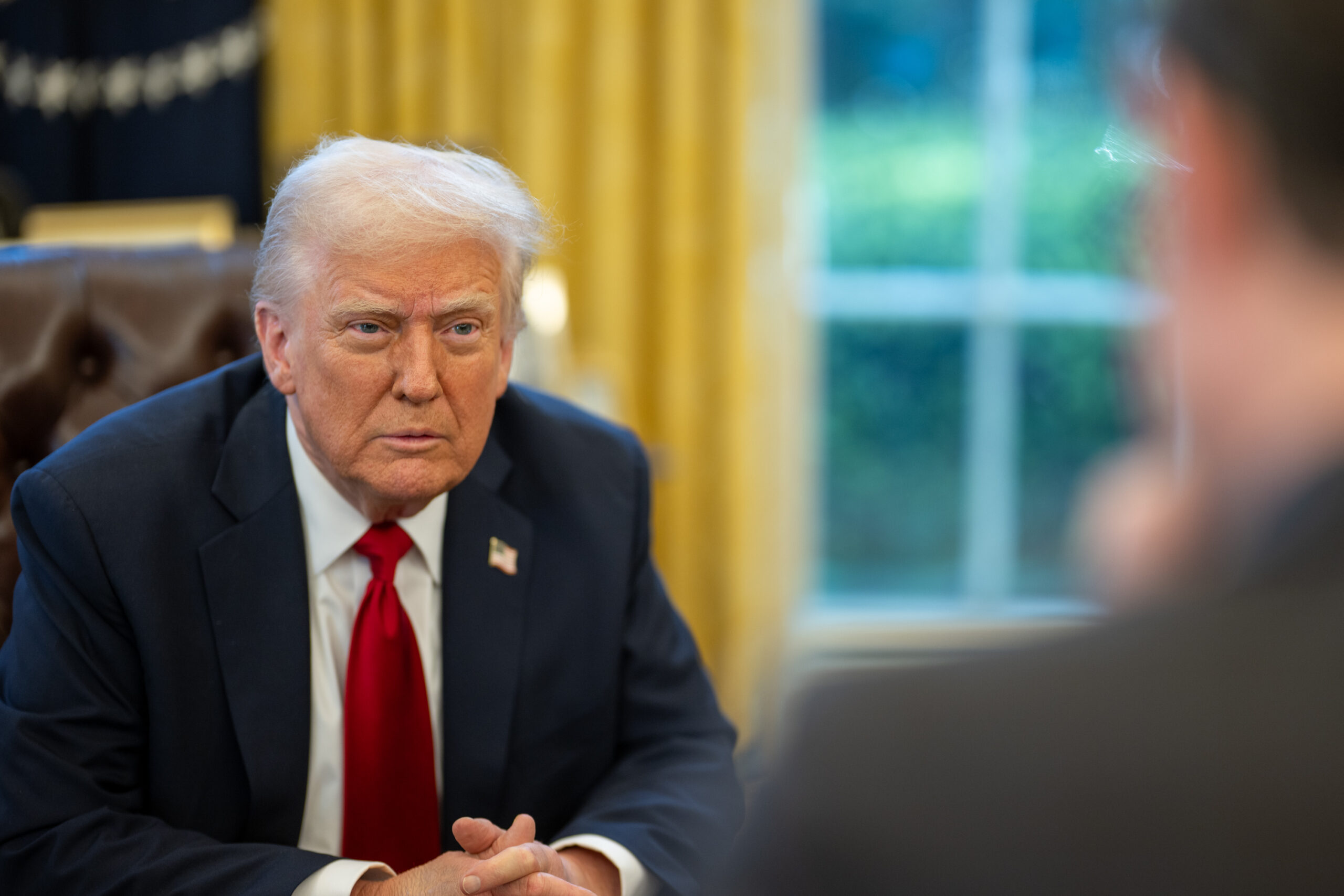
President Donald Trump on Monday confirmed that his administration is engaged in talks with Iranian parliamentary speaker Mohammad Bagher Ghalibaf, identifying for the first time the official he has described as a key contact in ongoing negotiations.
The confirmation was reported by New York Post national security correspondent Caitlin Doornbos, who said Trump told her the U.S. is negotiating directly with Ghalibaf and suggested it would soon become clear whether the talks could produce results.
Trump “confirmed to me today that the US is negotiating with Iranian parliamentary speaker Mohammad Bagher Ghalibaf, saying we’ll ‘find out in about a week’ whether he is someone America can truly work with,” Doornbos reported.
The disclosure follows days of speculation after Trump announced on Truth Social that “VERY GOOD AND PRODUCTIVE CONVERSATIONS” were underway between the United States and Iran, even as tensions remained high following recent military escalation.
Trump’s announcement of talks came alongside a significant policy shift. Just hours after warning that Iran could face “total decimation” if it failed to comply with U.S. demands over the Strait of Hormuz, the president ordered a five-day pause on planned strikes targeting Iranian energy infrastructure, citing progress in negotiations.
Before naming Ghalibaf, Trump had declined to identify his counterpart, telling reporters only that discussions were taking place with “a top person.”
“A top person. Don’t forget, we wiped out the leadership, phase one, and phase two and largely phase three. But we’re dealing with a man who I believe is the most respected and the leader. It is a little tough. We’ve wiped out everybody,” Trump said.
When pressed at the time on whether he was referring to Iran’s leadership, Trump ruled out direct contact with the country’s newly named supreme leader.
“No, not the supreme leader. Nobody has heard of the second supreme leader, the son. We have not heard from the son. Everyone said you’ve seen a statement made, we don’t know if he is living. But the people that seem to be running it, and they seem that based on, really, fact because things they’ve said have taken place.”
Following those remarks, The Jerusalem Post reported that Trump’s backchannel contact was Ghalibaf. The Iranian official quickly denied the claim, posting on X that no negotiations were taking place.
“Iranian people demand complete and remorseful punishment of the aggressors. All Iranian officials stand firmly behind their supreme leader and people until this goal is achieved. No negotiations have been held with the US, and fakenews is used to manipulate the financial and oil markets and escape the quagmire in which the US and Israel are trapped.”
Despite the denial, Trump reiterated his position in comments to Doornbos, suggesting the administration is actively testing whether Ghalibaf represents a viable negotiating partner as conflict continues to unfold across the region.
“We’re gonna find out,” Trump told The Post when asked about Iran’s Mohammad Bagher Ghalibaf. “I’ll let you know that in about a week.”
Trump also indicated that recent developments inside Iran may have altered the diplomatic landscape.
“There has been total regime change because the regimes of the past are gone and we’re dealing with a whole new set of people. And thus far, they’ve been much more reasonable,” he said.
The conflicting accounts underscore ongoing uncertainty around the status of negotiations, even as the Trump administration signals optimism about a potential resolution
According to a report from The Hill, Pakistan on Sunday said it would host talks aimed at ending the U.S.-Iran war, after diplomats from Turkey, Egypt and Saudi Arabia met in Islamabad.
“Pakistan will be honored to host and facilitate meaningful talks between the two sides in coming days in a comprehensive sentiment of the ongoing conflict,” Pakistan Foreign Minister Ishaq Dar said in a speech after the meeting.
It was not immediately clear if the U.S. and Iran would take part in the talks.
On Sunday, Iran’s paramilitary Revolutionary Guard said U.S. universities based in the Middle East “are legitimate targets” after its military said joint U.S.-Israeli strikes hit two colleges in the country.
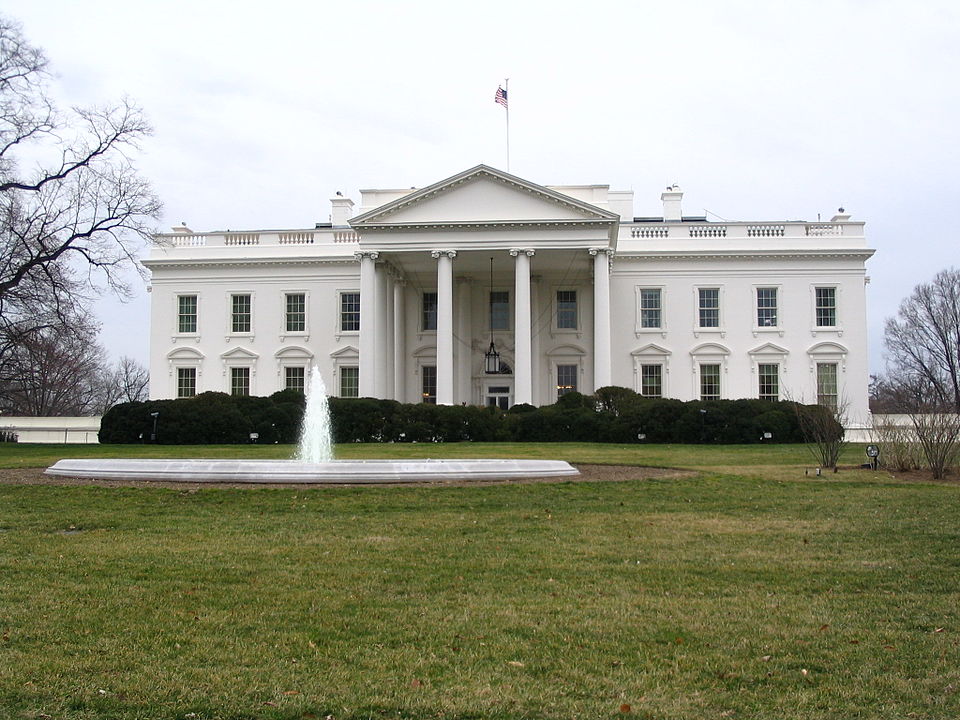
“The reckless rulers of the White House should know that from now on, all universities of the occupying regime and American universities in the West Asia region are legitimate targets for us until two universities are struck in retaliation for the Iranian universities that have been destroyed,” it wrote in a post on the social platform X.
“All staff, professors, and students of American universities in the region, as well as residents in their surroundings, are advised to stay at least one kilometer away from these universities to ensure their safety,” the statement continued.
Many American universities have satellite campuses in the region, including New York University, Georgetown University, Carnegie Mellon University, Northwestern University and Texas A&M University.
Additionally, President Trump threatened to attack Iran’s energy infrastructure on Monday morning in a Truth Social post:
“The United States of America is in serious discussions with A NEW, AND MORE REASONABLE, REGIME to end our Military Operations in Iran. Great progress has been made but, if for any reason a deal is not shortly reached, which it probably will be, and if the Hormuz Strait is not immediately “Open for Business,” we will conclude our lovely “stay” in Iran by blowing up and completely obliterating all of their Electric Generating Plants, Oil Wells and Kharg Island (and possibly all desalinization plants!), which we have purposefully not yet “touched.” This will be in retribution for our many soldiers, and others, that Iran has butchered and killed over the old Regime’s 47 year “Reign of Terror.” Thank you for your attention to this matter.”