

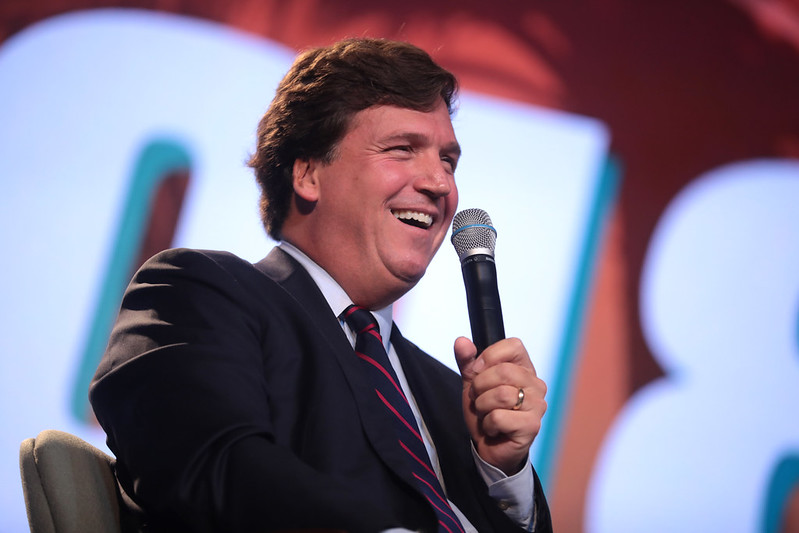
DOHA, Qatar — Tucker Carlson told an audience at the Doha Forum on Sunday that he plans to buy real estate in Qatar on Monday, framing the move as a statement of personal independence after months of criticism from fellow conservatives over his foreign-policy views and his media business relationships.
During an on-stage interview with Qatar’s prime minister, Mohammed bin Abdulrahman bin Jassim Al Thani, Carlson addressed allegations that he and his media outlet, the Tucker Carlson Network, have benefited from Qatari-linked money. Carlson denied it — then announced his intended purchase.
“I have been criticized as being a tool of Qatar, and I just want to say, which you already know, which is I have never taken anything from your country and don’t plan to,” Carlson said. “I am, however, tomorrow buying a place in Qatar.”
He continued: “I like the city, I think it’s beautiful, but also to make a statement that I’m an American and a free man and I’ll be wherever I want to be.”
Carlson’s remarks drew a brief round of applause from the crowd.
Why it’s causing heartburn on the Right
For many Republican voters — especially those who view Qatar primarily through the lens of Hamas, Iran, and Middle East conflict — the announcement landed like a political grenade. Some prominent conservatives have long labeled Qatar a bad actor because it maintains ties to Hamas and has hosted some Hamas leaders. Carlson raised that criticism directly, referencing Sen. Ted Cruz (R-TX) describing Qatar as a “terror state,” and asked the prime minister to respond.
Al Thani defended Qatar’s posture by arguing it had been asked by the U.S. and Israel “more than a decade ago” to maintain channels to Hamas, claiming those channels were useful in negotiations. Carlson presented the exchange as a case for diplomacy and communication — but critics argue it blurs moral lines and underplays the danger of legitimizing terror-linked organizations.
The Gaza exchange: what Qatar said on stage
In the interview, Al Thani rejected the idea that Qatar should bankroll reconstruction in Gaza, saying:
“We are not the ones who are going to write the check to rebuild what others destroyed.”
He added: “When you are talking about Gaza, Israel flattened this land.”
Those comments come as Qatar continues to present itself as a central player in negotiations surrounding Gaza, even as the region remains volatile.
Doha Forum’s unusual mix of speakers
Carlson wasn’t the only headline name in Doha. The forum featured a wide-ranging lineup that included Hillary Clinton, Donald Trump Jr., and Bill Gates, along with journalists from major outlets spanning left and right.
Carlson’s growing fractures with the GOP — and the Nick Fuentes backlash
Carlson’s Qatar appearance is also landing amid a broader tension between Carlson and parts of the Republican coalition. In recent months, he has drawn increasing criticism from elected Republicans and conservative institutions who say his platform has drifted from defending core U.S. interests and has instead amplified figures and arguments that divide the party.
One flashpoint: Carlson’s recent interview with Nick Fuentes, a far-right influencer widely denounced for antisemitic rhetoric. The decision to give Fuentes a high-profile platform triggered condemnation from within the party — including House Speaker Mike Johnson, who reportedly called the interview a “big mistake” and described Fuentes as “vile.”
That controversy has widened a fault line on the Right: between voters who want a harder line against antisemitism and extremist activism, and voices in the “populist” media sphere who argue they’re simply questioning establishment taboos. The dispute has spilled into open feuds among prominent conservatives — and Carlson’s Qatar announcement only added fuel.
Fleeing a perpetually intentionally divided country that is broke is not something everyone can do.