
Foreign Affairs

Home Foreign Affairs

Trump Says He Is ‘Not Happy’ With Iran Negotiations

0
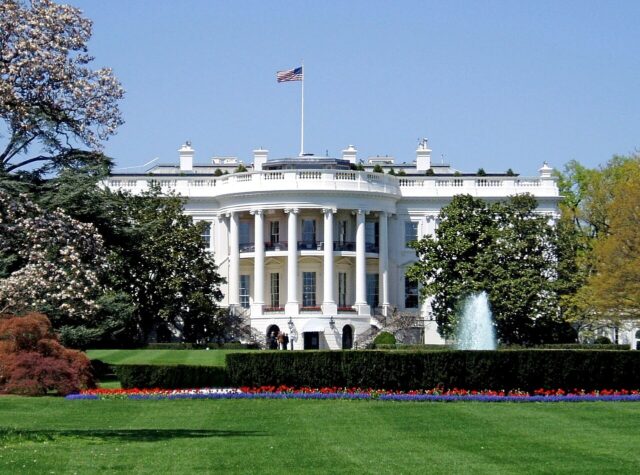
The White House, Public domain, via Wikimedia Commons

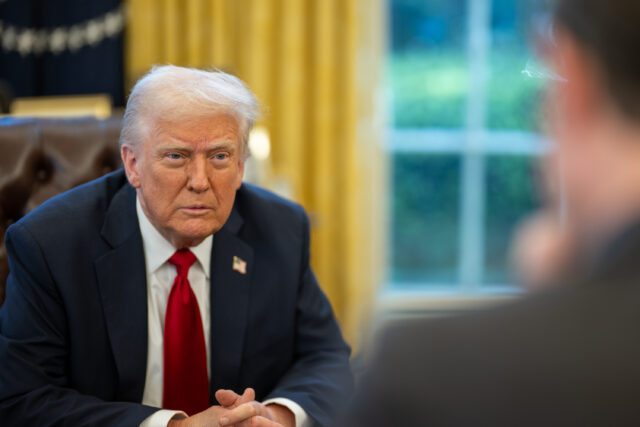
President Donald Trump said Friday he is dissatisfied with the ongoing negotiations with Iran, signaling growing frustration as diplomatic talks continue and speculation mounts about potential U.S. military action.

Speaking to reporters, Trump said Iran has not yet met key U.S. demands.

“I’m not happy with the fact that they’re not willing to give us what we have to have. So I’m not thrilled with that,” Trump said. “We’ll see what happens. We’re talking later. We’ll have some additional talks today. But, no, I’m not happy with the way they’re going.”

The comments come as the administration weighs its next steps in dealing with Tehran, amid longstanding concerns among U.S. officials and allies about Iran’s nuclear ambitions, ballistic missile program, and support for terrorist proxies across the Middle East.

Trump said he has not made a final decision on whether the United States will carry out a military strike against Iran, an option that has drawn heightened attention in recent days.

When asked by Fox News correspondent Peter Doocy about the potential consequences of such action, including the risk of a prolonged regional conflict, the president acknowledged the inherent uncertainty surrounding military engagements.

“I guess you could say there’s always a risk. You know, when there’s war, there’s a risk in anything — both good and bad,” Trump said.

Trump pointed to actions taken during his first term as evidence of his administration’s willingness to use force when necessary. In 2020, the U.S. carried out a drone strike that killed Gen. Qassem Soleimani, the head of Iran’s Islamic Revolutionary Guard Corps’ elite Quds Force. The strike was praised by many Republicans as a decisive move that reasserted American deterrence after years of what critics described as weak enforcement of red lines under previous administrations.

The president also referenced Operation Midnight Hammer, launched last summer during his second term, as part of broader efforts to counter Iranian-backed threats in the region. Trump said that, to this point, “everything’s worked out.”

Republican lawmakers have largely backed Trump’s hardline approach, arguing that sustained economic pressure, clear red lines, and credible military deterrence are essential to preventing Iran from acquiring a nuclear weapon and destabilizing U.S. allies such as Israel. Critics of Tehran have long contended that previous diplomatic agreements provided sanctions relief without permanently dismantling Iran’s nuclear infrastructure.

As talks continue, administration officials have emphasized that the president’s priority remains preventing Iran from obtaining a nuclear weapon while protecting American interests and personnel in the region. For now, Trump indicated that discussions are ongoing — but made clear he expects more from Iran at the negotiating table.

“We’ll see what happens,” he said.

Report: Trump Advisor Warns ‘90% Chance’ Strike On Iran Is Coming

President Donald Trump gestures to the crowd after delivering remarks at the House GOP Member Retreat, Tuesday, January 6, 2026, at the Donald J. Trump- John F. Kennedy Center for the Performing Arts in Washington, D.C. (Official White House Photo by Daniel Torok)

A senior adviser to President Donald Trump is warning that U.S. military action against Iran may be imminent as diplomatic efforts appear to be faltering.

One senior adviser told Axios reporter Barak Ravid on Monday that there is a “90% chance” the United States could launch strikes within weeks.

“The boss is getting fed up. Some people around him warn him against going to war with Iran, but I think there is 90% chance we see kinetic action in the next few weeks,” the adviser said.

The comments come amid heightened tensions following three-hour talks in Geneva between Trump advisers Jared Kushner and Steve Witkoff and Iranian Foreign Minister Abbas Araghchi. Both sides publicly stated that discussions “made progress,” though significant differences remain.

Vice President JD Vance echoed that assessment, signaling that while diplomacy has not collapsed, it may be nearing its limits.

Negotiations “went well” in some ways, Vance said, but “in other ways it was very clear that the president has set some red lines that the Iranians are not yet willing to actually acknowledge and work through.” He cautioned that diplomacy could soon have “reached its natural end.”

The administration has consistently maintained that Iran will not be permitted to obtain a nuclear weapon, a position widely supported by Republican lawmakers and national security hawks. Trump has repeatedly emphasized that Tehran must meet strict conditions or face serious consequences.

At the same time, U.S. military deployments in the region have accelerated. Two aircraft carriers, dozens of warships, and hundreds of fighter jets are being positioned across the Middle East. More than 150 cargo flights have reportedly delivered weapons systems and ammunition to support forces in the region.

According to Axios, a potential strike on Iran would likely unfold as a sustained and coordinated U.S.-Israeli effort. Sources familiar with planning discussions indicated that any operation would not be limited to nuclear facilities but could also target key regime assets.

While the president has continued to leave the door open to a negotiated solution, senior officials suggest patience is rapidly wearing thin.

On Tuesday, Iranian Foreign Minister Abbas Araghchi said the two sides reached a “general agreement on a number of guiding principles” and agreed to begin drafting text for a possible agreement during a meeting between the two countries, with plans to exchange drafts and schedule a third round of talks. 

“Good progress was made compared to the previous meeting,” he said, adding that while drafting would slow the process, “at least the path has started.”

Ex-NATO Commander Warns Trump Is ‘Greater Threat’ to Alliance Than Putin

7
Kremlin.ru, via Wikimedia Commons

A former senior NATO commander is drawing headlines after claiming President Donald Trump poses a greater threat to the Western alliance than Russian President Vladimir Putin—a charge the White House has forcefully rejected and that many U.S. conservatives say ignores key facts about NATO’s recent history.

In an interview with The Independent, General Sir Richard Shirreff, NATO’s former deputy supreme allied commander for Europe, criticized Trump’s blunt rhetoric toward U.S. allies, particularly comments about Greenland and European defense commitments.

“We have to take him literally,” Shirreff told the newspaper. “We have to assume with Trump, as with Putin, that the worst case will happen. Trump is the greater threat [to NATO] if you want to make the comparison. It’s Trump who gets the prize.”

Shirreff’s remarks come despite Trump’s repeated insistence that he would not use force to take Greenland, a territory controlled by NATO member Denmark. Trump has framed the issue primarily in terms of U.S. national security and Arctic defense, arguing that America bears disproportionate responsibility for protecting the region.

During his first term—and again since returning to office—Trump has consistently pressed NATO allies to meet their long-standing commitment to spend at least 2 percent of GDP on defense, a goal many European countries ignored for decades. Supporters argue that Trump’s tough approach helped reverse years of complacency and forced allies to take their own security more seriously.

Shirreff nevertheless went further, claiming Trump had “destroyed the international order” during the first year of his second term and was undermining NATO itself.

“The lead nation of the alliance has threatened the territorial integrity of another member,” Shirreff said. “How do you move on and rebuild trust? Nobody will trust Trump again.”

Many Republicans counter that this view overlooks Trump’s record of strengthening NATO militarily rather than rhetorically. U.S. defense spending rose during Trump’s presidency, and several NATO countries increased their own military budgets after sustained pressure from Washington—something previous administrations had failed to achieve.

Shirreff acknowledged that Russia remains an “existential threat” to Europe, but argued that Vladimir Putin’s 2022 invasion of Ukraine initially unified NATO, while Trump has allegedly “decoupled America from European security” and left the alliance “below the waterline.”

“Clearly, Putin threatened it massively but Trump has attacked the one alliance which grants our security,” Shirreff said, adding that the rules-based global system was now “a dead duck.”

The White House sharply disputed that assessment. In a statement to The Independent, officials dismissed Shirreff’s comments and said Trump “has done more for NATO than anyone,” pointing to U.S. military contributions and increased allied defense spending under his leadership.

On Greenland, the White House added: “The United States is the only NATO partner who can protect Greenland, and the President is advancing NATO interests in doing so.”

Trump Threatens Canada With 100% Tariffs

President Donald Trump on Saturday warned Canada that it could face steep consequences if it deepens trade ties with China, including a potential 100% tariff on Canadian imports entering the United States.

“If Canada makes a deal with China, it will immediately be hit with a 100% Tariff against all Canadian goods and products coming into the U.S.A. Thank you for your attention to this matter!,” Trump wrote in a post on his social media platform.

Trump did not specify which agreement he was referencing. However, Canada and China reached an agreement last Friday that would reportedly have Canada scale back its 100% tariffs on Chinese electric vehicles in exchange for lower Chinese tariffs on Canadian agricultural products.

Canadian officials quickly pushed back on the idea that the country is pursuing broader economic alignment with Beijing. Dominic LeBlanc, the Canadian minister responsible for Canada–U.S. trade, released a statement Saturday insisting that “there is no pursuit of a free trade agreement with China,” while emphasizing Canada’s relationship with Washington.

“Canada and the United States have built a remarkable partnership in the economy, in security, and in rich cultural exchange,” LeBlanc said, calling the U.S.-Canada relationship a “remarkable partnership.”

His statement added, “The new Government of Canada is strengthening the Canadian economy through a plan that consolidates our national strength and bolsters our trade partnerships around the world.”

Trump’s latest warning comes amid renewed scrutiny from Republicans and conservatives over Canada’s willingness to do business with the Chinese Communist Party while continuing to rely on U.S. markets and security guarantees. The post followed another social media message Trump shared the day before, in which he criticized Canada’s reported stance toward his proposed “Golden Dome” missile defense initiative and blasted Ottawa’s trade engagement with China.

Canadian Prime Minister Mark Carney addressed Trump’s criticism Thursday, arguing that Canada’s identity and strength are independent of the United States, even as the two countries remain close allies.

“Canada and the United States have built a remarkable partnership in the economy, in security, and in rich cultural exchange,” Carney said. “But Canada doesn’t live because of the United States. Canada thrives because we are Canadian.”

The clash also comes after Trump was asked last Friday whether he was concerned about Canada growing closer to China during Carney’s visit. At the time, Trump signaled he was not opposed to Canada pursuing trade deals—as long as U.S. interests are protected.

“That’s what he should be doing. It’s a good thing for him to sign a trade deal. If you can get a deal with China, you should do that,” Trump said.

In Saturday’s post, Trump referred to Carney as “governor” rather than prime minister—a term he previously used for former Prime Minister Justin Trudeau, tying it to his long-running suggestion that Canada should become the 51st U.S. state.

The warning also comes after Trump recently walked back tariffs he had threatened to impose on European allies who resisted his proposals involving Greenland. Trump said he and NATO Secretary-General Mark Rutte have “formed the framework of a future deal with respect to Greenland.”

Trump Revokes Board Of Peace Invitation For Longtime Ally

3

This will have far-reaching implications…

President Trump on Friday revoked Canadian Prime Minister Mark Carney’s invitation to join his new Board of Peace, following Carney’s public criticism of Trump’s tariff proposals and his broader push to secure U.S. influence in Greenland.

In a post on Truth Social, Trump announced the decision directly.

“Dear Prime Minister Carney,” Trump wrote on Truth Social. “Please let this Letter serve to represent that the Board of Peace is withdrawing its invitation to you regarding Canada’s joining, what will be, the most prestigious Board of Leaders ever assembled, at any time.”

Carney had received the invitation last week. However, he raised concerns about the board’s reported $1 billion membership fee, telling reporters Sunday that Canada “wants money to have maximum impact.”

“We still do not have unimpeded aid flows, humanitarian aid flows at scale to the people in Gaza,” he said. “That is a precondition for moving forward on this.”

Trump’s Board of Peace, which he would chair, is intended to oversee Gaza and assist with rehabilitation efforts as part of his broader 20-point peace plan, developed amid the ceasefire between Israel and Hamas.

The invitation list reportedly included multiple high-profile world leaders, such as Russian President Vladimir Putin, Israeli Prime Minister Benjamin Netanyahu, and Argentinian President Javier Milei.

Carney’s comments came as tensions continued to build over Trump’s warnings of new trade penalties against Denmark and other European countries, tied to his administration’s position on Greenland. Carney criticized Trump’s tariff threats—including the proposed 10 percent tariffs—after Trump signaled the United States is pursuing control over the strategically important Arctic territory.

Trump later lifted the proposed tariffs after discussions with NATO leaders and a “framework” agreement at the World Economic Forum in Davos, Switzerland, giving the U.S. access to the territory for military and mineral rights purposes.

At Davos, Carney framed Canada’s position as firm support for Denmark and Greenland.

“On Arctic sovereignty, we stand firmly with Greenland in Denmark and fully support their unique right to determine Greenland’s future,” Carney said in Davos on Tuesday. “Our commitment to NATO’s Article 5 is unwavering, so we’re working with our NATO allies, including the Nordic-Baltic Eight to further secure the alliance’s northern and western flanks, including through Canada’s unprecedented investments in over-the-horizon radar, in submarines and aircraft and boots on the ground — boots on the ice.”

Trump addressed the issue the following day during a speech, criticizing Carney’s tone and arguing that Canada benefits heavily from U.S. defense and economic support.

“We’re building a Golden Dome that’s going to, just by its very nature, going to be defending Canada,” Trump said. “Canada gets a lot of freebies from us, by the way. They should be grateful also, but they’re not. I watched your prime minister yesterday, he wasn’t so grateful.”

“But they should be grateful to us, Canada,” the president added. “Canada lives because of the United States. Remember that, Mark, before you make your statements.”

Trump Gives Blunt Answer What Happens To Iran If He’s Assassinated

4
President Donald Trump gestures to the crowd after delivering remarks at the House GOP Member Retreat, Tuesday, January 6, 2026, at the Donald J. Trump- John F. Kennedy Center for the Performing Arts in Washington, D.C. (Official White House Photo by Daniel Torok)

In an interview broadcast Tuesday night, President Donald Trump delivered a blunt warning to Iran’s ruling regime: any attempt on his life would be met with overwhelming retaliation.

Speaking with NewsNation host Katie Pavlich on “Katie Pavlich Tonight,” Trump said he has already ordered a devastating response if Iran follows through on threats made against him.

“They shouldn’t be doing it, but I’ve left notification. Anything ever happens, the whole country is going to get blown up,” Trump told Pavlich. “Originally, Biden should have said something, when they made a statement. We always said, ‘Why isn’t Biden saying anything?’ Because he didn’t.”

Trump also criticized what he described as weakness from the Biden administration, arguing that failing to respond forcefully to foreign threats only emboldens America’s enemies.

“But a president has to defend a president. If I were here, and they were making that threat to somebody, even, not even a president, but somebody, like they did with me, I would absolutely hit them so hard,” Trump said. “But I have very firm instructions — anything happens, they’re going to wipe them off the face of this earth.”

Iranian threats escalate against Trump

Trump’s comments came as Iran’s Supreme Leader Ayatollah Ali Khamenei has posted multiple threatening messages about Trump on social media—including imagery depicting the president in a coffin. Trump said those threats cannot be ignored, especially given Iran’s long history of supporting terrorism and political violence across the Middle East.

To many conservatives, the threats underscore a larger pattern: Iran’s theocratic leaders grow more aggressive when the United States appears unwilling to enforce red lines. Republicans have repeatedly argued that deterrence only works when America backs it with strength, resolve, and consequences.

Biden administration acknowledged IRGC assassination plot

Even under the Biden administration, the threat from Iran has been formally documented.

Biden’s Justice Department announced the indictment of a senior member of the Iranian Revolutionary Guard Corps (IRGC) on charges of conspiring to kill former National Security Advisor John Bolton in 2022. Prosecutors alleged that a confidential source was offered $300,000 to carry out the assassination.

For Republicans, the plot was more proof that Iran is not simply a hostile state—but a regime willing to target Americans directly, including former senior officials.

Trump’s stance: defend dissidents, punish brutality

Trump has previously warned Iran not to harm protesters who oppose the regime, threatening consequences if demonstrators were executed. While Iran did not hang those specific protesters, the regime’s security forces killed hundreds during the crackdown.

Conservatives have long viewed Iran’s government as an oppressive theocracy that violently suppresses its own people while funding terrorist proxies abroad. Many Republicans argue the U.S. should side firmly with dissidents and freedom-minded citizens, not appease the clerics in Tehran.

Soleimani strike remains a defining moment

One of the most significant actions of Trump’s first term against Iran was the January 2020 strike that killed Qasem Soleimani, an IRGC commander widely viewed by U.S. officials as responsible for planning attacks on Americans and allied forces.

The strike was praised by many Republicans as a clear demonstration of deterrence: when Iran targets Americans, the United States responds decisively.

A major 2025 strike on Iran’s nuclear infrastructure

The article also notes that in June 2025, the United States Air Force bombed multiple facilities in Fordow, Natanz, and Isfahan connected to Iran’s nuclear program, reportedly dropping as many as 14 GBU-57 Massive Ordnance Penetrators.

The operation involved a 37-hour flight by seven B-2A Spirit bombers and inflicted significant damage to Iran’s nuclear capabilities with no American losses.

Cruz Rages At Reports Iran Is ‘Explicitly Threatening To Murder Trump’

Gage Skidmore from Surprise, AZ, United States of America,

Sen. Ted Cruz (R-TX) and other close allies of President Donald Trump were left fuming after reporters leaked that Iranian state TV broadcast an image threatening to assassinate the president.

Iran issued the sickening threat against President Trump on Wednesday, broadcasting a picture of the commander in chief during the 2024 Butler rally assassination attempt — with the words “This time it will not miss the target.” The ominous warning was aired on Iranian state-run TV, Agence France Presse (AFP) reported.

This marks Tehran’s most direct threat yet against Trump, following repeated threats that the US will strike the country if it continues its brutal crackdown on anti-government protesters.

On Tuesday, President Donald Trump urged the people of Iran to “take over” the country’s institutions on saying he has canceled all planned meetings with the Iranian regime until its crackdown on unrest ends.

“Iranian Patriots, KEEP PROTESTING – TAKE OVER YOUR INSTITUTIONS!!! Save the names of the killers and abusers. They will pay a big price,” Trump wrote in a Truth Social post.

“I have cancelled all meetings with Iranian Officials until the senseless killing of protesters STOPS. HELP IS ON ITS WAY. MIGA!!!” he continued, referencing “Make Iran Great Again.”

The death toll from nationwide protests grew to 2,000, The Associated Press reported, citing activists.

Trump’s message to Iranians has become increasingly intense in recent days. In addition to encouraging anti-government protests, Trump threatened earlier this week to impose a 25 percent tariff on any country conducting business with Iran if they also do business with the U.S.

Cruz shared the image and wrote on X, “Iran explicitly threatening to murder Trump. Tucker—whose podcast the Ayatollah is currently playing in Persian all across Iran—insists that Iran has never done this.”

Mediaite reported that Cruz referenced Tucker Carlson in his post as the two have long feuded over Trump’s previous strikes against Iran, which Carlson vehemently opposed and warned would lead to World War III.

Fox host Mark Levin also shared the image and wrote, “Iranian regime threatening to assassinate our President and making clear they’ve tried before! It’s time to deal with this. I’m sure we will.”

Trump Issues Ultimatum To Cuba

The White House, Public domain, via Wikimedia Commons

Time is running out…

President Donald J. Trump doubled down on his firm foreign-policy agenda Sunday, delivering a stark ultimatum to the Communist regime in Cuba.

In a Truth Social post, Trump declared: “THERE WILL BE NO MORE OIL OR MONEY GOING TO CUBA — ZERO! I strongly suggest they make a deal, BEFORE IT IS TOO LATE.”

The warning comes on the heels of a decisive U.S. operation that resulted in the capture of Venezuelan strongman Nicolás Maduro — a key ally of Havana — by U.S. forces, a watershed moment in halting the flow of oil and cash that long sustained Cuba’s moribund economy.

Trump noted bluntly that Cuba has long depended on “large amounts of OIL and MONEY from Venezuela” — support that has now effectively ended following the removal of Maduro from power.

The Trump administration has aggressively moved to isolate regimes that bankroll corruption, undermine democracy, and threaten American security. Venezuela’s massive oil reserves once underpinned its regional influence, including subsidized shipments to Havana — a relationship the president has now dismantled as part of a broader push to reshape Western Hemisphere energy flows and break the grip of hostile governments.

In recent days Trump also publicly characterized Cuba’s authoritarian leadership as “sick” and close to collapse without Venezuelan support — a reflection of the island’s deep economic crisis and prolonged energy shortages in the absence of Maduro’s patronage.

While Trump provides Cuban leaders a clear path — negotiate and engage on terms favorable to the U.S. — Havana has so far refused to back down.

President Trump Issues Warning To ‘Sick’ Colombian Leader

0
President Donald Trump answers questions from members of the media aboard Air Force One en route to Mount Pocono, Pennsylvania, for a rally on the economy, Tuesday, December 9, 2025. (Official White House Photo by Molly Riley)

Hours after a dramatic U.S. military operation in Venezuela that led to the capture of President Nicolás Maduro, President Donald Trump sharply escalated his rhetoric toward other foreign governments, criticizing Colombia’s president and reviving his long-standing idea of acquiring Greenland.

Trump, speaking to reporters aboard Air Force One, was initially responding to questions about a U.S. military operation in Caracas that resulted in the capture of Venezuelan leader Nicolás Maduro and his wife, Cilia Flores, as well as the future of Venezuela, when he shifted his focus to another South American country.

“Columbia’s very sick too, run by a sick man who likes making cocaine and selling it to the United States. And he’s not going to be doing it very long. Let me tell you,” Trump said.

When pressed by a reporter to clarify his remarks, Trump claimed that Gustavo Petro has “cocaine mills and cocaine factories.”

“So there will be an operation by the U.S. in Colombia?” the reporter asked.

“It sounds good to me,” Trump responded.

The comments marked an unusually direct threat to a longtime U.S. partner, officially designated a Major Non-NATO Ally, and drew swift condemnation from Bogotá.

Colombia Condemns Remarks

Colombia’s government rejected Trump’s statements, calling any threat of force against an elected leader a violation of international law and national sovereignty. Officials emphasized that disagreements over narcotics trafficking do not justify military rhetoric against a democratic ally.

Analysts told the Associated Press that while no formal policy change has been announced, Trump’s remarks risk destabilizing diplomatic relations with a key U.S. security and trade partner. Colombia has long collaborated with Washington on counter-narcotics efforts, even as cocaine production has surged in recent years.

The episode follows Trump’s intensifying criticism of Latin American governments he says have failed to curb drug trafficking and migration.

Trump Renews Greenland Focus

Amid the fallout from the Venezuela operation and the Colombia comments, Trump also renewed his interest in Greenland, the Arctic territory governed by NATO ally Denmark.

Trump has repeatedly argued that U.S. control of Greenland is vital to American strategic interests. Both Greenlandic and Danish leaders have firmly rejected the idea, saying the territory is not for sale.

The White House has appointed Louisiana Gov. Jeff Landry as a special envoy to Greenland, with an informal mandate to strengthen ties. Danish officials have criticized the move as an unacceptable challenge to Denmark’s territorial integrity.

While a formal acquisition remains highly unlikely because of legal and diplomatic barriers, Trump’s renewed focus on Greenland has reignited debate over Arctic security and great-power competition.

Echoes of the Monroe Doctrine

Trump has not formally announced a new Monroe Doctrine, but his rhetoric has revived comparisons to the 19th-century policy that treated the Western Hemisphere as a U.S. sphere of influence.

Throughout his political career, Trump has noted that China and Russia are expanding their footprint in Latin America through ports, telecommunications, and energy projects. At the same time, he has argued for withdrawing from overseas wars while taking a harder line closer to home.

Supporters often frame this approach as “America First” realism: resisting foreign powers in the hemisphere while avoiding large-scale military commitments elsewhere. Critics counter that it risks justifying intervention and could lead to a new generation of implacable military campaigns under a different label.

Divisions Inside the MAGA Coalition

Although largely supportive, reactions among Trump’s supporters are not uniform.

Populist nationalists within the MAGA movement strongly support a Monroe-style approach, viewing it as common-sense security and a way to push China out of the region without policing the entire world.

Libertarian-leaning and anti-interventionist conservatives are more skeptical. While they favor restraint abroad, they warn that asserting hemispheric dominance could lead to new interventions closer to home.

Evangelical and values-based conservatives are divided, often supporting resistance to leftist regimes such as Venezuela and Cuba but expressing concern about U.S. backing of governments with poor human rights records, as has been the case in Latin America.

A smaller group of traditional hawks aligned with MAGA favors a tougher posture, particularly to counter China, even if it risks deeper U.S. involvement overseas as domestic problems continue to mount.

The Bottom Line

In the aftermath of the Venezuela operation, Trump has adopted a more confrontational tone toward neighboring governments and revived controversial territorial ambitions abroad. Together, they signal a foreign policy posture that emphasizes regional dominance, skepticism of global institutions, and unilateral U.S. leverage — a combination that has unsettled allies and reopened debates over America’s role in its own hemisphere.

As Trump allies debate whether this approach reflects strategic restraint or intervention by another name, the administration’s next steps will determine whether the rhetoric translates into lasting policy shifts.

Trump then shifted his attention to Greenland, where he once again reiterated an interest in acquiring the Danish territory.

“We need Greenland from the standpoint of national security, and Denmark is not going to be able to do it,” Trump said.

“We need Greenland from a national security situation. It’s so strategic,” he added.

Danish Prime Minister Mette Frederiksen sharply rebuked Trump’s comments, urging him to cease what she described as baseless threats against a close ally.

“The Kingdom of Denmark – and thus Greenland – is part of NATO and is thus covered by the alliance’s security guarantee. We already have a defense agreement between the Kingdom and the USA today, which gives the USA wide access to Greenland. And we have invested significantly on the part of the Kingdom in the security of the Arctic,” said Frederiksen in a press release.

“I would therefore strongly urge that the U.S. stop the threats against a historically close ally and against another country and people who have said very clearly that they are not for sale,” Frederiksen added.

Trump Sends Ultimatum to Maduro Allies as U.S. Signals End to Negotiations

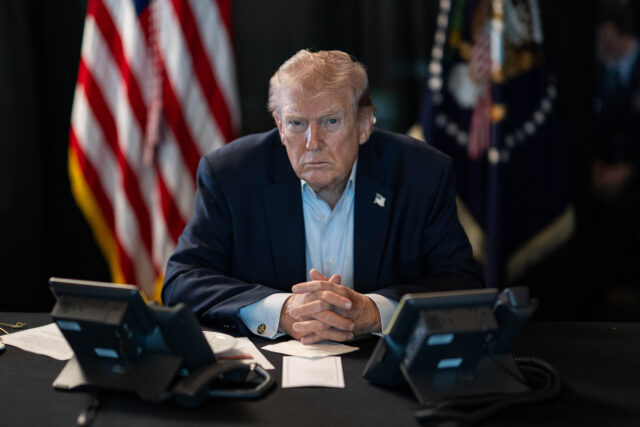
President Donald Trump monitors U.S. military operations in Venezuela, from Mar-a-Lago Club in Palm Beach, Florida, on Saturday, January 3, 2026.

President Donald Trump has delivered a blunt message to Venezuelan strongman Nicolás Maduro and his inner circle: cooperate with the United States—or step aside.

Fox News senior foreign correspondent Benjamin Hall revealed Sunday that Trump personally warned Maduro’s allies that they must either “surrender or play ball,” underscoring what the administration describes as a decisive shift away from diplomacy and toward direct action.

According to Hall, President Trump spoke directly with Maduro roughly a week before Saturday’s strike in Caracas. During that call, Trump reportedly issued a clear ultimatum demanding Maduro’s surrender. Maduro, Trump said, “was not willing.”

Hall noted that while Maduro has now been removed, several senior figures within the Venezuelan regime remain aligned with him, presenting an ongoing challenge for U.S. policymakers seeking stability in the region and an end to what they describe as narco-terrorist activity emanating from the country.

Operation Absolute Resolve – January 3rd, 2026

That message was reinforced by Department of Homeland Security Secretary Kristi Noem, who made clear that the Trump administration has no intention of tolerating continued obstruction from Venezuela’s remaining leadership.

“President Trump is done negotiating. He proved that a couple of days ago, that he is a man of action, that when someone is threatening the United States, he will defend it with every resource that we have, and he’ll continue to do that,” Noem said on Fox News Sunday.

Noem explained that Trump’s communications with Venezuela’s vice president were deliberately direct and unambiguous.

“His conversations now with the vice president in Venezuela are very matter-of-fact and very clear: ‘You can lead, or you can get out of the way because we’re not going to allow you to continue to subvert our American influence and our need to have a free country like Venezuela to work with rather than to have dictators in place who perpetuate crimes and drug trafficking,’” she said.

Her remarks followed the Trump administration’s high-profile operation on Saturday that resulted in the capture of Nicolás Maduro—an unprecedented move that sparked intense debate in Washington. While Democrats and some Republicans raised questions about the legality of the action and the long-term implications for Venezuela, supporters of the operation argued it sent a long-overdue message to hostile regimes.

The operation capped months of U.S. efforts to dismantle what officials describe as a network of narcoterrorism tied to the Venezuelan government. Those efforts included strikes against suspected drug trafficking vessels operating in Caribbean waters and increased enforcement against illicit oil shipments.

Noem pointed to those actions as further proof that the administration is committed to protecting American security interests and cutting off financial lifelines to adversarial governments.

“The Coast Guard has been heavily involved in stopping a lot of this shadow fleet of oil that has been trafficking illegally to many of our enemies in other countries,” she said.

Administration officials argue that Venezuela’s instability has long fueled drug trafficking, mass migration, and regional insecurity, and that decisive action was necessary after years of what they view as failed appeasement. Supporters say Trump’s approach represents a return to peace through strength—using American power to deter threats before they reach U.S. shores.