


Immigration

Home Immigration

Acting ICE Director Resigns

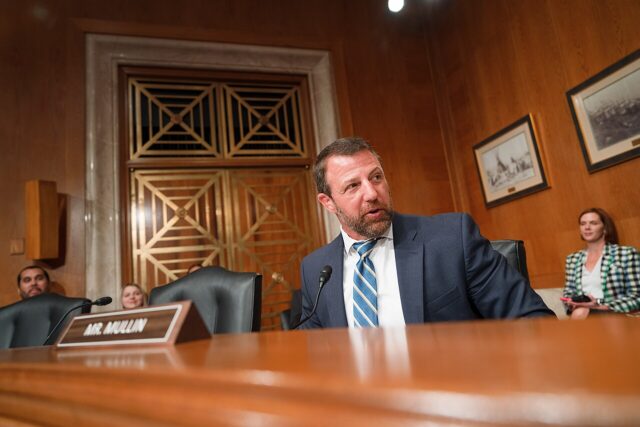
Indian Affairs Committee Hearings to examine Indian Self-Determination and Education Assistance Act successes and opportunities at the Department of the Interior and the Indian Health Service, in Washington, DC on September 17, 2025. (Official U.S. Senate photo by Ryan Donnell)

Todd Lyons, the acting head of Immigration and Customs Enforcement, is stepping down after a turbulent tenure defined by record deportations, internal tensions, and mounting political pressure.

Lyons submitted his resignation Thursday to Homeland Security Secretary Markwayne Mullin, saying he plans to remain in the role through May to help with the transition. His departure comes as Mullin takes over the department following Kristi Noem’s exit.

“Thanks to his leadership, American communities are safer,” Mullin said in a statement. “We wish him luck on his next opportunity in the private sector.”

No official reason was given for Lyons’ resignation, capping a 20-year career at the agency he joined in 2007. He was appointed to lead ICE in March of last year, replacing Caleb Vitello, and quickly became a central figure in President Donald Trump’s aggressive deportation push.

During his tenure, ICE carried out roughly 584,000 removals, a record pace that drew praise from allies and scrutiny from critics. Lyons also faced backlash over high-profile controversies, including the fatal shooting of Renee Good during Operation Metro Surge. At a January congressional hearing, Lyons declined to apologize to Good’s family.

A month later, he said two ICE officers involved in a separate January shooting of a Venezuelan immigrant had made “untruthful statements” under oath. Both officers were placed under investigation by the Justice Department.

Behind the scenes, Lyons navigated reported divisions within the Department of Homeland Security. He was closely aligned with Border Czar Tom Homan on deportation strategy, while other officials, including Noem and former Border Patrol Commander Greg Bovino, took different approaches. The split fueled ongoing reports of internal friction.

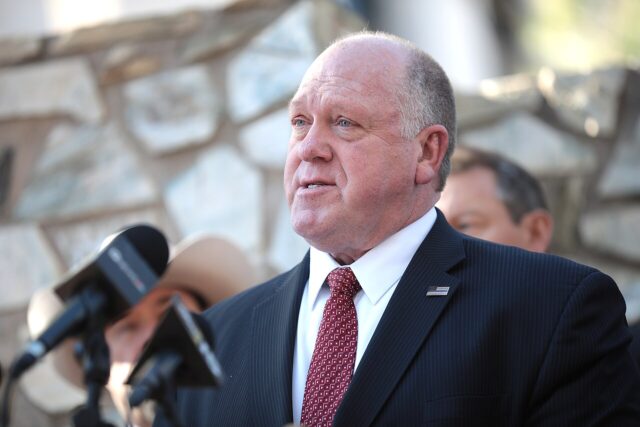
Homan defended Lyons’ record on Thursday, telling NBC that under his leadership, “ICE achieved a record number of removals in the first year of this Administration, despite unprecedented challenges.”

“I commend him for a distinguished law enforcement career and the countless contributions he has made to protect our country and advance its interests,” Homan added.

Lyons also faced intense pressure from the White House, where Trump and deputy chief of staff Stephen Miller pushed for daily deportation targets in the thousands.

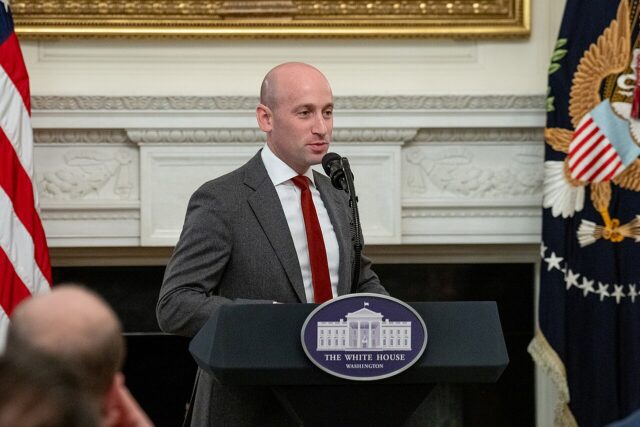
“Todd is a phenomenal patriot and dedicated leader who has been at the center of President Trump’s historic efforts to secure our homeland and reverse the Democrats’ sinister border invasion,” Miller said.

The strain appeared to take a toll. Lyons was hospitalized at least twice in recent months, and current and former officials described him as “visibly upset and struggling” under the weight of the administration’s demands.

His tenure also drew legal challenges. In January, a federal judge ordered Lyons to appear in court to explain why ICE repeatedly failed to carry out court-ordered bond hearings for detained immigrants.

Now, as Lyons prepares to step down, ICE faces another leadership transition at a time when immigration enforcement remains one of the administration’s most politically charged priorities.

Judge Rebuked Twice By Supreme Court Deals New Blow To Trump Immigration Agenda

A federal judge already twice rebuked by the Supreme Court is back at it—this time blocking the Trump administration from ending legal protections for thousands of Ethiopian migrants.

Judge Brian Murphy, a Biden appointee in Massachusetts, temporarily halted the administration’s plan to strip temporary protected status (TPS) from more than 5,000 Ethiopians—a move that would have made them deportable within 60 days.

Murphy said the Department of Homeland Security didn’t follow the law when it pulled the plug on the program.

That ruling lands right in the middle of the administration’s broader push to shrink TPS and tighten immigration enforcement.

But it also lands on a judge with a track record.

Murphy has repeatedly tried to block Trump-era deportation policies—especially efforts to send migrants to third countries. The Supreme Court has stepped in twice to reverse him, even issuing a rare 7–2 clarification saying he ignored its orders. An appeals court also shut down one of his more recent rulings just last month.

Critics say this is more of the same.

“This rogue judge lacks the subject matter jurisdiction to issue this order,” Sen. Eric Schmitt said. “The assault on the rule of law continues.”

Legal analyst Jonathan Turley piled on, warning that “this system cannot function with such rogue operators at the trial level.”

Iowa Solicitor General Eric Wessan pointed to what he sees as a fundamental problem: the law itself.

“One big problem for Murphy is the statute: It explains TPS determinations aren’t reviewable. Another is the Supreme Court, which has stopped similar orders twice,” Wessan said. “He finds neither statute nor SCOTUS stops him. I’m unconvinced.”

Murphy, for his part, insists he’s not defying the high court. He noted that the Supreme Court hasn’t fully explained its recent TPS-related rulings—and hasn’t stepped in on every similar case.

“There is no reason to assume” the justices have settled the issue, he wrote.

The lawsuit behind the ruling claims the administration’s TPS rollback isn’t just procedural—it’s discriminatory. Lawyers for the plaintiffs argue the policy is aimed at reducing non-white immigration, writing that the effort targets “the nationals of majority Black countries” in particular.

The Justice Department is expected to appeal, setting up yet another round in a growing legal fight between the Trump administration and a judge who keeps standing in its way.

Appeals Court Allows Trump Administration to Continue Third-Country Deportations

A federal appeals court ruled Monday that the Trump administration may continue swiftly deporting migrants while a legal challenge to the policy proceeds.

In a 2–1 decision, the U.S. Court of Appeals for the 1st Circuit allowed the deportations to continue and moved to speed up the timeline for the next stage of the case. The panel issued its order without an accompanying explanation.

The Trump administration has expanded the use of “third-country removals” as part of its broader immigration crackdown, deporting migrants to nations other than their countries of origin. The administration has reached agreements with several countries — including Cameroon, South Sudan and Eswatini — to accept deportees.

The Department of Homeland Security (DHS) has defended the policy as a way to remove individuals it describes as particularly dangerous.

In court filings, the administration has also argued that federal judges lack the authority to intervene in how immigration enforcement policies are carried out.

The majority on the three-judge panel included Judge Jeffrey Howard, nominated by former President George W. Bush, and Judge Seth Aframe, a nominee of former President Joe Biden. Judge Lara Montecalvo, also nominated by Biden, dissented.

The ruling lifts limits imposed by U.S. District Judge Brian Murphy, another Biden nominee, who is overseeing a class-action lawsuit filed last year by four noncitizens challenging the deportation policy.

Murphy ruled last month that the administration could not deport migrants to third countries without first attempting to send them to their country of citizenship or another country with which they have ties.

“It is not fine, nor is it legal,” Murphy wrote in his decision.

His order required immigration authorities to first attempt deportation to a migrant’s country of citizenship or the country normally designated for removal. If that effort failed, Murphy said migrants must be given a “meaningful opportunity” to challenge their deportation once a third country is selected.

Murphy delayed the implementation of his ruling to allow the appeals court time to weigh in. The 1st Circuit’s order keeps his decision on hold while the appeal moves forward.

Trina Realmuto, executive director of the National Immigration Litigation Alliance, which represents the migrants, said the group welcomed the expedited timeline.

“While the order unfortunately delays implementation of the decision, we appreciate that the First Circuit ordered a swift resolution of the merits of the government’s appeal,” Realmuto said.

The dispute has already reached the Supreme Court once. Last year, the Trump administration successfully appealed to the high court after Murphy imposed earlier limits on the policy.

In a statement following Monday’s ruling, a DHS spokesperson said the court’s decision supports the administration’s position.

“The Biden Administration allowed millions of illegal aliens to flood our country, and the Trump Administration has the authority to remove these criminal illegal aliens and clean up this national security nightmare,” the spokesperson said. “If these activist judges had their way, aliens who are so uniquely barbaric that their own countries won’t take them back, including convicted murderers, child rapists and drug traffickers, would walk free on American streets.”

Pro-Trump Mayor Accused Of Illegally Voting As A Noncitizen

4
Missvain, CC BY 4.0 via Wikimedia Commons

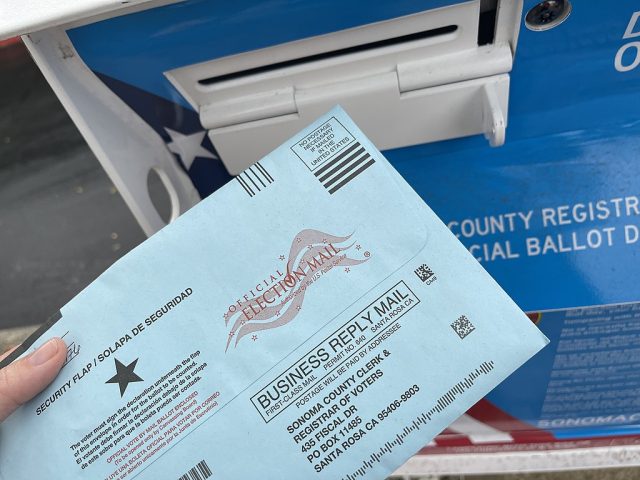
A small-town Kansas mayor who has supported President Donald Trump for years is now facing serious felony charges after state prosecutors allege he voted in multiple elections despite not being a U.S. citizen.

The New York Times this week highlighted the case of Joe Ceballos, the recently re-elected mayor of Coldwater, Kansas — a rural community of just 687 residents — who is now charged with multiple counts of voter fraud-related crimes.

Ceballos, 55, is facing three counts of election perjury and three counts of voting without being qualified under Kansas law. Prosecutors say he illegally cast ballots while holding permanent resident status rather than full citizenship.

“Nobody ever told me that I couldn’t vote or register to vote,” Ceballos told The Times. “And so, as a young man, yeah, I did it. I registered.”

A Case Raising Broader Questions About Election Integrity

The case arrives at a time when election security and voter eligibility remain central concerns for many Americans, particularly Republicans who argue that citizenship requirements must be enforced to protect the integrity of U.S. elections.

While instances of noncitizen voting are considered rare, conservatives have long maintained that even isolated cases undermine trust in the system — and that laws already on the books should be applied consistently.

Ceballos was born in Mexico and moved to the United States at age four, according to the report. He later obtained a green card in 1990. Ceballos said he believed that being a lawful permanent resident allowed him to vote.

“His defense, essentially, is that he did not understand that being a permanent resident should have precluded him from voting and holding office, and that no one ever told him he was not eligible,” the paper wrote.

Citizenship Application Triggered Investigation

Ceballos said his legal troubles began last year when he applied to become a U.S. citizen. During the process, he admitted to a federal official that he had previously voted.

“His eyes got real big, and I was like, ‘Boy, did I do something wrong?’” Ceballos recalled.

That admission reportedly halted his citizenship application and alerted Kansas officials, setting off the investigation that ultimately led to criminal charges.

If convicted, Ceballos could face up to 68 months in prison and a $200,000 fine.

“This alien committed a felony by voting in American elections,” DHS spokeswoman Tricia McLaughlin said about Ceballos.

Trump Supporter Says He Doesn’t Belong in “Criminal” Category

Ceballos acknowledged voting for Trump in 2016, 2020, and 2024, and said he still supports much of the president’s immigration agenda — particularly efforts to remove violent criminals from the country.

“I still strongly believe in Trump’s immigration laws about, ‘Let’s get the bad guys out of here,’” he said. “You know, they’re murderers, they killed people, they molested people, let’s get them out of here.

“But I feel like I don’t fit that category,” he added. “And I feel like that’s how they’re treating me.”

His comments reflect a broader debate within the immigration discussion: Republicans often emphasize the difference between legal immigrants who follow the process and those who break the law — while also insisting that voting is a right reserved only for American citizens.

Small Town Residents Rally Around Mayor

Coldwater residents told The Times they view the prosecution as a “personal attack on a pillar of the town.” Ceballos was overwhelmingly re-elected last year by a margin of 101 votes to 20.

Supporters argue the case is a tragic example of confusion over complex immigration and election laws, while critics say citizenship rules are clear and must be upheld regardless of intent.

SAVE Act and Growing Push for Proof of Citizenship

The case comes as Trump has backed the SAVE Act, legislation that would require proof of U.S. citizenship to vote in federal elections — a measure Republicans argue is common sense and necessary to restore confidence in elections.

Democrats such as Sen. Chuck Schumer (D-NY) have criticized the proposal, calling it discriminatory, but polling consistently shows strong public support for voter identification requirements.

CNN data analyst Harry Enten noted that surveys dating back to 2018 show at least 75% of Americans support voter ID laws, including a 2024 figure showing 83% approval.

“Normally, you might expect… a big divide by party,” Enten said. “But not really here.”

Sen. Susan Collins recently became the 50th lawmaker to signal support for the bill.

In an exclusive comment to The Maine Wire, Sen. Collins said she supports the current version of the SAVE Act.

Collins said she will support the version of the SAVE Act that has now cleared the House, calling it a “simple reform” aimed at strengthening confidence in federal elections.

“The law is clear that in this country only American citizens are eligible to vote in federal elections. In addition, having people provide an ID at the polls, just as they have to do before boarding an airplane, checking into a hotel, or buying an alcoholic beverage, is a simple reform that will improve the security of our federal elections and will help give people more confidence in the results,” she said.

Collins said that her support hinges on changes made to the legislation. She said she previously opposed an earlier draft that would have required voters to prove their citizenship each time they cast a ballot.

“Requiring voters to produce passports or birth certificates on election day — as opposed to just a state-issued ID — would have placed an unnecessary burden on the voters. That provision is no longer in the bill and dropping this requirement was key to getting my support.”

Tom Homan Announces End Of ICE Surge Operation In Minneapolis

0
By Gage Skidmore from Surprise, AZ, United States of America - Thomas Homan, CC BY-SA 2.0,

MINNEAPOLIS — Border czar Tom Homan announced Thursday that the Trump administration will conclude Operation Metro Surge in Minneapolis and the Twin Cities area, saying the large-scale federal immigration enforcement effort achieved its objectives and made the region safer.

Speaking at the Bishop Henry Whipple Federal Building in Fort Snelling, Homan said the stepped-up ICE operation would be scaled back after weeks of heightened federal presence and cooperation with state and local law enforcement. “I have proposed, and President Trump has concurred, that this surge operation conclude,” Homan told reporters.

Homan said the successful results of the mission — including arrests of individuals with criminal histories and disrupting unlawful agitator activity — warranted the drawdown. “Twin Cities and Minnesota in general are and will continue to be much safer for the communities here because of what we have accomplished under President Trump’s leadership,” he said during his third press conference since being tasked with leading the surge.

Federal officials say the initiative, which began late in 2025, has resulted in thousands of arrests of dangerous illegal aliens and public safety threats, helping stem criminal activity and bolster cooperation with local law enforcement.

Homan outlined that federal officers will either return to their home duty stations or be reassigned elsewhere once the drawdown is complete. “Law enforcement officers drawing down from this surge operation will either return to the duty stations or be assigned elsewhere.”

In recent days, Homan confirmed that 700 of nearly 3,000 federal immigration officers have already been reassigned, a move he framed as responsive to productive coordination with state officials.

The operation had drawn intense national attention and criticism after two Americans — Renée Good and Alex Pretti — were killed in separate confrontations with federal agents during enforcement actions, sparking protests and legal challenges.

GOP Senators Stand Firm Behind Stephen Miller Amid Party Tensions

1

Republican senators are rallying behind senior White House aide Stephen Miller as some GOP lawmakers privately grumble that his blunt style and hardline immigration messaging could complicate the party’s midterm prospects.

Sen. Lindsey Graham (R-S.C.) dismissed the idea that Miller is in trouble inside Trump’s inner circle, calling him a key architect of the administration’s aggressive border agenda.

“People can disagree with Stephen on rhetoric or policy,” Graham told The Hill, “but the question is, is he in jeopardy in Trump World? Absolutely not.”

Graham argued Republicans should stop hand-wringing over internal personality clashes and instead focus on going on offense against what he called the failures of the Biden years. He pointed to an upcoming Senate vote targeting sanctuary city policies, saying Miller played a central role in shaping the effort.

Miller’s defenders say he has been instrumental in delivering on the promises Trump made to voters — from tougher immigration enforcement to cracking down on fentanyl trafficking. Sen. Dave McCormick (R-Pa.), who represents a major battleground state, credited Miller with helping advance priorities that matter to working families.

Other prominent Republicans, including Senate GOP Conference Chair Tom Cotton (R-Ark.), also praised Miller’s long-standing role in border security and law enforcement policy.

Still, the controversy highlights growing tension inside the Republican conference as lawmakers head into an election cycle. Some senators, including Thom Tillis (R-N.C.), have criticized Miller’s demeanor and influence, arguing the White House should broaden its circle of advisers.

The debate comes as Washington faces a looming Homeland Security funding deadline, with Democrats threatening to block extensions unless the administration agrees to restrictions on ICE operations. Democrats have also escalated calls for investigations, impeachments, and removals of Trump officials tied to immigration enforcement — part of a broader effort to portray the administration as extreme.

Miller has also drawn attention for his unapologetic stance on Greenland and U.S. strategic power in the Arctic, which critics say risks alienating allies. Supporters counter that Trump’s tougher posture has strengthened America’s defensive position and forced long-overdue conversations about national security.

For many Trump allies, the bottom line is simple: Miller remains one of the president’s most trusted advisers — and Republicans who want to win should focus less on palace intrigue and more on policy fights Democrats are increasingly out of step on.

As Graham put it, Miller is “Karl Rove to MAGA,” and anyone betting on his downfall, he suggested, doesn’t understand how Trump’s White House works.

Blue City Prosecutor Vows To Pursue Federal Agents Criminally After Trump Term Ends

By U.S. Immigration and Customs Enforcement - https://www.ice.gov/about-ice/ero, Public Domain,

Philadelphia District Attorney Larry Krasner, a Soros-backed progressive prosecutor, is facing mounting bipartisan criticism after making fiery remarks comparing federal immigration agents to Nazis and suggesting they should be “hunted down.”

Speaking last week, Krasner denounced Immigration and Customs Enforcement (ICE) agents as “a small bunch of wannabe Nazis,” adding, “If we have to hunt you down the way they hunted down Nazis for decades, we will find your identities.”

The comments prompted swift backlash from Republicans, with Rep. Greg Steube (R-Fla.) a member of the House Intelligence Committee, urging the Department of Justice to open a criminal investigation.

Steube cited federal statutes that make threatening a federal law enforcement officer a felony punishable by up to 10 years in prison.

“The DOJ should absolutely arrest and convict this guy,” Steube said.

Krasner has a history of antagonism toward federal immigration enforcement. He previously claimed he would seek to arrest and prosecute federal agents who “come to Philly to commit crimes,” an apparent reference to controversial law enforcement actions during a Minnesota operation in which a woman was shot after allegedly attempting to ram officers with her vehicle.

In the speech that drew Steube’s condemnation, Krasner boasted that the 350 million Americans living in the United States vastly outnumber ICE agents, and he floated the idea of coordinating with prosecutors in other states to pursue them criminally after President Donald Trump’s term ends.

Even prominent Democrats distanced themselves from Krasner’s rhetoric. Pennsylvania Gov. Josh Shapiro called the remarks “unacceptable… abhorrent and it is wrong; period; hard-stop; end of sentence.”

Republicans were far less restrained.

“We have a psychopath with a badge,” Rep. Dan Meuser (R-Pa) said in a statement to Fox News Digital.

Meuser blasted Krasner for what he described as chronic failures to prosecute violent crime, pointing to reports that the district attorney’s office prosecutes only about 30% of violent crime arrests.

“Every responsible Democrat must condemn this behavior,” Meuser said. “Failure to do so only increases the temperature in an already volatile situation, endangering federal law enforcement and communities alike.”

Meuser also accused Senate Democrats of borrowing Krasner’s “reckless political playbook” by using Department of Homeland Security funding as leverage in government shutdown negotiations.

Critics have long dubbed Krasner “Let ’Em Go Larry” for his lenient prosecution policies—an approach Meuser contrasted sharply with Krasner’s aggressive posture toward federal immigration officers.

Meuser has authored the Holding Prosecutors Accountable Act, legislation that would strip Justice Department grant eligibility from district attorney offices that fail to prosecute at least two-thirds of arrests.

The Department of Homeland Security weighed in as well. DHS Assistant Secretary Tricia McLaughlin called Krasner’s comments “vile,” accusing him of encouraging violence and doxing of law enforcement officers.

“He is intentionally stoking the flames of hatred and division in this country for political gain,” McLaughlin said, citing a reported 1,300% increase in assaults against ICE agents. “The violence and dehumanization of these men and women who are simply enforcing the law must stop.”

McLaughlin argued that Krasner should instead be thanking ICE for removing dangerous criminals from the Philadelphia region, including Yehi Badawi of Egypt, convicted of aggravated assault and robbery; Cuban national Alan De Armas-Tundidor, a convicted drug trafficker; and Thanh Long Huynh of Vietnam, convicted of rape and cocaine distribution.

Other Pennsylvania Republicans emphasized that Krasner’s threats are legally hollow.

State Sen. Doug Mastriano (R-Gettysburg) who taught constitutional law at the U.S. Army War College, noted that the federal supremacy clause would override any attempt by Philadelphia officials to interfere with lawful federal immigration enforcement.

“The Constitution is not optional,” Mastriano said bluntly.

State Sen. Jarrett Coleman (R-Allentown) chairman of the Senate Intergovernmental Operations Committee, echoed that warning, calling claims that city officials can block ICE “empty threats.”

“If they do obstruct federal law enforcement efforts, the Pennsylvania Senate will be the least of their worries,” Coleman said, adding that if Krasner focused more on prosecuting violent offenders, “Philadelphia wouldn’t be such a s—hole.”

As criticism intensifies, Krasner’s remarks have reignited a broader debate over progressive prosecutors, public safety, and the limits of local resistance to federal law enforcement—one that now may draw scrutiny from the Justice Department itself.

Republican Warns Stephen Miller Will Cost GOP Midterms

1

Florida state Sen. Ileana Garcia (R), a longtime supporter of former President Trump and co-founder of Latinas for Trump, is publicly criticizing the tone and tactics surrounding the administration’s latest immigration crackdown—warning that internal divisions and inflammatory rhetoric could cost Republicans in the midterms.

“I do think that he will lose the midterms because of Stephen Miller,” Garcia told The New York Times in an interview published Tuesday, referring to Trump’s White House deputy chief of staff and one of the architects of the administration’s hard-line immigration strategy.

Garcia, who has consistently supported strong border enforcement and backed Trump’s efforts to regain control of the southern border, stressed that her concern is not with securing the border itself, but with how the policy is being communicated and executed. She placed particular blame on Miller for what she described as unnecessarily aggressive rhetoric that risks alienating persuadable voters—including Hispanic Republicans who favor border security but reject what they see as dehumanizing language.

The comments follow a volatile weekend in Minneapolis, where federal agents shot and killed 37-year-old Alex Pretti during a protest tied to the administration’s immigration actions. The incident came just weeks after another fatal shooting involving federal authorities in the same city, when ICE officers shot and killed 37-year-old Renee Good earlier this month.

Homeland Security Secretary Kristi Noem said Pretti “attacked” federal law enforcement officers, while Miller went further, describing Pretti as “a would-be assassin” who “tried to murder federal law enforcement.”

White House press secretary Karoline Leavitt later sought to distance President Trump from Miller’s remarks, telling reporters Monday that she had not heard the president “characterize Mr. Pretti in that way” and emphasizing that the incident remains under investigation.

Garcia pushed back sharply on Miller’s framing in a post Monday on X.

“Distorting, politicizing, slandering – justifying what happened to Alex Pretti contradicts the American values the administration campaigned on. He was neither a domestic terrorist nor an assassin,” Garcia wrote.

“Allowing individuals like Stephen Miller, among others, who represent the government and make hard-line decisions, to make such comments will have long-term consequences. … This is not what I voted for!” she added.

Garcia’s criticism carries weight within Republican circles. She helped rally Latina voters for Trump during his 2016 campaign and later served in the Department of Homeland Security during his first term. While she has consistently supported deportations of criminal illegal immigrants and stronger border controls, she has previously warned against what she called “inhumane” tactics used to meet deportation quotas, arguing that they undermine public trust and conservative messaging on law and order.

Her remarks highlight a broader debate within the GOP as Republicans campaign on border security ahead of November’s high-stakes midterms. While voters continue to rank immigration and public safety among their top concerns, some party leaders are increasingly wary that overheated rhetoric—especially following deadly confrontations—could distract from Republicans’ core argument: restoring order at the border, enforcing the law, and keeping communities safe.

As fallout from the Minnesota shootings continues, political observers warn that how Republicans handle immigration enforcement—and how they talk about it—may prove just as important as the policies themselves in determining control of Congress this fall.

Report: Noem Demanded Hours-long Meeting With Trump After She’s Sidelined

0
By The White House - https://www.flickr.com/photos/202101414@N05/54581054338/, Public Domain,

Homeland Security Secretary Kristi Noem requested a two-hour meeting with President Trump in the Oval Office late Monday as the administration faced intensifying backlash over a deadly shooting in Minneapolis involving federal immigration agents.

The meeting came after President Trump announced that longtime border enforcement official Tom Homan would travel to Minneapolis to take charge of Department of Homeland Security efforts following the death of protester Alex Pretti during a confrontation with Border Patrol agents, according to the New York Times.

The closed-door discussion, which included several of the president’s top aides, reflected the administration’s effort to recalibrate its response as tensions mounted across the city and criticism grew over how the incident was initially described.

Department of Homeland Security (DHS) Secretary Kristi Noem receives a tour of the Terrorist Confinement Center CECOT with the Minister of Justice and Public Security Gustavo Villatoro in Tecoluca, El Salvador, March 26, 2025. (DHS photo by Tia Dufour)

Noem came under fire after she labeled Pretti a “domestic terrorist,” saying he had charged officers while brandishing a gun. However, multiple videos circulating online showed the ICU nurse holding a cellphone and attempting to flee from agents at the time of the encounter.

The administration has since faced pressure to clarify its messaging, particularly as images and video from the scene fueled protests and intensified scrutiny of federal enforcement tactics in Democrat-run cities already resistant to immigration crackdowns.

Earlier Monday, Trump said he was sending Homan — a well-known hardliner on border enforcement — to oversee the situation on the ground. The move sparked questions about whether the president was dissatisfied with Noem’s handling of the fallout.

Despite the speculation, Trump did not indicate that Noem’s job was in jeopardy during the meeting, sources told the outlet.

Separately, Border Patrol chief Greg Bovino and some of his agents were ordered Monday to begin pulling back from Minnesota, according to sources.

Bovino, like Noem, drew criticism for his initial assessment of the incident. He had said Pretti was brandishing a firearm and “wanted to do maximum damage and massacre law enforcement,” a claim later challenged by video evidence.

Amid reports suggesting internal consequences, the Trump administration pushed back against claims that Bovino had been demoted.

“Chief Gregory Bovino has NOT been relieved of his duties,” DHS Assistant Secretary Tricia McLaughlin wrote on X. She added that Bovino remains a “key part of the president’s team and a great American.”

Noem Impeachment Calls Escalate As ICE Shooting Fallout Continues

Department of Homeland Security (DHS) Secretary Kristi Noem receives a tour of the Terrorist Confinement Center CECOT with the Minister of Justice and Public Security Gustavo Villatoro in Tecoluca, El Salvador, March 26, 2025. (DHS photo by Tia Dufour)

Prominent Democrats are escalating calls to remove Homeland Security Secretary Kristi Noem, accusing her of rushing to defend federal officers involved in two separate fatal shootings — a push that Republicans are likely to view as more partisan pressure on law enforcement than a serious, evidence-based accountability process.

According to Axios, a House Democratic caucus phone call on Sunday “lit up” with demands to impeach Noem after the death of Minneapolis protester Alex Pretti, who was shot and killed by federal agents on Saturday.

Rep. Jared Moskowitz (D-FL) reportedly warned colleagues that if Noem refuses to step down, “we will have no other option but to begin impeachment,” according to anonymous sources cited by Axios.

House Homeland Security Committee ranking member Bennie Thompson (D-MS) — “who was once reticent about impeachment” — also called for Noem to be impeached during the same call, Axios reported.

Outside Washington, New York Gov. Kathy Hochul (D) also demanded Noem’s removal, writing, “@Sec_Noem has forfeited her right to lead. I’m calling on her to resign.”

Hochul went further, adding, “Gregory Bovino must also be fired,” referring to a senior Border Patrol official who publicly defended the shooting at a press conference Sunday.

Democrats point to pattern; Republicans see familiar impeachment politics

Democrats argue Noem is showing a troubling pattern of defending federal officers before facts are fully established, pointing to a similar incident earlier this year.

The article notes that Renee Good was “shot four times and killed” on Jan. 7 by “officer Jonathan Ross,” and that Noem also immediately said the officer acted in self-defense.

Noem’s supporters — and many Republicans — are likely to counter that federal officers operating in volatile environments, including protests and border-related enforcement actions, deserve the presumption that they were responding to a real threat until evidence proves otherwise, especially amid increasingly aggressive anti-police rhetoric.

Republicans have also criticized Democrats for using impeachment as a political weapon in recent years, arguing that removing Cabinet officials should be reserved for clear misconduct, not disputed narratives still under investigation.

Border Patrol official calls Pretti “assaultive,” claims he interfered with federal action

At Sunday’s press conference, Bovino described Pretti as an “assaultive subject” who was “assaulting” officers and interfering with a federal action — language that underscores how federal officials are framing the encounter as a fast-moving confrontation rather than an unprovoked shooting.

Bovino’s comments, however, are now being disputed by Democrats and major media outlets that reviewed video from the scene.

Video review raises questions about the Trump administration’s initial account

Major news organizations, including The Wall Street Journal, reviewed bystander footage and reported that “Bystander footage appears to tell a different story” than the Trump administration’s claims.

The Journal reported: “A frame-by-frame review by The Wall Street Journal shows a federal officer pulling a handgun away from Pretti. Less than a second later, an agent fires several rounds. Pretti died at the scene.”

Both The Journal and The New York Times concluded that “At least 10 shots appear to have been fired within five seconds.”

Political fallout likely to intensify as facts emerge

The dispute is now shifting into familiar political territory: Democrats are pressing for impeachment and firings, while Republicans are likely to insist that the federal government should not allow high-pressure incidents involving officers to be immediately adjudicated by political opponents — especially before investigators have fully reviewed evidence, witness statements, and body camera footage, if available.