

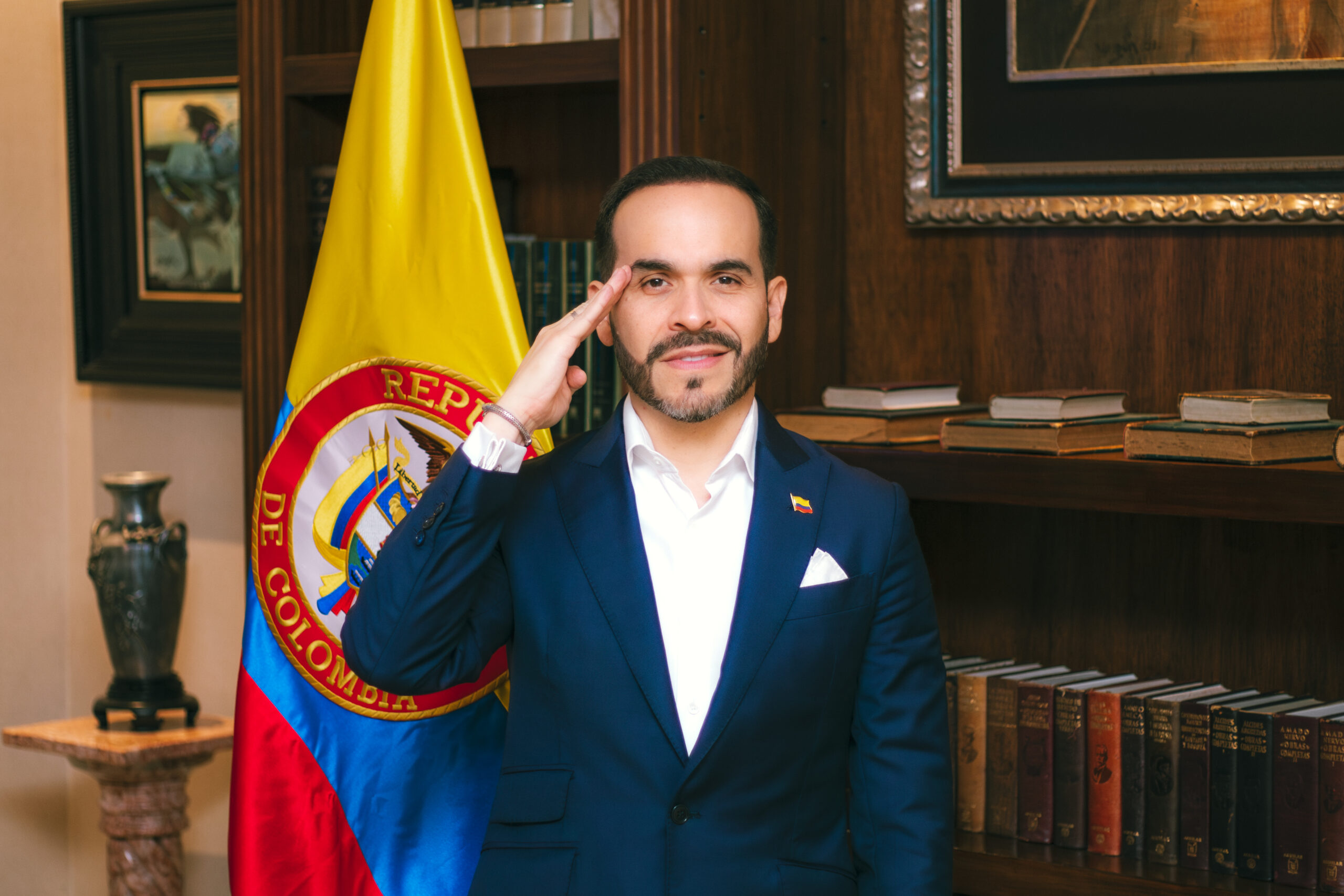
Colombia’s President-elect Abelardo de la Espriella suspended the presidential transition Tuesday and accused outgoing President Gustavo Petro of planning a coup to remain in power after Petro refused to recognize the results of the country’s election.
Petro claims progressive Sen. Iván Cepeda actually won the popular vote in Colombia’s June 21 presidential runoff, despite official results showing de la Espriella prevailing by less than 1 percentage point.
The certified tally gave de la Espriella 49.66% of the vote to Cepeda’s 48.70%.
Petro alleges the result was manipulated through algorithms operated from California by Israeli private intelligence companies. He has not released evidence establishing that those companies altered the vote count or that the officially reported results were fraudulent.
International election observers have likewise reported no evidence of irregularities that would have changed the outcome.
De la Espriella alleges plan to ‘cling to power’
De la Espriella, a conservative lawyer and businessman endorsed by President Donald Trump, responded in a video posted to social media.
He accused Petro and Cepeda of attempting to “cling to power at all costs” through what he called a “coup d’état.”
The president-elect called on Colombia’s armed forces to uphold the Constitution and disobey any unlawful orders from Petro. He also urged the international community to monitor the transfer of power and called on his supporters to “resist” until his scheduled inauguration Aug. 7.
Transition process breaks down
De la Espriella announced that he was suspending the formal transition process, known in Colombia as the “empalme,” during which the outgoing government provides information needed by the incoming administration.
Petro’s government then halted its side of the handover.
Finance Minister Germán Ávila, who is overseeing the transition for Petro’s administration, ordered his team to suspend its work in response. Ávila said the outgoing government had “nothing to hide” and criticized statements made by members of de la Espriella’s transition team.
The breakdown followed days of increasingly hostile accusations between the outgoing president and his successor.
Election observers defend vote count
International observers have not supported Petro’s claims that the runoff was fraudulent.
A European Union observer mission praised the transparency and efficiency of Colombia’s vote-counting process. The Carter Center described the system used to manage the results as reliable, transparent, and fully traceable.
De la Espriella was formally declared the winner after defeating Cepeda, who had campaigned on continuing many of Petro’s policies.
The result represented a major political setback for Petro, whose government has struggled with security concerns and a largely unsuccessful effort to negotiate peace agreements with several armed groups.
Incoming government moves ahead
Despite suspending cooperation with Petro’s administration, de la Espriella continued preparing to take office.
He announced six additional Cabinet appointments Tuesday, adding to previously named choices for the defense, interior, finance, and environment ministries.
The dispute has raised concerns about whether Colombia’s traditionally peaceful transfer of presidential power will proceed normally.
For now, Petro remains scheduled to leave office and de la Espriella is set to be inaugurated Aug. 7.
READ NEXT: Counterterrorism Takes Over Conservative Leader’s Death Probe



Columbia, crooked? California vote counters? I’m shocked, shocked I tell you to find any questions unanswered.