

Foreign Affairs

Home Foreign Affairs

Trump Gives Blunt Answer What Happens To Iran If He’s Assassinated
3
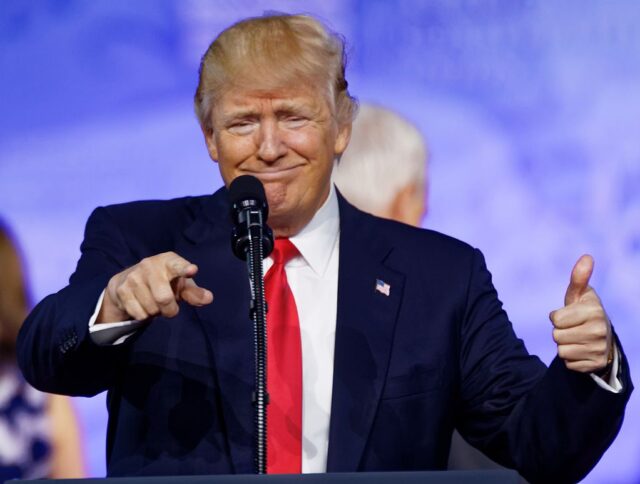
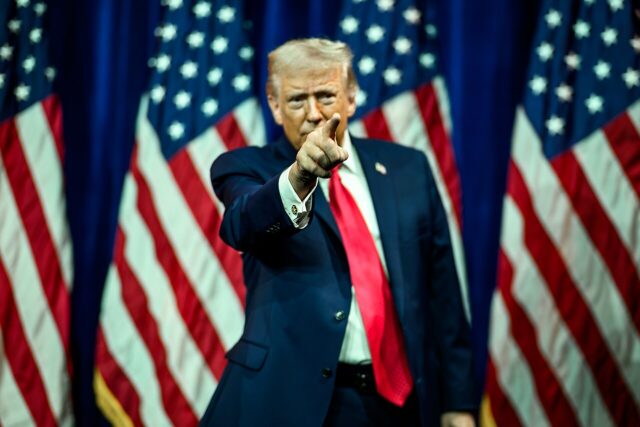
President Donald Trump gestures to the crowd after delivering remarks at the House GOP Member Retreat, Tuesday, January 6, 2026, at the Donald J. Trump- John F. Kennedy Center for the Performing Arts in Washington, D.C. (Official White House Photo by Daniel Torok)

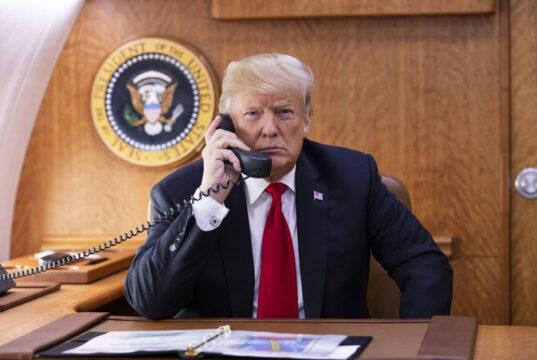
In an interview broadcast Tuesday night, President Donald Trump delivered a blunt warning to Iran’s ruling regime: any attempt on his life would be met with overwhelming retaliation.

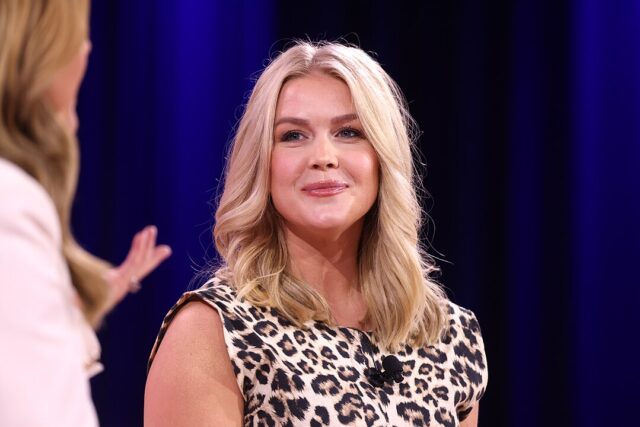
Speaking with NewsNation host Katie Pavlich on “Katie Pavlich Tonight,” Trump said he has already ordered a devastating response if Iran follows through on threats made against him.

“They shouldn’t be doing it, but I’ve left notification. Anything ever happens, the whole country is going to get blown up,” Trump told Pavlich. “Originally, Biden should have said something, when they made a statement. We always said, ‘Why isn’t Biden saying anything?’ Because he didn’t.”

Trump also criticized what he described as weakness from the Biden administration, arguing that failing to respond forcefully to foreign threats only emboldens America’s enemies.

“But a president has to defend a president. If I were here, and they were making that threat to somebody, even, not even a president, but somebody, like they did with me, I would absolutely hit them so hard,” Trump said. “But I have very firm instructions — anything happens, they’re going to wipe them off the face of this earth.”

Iranian threats escalate against Trump

Trump’s comments came as Iran’s Supreme Leader Ayatollah Ali Khamenei has posted multiple threatening messages about Trump on social media—including imagery depicting the president in a coffin. Trump said those threats cannot be ignored, especially given Iran’s long history of supporting terrorism and political violence across the Middle East.

To many conservatives, the threats underscore a larger pattern: Iran’s theocratic leaders grow more aggressive when the United States appears unwilling to enforce red lines. Republicans have repeatedly argued that deterrence only works when America backs it with strength, resolve, and consequences.

Biden administration acknowledged IRGC assassination plot

Even under the Biden administration, the threat from Iran has been formally documented.

Biden’s Justice Department announced the indictment of a senior member of the Iranian Revolutionary Guard Corps (IRGC) on charges of conspiring to kill former National Security Advisor John Bolton in 2022. Prosecutors alleged that a confidential source was offered $300,000 to carry out the assassination.

For Republicans, the plot was more proof that Iran is not simply a hostile state—but a regime willing to target Americans directly, including former senior officials.

Trump’s stance: defend dissidents, punish brutality

Trump has previously warned Iran not to harm protesters who oppose the regime, threatening consequences if demonstrators were executed. While Iran did not hang those specific protesters, the regime’s security forces killed hundreds during the crackdown.

Conservatives have long viewed Iran’s government as an oppressive theocracy that violently suppresses its own people while funding terrorist proxies abroad. Many Republicans argue the U.S. should side firmly with dissidents and freedom-minded citizens, not appease the clerics in Tehran.

Soleimani strike remains a defining moment

One of the most significant actions of Trump’s first term against Iran was the January 2020 strike that killed Qasem Soleimani, an IRGC commander widely viewed by U.S. officials as responsible for planning attacks on Americans and allied forces.

The strike was praised by many Republicans as a clear demonstration of deterrence: when Iran targets Americans, the United States responds decisively.

A major 2025 strike on Iran’s nuclear infrastructure

The article also notes that in June 2025, the United States Air Force bombed multiple facilities in Fordow, Natanz, and Isfahan connected to Iran’s nuclear program, reportedly dropping as many as 14 GBU-57 Massive Ordnance Penetrators.

The operation involved a 37-hour flight by seven B-2A Spirit bombers and inflicted significant damage to Iran’s nuclear capabilities with no American losses.
Trump Revokes Elise Stefanik Nomination For UN Ambassador

She’s out…

President Donald Trump announced that he asked Rep. Elise Stefanik (R-N.Y.) to bow out of contention to be U.S. ambassador to the United Nations.

He cited the House GOP’s slim majority, writing on Truth Social:

“I have asked Elise, as one of my biggest Allies, to remain in Congress to help me deliver Historic Tax Cuts, GREAT Jobs, Record Economic Growth, a Secure Border, Energy Dominance, Peace Through Strength, and much more, so we can MAKE AMERICA GREAT AGAIN.”

“With a very tight Majority, I don’t want to take a chance on anyone else running for Elise’s seat. The people love Elise and, with her, we have nothing to worry about come Election Day. There are others that can do a good job at the United Nations,” he said.

Stefanik had been under pressure to take herself out of contention for the role despite appearing poised to sail through Senate confirmation with bipartisan support, CBS News first reported. 

This is a breaking news story. Please chec

FBI Director Kash Patel Shuts Down Charlie Kirk Foreign Intelligence Probe

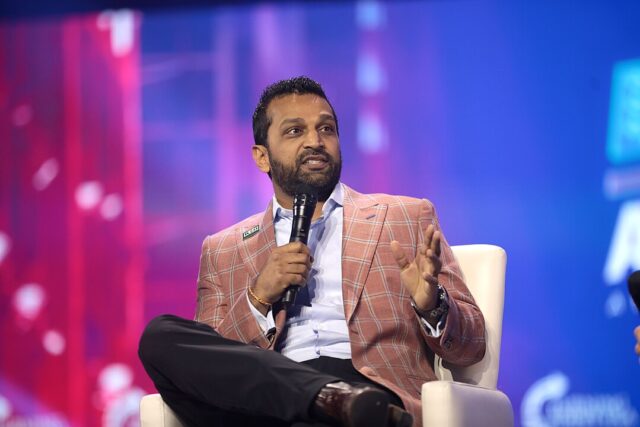
Image via gage Skidmore Flickr

FBI Director Kash Patel reportedly shut down efforts by Joe Kent, head of the National Counterterrorism Center and a close ally of Tulsi Gabbard, to investigate whether a foreign power was behind the assassination of conservative leader Charlie Kirk.

Kent Pushes to Expose Possible Foreign Ties

According to The New York Times, Kent began reviewing FBI case files to determine if Kirk’s alleged killer, Tyler Robinson, received outside help. Robinson, 22, has been charged with fatally shooting Kirk with a sniper rifle while the Turning Point USA founder was addressing students at Utah Valley University on September 10.

Kent’s investigation raised alarms at the FBI. Patel reportedly believed Kent was overstepping his authority by digging into an active bureau investigation — even though Kent’s mandate at the Counterterrorism Center includes monitoring potential foreign threats to national security.

White House Tensions Boil Over

When Patel learned Kent had accessed internal FBI materials, he demanded a high-level White House meeting. The tense roundtable brought together Patel, Kent, Gabbard, Vice President JD Vance, Chief of Staff Susie Wiles, and senior DOJ officials.

Kent defended his actions, saying a lower-level FBI official had granted him access. Supporters of Kent argue he was doing his duty to ensure foreign adversaries weren’t behind the killing of one of the conservative movement’s most prominent voices.

However, Patel and other officials worried the probe could complicate the prosecution, possibly giving Robinson’s defense attorneys an opening to claim there were multiple suspects or motives at play.

Jurisdictional Turf War

The standoff reflects ongoing turf battles between the FBI and the Counterterrorism Center, particularly over how intelligence is shared during active criminal cases. Despite the controversy, Kent’s team reportedly collected intelligence from other agencies about potential foreign funding or coordination, including possible links to left-wing extremist groups like Antifa.

So far, it’s unclear whether either agency is still investigating possible foreign involvement in the attack.

Special Envoy Reveals Ukraine Leader Apologized In Letter To Trump

5
By President Of Ukraine - https://www.flickr.com/photos/165930373@N06/54169325552/, CC0, https://commons.wikimedia.org/w/index.php?curid=156221279

President Trump’s special envoy Steve Witkoff said Ukrainian President Volodymyr Zelensky apologized to Trump in a letter.

“Zelensky sent a letter to the president. He apologized for that whole incident that happened in the Oval Office,” Witkoff said Monday on Fox News. “I think that it was an important step and there’s been a lot of discussion between our teams and the Ukrainians and the Europeans who are relevant to this discussion as well.”

U.S. and Ukrainian officials are set to meet in Saudi Arabia this week to pick back up on peace negotiations to end the war with Russia.

Witkoff said he thought Zelensky sending Trump a letter to apologize for the fiery meeting was “progress.”

Witkoff said it’s important for the officials to discuss security protocols for Ukrainians, territorial issues and a utility plan.

“These are not complicated things, they just … need to be put on the table and everybody needs to be transparent about what their expectations are, then we can begin to have a discussion about how we compromise,” he said.

This is a breaking news story. Please check back for updates.

Trump’s Patience With Zelensky Evaporates As White House Issues Dire Warning

By President Of Ukraine - https://www.flickr.com/photos/165930373@N06/54169325552/, CC0, https://commons.wikimedia.org/w/index.php?curid=156221279

President Trump’s growing frustration with Ukrainian President Volodymyr Zelensky came to a head on Wednesday. At the center of the tension: a statement from Zelensky demanding full Russian withdrawal — including from Crimea — before even sitting down for peace talks.

While the Ukrainian leader remains steadfast in his refusal to negotiate without a complete rollback of Russian control, critics argue that this kind of rigid posture may be stalling real progress and prolonging the war’s human cost.

The Trump team has been exploring more pragmatic solutions to break the deadlock — one of which includes floating the idea of formally recognizing Crimea as Russian territory. It’s a bold play meant to strip away one of the biggest barriers to getting both sides to the table.

As the New York Post explains, Trump’s dire warning to the Ukrainian president included a particularly ominous comment: settle for a negotiated peace or risk “losing the entire country.”

Trump, 78, was responding to Zelensky telling reporters Tuesday that “Ukraine will not legally recognize the [Russian] occupation of Crimea” — a key part of a US-proposed peace plan under discussion in London Wednesday, and a condition that has long been a red line for Kyiv.

“This statement is very harmful to the Peace Negotiations with Russia in that Crimea was lost years ago under the auspices of President Barack Hussein Obama, and is not even a point of discussion,” the president seethed on Truth Social. 

“Nobody is asking Zelenskyy to recognize Crimea as Russian Territory but, if he wants Crimea, why didn’t they fight for it eleven years ago when it was handed over to Russia without a shot being fired?”

Trump a decade ago criticized Obama for not intervening when Russia annexed Crimea. Kyiv has been working since 2014 to get its territory back and expel Russians from eastern Ukraine.

In a bid to end the grinding, trench-style war in Ukraine, the Trump administration is preparing to upend more than eight decades of U.S. foreign policy.

“There’s a doctrine out there called the Welles Declaration, that goes back to 1940, that says the United States will not acknowledge the occupation of a foreign land by another nation,” a senior administration official told the Post. “That’s on the table.”

The Welles Doctrine, first invoked to condemn the Soviet occupation of the Baltic states, has long guided America’s refusal to recognize territorial seizures. Reversing or softening that position would mark a historic shift — one aimed at pressuring Ukraine and Russia toward a negotiated ceasefire.

The move, while politically explosive, is rooted in realpolitik. Crimea has been effectively under Russian control since 2014, and there’s an argument to be made that clinging to pre-2014 maps may be standing in the way of saving lives today.

Predictably, the proposal sparked outrage in Kyiv. For Ukrainians, Crimea isn’t just land — it’s a Maryland size chunk of heritage, identity and pride.

But an important question remains: At what point does principled resistance become strategic blindness?

READ NEXT: Fox News Star UNLOADS On Democrat Rep In Explosive Clash [WATCH]

Retired General Predicts Putin Will ‘Wait Out’ Trump Term Before Final Ukraine Strike

4
By President Of Ukraine from Україна - Joint Statement of the fourth Ukraine - Nordic Summit in Reykjavik., CC0, curid=156221560

Retired U.S. Army Gen. Jack Keane said he suspects Russian President Vladimir Putin will wait for President Trump to leave office before he launches an attack to unseat the Ukrainian government.

In an interview on Fox News, Keane said he does not think Putin will ever give up his long-term goal of taking over Ukraine, even if he accepts a peace agreement during Trump’s time in office.

Keane said he thinks Putin is “willing to, at some point, if the deal is OK with him, to accept a peace agreement and a ceasefire.”

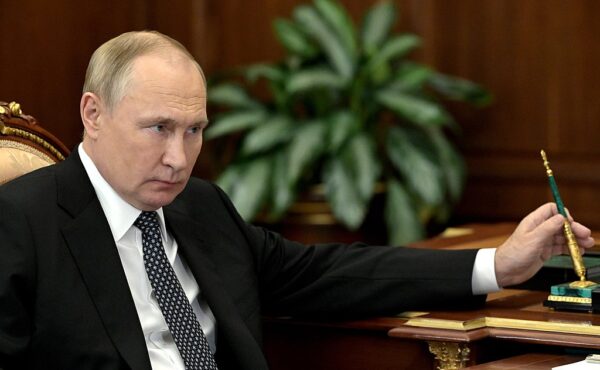
Kremlin.ru, via Wikimedia Commons

“But he’s not given up on his strategic goal to topple the government in Ukraine and take over the country,” Keane continued, adding, “So, where is he coming from? He’ll wait out President Trump, I suspect, and attack.”

Secretary of State Marco Rubio, Middle East envoy Steve Witkoff and national security adviser Mike Waltz met with Russian officials in Saudi Arabia on Tuesday to discuss an end to the war.

Asked whether he thinks it will be difficult for Trump “to get the kind of peace” agreement he wants, Keane said in the interview, “No.”

“I think he can get a peace agreement,” Keane said. “But what I think will happen is … it [is] likely he [Putin] will not take on his goal of toppling the government in Ukraine until after Trump is out of the presidency.”

Keane nodded to intelligence that suggested Putin anticipated his invasion of Ukraine would happen swiftly and with little resistance. Instead, he encountered a resolute Ukrainian military, backed by a strengthened NATO alliance.

“Listen, everything is on the line for him. He has strategic failure here. He thought this was going to take place in two to three weeks, that people would capitulate. It did not happen,” Keane said about Putin.

“And here we are going into a third year,” he continued. “The reality is, his presidency is at stake. And I think also his personal life is at stake if all of this blows up on him.”

Trump told reporters Sunday that he thinks Putin “wants to stop fighting” and that he is not still aiming to take all of Ukrainian territory.

Asked about Putin’s territorial ambitions — and whether he thinks Putin wants the whole of Ukraine’s land — Trump said he asked Putin the same question.

“I think he wants to stop. That was my question to him. Because if he’s going to go on, that would have been a big problem for us, and that would have caused me a big problem, because you just can’t let that happen,” Trump said.

“I think he wants to end it. And they want to end it fast. Both of them,” Trump continued, noting Ukrainian President Volodymyr Zelensky “wants to end it too.”

Trump Sends Ultimatum to Maduro Allies as U.S. Signals End to Negotiations

President Donald Trump monitors U.S. military operations in Venezuela, from Mar-a-Lago Club in Palm Beach, Florida, on Saturday, January 3, 2026.

President Donald Trump has delivered a blunt message to Venezuelan strongman Nicolás Maduro and his inner circle: cooperate with the United States—or step aside.

Fox News senior foreign correspondent Benjamin Hall revealed Sunday that Trump personally warned Maduro’s allies that they must either “surrender or play ball,” underscoring what the administration describes as a decisive shift away from diplomacy and toward direct action.

According to Hall, President Trump spoke directly with Maduro roughly a week before Saturday’s strike in Caracas. During that call, Trump reportedly issued a clear ultimatum demanding Maduro’s surrender. Maduro, Trump said, “was not willing.”

Hall noted that while Maduro has now been removed, several senior figures within the Venezuelan regime remain aligned with him, presenting an ongoing challenge for U.S. policymakers seeking stability in the region and an end to what they describe as narco-terrorist activity emanating from the country.

Operation Absolute Resolve – January 3rd, 2026

That message was reinforced by Department of Homeland Security Secretary Kristi Noem, who made clear that the Trump administration has no intention of tolerating continued obstruction from Venezuela’s remaining leadership.

“President Trump is done negotiating. He proved that a couple of days ago, that he is a man of action, that when someone is threatening the United States, he will defend it with every resource that we have, and he’ll continue to do that,” Noem said on Fox News Sunday.

Noem explained that Trump’s communications with Venezuela’s vice president were deliberately direct and unambiguous.

“His conversations now with the vice president in Venezuela are very matter-of-fact and very clear: ‘You can lead, or you can get out of the way because we’re not going to allow you to continue to subvert our American influence and our need to have a free country like Venezuela to work with rather than to have dictators in place who perpetuate crimes and drug trafficking,’” she said.

Her remarks followed the Trump administration’s high-profile operation on Saturday that resulted in the capture of Nicolás Maduro—an unprecedented move that sparked intense debate in Washington. While Democrats and some Republicans raised questions about the legality of the action and the long-term implications for Venezuela, supporters of the operation argued it sent a long-overdue message to hostile regimes.

The operation capped months of U.S. efforts to dismantle what officials describe as a network of narcoterrorism tied to the Venezuelan government. Those efforts included strikes against suspected drug trafficking vessels operating in Caribbean waters and increased enforcement against illicit oil shipments.

Noem pointed to those actions as further proof that the administration is committed to protecting American security interests and cutting off financial lifelines to adversarial governments.

“The Coast Guard has been heavily involved in stopping a lot of this shadow fleet of oil that has been trafficking illegally to many of our enemies in other countries,” she said.

Administration officials argue that Venezuela’s instability has long fueled drug trafficking, mass migration, and regional insecurity, and that decisive action was necessary after years of what they view as failed appeasement. Supporters say Trump’s approach represents a return to peace through strength—using American power to deter threats before they reach U.S. shores.

Iranian Grand Ayatollah Issues Fatwa Targeting Trump

The White House, Public domain, via Wikimedia Commons

A senior Iranian cleric has called for the assassination of U.S. President Donald Trump, Israeli Prime Minister Benjamin Netanyahu, and other Israeli officials, calling them “Enemies of God.”

Grand Ayatollah Naser Makarem Shirazi, a leading Shiite cleric in Iran with authority to issue legal rulings under Islamic law, has issued a fatwa — an Islamic legal decree — escalating regional tensions and offering religious justification for violence against Western and Israeli leaders.

As Newsweek rightly notes, the development highlights the Islamic Republic’s ongoing use of religious decrees as political tools — a strategy Iran has long used to project power beyond its borders.

While a fatwa is not legally enforceable, it can influence judicial decisions in countries with Sharia-based legal systems.

Khosro K. Isfahani, senior research analyst at the National Union for Democracy in Iran wrote on X, formerly Twitter, that the fatwa issued by Shirazi against Trump was similar to the murder fatwa issued against the author Salman Rushdie for his novel The Satanic Verses which led to a number of assassination attempts.

Fatwa Targets U.S. and Israeli Leadership

Shirazi’s ruling singles out Trump, Netanyahu, and senior Israeli officials for death, framing the call as a divine imperative. While fatwas lack direct enforcement mechanisms outside of Islamic law, they carry significant weight among hardline elements and militias aligned with Tehran.

The fatwa comes on the heels of a fragile U.S.-brokered ceasefire that followed a 12-day conflict involving Israel, Iran, and the United States.

At the height of the fighting, President Trump declared that the U.S. knew the whereabouts of Iranian Supreme Leader Ali Khamenei, calling him an “easy target” — though he added Khamenei was safe “for now.” Around the same time, Israeli Defense Minister Israel Katz issued his own threat, saying that Khamenei should be assassinated.

As Newsweek reporters Brendan Cole and Shane Croucher add, “Shirazi said anyone who threatens the Leader or Marja is considered ‘an enemy of God’ and reminded Muslims and Islamic states that it would be ‘haram’ (forbidden) to stand in support of the enemy.”

They continue:

“It is necessary for all Muslims around the world to make these enemies regret their words and mistakes,” the fatwa said.

Isfahani said on X that the fatwa had been signed and sealed responding to an Estefta (formal query) and was significant because it directly named Trump and that “unlike the nonexistent Fatwa against nukes, this one is real.”

Not Shirazi’s First Outrageous Decree

Shirazi, known for issuing rulings against smoking and even banning women from attending soccer matches, has a long record of using his clerical position to shape Iranian social and political norms.

Critics say the fatwa resembles Iran’s infamous 1989 ruling against author Salman Rushdie, which led to a decades-long threat on Rushdie’s life and culminated in a violent stabbing in 2022 that left the writer blind in one eye.

Elena Ternovaja, CC BY-SA 3.0 , via Wikimedia Commons

Comes Amid Pattern of Threats Against U.S. Officials

This latest fatwa doesn’t come in a vacuum. It follows reported Iranian-backed plots targeting Trump and former Secretary of State Mike Pompeo — both of whom played key roles in the U.S. withdrawal from the Iran nuclear deal and the targeted killing of Islamic Revolutionary Guard Corps (IRGC) commander Qasem Soleimani in 2020.

While the White House has not yet responded to Shirazi’s declaration, U.S. officials have previously acknowledged ongoing threats from Iranian actors against Trump-era leaders.

What This Means Going Forward

Even if symbolic, Shirazi’s call could inspire real-world violence — and it’s likely to complicate diplomatic efforts in the region, particularly as Tehran faces renewed scrutiny over its nuclear ambitions and destabilizing activity across the Middle East.

Colombian President Immediately Backtracks After Trump Threat

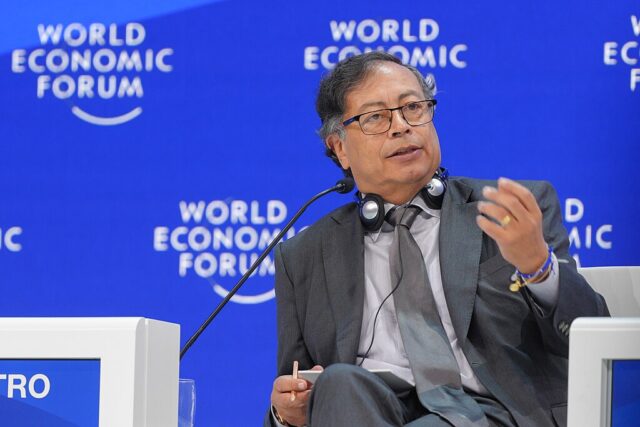
Colombian President Gustavo Petro has backed down from his earlier declaration that he would not accept deportation flights from the United States. After initially refusing two repatriation flights containing 160 deportable migrants, Petro announced that he would instead send his presidential plane to personally pick up deported individuals, according to a U.S. official familiar with the matter.

This came after former President Donald Trump, who has consistently criticized Petro’s handling of immigration matters, responded with a series of strong retaliatory measures, including the imposition of emergency 25% tariffs on Colombian goods and the threat of a broader diplomatic and economic crackdown.

The Colombian president had originally indicated that he would accept deportation flights from the U.S. but changed his tune resulting in two flights being halted. The public explanation offered was that the U.S. treated Colombian migrants as “criminals,” which he argued violated basic human rights, though some doubted the sincerity of his rationale.

In his announcement, Petro demanded that the United States “establish a protocol for the dignified treatment of migrants before we receive them.” 

Petro was met with swift and fierce condemnation from former President Trump, who argued that Petro’s refusal to accept the flights jeopardized U.S. national security. Trump highlighted the seriousness of the issue in a post on Truth Social.

In response to Petro’s decision, Trump wasted no time in outlining a series of retaliatory measures aimed at pressuring the Colombian government into complying with U.S. demands. On Sunday, Trump announced that his administration would implement “emergency 25% tariffs” on all Colombian imports to the U.S., a figure he vowed would escalate to 50% within one week.

These tariffs are expected to impact a wide range of goods, from agricultural products to textiles, and could severely harm Colombia’s economy, which relies heavily on exports to the U.S. Trump’s statement also included plans for a travel ban and visa revocations targeting Colombian government officials, along with their allies and supporters.

Trump emphasized that these actions were just the beginning, stating, “We will not allow the Colombian Government to violate its legal obligations with regard to the acceptance and return of the criminals they forced into the United States.”

In a further escalation of tensions, a U.S. official revealed that the U.S. Embassy in Colombia would close on Monday following Petro’s refusal to honor his previous commitment. While no further details were provided regarding the closure, this move is likely to further strain the relationship between the two nations. The embassy’s closure could have a significant impact on diplomatic and consular services, including visa processing.

Article Published With The Permission of American Liberty News

White House Press Sec. Fiercely Defends Trump Over Zelenskyy Showdown

3
By Gage Skidmore from Surprise, AZ, United States of America - Karoline Leavitt, CC BY-SA 2.0,

White House Press Secretary Karoline Leavitt defended President Trump’s recent behavior during negotiations with Ukraine leader Volodymyr Zelenskyy on Friday.

Friday’s joint press event quickly turned sour as Zelenskyy, Trump, and Vice President JD Vance openly argued and insulted one another over the ongoing conflict between Russia and Ukraine — in a stunning showdown that unfolded on live TV.

During Sunday’s Media Buzz, Kurtz acknowledged Zelenskyy could be “irritating” but pointedly noted that “it also seemed like President Trump lost his temper.”

Leavitt pushed back hard, dismissing the idea outright: “I would disagree with that. I think what happened in the Oval Office, I was there, was unfortunately President Zelenskyy came in with a mindset not wanting to negotiate peace.”

She shifted blame to the Ukrainian leader: “President Zelenskyy was also antagonistic, and frankly, he was rude. He picked a fight with the Vice President of the United States. He repeatedly interrupted President Trump… After three years of funding this brutal war, [Americans] are sick and tired of footing the bill.”

Kurtz, sticking to his initial take, pushed back and even rationalized Zelenskyy’s issue with ongoing negotiations: “The president kicked him out without the expected agreement about rare minerals, and President Zelenskyy kept saying he needed security agreements, security because Vladimir Putin had a long history of breaking agreements, so wasn’t that a reasonable point for him to make?”

“Well, that’s not what this meeting was about,” Leavitt shot back. “And President Zelenskyy was told that ahead of time… This meeting was about signing an economic partnership between the United States of America and Ukraine.”

When Kurtz interjected — “His country’s at war!” — Leavitt pivoted, arguing Trump is still actively pursuing peace.

“Yeah, I would just say a ceasefire might leave all the Russian land gains intact,” Kurtz replied, before adding: “I’ve never seen anything like it, would have happened behind closed doors. So why hold the meeting in front of the cameras?”

Leavitt replied: “Because President Trump is the most transparent president in history and it was great for the cameras to be in there because the American people and the world were able to see what the president and his team has seen behind the scenes in negotiating with President Zelenskyy’s team.”

On Sunday, U.K. Prime Minister Keir Starmer put forward a framework for a peace plan between Ukraine and Russia, though he acknowledged it relies heavily on assumed U.S. support.

Starmer said the U.K. is prepared to deploy boots on the ground in Ukraine as well as air force assets to ensure Russia does not infringe on a peace agreement. He nevertheless stated that the plan would rely heavily on U.S. backing as well.