
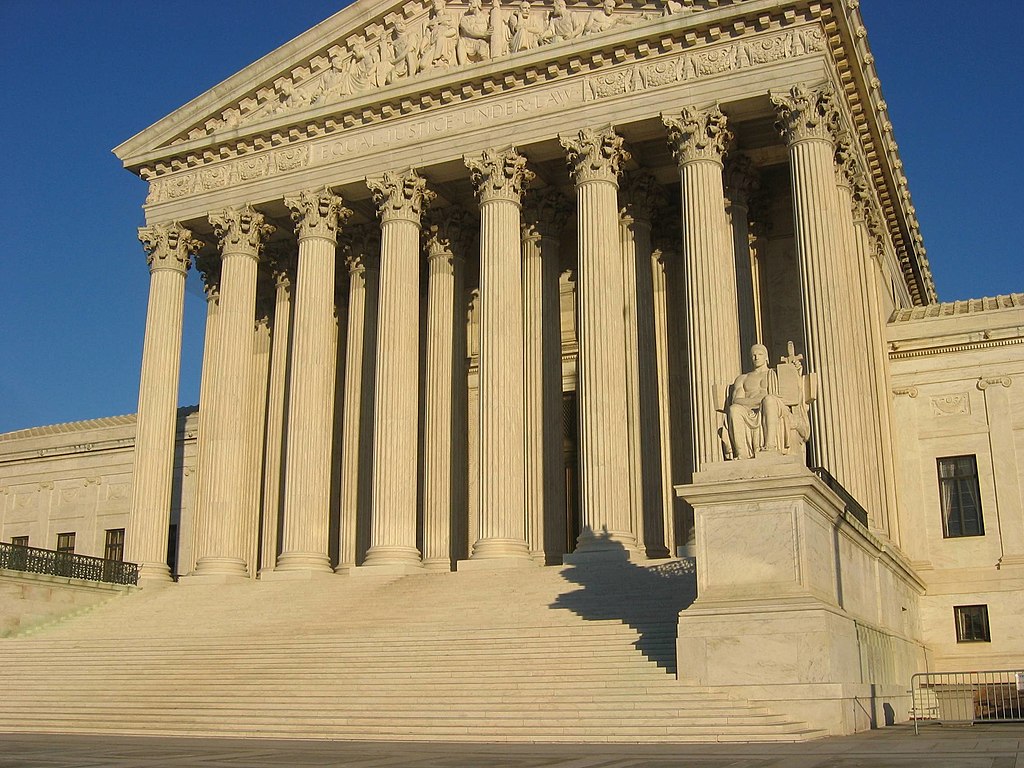
President Donald Trump is set to make an unprecedented appearance at the U.S. Supreme Court on Wednesday, attending oral arguments in a case that could redefine birthright citizenship in America.
The White House confirmed the visit as justices hear the administration’s appeal after lower courts blocked Trump’s executive order restricting automatic citizenship. A decision is expected by early summer.
If he follows through, Trump would become the first sitting president to attend Supreme Court arguments.
The order — signed on the first day of his second term — seeks to deny citizenship to children born in the U.S. to parents who are in the country illegally or on temporary visas, directly challenging long-standing interpretations of the 14th Amendment.
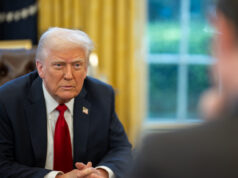
“I’m going,” Trump told reporters Tuesday in the Oval Office, adding: “I think so, I do believe.”
For the administration, the case is central to Trump’s hardline immigration agenda — a defining feature of his second term. Opponents call the effort unconstitutional and unprecedented, warning it could affect roughly 150,000 children born in the U.S. each year to non-citizens.
A ruling in Trump’s favor would mark a seismic shift in immigration policy, upending decades of legal precedent and forcing immediate action from Congress and federal agencies to determine the status of affected children.
The Constitutional Fight
At the center of the case is the 14th Amendment, which states: “All persons born or naturalized in the United States, and subject to the jurisdiction thereof, are citizens…”
Trump argues that the clause has been misinterpreted.
His Executive Order 14160, “Protecting the Meaning and Value of American Citizenship,” would deny citizenship to children born after Feb. 19, 2025, if their parents are undocumented or in the U.S. on temporary visas. It also bars federal agencies from recognizing those children as citizens.
“The privilege of United States citizenship is a priceless and profound gift,” the order states. “But the Fourteenth Amendment has never been interpreted to extend citizenship universally to everyone born within the United States.”
In its appeal, the Justice Department called lower court rulings against the order a “mistaken view” with “destructive consequences.”
“The lower courts’ decisions invalidated a policy of prime importance to the president and his administration in a manner that undermines our border security,” said Solicitor General John Sauer, who will argue the case. “Those decisions confer, without lawful justification, the privilege of American citizenship on hundreds of thousands of unqualified people.”
The Opposition
A coalition of states, immigrant rights groups, and private plaintiffs — including pregnant women — is challenging the order.
They argue it contradicts both the Constitution and longstanding Supreme Court precedent, including an 1898 ruling affirming citizenship for children born in the U.S. to non-citizen parents.
“The federal courts have unanimously held that President Trump’s executive order is contrary to the Constitution, a Supreme Court decision from 1898, and a law enacted by Congress,” said ACLU legal director Cecillia Wang. “We look forward to putting this issue to rest once and for all in the Supreme Court this term.”
Critics warn the policy could create chaos, forcing families to prove citizenship status at birth and potentially leaving some children stateless.
“Under the executive order, that child is born a noncitizen,” said UVA law professor Amanda Frost, “denied all the benefits and privileges of citizenship and theoretically deportable on day one of their life.”
What the Court Will Weigh
The legal battle hinges on the phrase “subject to the jurisdiction thereof.”
The administration argues it allows the government to exclude children of undocumented or temporary-status parents. Opponents say precedent limits that exception to narrow cases like children of foreign diplomats.
During earlier arguments, several justices appeared skeptical.
The government’s position “makes no sense whatsoever,” Justice Sonia Sotomayor said, warning it could leave some children “stateless.”
Justice Brett Kavanaugh raised practical concerns: “What do hospitals do with a newborn? What do states do with a newborn?”
“I don’t think they do anything different,” Sauer responded.
“How are they going to know that?” Kavanaugh pressed.
Why It Matters
The stakes are enormous.
A Pew survey found 94% of Americans support citizenship for children born in the U.S. to immigrants legally in the country. Meanwhile, critics of current policy point to abuses like “birth tourism,” where foreign nationals travel to the U.S. specifically to secure citizenship for their children.
“This is the exploitation of America’s birthright citizenship policy,” said Peter Schweizer. “Birth tourism is essentially an industry…”
Now, the Supreme Court will decide whether to uphold more than a century of precedent — or redefine what it means to be born an American.
And for the first time, the president himself may be in the room when that decision begins.