

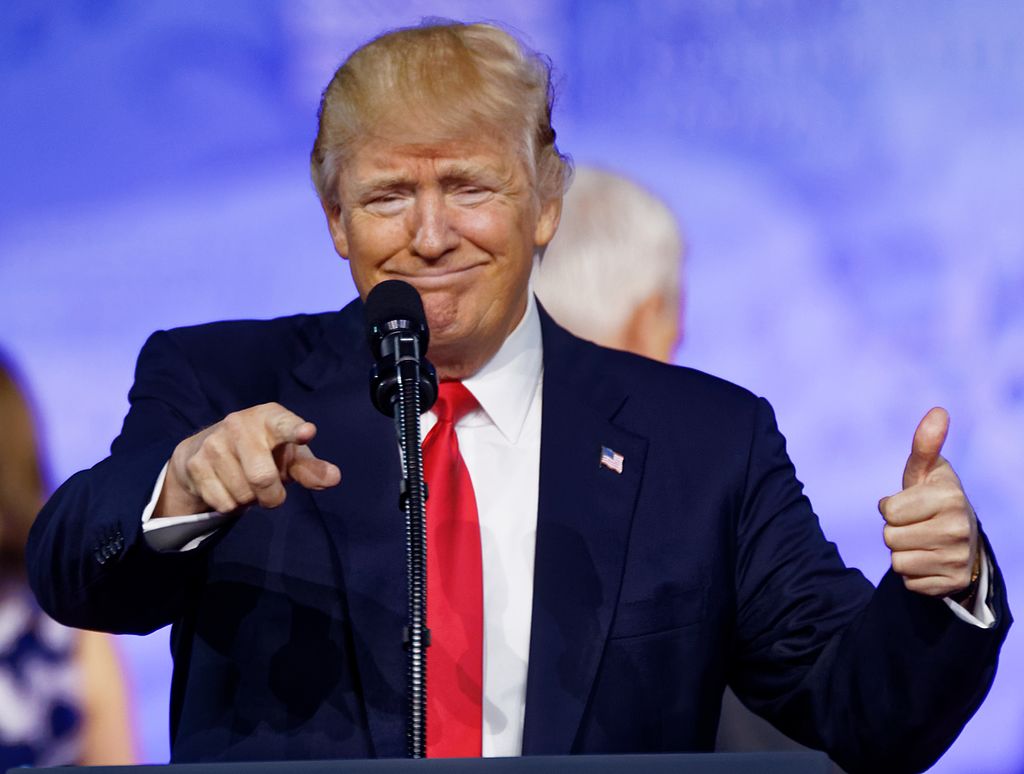
President Donald Trump on Tuesday floated the idea that Americans could see their federal income taxes drastically reduced—or potentially eliminated—if tariff revenue continues to rise, calling the amounts collected under his administration “so great… so enormous” that the government may be able to abandon the current system.
Speaking to reporters in a post–cabinet meeting press gaggle, Trump said, “at some point in the not too distant future you won’t even have income tax to pay,” arguing that tariff-driven revenue could eventually replace money now raised through taxes on wages and personal income.
“Whether you get rid of it or just keep it around for fun or have it really low, much lower than it is now, but you won’t be paying income tax,” Trump added.
If pursued, the proposal would amount to one of the biggest shifts in the U.S. tax structure in generations. The federal income tax is a central funding source for Washington, while tariffs—taxes on imported goods—have historically played a smaller role in modern federal budgeting. Trump, however, has repeatedly praised an older era of American finance, when the federal government relied more heavily on customs duties and other consumption-style taxes.
“It’s time for the United States to return to the system that made us richer and more powerful than ever before,” the president said in January. “Instead of taxing our citizens to enrich foreign nations, we should be tariffing and taxing foreign nations to enrich our citizens.”
Trump has previously previewed narrower versions of the same concept. Earlier in his second administration, he floated eliminating income tax for individuals earning under $150,000, again describing tariffs as the replacement revenue stream. That idea—like full repeal—would still require major legislative action and raise large questions about how the federal government would maintain funding levels for defense, Social Security and Medicare administration, interest payments on the national debt, and other functions now supported by income-tax receipts.
The president has also framed the idea as a common-sense bargain rather than a technical redesign of federal finance. Asked by podcaster Joe Rogan whether he was serious about eliminating personal income taxes, then-candidate Trump replied, “Yeah, sure, why not?” and suggested tariffs could fund government operations “instead of wage taxes.”
Even if the White House embraces the concept, the path to implementation is steep. Eliminating or dramatically shrinking the income tax would require rewriting large sections of the tax code—changes that must pass Congress and withstand scrutiny from budget scorekeepers and lawmakers concerned about deficits, household costs, and the economic consequences of sharply expanding tariffs. Those hurdles could be especially high amid tight margins in the House, where leadership often struggles to keep large coalitions together on complex fiscal votes.
Trump’s views on taxation have also shifted over time. During his brief exploration of a 1999 presidential run under the Reform Party banner, Trump considered a one-time “net worth” tax for people with wealth over $10 million—an approach that contrasts with his current push to shift more of the federal tax burden toward imports.
While outright abolition of the income tax has traditionally been a fringe policy idea, Trump’s increasingly explicit endorsement has pushed it closer to mainstream political debate—especially as tariffs become a larger and more central feature of his economic message.


How will they fund social security, healthcare and all the governments programs, let alone the wars.
MY, MY, HOW . EASY IT IS O CONDEMN THE PRESIDENT WHEN YOU SIT ON THE SIDE AND DO NOTHING. THE DEMOCRATS TAKE PRIDE IN MAKING THE MURDER OF INNOCENTS [THE UNBORN] WHOM THEY USE AS FODDER FOR MONEY LAUNDERING. THEY KILL GODS INNOCENT WHO BELONG TO GOD BUT ARE INCONVENIENT.