

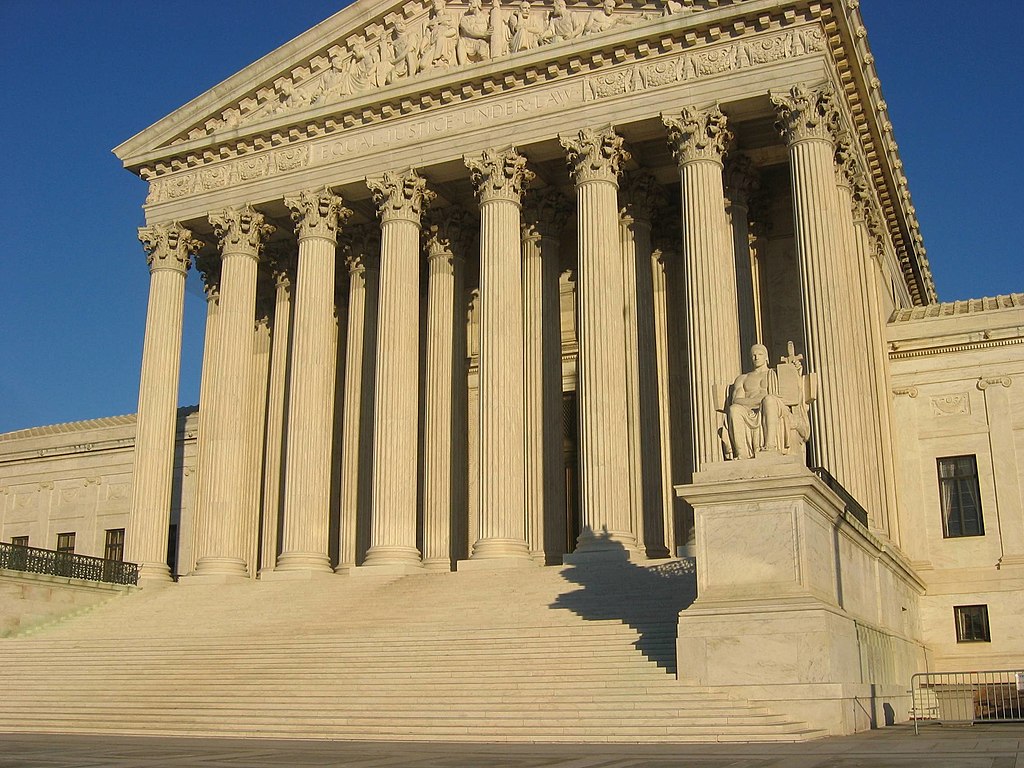
President Donald Trump tore into the Supreme Court on Tuesday after the justices rejected his administration’s emergency push to impose new mail-ballot rules before the Nov. 3 midterm elections — and he made clear that some of his sharpest anger was aimed at the three justices he put on the bench.
“These are not the people I interviewed to serve on the United States Supreme Court,” Trump wrote in a lengthy Truth Social post, referring to a Court that includes his nominees Neil Gorsuch, Brett Kavanaugh and Amy Coney Barrett. He called the justices “merely a shell of their original selves” and accused the Court of being pressured by the political left.
Trump singled out Justices Samuel Alito and Clarence Thomas — the only two justices who publicly dissented from Monday’s order — as “legends both,” according to the ABC News report provided as the basis for this article.
The outburst followed a major election-year setback, but the ruling was narrower than a final decision striking down the administration’s policy.
In an unsigned, one-paragraph order, the Supreme Court denied the administration’s request to pause a lower-court injunction. The majority said the government was “unlikely to succeed on the merits” of its challenge and had not shown that the balance of equities favored emergency relief.
The practical result is straightforward: states can continue using their existing mail-ballot procedures for this year’s midterms.
Kavanaugh Breaks With Trump — For Now
Kavanaugh, one of Trump’s three nominees, wrote separately to explain that timing was decisive.
He said there was “at least a fair prospect” that the Postal Service’s final rule fell within the agency’s legal authority. But imposing it during the 2026 elections, he concluded, would be “arbitrary and capricious” because state and local officials did not have enough time to implement it reasonably.
That distinction matters. The Court did not settle every legal question surrounding the rule or permanently bar a future version. It kept the injunction in place for an election already underway in parts of the country.
Alito, joined by Thomas, argued that the administration had made the showing required for a stay. His dissent said the Postal Service has broad power to regulate the mail and blamed the challengers and lower courts for much of the delay that pushed the dispute so close to Election Day.
The Rule Behind the Fight
Trump’s March 31 executive order directed the Postal Service to develop national standards for federal ballot mail. Those standards included official election-mail markings, automation-compatible envelopes, individualized barcodes and Postal Service design review. The plan also called for voters receiving mail ballots to be enrolled through state-specific lists submitted to a federal system.
The Postal Service’s final rule, issued in August, required election officials to submit voter information through a new Federal Ballot Mail Portal. Noncompliant mailings could be rejected and returned to the sending jurisdiction, according to the Supreme Court’s account of the rule.
The administration framed the changes as election-security safeguards. A White House spokesperson told Axios that officials had ample time to prepare and called the requirements “commonsense measures” intended to secure mail voting and prevent ineligible voting.
Opponents — including Democratic-led states, voting-rights groups and election administrators — argued that the president and Postal Service were reaching into powers reserved to Congress and the states while forcing a sweeping operational change only weeks before the election.
That argument has gained traction in more than one courtroom. U.S. District Judge Carl Nichols, a Trump appointee, separately found that Congress authorized the Postal Service to handle mail, not to make states enroll voters in a federal portal or refuse ballots that fail the new checks. His Sept. 13 opinion imposed another block on key parts of the rule.
A Familiar Collision With the Court
Trump’s response also reopened a long-running tension between the president and the conservative-majority Court he helped shape. In Tuesday’s post, he broadened his attack beyond mail voting, citing earlier defeats involving tariffs and birthright citizenship. Yet the Court has also delivered major victories for Trump, including its 2024 presidential-immunity ruling.
The mail-ballot fight carries immediate consequences because roughly one-third of voters cast ballots by mail, according to ABC News, and some states have already begun sending ballots.
Trump has long argued that mail voting invites fraud. A 2025 Brookings Institution analysis, drawing on documented cases from four general elections between 2016 and 2022, estimated about four mail-voting fraud cases for every 10 million mail ballots cast. Brookings noted that the underlying Heritage Foundation database was not comprehensive, while arguing that even assumptions designed to inflate the rate still produced a very low figure.
For now, the Court’s order freezes the administration’s overhaul for the 2026 midterms. The broader legal fight over how far the Postal Service may go in regulating ballot mail is not necessarily finished — but Trump’s fury with the justices is already out in the open.
MAIL-IN BALLOTS!?!
Never an issue under the Bible’s one-God, one-vote election system, per Deuteronomy 17:15.
Mail-in ballots are just one of the many compounded consequences of the constitutional framers spurning the Bible’s moral law (including its election system) as the law of the land.
The worst consequence being America’s guaranteed destruction!
One of the dumbest things the constitutional framers did was to usurp Yahweh’s exclusive election authority, thereby turning election “discretion” over to We the People whom, according to Christ in Matthew 7:13, are in the broad way leading to *destruction.*
If ever you wanted to know how America has ended up on the precipice of moral depravity and destruction, now you know. At least in part.
Add to that Article 6’s Christian test ban by which mandatory biblical qualifications (e.g., Exodus 18:21, Deuteronomy 17:15, etc.) were eliminated and you have the perfect recipe disaster.
For more, see blog article “Constitutional Elections: Dining at the ‘Devil’s Table,'” at bible versus constitution dot org. Search title on our Blog.
For how the Bible’s election system operates, see blog article “Salvation by Election.” Don’t be fooled by the title.
For more regarding Article 6’s Christian test ban, see Chapter 9 “Article 6: The Supreme Law of the Land” of free online book “Bible Law vs. the United States Constitution: The Christian Perspective.” Click on the top entry on our Online Book page and scroll down to Chapter 9.