
Home Blog Page 48

Trump Threatens Canada With 100% Tariffs

President Donald Trump on Saturday warned Canada that it could face steep consequences if it deepens trade ties with China, including a potential 100% tariff on Canadian imports entering the United States.

“If Canada makes a deal with China, it will immediately be hit with a 100% Tariff against all Canadian goods and products coming into the U.S.A. Thank you for your attention to this matter!,” Trump wrote in a post on his social media platform.

Trump did not specify which agreement he was referencing. However, Canada and China reached an agreement last Friday that would reportedly have Canada scale back its 100% tariffs on Chinese electric vehicles in exchange for lower Chinese tariffs on Canadian agricultural products.

Canadian officials quickly pushed back on the idea that the country is pursuing broader economic alignment with Beijing. Dominic LeBlanc, the Canadian minister responsible for Canada–U.S. trade, released a statement Saturday insisting that “there is no pursuit of a free trade agreement with China,” while emphasizing Canada’s relationship with Washington.

“Canada and the United States have built a remarkable partnership in the economy, in security, and in rich cultural exchange,” LeBlanc said, calling the U.S.-Canada relationship a “remarkable partnership.”

His statement added, “The new Government of Canada is strengthening the Canadian economy through a plan that consolidates our national strength and bolsters our trade partnerships around the world.”

Trump’s latest warning comes amid renewed scrutiny from Republicans and conservatives over Canada’s willingness to do business with the Chinese Communist Party while continuing to rely on U.S. markets and security guarantees. The post followed another social media message Trump shared the day before, in which he criticized Canada’s reported stance toward his proposed “Golden Dome” missile defense initiative and blasted Ottawa’s trade engagement with China.

Canadian Prime Minister Mark Carney addressed Trump’s criticism Thursday, arguing that Canada’s identity and strength are independent of the United States, even as the two countries remain close allies.

“Canada and the United States have built a remarkable partnership in the economy, in security, and in rich cultural exchange,” Carney said. “But Canada doesn’t live because of the United States. Canada thrives because we are Canadian.”

The clash also comes after Trump was asked last Friday whether he was concerned about Canada growing closer to China during Carney’s visit. At the time, Trump signaled he was not opposed to Canada pursuing trade deals—as long as U.S. interests are protected.

“That’s what he should be doing. It’s a good thing for him to sign a trade deal. If you can get a deal with China, you should do that,” Trump said.

In Saturday’s post, Trump referred to Carney as “governor” rather than prime minister—a term he previously used for former Prime Minister Justin Trudeau, tying it to his long-running suggestion that Canada should become the 51st U.S. state.

The warning also comes after Trump recently walked back tariffs he had threatened to impose on European allies who resisted his proposals involving Greenland. Trump said he and NATO Secretary-General Mark Rutte have “formed the framework of a future deal with respect to Greenland.”

Elizabeth Warren Reveals Why Trump Called After Her Speech

    3

    Liberal Sen. Elizabeth Warren of Massachusetts said President Donald Trump called after she delivered a speech accusing him of raising costs and abusing power.

    “This morning, I gave a speech noting how Donald Trump is driving up costs for families, sowing terror and chaos in our communities, and abusing his power to prosecute anyone who criticizes him. I also laid out an argument for how Democrats should fight back and win,” Warren said in her statement.

    Warren spoke at a National Press Club event and later expanded on her criticisms during a question-and-answer session.

    “In my remarks, I made it clear that despite promising to lower costs On Day One, Trump has done nothing but raise costs for families,” she said in the statement.

    According to Warren, Trump contacted her after the event.

    “I told him that Congress can pass legislation to cap credit card rates if he will actually fight for it. I also urged him to get House Republicans to pass the bipartisan ROAD to Housing Act,” that “would build more housing and lower costs,” she said in the statement.

    “President Trump and Sen. Warren had a productive call about credit card interest rates and housing affordability for the American people,” a White House official noted.

    The call comes after Trump posted on Truth Social last week proposing a temporary cap on credit card interest rates.

    “Effective January 20, 2026, I, as President of the United States, am calling for a one year cap on Credit Card Interest Rates of 10%. Coincidentally, the January 20th date will coincide with the one year anniversary of the historic and very successful Trump Administration,” he declared in the post.

    Trump Confirms The US Used New Sonic Weapon

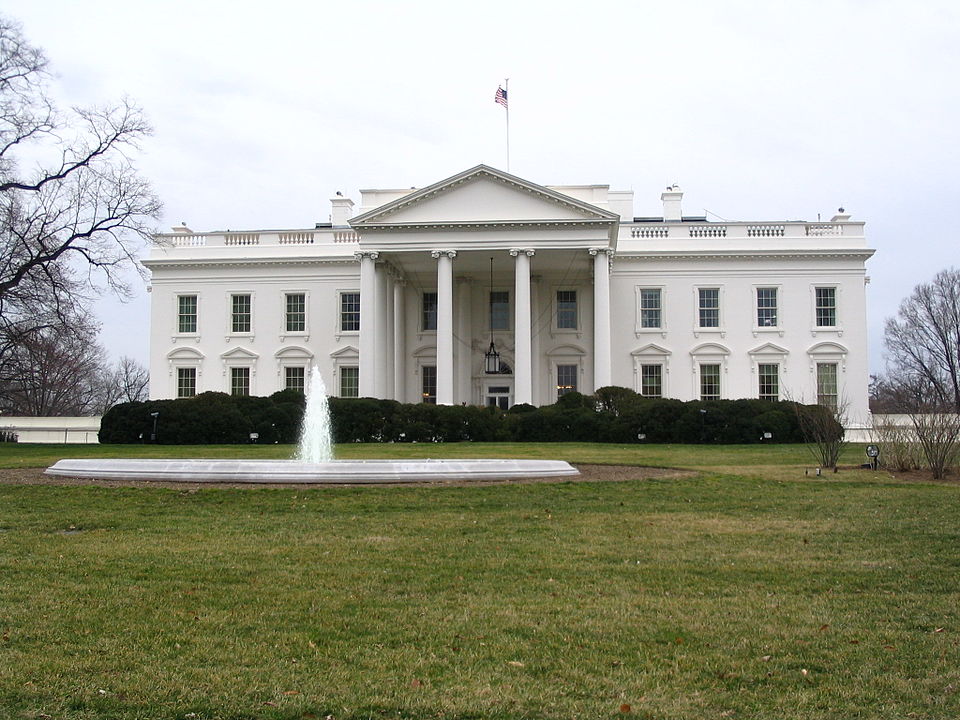
    The White House, Public domain, via Wikimedia Commons

    President Donald Trump confirmed in a NewsNation interview this week that the U.S. used a previously undisclosed weapon during the mission that captured Venezuelan strongman Nicolás Maduro earlier this month.

    During a conversation with NewsNation host Katie Pavlich, Trump was asked about reports claiming a “sonic weapon” was deployed in Venezuela—one that allegedly disabled Maduro’s Cuban bodyguards and left them unable to fight back.

    Trump didn’t offer technical details, but he strongly implied the reports were accurate.

    “Yeah, something I don’t wanna— Nobody else has it,” Trump said, suggesting the U.S. possesses capabilities that America’s enemies simply can’t match.

    Trump added that the U.S. military has “weapons that nobody knows about,” saying it’s better not to discuss them publicly—but praising the operation as a total success.

    “That was an amazing attack,” Trump said. “Don’t forget, that house was in the middle of a fort, an army base, a big one, a lot of soldiers, and they came in and they did their job. We lost nobody.”

    Leavitt amplified viral claims of a “sound wave” weapon

    The conversation follows a viral post shared on X by White House Press Secretary Karoline Leavitt on January 10. Leavitt reposted a dramatic account from influencer Mike Netter, writing, “Stop what you are doing and read this…”

    Netter’s post claimed to feature an exchange between a Venezuelan security guard loyal to Maduro and an interviewer. In the account, the guard described U.S. forces as overwhelmingly precise and unstoppable, even while badly outnumbered.

    The guard alleged the Americans used such advanced firepower that it seemed “each soldier was firing 300 rounds per minute,” and claimed the attack wasn’t just about guns.

    According to the account, the turning point came when U.S. troops launched something the guard described as “a very intense sound wave.” He claimed it caused instant physical effects—including nosebleeds, disorientation, and even vomiting blood—leaving Maduro’s men collapsed and defenseless.

    The guard also claimed the raid ended with roughly twenty U.S. soldiers defeating hundreds of defenders without a single American casualty.

    Legacy media largely ignores the story

    Despite Trump’s comments and the attention Leavitt’s post received online, the story has seen limited coverage from major U.S. outlets.

    However, several British tabloids—including The Independent and Daily Mail—reported on Trump’s remarks, with the Mail running the headline: “Trump reveals details of secret ‘sonic weapon’ used in Venezuela raid: ‘Nobody else has it.’”

    Trump Revokes Board Of Peace Invitation For Longtime Ally

    3

    This will have far-reaching implications…

    President Trump on Friday revoked Canadian Prime Minister Mark Carney’s invitation to join his new Board of Peace, following Carney’s public criticism of Trump’s tariff proposals and his broader push to secure U.S. influence in Greenland.

    In a post on Truth Social, Trump announced the decision directly.

    “Dear Prime Minister Carney,” Trump wrote on Truth Social. “Please let this Letter serve to represent that the Board of Peace is withdrawing its invitation to you regarding Canada’s joining, what will be, the most prestigious Board of Leaders ever assembled, at any time.”

    Carney had received the invitation last week. However, he raised concerns about the board’s reported $1 billion membership fee, telling reporters Sunday that Canada “wants money to have maximum impact.”

    “We still do not have unimpeded aid flows, humanitarian aid flows at scale to the people in Gaza,” he said. “That is a precondition for moving forward on this.”

    Trump’s Board of Peace, which he would chair, is intended to oversee Gaza and assist with rehabilitation efforts as part of his broader 20-point peace plan, developed amid the ceasefire between Israel and Hamas.

    The invitation list reportedly included multiple high-profile world leaders, such as Russian President Vladimir Putin, Israeli Prime Minister Benjamin Netanyahu, and Argentinian President Javier Milei.

    Carney’s comments came as tensions continued to build over Trump’s warnings of new trade penalties against Denmark and other European countries, tied to his administration’s position on Greenland. Carney criticized Trump’s tariff threats—including the proposed 10 percent tariffs—after Trump signaled the United States is pursuing control over the strategically important Arctic territory.

    Trump later lifted the proposed tariffs after discussions with NATO leaders and a “framework” agreement at the World Economic Forum in Davos, Switzerland, giving the U.S. access to the territory for military and mineral rights purposes.

    At Davos, Carney framed Canada’s position as firm support for Denmark and Greenland.

    “On Arctic sovereignty, we stand firmly with Greenland in Denmark and fully support their unique right to determine Greenland’s future,” Carney said in Davos on Tuesday. “Our commitment to NATO’s Article 5 is unwavering, so we’re working with our NATO allies, including the Nordic-Baltic Eight to further secure the alliance’s northern and western flanks, including through Canada’s unprecedented investments in over-the-horizon radar, in submarines and aircraft and boots on the ground — boots on the ice.”

    Trump addressed the issue the following day during a speech, criticizing Carney’s tone and arguing that Canada benefits heavily from U.S. defense and economic support.

    “We’re building a Golden Dome that’s going to, just by its very nature, going to be defending Canada,” Trump said. “Canada gets a lot of freebies from us, by the way. They should be grateful also, but they’re not. I watched your prime minister yesterday, he wasn’t so grateful.”

    “But they should be grateful to us, Canada,” the president added. “Canada lives because of the United States. Remember that, Mark, before you make your statements.”

    Trump Says GOP Has a ‘Good Bench’ for 2028—But Won’t Name a Successor Yet

    0

    President Trump says Republicans are well-positioned for the future—and that the party has a deep lineup of potential leaders ready to carry the America First agenda into 2028.

    In an interview airing Wednesday night on NewsNation’s “Katie Pavlich Tonight,” Trump was asked whether he sees a clear successor who could continue his legacy in the White House.

    “I hope so,” Trump said. “And we certainly have a good bench. We have some very talented people.”

    While the president acknowledged he has early favorites, he declined to name any one candidate this far out.

    “I do, but it’s so early,” Trump told Pavlich. “I don’t like to [say].”

    Trump Highlights Key Leaders Driving the Agenda

    When pressed for names, Trump pointed to the strength of his administration and the results his team is delivering—especially on issues central to Republican voters, including border security, economic recovery, and restoring America’s standing abroad.

    “Look, we have great people,” Trump said. “I’m not just talking about one or two—we have so many great people.”

    Asked again who specifically stood out, Trump singled out several of the most prominent figures in his circle:

    • Vice President JD Vance, whom Trump credited with strong leadership and loyalty to the MAGA coalition
    • Secretary of State Marco Rubio, a familiar and experienced voice on foreign policy
    • Treasury Secretary Scott Bessent, who has been a key figure in Trump’s economic team

    Trump also praised officials leading the administration’s crackdown on illegal immigration and security efforts:

    • Tom Homan, Trump’s border czar and a longtime advocate of tougher enforcement
    • Homeland Security Secretary Kristi Noem, who has taken a visible role in administration security priorities

    “I could name 20 people that are phenomenal,” Trump added.

    A Sign of Confidence—and a Message to Voters

    Trump’s remarks are being read by many Republicans as a clear message: the GOP is not just a one-man movement. While Trump remains the dominant figure in conservative politics, his comments suggest the broader America First bench is expanding—a sign of stability and staying power for the party beyond any single election cycle.

    In recent years, Republican voters have increasingly prioritized candidates who will:

    • fight the administrative state rather than manage it
    • take border enforcement seriously
    • resist “forever war” foreign policy
    • challenge corporate-media narratives instead of courting them

    Trump’s list reflects that shift and highlights Republicans who have gained credibility with the base through real governance and public-facing leadership.

    Midterms: Republicans Eye a Comeback in 2026

    The comments come as Republicans begin gearing up for the 2026 midterms following setbacks in last year’s elections. Democrats and their allied media have tried to portray those results as a long-term trend—yet history suggests otherwise.

    Trump himself addressed the challenge in an earlier Fox News interview, noting that the party in power “always loses” seats in midterm elections. That pattern has been true for decades and reflects voter turnout dynamics and backlash politics more than any permanent realignment.

    A new Emerson College poll shows Democrats leading a hypothetical generic ballot matchup at 48.1% to 41.7%, with 10.2% undecided. But Republicans caution that early polling—especially this far from Election Day—often fails to capture likely-voter turnout, local issues, and late-breaking shifts that typically determine midterms.

    Bottom Line

    Trump may not be naming a successor yet, but he’s signaling something important: the Republican Party has depth, talent, and rising leaders ready to keep building on the movement voters started in 2016.

    For Republicans focused on winning in 2026—and holding the line against Democrats’ spending agenda, cultural policies, and bureaucratic overreach—Trump’s message was simple: the team is strong, and the fight isn’t slowing down.


    Machado Defends Giving Trump Nobel Prize

    0
    By Kevin Payravi - Own work, CC BY-SA 4.0, https://commons.wikimedia.org/w/index.php?curid=179718533

    Venezuelan opposition leader María Corina Machado defended her decision to present President Trump with her Nobel Peace Prize medal during a recent visit to the White House, calling it a gesture of gratitude from the Venezuelan people for U.S. support in their fight for freedom.

    “I already said what I meant and what it means to the Venezuelan people to present President Trump with our gratitude for what he has done,” Machado told independent reporter Nicholas Ballasy on Capitol Hill.

    Machado urges anti-communist unity in the Americas

    Machado was in Washington this week meeting with lawmakers and rallying support for democratic movements across the region. Speaking to reporters, she called for the Western Hemisphere to be “free from communism,” arguing that once Venezuela is liberated, the broader effort will continue.

    After Venezuela is free, she said, “we will keep working and we will have a free Cuba and a free Nicaragua.”

    “This is a historic moment and we wouldn’t be here if it wasn’t for yes, the commitment, resilience, generosity and courage of the Venezuelan people, but also because we have counted with the support, vision and courage of incredible leaders such as the president of United States, Donald Trump, and members of this honorable Congress,” Machado told reporters.

    A symbolic handoff: “Bolívar” to the “heir of Washington”

    Machado presented the award roughly two weeks after U.S. military forces captured Venezuelan strongman Nicolás Maduro and transported him to New York to face criminal charges—an operation that stunned observers across the region and energized Venezuelans demanding democratic change.

    Machado later explained that she told President Trump about a historic symbol of shared liberation between the U.S. and Latin America: a medal featuring President George Washington that Revolutionary War Gen. Marquis de Lafayette gave to Venezuelan revolutionary hero Simón Bolívar.

    “Two hundred years in history, the people of Bolivar are giving back to the heir of Washington a medal, in this case the medal of the Nobel Peace Prize as a recognition for his unique commitment with our freedom,” Machado said.

    President Trump later shared photos from the Oval Office showing him holding the framed prize, with Machado standing beside him.

    Nobel Committee pushes back, critics pile on

    Not everyone praised the moment. The Norwegian Nobel Committee emphasized that while a physical medal can change hands, the Nobel honor itself does not.

    “Regardless of what may happen to the medal, the diploma, or the prize money, it is and remains the original laureate who is recorded in history as the recipient of the prize,” the committee stated. “Even if the medal or diploma later comes into someone else’s possession, this does not alter who was awarded the Nobel Peace Prize.”

    Norwegian Labour Party politician Raymond Johansen criticized Trump for accepting the medal, calling it “incredibly embarrassing and damaging.” And Sen. Mark Warner (D-Va.) also took a shot at the president, saying Trump looked “kind of silly.”

    Trump and the Nobel: longstanding controversy

    Trump has been openly vocal in the past about being passed over for the Nobel Peace Prize, especially after major foreign-policy efforts. He campaigned for it last October, before Machado ultimately won.

    The president also linked the Nobel snub to his thinking about Greenland, according to a text exchange with Norwegian Prime Minister Jonas Gahr Støre.

    “Dear Jonas: Considering your Country decided not to give me the Nobel Peace Prize for having stopped 8 Wars PLUS, I no longer feel an obligation to think purely of Peace, although it will always be predominant, but can now think about what is good and proper for the United States of America,” Trump wrote Støre.

    Trump later softened his remarks while speaking Wednesday at the World Economic Forum in Davos, Switzerland, and subsequently announced a “framework” for a deal involving the Danish territory.

    Barron Trump ‘Saved’ Woman’s Life With Heroic Call To Police

    0

    A woman testified in an English court on Wednesday that Barron Trump “saved” her life after he realized she was being violently attacked and immediately called police, according to multiple reports.

    Metro UK reported jurors at Snaresbrook Crown Court in London heard a dramatic emergency call in which President Donald Trump’s son told operators, “I just got a call from a girl I know. She’s getting beaten up.”

    According to testimony, Barron Trump contacted authorities after FaceTiming the young woman, a friend of his, expecting a normal call but quickly realizing she was witnessing an assault in real time.

    “I just saw a ceiling and could hear screaming. I could see a guy’s head on the phone, and then the camera turns to her crying and getting hit,” Trump told operators. The call was placed from the United States.

    The Daily Mail identified the accused as 22-year-old Russian national Matvei Rumiantsev, who allegedly “was jealous of the American’s relationship with the woman and flew into a rage when he tried to phone her earlier that evening.”

    Jurors were told Rumiantsev later went to the woman’s home and repeatedly punched her. Prosecutors also allege he kicked the woman in the stomach and used degrading language during the video call with Barron Trump, calling her a “whore” and a “slut.”

    During her testimony Wednesday, the woman praised Trump for acting quickly.

    “He helped save my life,” she said. “That call was like a sign from God at that moment.”

    Jurors also heard an exchange between Trump — who was reportedly 18 years old at the time — and the police operator, who pressed him for details about his connection to the victim as officers were dispatched.

    Here is that back-and-forth:

    Operator: “Can you stop being rude and actually answer my questions. If you want to help the person, you’ll answer my questions clearly and precisely, thank you.”

    Barron Trump: “I met her on social media. She’s getting really badly beat up and the call was about eight minutes ago, I don’t know what could have happened by now.”

    He added a moment later, “So sorry for being rude.”

    Trump reportedly told authorities it took him a few minutes to locate the correct phone number for British police. He placed the call at 2:23 a.m. London time, or 9:23 p.m. ET.

    Rumiantsev is facing serious charges, including assault, two counts of rape, intentional strangulation, and perverting a court of justice, according to The Daily Mail.

    Trump Sues JPMorgan Chase and CEO Jamie Dimon For $5B

    2

    On Thursday, President Donald Trump sued JPMorgan Chase and its CEO Jamie Dimon to the tune of $5 billion for allegedly debanking him over political reasons.

    The president’s attorney, Alejandro Brito, filed the lawsuit Thursday morning in Florida on behalf of the president and several of his hospitality companies.

    Brito quotes JPMorgan’s code of conduct, which states that the bank operates “with the highest level of integrity and ethical conduct.” 

    “We set high expectations and hold ourselves accountable. We do the right thing—not necessarily the easy or expedient thing. We abide by the letter and spirit of the laws and regulations everywhere we do business and have zero tolerance for unethical behavior,” the lawsuit states, citing the bank’s code of conduct.

    “Despite claiming to hold these principles dear, JPMC violated them by unilaterally—and without warning or remedy—terminating several of Plaintiff’s bank accounts,” the lawsuit claims. 

    A JPMorgan Chase spokesperson told Fox Business, “While we regret President Trump has sued us, we believe the suit has no merit. We respect the President’s right to sue us and our right to defend ourselves – that’s what courts are for. 

    “JPMC does not close accounts for political or religious reasons,” she continued, “We do close accounts because they create legal or regulatory risk for the company. We regret having to do so but often rules and regulatory expectations lead us to do so.  We have been asking both this administration and prior administrations to change the rules and regulations that put us in this position, and we support the Administration’s efforts to prevent the weaponization of the banking sector.” 

    Trump had been a customer of JPMorgan for decades, and he and his affiliated entities “have transacted hundreds of millions of dollars” through JPMorgan Chase, according to the lawsuit. 

    Trump’s lawyer said Feb. 19, 2021, was the day that “forever altered the dynamic of the parties’ relationship,” when the bank, allegedly “without warning or provocation,” notified Trump and his entities that several bank accounts they controlled, were beneficiaries of, and actively used to transact “would be closed just two months later, on April 19, 2021.”

    This is a breaking news story. Please check back for updates.

    Trump Launches Board Of Peace

    2
    President Donald Trump gestures to the crowd after delivering remarks at the House GOP Member Retreat, Tuesday, January 6, 2026, at the Donald J. Trump- John F. Kennedy Center for the Performing Arts in Washington, D.C. (Official White House Photo by Daniel Torok)

    President Trump and his administration on Thursday unveiled a new “Board of Peace” initiative aimed at rebuilding and stabilizing Gaza, rolling out the framework during the World Economic Forum in Davos with leaders from more than 20 countries — a list that notably did not include many major European Union allies.

    The White House said countries agreeing to join the board include Argentina, Belarus, Morocco, Vietnam, Pakistan, Kazakhstan, Uzbekistan, Kosovo, Hungary, Egypt, Turkey, Qatar, Jordan, Indonesia and Saudi Arabia, among others.

    Still, the administration’s initial member list immediately drew pushback from at least one European country after Belgium was mistakenly included.

    “Belgium has NOT signed the Charter of the Board of Peace. This announcement is incorrect,” Belgian Deputy Prime Minister Maxime Prevot wrote in a post on X. “We wish for a common and coordinated European response. As many European countries, we have reservations to the proposal.”

    The confusion highlighted a broader challenge for the new initiative: while Trump’s team appears to be moving quickly to secure international backing, many European governments face legal or political hurdles that prevent them from signing on immediately — even if they see value in the proposal.

    Finnish President Alexander Stubb said in an interview with CBS News that Finland and other European nations may be unable to join at first because they need parliamentary approval.

    “One is that this is an international organization which, basically, then needs parliamentary approval. So, you know, we are liberal democracies. We can’t come here and say, ‘okay, here’s the statute,’” Stubb said.

    Stubb also said European leaders want the effort more closely tied to the United Nations, reflecting a common preference among Western governments for U.N.-anchored peace and reconstruction missions.

    “The other one is that we want to link it even more closer to the U.N. So I think, for instance, that the Gaza peace board is based on a U.N. mandate, which is really good. So now we just need to make sure that some of the other mandates can be put into the U.N. as well. But we’ll see what the other Europeans do and what we do together. I think it’s a good initiative,” he said.

    Trump, along with senior officials in his administration, presented the Board of Peace as a concrete attempt to move beyond endless diplomatic statements and toward a rebuilding plan for Gaza — a territory devastated by war, with large-scale destruction to housing, utilities, and basic infrastructure.

    In remarks and presentations shared during the ceremony, the administration laid out a vision that included major construction and investment proposals, including an airport, data centers, workforce housing and new tourist attractions along Gaza’s coastline.

    Jared Kushner, Trump’s son-in-law and a key figure in past Middle East diplomacy, spoke during the Board of Peace ceremony and showed slides illustrating phased redevelopment concepts and what the administration described as a “master plan” approach.

    Kushner argued that a long-term economic transformation is essential if Gaza is ever to have lasting stability, framing the plan as a way to create jobs, attract investment and give residents a real chance to build prosperous lives.

    “We do not have a plan B,” Kushner said. “We have a plan. We signed an agreement. We are all committed to making that agreement work. There’s a master plan.”

    Kushner added that he hopes Gaza can ultimately become a “destination” with strong industry and opportunity “where people can thrive,” echoing Trump’s longstanding push for economic development as a lever for peace.

    The initiative comes at a moment when the Middle East remains under intense pressure from continuing conflict, rising humanitarian needs, and deep questions over Gaza’s governance after the war. One of the central issues facing any reconstruction effort is who will administer Gaza’s border crossings, security, public services, and economic recovery while preventing the territory from returning to instability or serving as a launchpad for future violence.

    A Palestinian official named to the newly formed National Committee for the Administration of Gaza, Dr. Ali Sha’ath, announced the reopening of the Rafah Crossing — Gaza’s main entry and exit point to and from Egypt. The Rafah Crossing has served as a critical route for aid delivery, medical evacuations, and civilian travel, and its reopening would mark a significant development for the enclave’s immediate humanitarian situation.

    The Trump administration also signaled it expects the Board of Peace to expand beyond its initial signatories, pointing to internal legal procedures in other countries as one reason more allies were not yet included.

    During the signing ceremony, Secretary of State Marco Rubio said the administration anticipates additional nations will join as their governments complete domestic approval processes.

    “Many others who are going to join, you know, others either are not in town today or they have to go through some procedure internally in their own countries, in their own country, because of constitutional limitations, but others will join,” Rubio said.

    For now, the Board of Peace initiative is being positioned by the White House as a step toward a post-war pathway for Gaza, with Trump’s team betting that a mix of security guarantees, regional buy-in, and economic rebuilding can eventually change the trajectory of one of the world’s most volatile flashpoints.

    Trump Gives Blunt Answer What Happens To Iran If He’s Assassinated

    4
    President Donald Trump gestures to the crowd after delivering remarks at the House GOP Member Retreat, Tuesday, January 6, 2026, at the Donald J. Trump- John F. Kennedy Center for the Performing Arts in Washington, D.C. (Official White House Photo by Daniel Torok)

    In an interview broadcast Tuesday night, President Donald Trump delivered a blunt warning to Iran’s ruling regime: any attempt on his life would be met with overwhelming retaliation.

    Speaking with NewsNation host Katie Pavlich on “Katie Pavlich Tonight,” Trump said he has already ordered a devastating response if Iran follows through on threats made against him.

    “They shouldn’t be doing it, but I’ve left notification. Anything ever happens, the whole country is going to get blown up,” Trump told Pavlich. “Originally, Biden should have said something, when they made a statement. We always said, ‘Why isn’t Biden saying anything?’ Because he didn’t.”

    Trump also criticized what he described as weakness from the Biden administration, arguing that failing to respond forcefully to foreign threats only emboldens America’s enemies.

    “But a president has to defend a president. If I were here, and they were making that threat to somebody, even, not even a president, but somebody, like they did with me, I would absolutely hit them so hard,” Trump said. “But I have very firm instructions — anything happens, they’re going to wipe them off the face of this earth.”

    Iranian threats escalate against Trump

    Trump’s comments came as Iran’s Supreme Leader Ayatollah Ali Khamenei has posted multiple threatening messages about Trump on social media—including imagery depicting the president in a coffin. Trump said those threats cannot be ignored, especially given Iran’s long history of supporting terrorism and political violence across the Middle East.

    To many conservatives, the threats underscore a larger pattern: Iran’s theocratic leaders grow more aggressive when the United States appears unwilling to enforce red lines. Republicans have repeatedly argued that deterrence only works when America backs it with strength, resolve, and consequences.

    Biden administration acknowledged IRGC assassination plot

    Even under the Biden administration, the threat from Iran has been formally documented.

    Biden’s Justice Department announced the indictment of a senior member of the Iranian Revolutionary Guard Corps (IRGC) on charges of conspiring to kill former National Security Advisor John Bolton in 2022. Prosecutors alleged that a confidential source was offered $300,000 to carry out the assassination.

    For Republicans, the plot was more proof that Iran is not simply a hostile state—but a regime willing to target Americans directly, including former senior officials.

    Trump’s stance: defend dissidents, punish brutality

    Trump has previously warned Iran not to harm protesters who oppose the regime, threatening consequences if demonstrators were executed. While Iran did not hang those specific protesters, the regime’s security forces killed hundreds during the crackdown.

    Conservatives have long viewed Iran’s government as an oppressive theocracy that violently suppresses its own people while funding terrorist proxies abroad. Many Republicans argue the U.S. should side firmly with dissidents and freedom-minded citizens, not appease the clerics in Tehran.

    Soleimani strike remains a defining moment

    One of the most significant actions of Trump’s first term against Iran was the January 2020 strike that killed Qasem Soleimani, an IRGC commander widely viewed by U.S. officials as responsible for planning attacks on Americans and allied forces.

    The strike was praised by many Republicans as a clear demonstration of deterrence: when Iran targets Americans, the United States responds decisively.

    A major 2025 strike on Iran’s nuclear infrastructure

    The article also notes that in June 2025, the United States Air Force bombed multiple facilities in Fordow, Natanz, and Isfahan connected to Iran’s nuclear program, reportedly dropping as many as 14 GBU-57 Massive Ordnance Penetrators.

    The operation involved a 37-hour flight by seven B-2A Spirit bombers and inflicted significant damage to Iran’s nuclear capabilities with no American losses.