
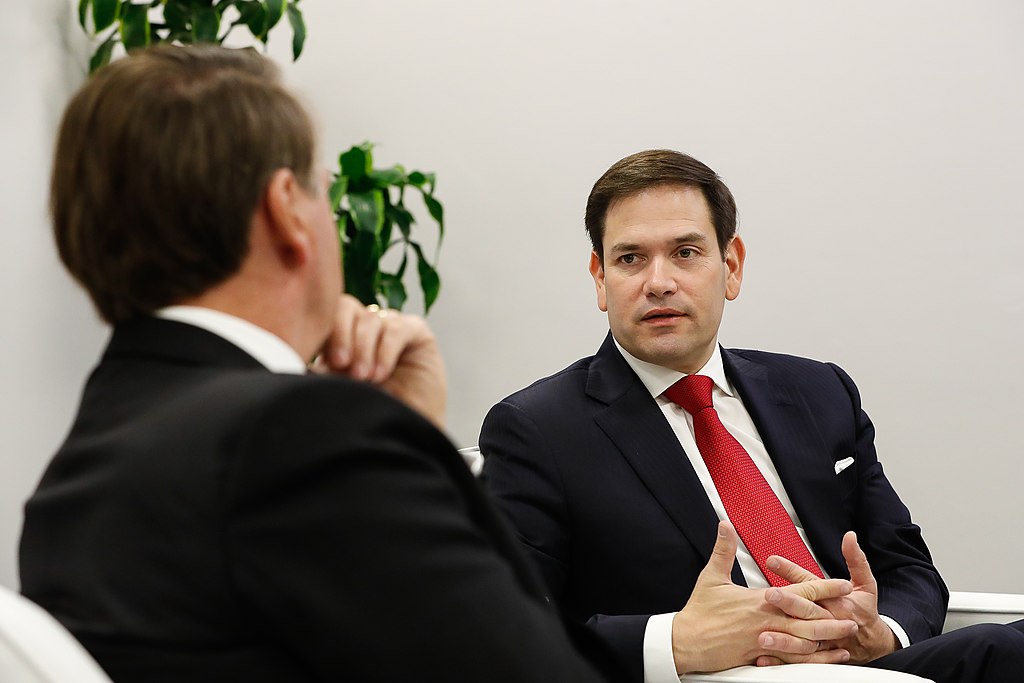
Secretary of State Marco Rubio imposed sanctions Tuesday on the president of the International Criminal Court and one of its senior trial lawyers, escalating the Trump administration’s campaign against the Hague-based tribunal.
The new designations target ICC President Tomoko Akane, a Japanese judge, and Abdoulaye Seye, a Senegalese senior trial lawyer.
“These individuals have directly engaged in efforts by the ICC to investigate, arrest, detain, or prosecute officials whose government has not consented to ICC jurisdiction,” Rubio said, according to CNN.
The sanctions generally block any property or financial interests the two officials have within the United States or under the control of U.S. citizens. Americans are also prohibited from conducting most transactions with them, effectively cutting Akane and Seye off from the U.S. financial system.
Rubio described the ICC as a corrupt, politically driven institution that has exceeded its authority. He said the sanctions were part of the administration’s “unwavering mission to protect Americans from this sham of a court.”
The United States is not a party to the Rome Statute, the treaty that established the ICC. Israel is also not a member and does not recognize the court’s jurisdiction.
The ICC nevertheless maintains that it can prosecute alleged crimes committed on the territory of member states, even when the accused comes from a country that has not joined the court. That jurisdictional dispute lies at the heart of Washington’s confrontation with the tribunal.
Trump Laid the Groundwork
President Donald Trump did not immediately issue a separate public statement on Tuesday’s sanctions. However, the White House established the administration’s position in a February 2025 executive order authorizing penalties against ICC personnel.
In that order, Trump accused the court of taking “illegitimate and baseless actions targeting America and our close ally Israel.”
Trump said the ICC had endangered American service members and officials while abusing its authority against Israeli Prime Minister Benjamin Netanyahu and former Israeli Defense Minister Yoav Gallant. The court issued arrest warrants for Netanyahu and Gallant in November 2024 over alleged war crimes and crimes against humanity connected to the war in Gaza. Both Israel and the United States have rejected the accusations and the court’s authority.
Trump’s executive order declared the ICC’s efforts against protected American and allied officials an extraordinary threat to U.S. national security and foreign policy.
Washington has also fought the court over its past investigation into the conduct of U.S. troops in Afghanistan.
A Campaign to Dismantle the Court
The latest sanctions are part of a broader State Department-led campaign to weaken the ICC’s ability to operate.
Rubio announced that effort in July, promising to use sanctions, visa restrictions, diplomatic pressure and other government powers to dismantle the court “brick by brick” if necessary.
The administration is also pressuring other countries to withdraw their funding and participation. Nations that cooperate with American law enforcement, host U.S. forces or rely on Washington’s security support have been urged to reject the ICC’s authority over American personnel.
Rubio said Tuesday that the administration is prepared to take additional action until the court is no longer capable of threatening American sovereignty. The State Department has described the effort as a whole-of-government response.
The administration has already sanctioned multiple ICC prosecutors and judges. Prosecutor Karim Khan was among the first officials targeted after pursuing the warrants against Netanyahu and Gallant.
According to The Guardian, Seye has also been linked to investigations involving Israeli settlement funding and the distribution of weapons to settlers in the West Bank, although Rubio’s announcement did not identify the specific actions that led to Tuesday’s designation.
Court Fight Moves to U.S. Soil
The sanctions campaign is now facing several legal challenges inside the United States.
Three ICC judges sued the Trump administration in New York in June, arguing that the penalties imposed against them were unlawful. Human rights organizations have filed separate lawsuits claiming the sanctions interfere with their ability to document alleged crimes and assist international investigations.
Two advocacy groups said the restrictions had produced a “chilling effect” on their work. Four additional organizations filed another lawsuit last week, arguing that the administration was unlawfully obstructing their international justice work.
The ICC had not issued a public response to the new designations as of Tuesday afternoon.