

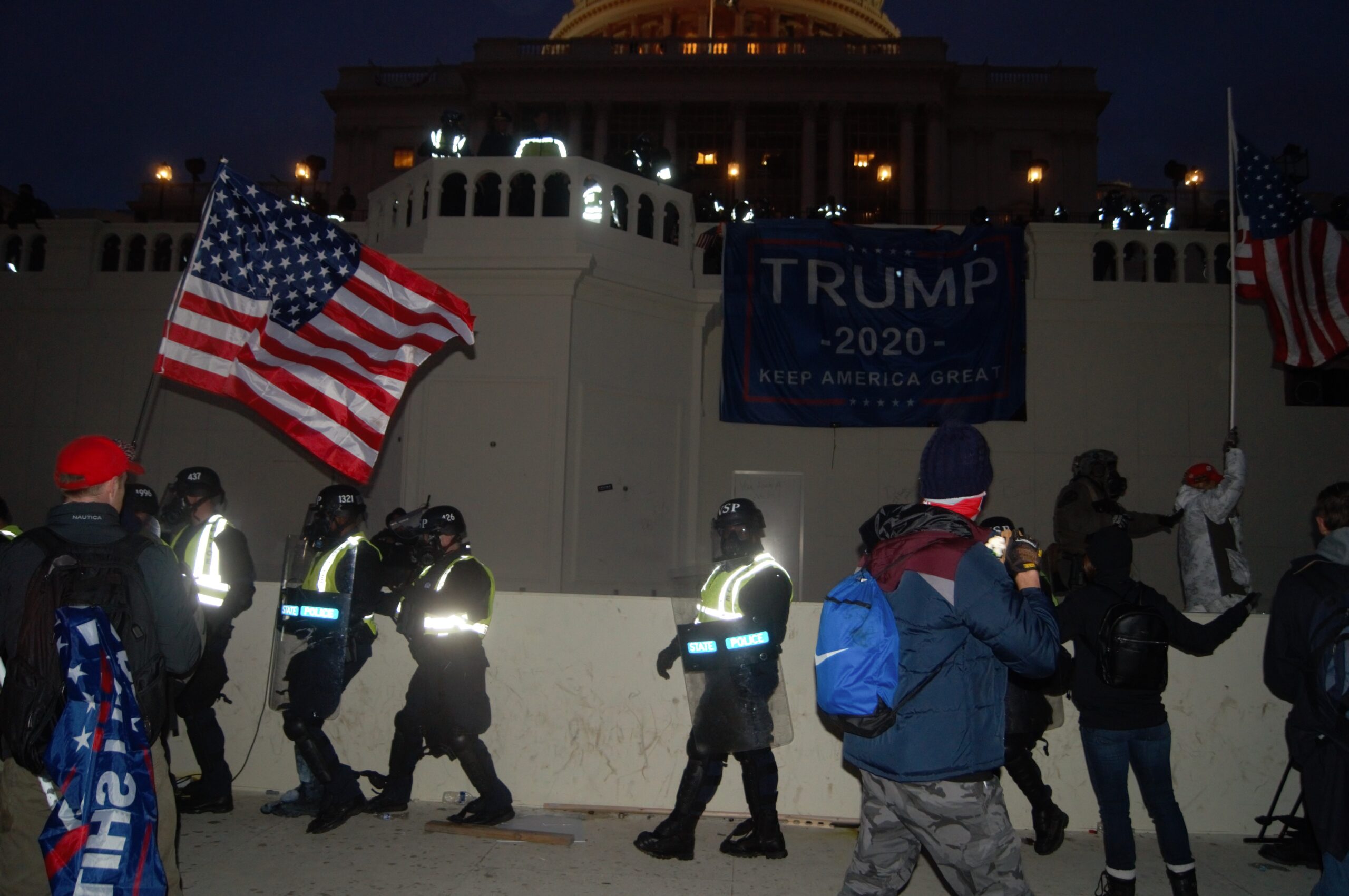
The Justice Department is forcefully pushing back against a striking legal claim from the man accused of planting pipe bombs in Washington, D.C., on the eve of Jan. 6 — that he was effectively pardoned by President Trump.
In a court filing Friday, prosecutors urged a federal judge to reject Brian Cole Jr.’s attempt to have his charges thrown out, calling his argument flatly incompatible with the “clear and unambiguous terms” of Trump’s sweeping Jan. 6 clemency order.
Cole, who was arrested in December 2025 after years of investigation, is accused of placing two pipe bombs outside the Republican and Democratic National Committee headquarters on Jan. 5, 2021 — just hours before rioters stormed the U.S. Capitol.
The devices never detonated, but the FBI has said they were functional and viable, raising the stakes of a case that remained unsolved for nearly five years.
Earlier this year, Cole’s lawyers made a bold move: They argued that his actions were “inextricably and demonstrably tethered” to the events of Jan. 6 — and therefore covered by Trump’s mass pardon of people tied to the attack.
They pointed to the broad language in Trump’s order, which applies to offenses “related to” events at or near the Capitol, and noted that Cole allegedly traveled to Washington for an election protest tied to the same political moment that fueled the riot.
But the Justice Department isn’t buying it.
“The defendant ignores that the proclamation expressly limited relief to individuals who had been ‘convicted of,’ or had a ‘pending indictment’ for, offenses related to the events at or near the United States Capitol on January 6,” U.S. Attorney for the District of Columbia Jeanine Pirro wrote.
That distinction, prosecutors argue, is decisive.
When Trump’s pardon took effect on Jan. 20, 2025, Cole had not yet been charged — putting him outside the scope of the order entirely.
“The defendant belonged to neither category, and so the proclamation has no bearing on this case,” Pirro wrote.
Cole was indicted weeks later, in January 2026, on charges including interstate transportation of explosives and malicious attempt to use them.
Prosecutors also made clear that even a broader reading of the pardon wouldn’t help him.
“Even if the Court somehow found, notwithstanding its text, that the proclamation could apply to this case,” Pirro wrote, the Justice Department’s interpretation should still prevail as a “consistent, reasonable” reading by the agency tasked with enforcing it.
The clash sets up a high-stakes test of how far Trump’s Jan. 6 pardons can stretch — and whether conduct that happened before the riot, but is arguably connected to it, can fall under their umbrella.
For now, the Justice Department’s position is blunt: Not this case. Not this defendant.
READ NEXT: Congressman’s Sudden Death Upends Key Race


NO