

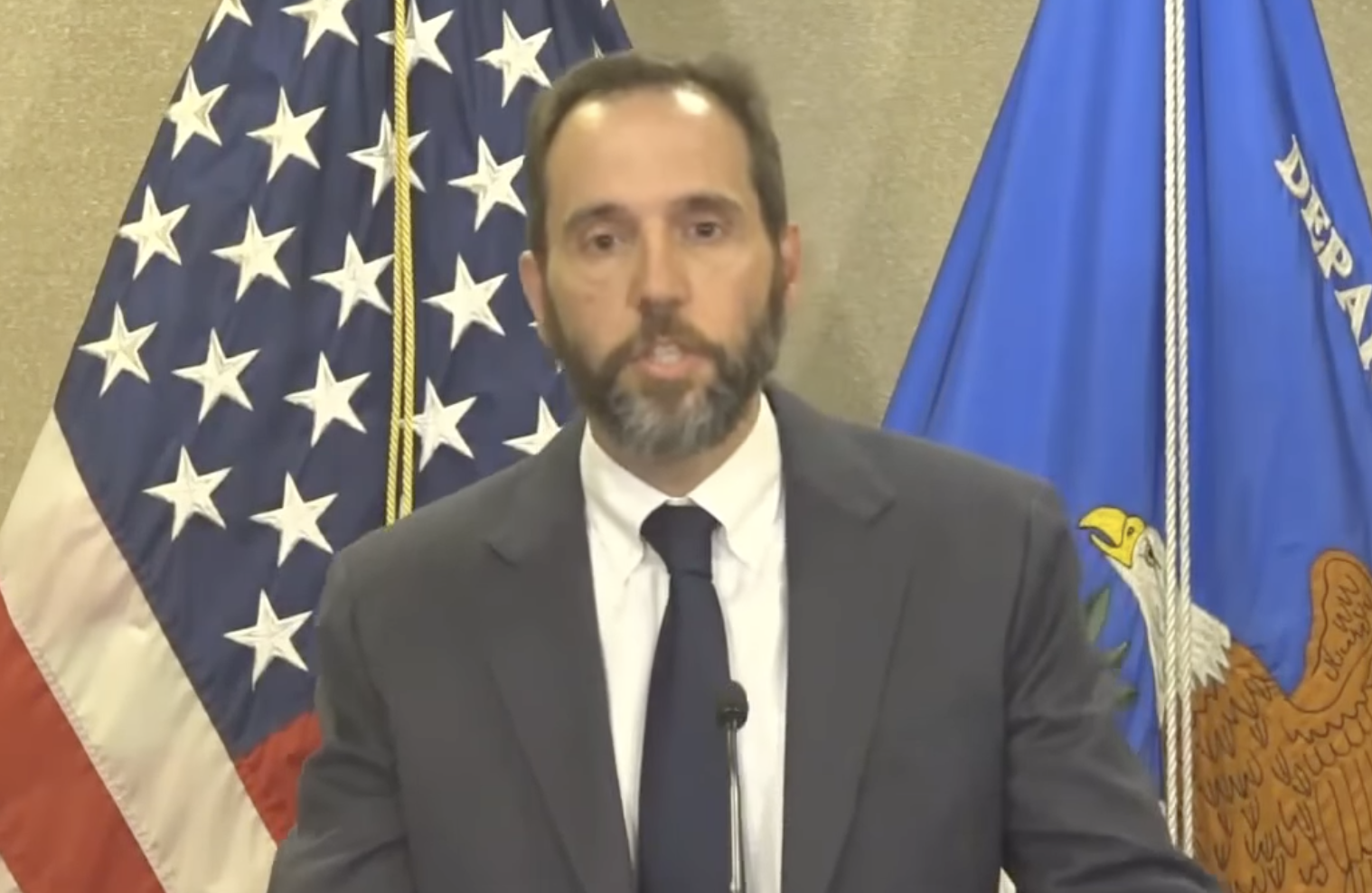
House Judiciary Committee Chairman Jim Jordan is calling on the Justice Department to investigate former Special Counsel Jack Smith, accusing the longtime prosecutor of misleading Congress about his pursuit of lawmakers’ private communications during the Trump election case.
Jordan sent a criminal referral Wednesday to Acting Attorney General Todd Blanche after newly released Justice Department records appeared to conflict with testimony Smith gave under oath in December 2025.
The referral does not compel the DOJ to open an investigation or bring charges, but it formally places Smith’s testimony before federal prosecutors for review.
At the center of the explosive dispute are text messages involving members of Congress.
During a closed-door deposition, Smith was asked whether telephone records subpoenaed by his office included the contents of lawmakers’ calls or text messages. Smith answered “no” to both questions.
Those answers were technically accurate when applied specifically to toll records, which generally contain information such as telephone numbers, dates and call durations—not the substance of communications.
But Jordan argues Smith left lawmakers with a deeply misleading impression.
Records recently released by Senate Judiciary Committee Chairman Chuck Grassley indicate Smith’s team separately obtained the contents of text messages through a subpoena issued to the National Archives and Records Administration. According to Jordan, the material included communications involving dozens of lawmakers.
“The responses provided by Mr. Smith gave the impression that neither Mr. Smith nor his team had access to the content of Members’ privileged text messages. We now know this to be false,” Jordan wrote.
Smith’s attorneys fired back, accusing the Republican chairman of twisting their client’s words to manufacture a criminal allegation.
Peter Koski and Lanny Breuer argued that Smith answered the precise questions he was asked about toll records, which did not contain message content. They said Jordan was improperly conflating those subpoenas with a separate legal process used to obtain communications from another source.
“During his testimony, Mr. Smith provided truthful, responsive answers, and candidly discussed his work as Special Counsel,” the attorneys wrote in a letter to Jordan and Judiciary Committee Ranking Member Jamie Raskin.
They characterized the referral as an effort to “weaponize the justice system” against a career prosecutor.
The Justice Department confirmed that it received Jordan’s referral and said it “will investigate all evidence of criminal conduct.” The department did not say whether it has formally opened an investigation into Smith.
Jordan alleges the former special counsel may have violated federal law by knowingly making materially false statements to Congress. Prosecutors must now determine whether Smith merely answered a narrowly worded question—or deliberately concealed the full reach of his investigation.
The referral opens another front in the long-running battle over Smith’s prosecutions of President Donald Trump involving classified documents and challenges to the 2020 election results.
Smith abandoned both cases following Trump’s 2024 election victory, citing Justice Department policy against prosecuting a sitting president. He resigned shortly before Trump returned to the White House.

Prosecute him all the way