

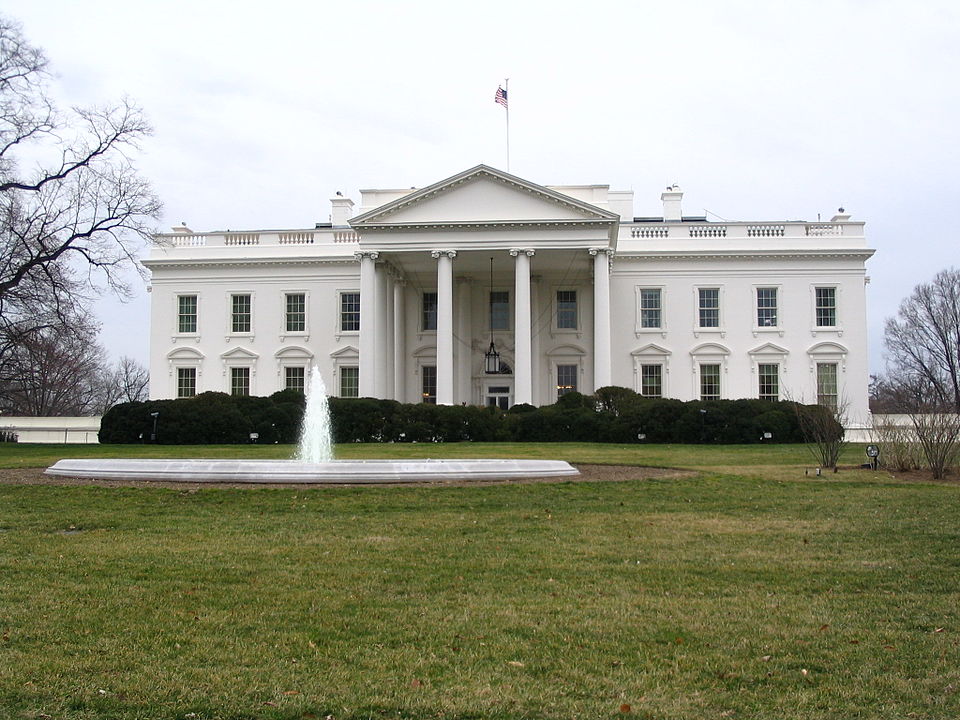
A federal appeals court panel appeared inclined Friday to side with opponents of President Donald Trump’s proposed White House ballroom, raising new questions about whether the administration can move forward with the long-planned project without explicit authorization from Congress.
During oral arguments before the U.S. Court of Appeals for the D.C. Circuit, two judges repeatedly pressed administration attorney Michael Roth on whether existing federal law gives Trump the authority to construct a new ballroom on White House grounds.
The case stems from a lawsuit brought by the National Trust for Historic Preservation, which argues that a federal statute prohibits new buildings on federal land in Washington, D.C., unless Congress specifically approves them.
A lower court judge previously halted above-ground construction, agreeing that Congress had not clearly authorized the project. The appeals court temporarily allowed work to continue while it considers the case.
The administration argues that Congress has already provided sufficient authority through laws allowing alterations and improvements to the White House and through statutes governing the National Park Service’s management of federal property.
But Judge Brad Garcia, a Biden appointee, appeared unconvinced.
“Promote the use of the National Park Service equals express authority to erect buildings?” Garcia asked Roth during the hearing.
“Yes, that’s our position,” Roth replied, arguing that lawmakers would have understood the law to grant that authority when it was enacted.
Garcia later suggested Congress intentionally retained control over major changes to the White House itself.
“It sure cares a lot about what is done to the White House, and so it’s going to retain more of a leash on the kinds of activities the president can undertake,” Garcia said.
Judge Patricia Millett, an Obama appointee, also raised concerns about the administration’s interpretation of the law, signaling that at least two members of the three-judge panel may be sympathetic to the preservation group’s arguments.
The lone Trump appointee on the panel, Judge Neomi Rao, focused instead on whether the National Trust has legal standing to sue. The organization’s case relies in part on a member who regularly visits the area around the White House and argues the project would alter the historic character of the site.
“She says that she’s going to walk past the White House maybe once a month. She doesn’t really say anything specific,” Rao said, questioning whether that constitutes a concrete injury under federal law.
The challenge comes as Trump has increasingly sought congressional support for the project after legal obstacles slowed construction efforts.
The president originally proposed financing the ballroom through private donations, presenting the project as a way to modernize White House event space and reduce reliance on temporary structures for large state functions. Administration officials have also emphasized that portions of the work involve security upgrades that they argue should proceed regardless of the lawsuit.
The legal battle reflects a broader debate over who ultimately controls changes to federal property. The Constitution grants Congress authority over federal lands and buildings, a point repeatedly emphasized by attorneys representing the preservation group.
“That’s what the constitutional framework requires, which is that you do go to Congress, because Congress controls federal property,” attorney Thaddeus Heuer told the court.
The courtroom skepticism toward the administration comes amid growing political resistance on Capitol Hill. Earlier this week, Senate Republicans stripped a proposed $1 billion funding provision for the ballroom from a larger reconciliation package. Separately, six Republican senators joined Democrats in supporting an amendment that would have explicitly barred the project from moving forward without congressional approval.



Damn petty judges & DC Swamp
Trump’s expensive “fixes” of the White House and other changes in Washington (to be paid for by taxpayers) are illegal but his pet judges don’t dare to put the handcuffs on him.
If they would have left it alone and let the private donations fund the project this would have been smooth sailing and the construction continue. Sure sounds like the government wants to have their hands in everything, hence control, and more spending by them, doesn’t it?