


Defense News

Home Defense News

Hegseth’s Inner Circle Crumbles — Top Aide Out In Pentagon Shakeup

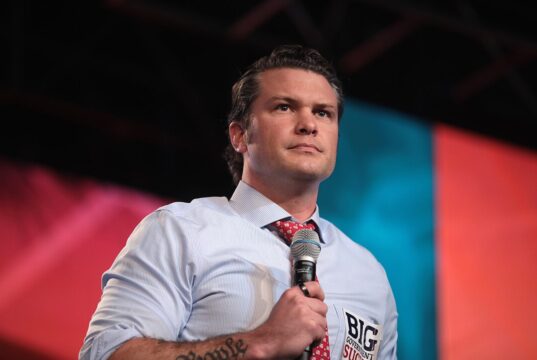
By Gage Skidmore from Peoria, AZ, United States of America - Pete Hegseth, CC BY-SA 2.0

Joe Kasper, former chief of staff to Defense Secretary Pete Hegseth, likely walked out of the Pentagon as a Department of Defense (DOD) employee for the last time Thursday as controversy over leaked classified information spiraled out of control. His exit follows bombshell revelations that Hegseth shared sensitive military plans — including airstrike details in Yemen — with unauthorized parties via Signal, an encrypted messaging app.

The scandal, now called “Signalgate,” has set off a series of investigations and toppled senior aides, including Deputy Chief of Staff Darin Selnick and Senior Advisor Dan Caldwell. Former Pentagon spokesman John Ullyot called it a “full-blown meltdown,” and warned that Hegseth’s days could be numbered.

Even as the chaos grows, President Trump is standing by Hegseth — at least publicly. But the fallout is exposing serious cracks in the Pentagon’s leadership and raising alarms about operational security.

Kasper’s abrupt departure marks another blow during a brutal period of scrutiny. Although Hegseth told the hosts of “Fox & Friends” that his chief adviser would move to “a slightly different role” within the DOD, Kasper is officially gone — eyeing a return to government relations and consulting.

A senior official confirmed the news on Friday, according to a report by The Guardian:

“Secretary Hegseth is thankful for [Kasper’s] continued leadership and work to advance the America First agenda,” the official said in a statement, referring to Donald Trump’s protectionist policy push.

The quick exit comes after Kasper was implicated as the orchestrator of a power grab that led to the dismissal of three senior Pentagon officials – Dan Caldwell, Darin Selnick and Colin Carroll – allegedly as part of a leak investigation.

The administration’s first hundred days created a troubled tenure for Kasper, with anonymous sources claiming he was frequently late to meetings, failed to follow through on critical tasks, and displayed inappropriate behavior, including berating officials and making crude comments allegedly about his bowel movements during high-level meetings.

“He lacked the focus and organizational skills needed to get things done,” one anonymous insider told Politico.

Other reports surfaced that the strip club aficionado shared inappropriate personal stories about exotic dancers during classified meetings — one of several reasons he became a liability. He’s now the fifth top aide to leave Hegseth’s circle in just a week.

Meanwhile, the broader Pentagon leadership is under fire for security breaches, including Hegseth’s use of an unsecured “dirty” internet line for Signal communications — a move that may have exposed critical data to foreign surveillance, according to NSA warnings.

READ NEXT: Trump’s Deportation Squad Takes Down Judge Linked To Gruesome Pics
Special Envoy Steve Witkoff Accuses CNN’s Anonymous Sources of ‘Treason’

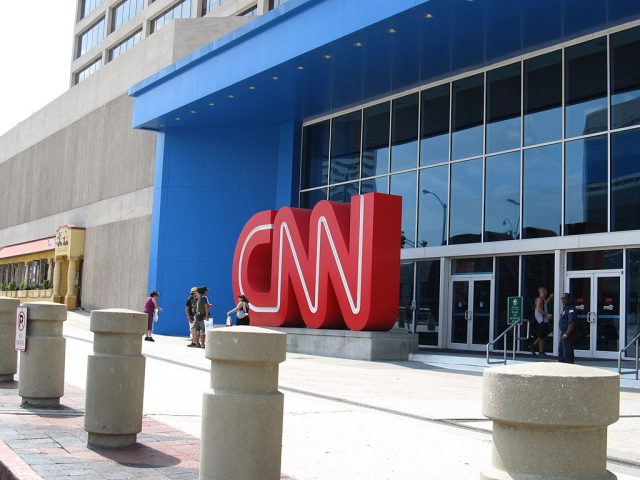
CNN Headquarters via Wikimedia Commons

U.S. Special Envoy to the Middle East Steve Witkoff accused several anonymous CNN sources of “treason” on Tuesday.

In an exclusive report from CNN, three sources briefed on intelligence of the operation claimed that the damage done to Iran’s nuclear program “likely only set it back by months” despite Trump’s claims to have “completely and totally obliterated” it by U.S. bombing.

“This leaked intel assessment, it’s an early look at what was actually accomplished on the ground,” said Fox News host Laura Ingraham during an interview with Witkoff. “But it was leaked. Somebody decided to leak this from the DIA and it’s being used in the media, and it’s all over today, that, ‘Aha, Trump said it obliterated, but it’s not obliterated. It’s set back months, but it’s not over.’”

Witkoff replied, “Well, it goes without saying that leaking that type of information, whatever the information, whatever site it comes out on, is outrageous. It’s treasonous. So it ought to be investigated, and whoever did it, whoever’s responsible for it should be held accountable.”

He concluded, “It could hurt lives in the future. This leaking is a completely unacceptable thing.”

CNN spoke to seven anonymous sources in total, who described the Defense Intelligence Agency’s (DIA) assessment of the Trump administration’s strikes. Two of the sources “said Iran’s stockpile of enriched uranium was not destroyed,” according to the CNN report, while “one of the people said the centrifuges are largely ‘intact.’”

“Another source said that the intelligence assessed enriched uranium was moved out of the sites prior to the US strikes,” CNN reported.

White House Press Secretary Karoline Leavitt and Secretary of Defense Pete Hegseth lashed out at CNN’s report, calling it “flat-out wrong.”

“This alleged assessment is flat-out wrong and was classified as ‘top secret’ but was still leaked to CNN by an anonymous, low-level loser in the intelligence community,” Leavitt said. “The leaking of this alleged assessment is a clear attempt to demean President Trump, and discredit the brave fighter pilots who conducted a perfectly executed mission to obliterate Iran’s nuclear program. Everyone knows what happens when you drop fourteen 30,000 pound bombs perfectly on their targets: total obliteration.”

While Leavitt tried to pin the leak on a single source, CNN — in its report — cited “three people briefed” on the U.S. intelligence assessment.

Secretary of Defense Pete Hegseth, in a separate statement, likewise claimed the sites were leveled in the blasts:

Based on everything we have seen and I’ve seen it all, our bombing campaign obliterated Iran’s ability to create nuclear weapons. Our massive bombs hit exactly the right spot at each target and worked perfectly. The impact of those bombs is buried under a mountain of rubble in Iran. So anyone who says the bombs were not devastating is just trying to undermine the president and the successful mission.

In a statement to Mediaite, a CNN spokesperson said, “CNN stands by our thorough reporting on an early intelligence assessment of the recent strikes on Iran’s nuclear facilities, which has since been confirmed by other news organizations. The White House has acknowledged the existence of the assessment, and their statement is included in our story.”

Trump And Putin Agree To 30-Day Ceasefire

0
Kremlin.ru, via Wikimedia Commons

U.S. President Donald Trump and Russian President Vladimir Putin have agreed to a 30-day cessation of attacks on energy infrastructure in Ukraine, following an extensive phone conversation. This agreement is a preliminary step toward broader peace negotiations, although a comprehensive ceasefire has not yet been established.

During their three hour discussion, both leaders emphasized the importance of addressing the underlying causes of the conflict to achieve lasting peace. They agreed to initiate technical negotiations aimed at a maritime ceasefire in the Black Sea and to continue efforts toward a full cessation of hostilities.

Additionally, Russia and Ukraine have consented to exchange 175 prisoners each as part of confidence-building measures. While Ukraine has accepted the 30-day ceasefire proposal, Russia’s support is conditional, with President Putin expressing concerns about Ukraine potentially regrouping during the ceasefire and emphasizing the need for guarantees to prevent such actions

President Trump has indicated that further sanctions could be imposed on Russia if a comprehensive peace agreement is not reached, underscoring the urgency of the situation.

This is a breaking news story. Please check back for updates.

Article Published With The Permission of American Liberty News

US Takes 10% Stake In Intel Under Trump To Strengthen Chip Production

Donald Trump via Gage Skidmore Flickr

A public-private deal aims to bring microchip manufacturing back to American soil — and deliver taxpayer returns in the process.

A Strategic Bet on Semiconductors

President Donald Trump announced Friday that chipmaker Intel agreed to give the U.S. government a 9.9% equity stake, valued at $8.9 billion. The move, the first of its kind under the CHIPS and Science Act, is intended to strengthen domestic semiconductor capacity and ensure that federal subsidies come with direct returns for taxpayers.

“They’ve agreed to do it, and I think it’s a great deal for them,” Trump told reporters during a briefing. The agreement follows internal administration discussions about using existing Commerce Department funding to acquire a stake in Intel, an effort confirmed earlier in the week by Commerce Secretary Howard Lutnick.

The stake is expected to be funded through the CHIPS Act and the Department of Defense’s Secure Enclave program. It will be a passive investment, meaning the government will not receive board seats, governance rights, or special access to information.

Intel Under Scrutiny

Trump also shed light on how the agreement came about — including a conversation with Intel CEO Lip-Bu Tan, whose background had drawn criticism from Capitol Hill.

Earlier this month, Sen. Tom Cotton (R-AR) raised alarms over Tan’s past leadership of Cadence Design Systems, which in 2008 pleaded guilty to illegally exporting chip design software to a Chinese military university. Tan’s investments in China-based firms had also raised national security concerns.

“I said, ‘Well that’s right, he should resign,’” Trump said. “And he came in, he saw me, we talked for a while. I liked him a lot. I thought he was very good. I thought he was somewhat a victim, but, you know, nobody’s a total victim, I guess.”

Following their meeting, Trump floated the idea that Intel should offer a 10% equity share to the U.S. government.

“He said, ‘I would consider that,’” Trump recalled. “Intel has been left behind, as you know, compared to [Nvidia CEO] Jensen [Huang] and some of our friends.”

Commerce: “We Can’t Rely on Taiwan”

Commerce Secretary Lutnick emphasized that the deal has more to do with national security than boardroom politics. In an interview on CNBC’s Squawk Box, Lutnick pointed out that Taiwan, which manufactures over 90% of the world’s most advanced semiconductors, sits just 80 miles from China.

“We cannot rely on Taiwan, which is 9,500 miles away from us and only 80 miles from China,” Lutnick said. “So, you can’t have 99 percent of leading-edge chips made in Taiwan. We want to make them here.”

He noted that the administration wants to ensure that U.S. companies are capable of producing next-generation chip nodes domestically.

“One of those pieces is, it would be lovely to have Intel be capable of making a U.S. node or a U.S. transistor — driving that in America,” Lutnick added.

A Rare Bipartisan Signal

The move drew support across ideological lines, with Sen. Bernie Sanders (I-VT) praising the basic premise: that if the federal government is handing out billions in subsidies, the public should see a share of the profits.

“No. Taxpayers should not be providing billions of dollars in corporate welfare to large, profitable corporations like Intel without getting anything in return,” Sanders said. “If microchip companies make a profit from the generous grants they receive from the federal government, the taxpayers of America have a right to a reasonable return on that investment.”

Not Everyone on Board

Some conservatives pushed back against the concept of government equity stakes in private corporations.

Sen. Rand Paul (R-KY) called the proposal a “terrible” precedent.

“If socialism is government owning the means of production, wouldn’t the government owning part of Intel be a step toward socialism?” Paul wrote in a post on X.

Despite the criticism, the administration has defended the agreement as a narrowly targeted investment — not a takeover — intended to align taxpayer contributions with long-term national and economic security.

Looking Ahead

The Intel stake marks a sharp departure from traditional federal industrial policy. Rather than simply issuing grants or tax breaks, the administration is pursuing a more transactional model: public money in, public equity out.

For the Trump administration, the goal is clear — to use government leverage to secure America’s position in next-generation chip manufacturing and reduce dependence on overseas supply chains.

READ NEXT: When Loyalty Breaks: Hegseth Moves Against Key Military Leader

Trump Confirms The US Used New Sonic Weapon

The White House, Public domain, via Wikimedia Commons

President Donald Trump confirmed in a NewsNation interview this week that the U.S. used a previously undisclosed weapon during the mission that captured Venezuelan strongman Nicolás Maduro earlier this month.

During a conversation with NewsNation host Katie Pavlich, Trump was asked about reports claiming a “sonic weapon” was deployed in Venezuela—one that allegedly disabled Maduro’s Cuban bodyguards and left them unable to fight back.

Trump didn’t offer technical details, but he strongly implied the reports were accurate.

“Yeah, something I don’t wanna— Nobody else has it,” Trump said, suggesting the U.S. possesses capabilities that America’s enemies simply can’t match.

Trump added that the U.S. military has “weapons that nobody knows about,” saying it’s better not to discuss them publicly—but praising the operation as a total success.

“That was an amazing attack,” Trump said. “Don’t forget, that house was in the middle of a fort, an army base, a big one, a lot of soldiers, and they came in and they did their job. We lost nobody.”

Leavitt amplified viral claims of a “sound wave” weapon

The conversation follows a viral post shared on X by White House Press Secretary Karoline Leavitt on January 10. Leavitt reposted a dramatic account from influencer Mike Netter, writing, “Stop what you are doing and read this…”

Netter’s post claimed to feature an exchange between a Venezuelan security guard loyal to Maduro and an interviewer. In the account, the guard described U.S. forces as overwhelmingly precise and unstoppable, even while badly outnumbered.

The guard alleged the Americans used such advanced firepower that it seemed “each soldier was firing 300 rounds per minute,” and claimed the attack wasn’t just about guns.

According to the account, the turning point came when U.S. troops launched something the guard described as “a very intense sound wave.” He claimed it caused instant physical effects—including nosebleeds, disorientation, and even vomiting blood—leaving Maduro’s men collapsed and defenseless.

The guard also claimed the raid ended with roughly twenty U.S. soldiers defeating hundreds of defenders without a single American casualty.

Legacy media largely ignores the story

Despite Trump’s comments and the attention Leavitt’s post received online, the story has seen limited coverage from major U.S. outlets.

However, several British tabloids—including The Independent and Daily Mail—reported on Trump’s remarks, with the Mail running the headline: “Trump reveals details of secret ‘sonic weapon’ used in Venezuela raid: ‘Nobody else has it.’”

‘Vladimir, STOP!’ – Trump Blasts Putin Over Deadly Strikes On Kyiv

Photo via Gage Skidmore Flickr

In a dramatic public rebuke of Russian President Vladimir Putin, President Donald Trump took to Truth Social on Thursday morning to condemn Russia’s latest missile and drone assault on Kyiv, which killed at least nine people and injured more than 70.

“I am not happy with the Russian strikes on KYIV,” Trump wrote. “Not necessary, and very bad timing. Vladimir, STOP! 5000 soldiers a week are dying. Let’s get the Peace Deal DONE!”

The Hill has more:

The Trump administration has been pushing for a ceasefire in the war in Ukraine, but top officials have in recent days signaled they are prepared to walk away from negotiations if the two sides don’t reach a deal soon.

Fighting has been ongoing in Ukraine since Russian forces invaded in February 2022 after amassing troops near the border.

Trump has vacillated between criticizing Russia for its continued assault on Ukraine and lashing out at Zelensky.

Trump’s comments came just hours after he slammed Ukrainian President Volodymyr Zelensky for vowing that Ukraine would never recognize Russia’s occupation of Crimea — a strategic peninsula that was illegally annexed by Moscow in 2014 and is home to more than 2 million people.

By President Of Ukraine – https://www.flickr.com/photos/165930373@N06/54169325552/, CC0, https://commons.wikimedia.org/w/index.php?curid=156221279

“Nobody is asking Zelenskyy to recognize Crimea as Russian territory,” Trump posted Wednesday. He added that such declarations from Kyiv “make it so difficult to settle this war.”

The White House recently announced that Trump’s special envoy, Steve Witkoff, will soon visit Moscow for a fourth round of negotiations with Putin, underlining ongoing diplomatic efforts.

Kremlin.ru, via Wikimedia Commons

Meanwhile, European leaders, including French President Emmanuel Macron, have squarely blamed Putin for prolonging the war, stating that Russia alone prevents peace. Macron emphasized that only Putin’s agreement could stop the violence, underscoring the international community’s call for a resolution.

READ NEXT: Legal Firestorm Erupts: US States Sue Trump Over Emergency Powers

Trump Orders Defense Secretary to Ensure Troops Get Paid Despite Democrat Shutdown

4
Daniel Ramirez from Honolulu, USA, CC BY 2.0 , via Wikimedia Commons

President Donald Trump is stepping up to protect America’s servicemembers amid the ongoing government shutdown — directing Defense Secretary Pete Hegseth to use all available Department of Defense funds to make sure troops receive their paychecks on time.

In a decisive move shared Saturday on Truth Social, Trump invoked his authority as Commander in Chief, announcing that servicemembers will be paid on October 15, regardless of congressional gridlock.

“That is why I am using my authority, as Commander in Chief, to direct our Secretary of War, Pete Hegseth, to use all available funds to get our Troops PAID on October 15th,” Trump wrote.
“We have identified funds to do this, and Secretary Hegseth will use them to PAY OUR TROOPS.”

The Office of Management and Budget confirmed that the funds would come from research and development money within the DOD — funding that remains available for two years and can be redirected in this emergency.

Trump’s order comes as Democrats in the Senate, led by Chuck Schumer (D-N.Y.), refuse to act on legislation that would keep pay flowing to the military. House Speaker Mike Johnson (R-La.) reminded Americans that the House has already passed a bill — H.R. 5371 — to ensure military pay continues during the shutdown.

“No one in the military or any military family should have their pay blocked on October 15!” Johnson said on X. “Since the bill ALREADY PASSED THE HOUSE, a simple yes vote by five more Democrats on Tuesday would allow the military to be paid on Wednesday.”

While Democrats point fingers, President Trump and Republican leaders are taking concrete action to protect the men and women in uniform who defend the nation.

Trump Mulls Renaming Department Of Defense

Big things are happening…

On Monday, President Trump announced he plans to restore the Department of Defense to its original title: The Department of War.

The president said at the White House that Secretary of Defense Pete Hegseth “has been incredible with the, as I call it, the Department of War.”

“You know we call it the Department of Defense, but between us, I think we’re going to change the name. You want to know the truth? I think we’re going to have some information on that, maybe soon,” Trump added. 

“But I think because, you know, Department of Defense, we won the World War One, World War Two. It was called the Department of War. And to me that’s really what it is. Defense is a part of that. But I have a feeling we’re going to be changing,” Trump continued. “I’m talking to the people. Everybody likes that. We had an unbelievable history of victory when it was Department of War. Then we changed it to Department of Defense. 

Later on, NewsNation reporter Kellie Meyer asked, “And on the Department of War, how do you plan to do that? It requires an act of Congress to rename the Defense Department–”

Trump then said, “It’s something that I think you’re going to be hearing about or seeing about over the next couple of weeks,” and “probably that change is going to be made over the next week or so.” 

When asked about the name change at another White House event Monday, Trump told a reporter “We’re just going to do it.”

“I’m sure Congress will go along if we need that. I don’t think we even need that. But, if we need that, I’m sure Congress will go along,” Trump also said. You know, that was the name when we won World War One. We won World War Two. We won everything. And, just to me, seems like just a much more appropriate. The other is, defense is too defensive. And we want to be defensive, but we want to be offensive too, if we have to be. So it just sounded to me like a better name.” 

The Department of Defense says on its website that the Department of War was established by Congress in August 1789 “at the cabinet level to oversee the operation and maintenance of the Army, Navy and Marine Corps.” 

Following the conclusion of World War II, in July 1947, President Harry Truman signed the National Security Act which, the site says, merged “the Navy and War Departments and the newly independent Air Force into a single organization called the National Military Establishment led by a civilian secretary of defense who also oversees the Joint Chiefs of Staff.”

Two years later in August 1949, the National Security Act was amended, renaming the National Military Establishment as the Department of Defense.

USA Strikes ‘Big Facility’ In Campaign Against Venezuela

President Donald Trump holds a Cabinet meeting, Wednesday, April 30, 2025, in the Cabinet Room. (Official White House Photo by Molly Riley)

President Donald Trump suggested this week that U.S. forces may have carried out a direct strike on a major drug-related facility inside Venezuela, a development that—if confirmed—would represent a significant escalation in his administration’s campaign against narco-trafficking and the Maduro regime.

In an interview Friday with radio host John Catsimatidis on The Cats & Cosby Show, the president discussed ongoing U.S. military operations targeting suspected drug-smuggling vessels operating off the Venezuelan coast. During that conversation, Trump appeared to reference a successful strike on a fixed facility connected to those operations.

“They have a big plant or a big facility where the ships come from,” the president said. “Two nights ago, we knocked that out.”

While Trump did not publicly identify the location of the facility, U.S. officials later told The New York Times that the president was referring to a drug facility located inside Venezuela that had been destroyed. At this time, the president’s comments remain the only public indication such a strike occurred. Neither the Venezuelan government nor other Latin American governments have acknowledged or confirmed an attack of this kind.

If U.S. forces did strike a facility on Venezuelan soil, it would mark the first known land-based military action in Trump’s broader effort to disrupt drug trafficking networks tied to the regime of Venezuelan strongman Nicolás Maduro. That effort has intensified since September, when the administration began authorizing military strikes on vessels believed to be transporting narcotics in international waters near Venezuela.

According to public reporting, more than 100 people have been killed since those maritime strikes began. The administration has defended the operations as necessary to combat transnational criminal organizations that U.S. officials say operate with the protection—or direct involvement—of the Maduro government. The Trump administration has repeatedly labeled Venezuela a “narco-state,” accusing senior regime figures of facilitating cocaine trafficking into the United States.

In October, The New York Times reported that the president had “secretly authorized the C.I.A. to conduct covert action in Venezuela,” a claim Trump later confirmed publicly. The authorization reportedly expanded U.S. intelligence and operational capabilities aimed at undermining drug cartels and weakening Maduro’s grip on power.

Beyond military operations, the administration has steadily increased pressure on Caracas through economic and strategic measures. Trump ordered the shutdown of Venezuelan airspace, citing security concerns, and earlier this month the U.S. began seizing oil tankers near Venezuelan shores as part of what officials describe as an enforcement action against illicit oil shipments funding the regime. Supporters of the policy argue these moves are designed to cut off revenue streams used to prop up corruption and criminal networks.

The president has previously made clear that land-based options were under consideration.

“What’s the next step in this war on cartels, and are you considering options? Are you considering strikes on land?” an off-camera reporter asked Trump in the Oval Office in October.

“Well, I don’t want to tell you exactly, but we are certainly looking at land now because we’ve got the sea very well under control,” Trump replied.

That comment, combined with Trump’s remarks during Friday’s radio interview, has fueled speculation that the administration may already be acting on those plans.

Despite the president’s statements, military officials told The New York Times they had no information to share regarding the reported destruction of a “big facility.” Both the CIA and the White House declined to comment, a response consistent with the administration’s approach to sensitive national security operations.

Supporters of the president argue that Trump’s aggressive posture reflects a long-overdue willingness to confront drug cartels and hostile regimes head-on, rather than relying solely on diplomatic pressure. Critics, meanwhile, warn that direct military action inside Venezuela could escalate tensions in the region.

For now, the administration has offered no further details—but Trump’s remarks make clear that his campaign against drug trafficking and the Maduro regime is far from over.

Report: US Military Seizes Two Sanctioned Tankers In Atlantic Ocean

Just in…

On Wednesday, U.S. forces seized two sanctioned tankers in the Atlantic Ocean.

First, U.S. European Command (EUCOM) announced the seizure of the Russian-flagged Marinera oil tanker in the North Atlantic Sea.

“The @TheJusticeDept & @DHSgov, in coordination with the @DeptofWar today announced the seizure of the M/V Bella 1 for violations of U.S. sanctions,” read a post from EUCOM on X. “The vessel was seized in the North Atlantic pursuant to a warrant issued by a U.S. federal court after being tracked by USCGC Munro.”

“This seizure supports @POTUS Proclamation targeting sanctioned vessels that threaten the security and stability of the Western Hemisphere,” EUCOM added. “The operation was executed by DHS components with support from  @DeptofWar, showcasing a whole-of-government approach to protect the homeland.”

Fox News previously reported that U.S. forces were attempting to board the Marinera tanker, which previously operated under the name Bella 1, in the North Atlantic earlier Wednesday morning.

Fox News reports:

The development comes after the Wall Street Journal reported on Tuesday that Russia had sent a submarine and other naval assets to escort the tanker.

The vessel had spent more than two weeks attempting to slip past U.S. enforcement efforts targeting sanctioned oil shipments near Venezuela, the outlet reported.

“The blockade of sanctioned and illicit Venezuelan oil remains in FULL EFFECT — anywhere in the world,” said Secretary of War Pete Hegseth after the tanker was seized.