Media

Home Media

Fox Host Praises Trump’s $5K Pledge As Questions Mount Over Cost And Authority

1
President Donald Trump gestures to the crowd after delivering remarks at the House GOP Member Retreat, Tuesday, January 6, 2026, at the Donald J. Trump- John F. Kennedy Center for the Performing Arts in Washington, D.C. (Official White House Photo by Daniel Torok)

Rachel Campos-Duffy called the president’s proposal “creative and rule-breaking,” but the conditional payments could cost more than $1 trillion, require congressional approval, and far exceed current tariff revenue.

Fox News host Rachel Campos-Duffy praised President Donald Trump’s promise to send $5,000 to every adult American citizen if Republicans retain control of Congress, calling the proposal “creative and rule-breaking.”

Speaking Thursday on “Fox & Friends,” Campos-Duffy said the pledge could help Republicans build momentum before the Nov. 3 midterm elections.

“This shows just how creative and rule-breaking and out of the box President Trump is,” Campos-Duffy said. “I’m surprised no one has thought of this before.”

She added: “I mean, it’s actually a great way, as you say, to sort of get that momentum, push things forward. Especially if you are running, you know, as the incumbent in the midterm, you know you’re already going to have those headwinds. This was a brilliant idea on their part.”

The political appeal is easy to understand. The policy behind it remains largely undefined.

Trump cannot distribute the money without congressional authorization, Congress has not approved the estimated $1.2 trillion needed to fulfill the promise, and the White House has not released a detailed funding plan.

WATCH: Rachel Campos-Duffy reacts to Trump’s $5,000 dividend pledge

Trump Ties Payments to Republican Victory

Trump unveiled what he called the “Trump Dividend” Wednesday night during the Republican Party’s midterm convention in Dallas.

“Here is my promise: If the Republicans win the House of Representatives and the United States Senate — both of them —because of our tremendous economic success, like in history. We’ve never had anything like what’s happening. But because of our tremendous strength and success economically, I will issue a dividend to every adult citizen in the United States of America for $5,000.”

“That alone should win the midterms,” Trump added.

Trump said recipients would be required to spend the money inside the United States, but he did not explain how the government would enforce that restriction. His remarks also did not specify a delivery date, an income limit, a legislative structure, or a precise funding source.

The president compared the payment to a profitable company distributing money to its shareholders.

“If the Republicans win, you win with us,” Trump told the crowd. “Now all we have to do is win.”

The White House had not released legislation or a formal cost estimate as of Thursday.

Cost Could Reach $1.2 Trillion

The United States has approximately 240 million adult citizens. Paying each of them $5,000 would cost roughly $1.2 trillion before administrative expenses.

That would represent a major new federal expenditure while the government is already operating at a substantial deficit. The Congressional Budget Office reported that the federal deficit totaled nearly $1.8 trillion in fiscal 2025.

The Constitution gives Congress — not the president acting alone — control over federal appropriations. Lawmakers would therefore have to authorize the payments and identify a source of funding.

Sen. Bernie Moreno (R-Ohio) endorsed Trump’s proposal and said he would prepare legislation authorizing the dividend if Republicans win in November.

Other Republicans have been more cautious.

Rep. Chip Roy (R-Texas) told Politico that he wanted to know how the administration intended to finance what he calculated would be a payment “well over $1 trillion.”

The final cost could be lower if Congress imposed income limits or narrowed eligibility. Such restrictions would depart from Trump’s initial promise of payments to “every adult citizen.”

Vance Suggests Wealthy Americans May Be Excluded

Vice President JD Vance suggested after Trump’s speech that wealthy Americans might not qualify.

Vance also argued that tariff revenue could help finance the plan.

“Tariffs have generated a lot of revenues,” Vance told Fox News anchor Bret Baier. “The president is saying, if you keep us in power, then you will share in some of the benefit of this incredible wealth that we are creating.”

Tariffs have generated additional federal revenue, but not nearly enough to finance universal $5,000 payments.

Treasury Department figures cited by Time magazine show that customs duties generated approximately $154.5 billion during the first 10 months of fiscal 2026. A $1.2 trillion dividend would cost nearly eight times that amount.

Some tariff revenue also could be reduced by refunds connected to duties the Supreme Court determined were unlawfully imposed under the International Emergency Economic Powers Act.

Unless lawmakers approved substantial spending cuts or another source of revenue, the payments would increase federal borrowing.

Economists have also warned that injecting more than $1 trillion into the economy could increase inflationary pressure. The extent of that effect would depend on the payments’ timing, eligibility requirements, and financing.

Critics Use ‘Bribery’ Label

Some of Trump’s opponents characterized the promise as a “bribe” because he explicitly conditioned the payments on Republicans winning both chambers of Congress.

Baier raised that criticism during his interview with Vance.

“I can hear the critics’ heads exploding,” Baier said. “They’re saying out loud, I guarantee you, ‘the president is bribing voters to vote for Republicans to take over the House, and then he’s bankrupting the country because the deficit and debt is huge and inflation would come back if this comes into play.’ So how do you answer those criticisms?”

Candidates routinely campaign on promises involving tax reductions, new benefits, or government payments that require them and their allies to win office. Trump did not offer individual voters money in exchange for demonstrating how they cast their ballots.

Legal experts told the Associated Press that the proposal would not ordinarily constitute criminal voter bribery, describing it as a campaign promise conditioned on an electoral outcome rather than a payment conditioned on how an individual votes.

Previous Dividend Proposals Did Not Become Law

Trump has floated several direct-payment proposals during his second term.

He previously endorsed a $2,000 tariff dividend, proposed returning part of the savings attributed to the Department of Government Efficiency, and supported deposits into health savings accounts. Congress did not enact those broader payments.

Trump also announced a $1,776 payment for military personnel. That “Warrior Dividend” used money Congress had already appropriated for a housing supplement, making it materially different from the newly proposed $5,000 payments.

Trump’s first administration distributed two rounds of stimulus checks during the COVID-19 pandemic, but those payments also required legislation passed by Congress.

Campos-Duffy’s praise captured the proposal’s immediate political value: It gives voters a clear and easily understood financial incentive to support continued Republican control.

Whether it becomes policy depends on considerably more complicated questions. Congress would have to approve it, lawmakers would need to find more than $1 trillion or restrict eligibility, and the government would have to determine whether the payment could be administered without significantly increasing federal deficits or inflation.

Until the White House submits legislation and identifies a credible funding source, the “Trump Dividend” remains a campaign promise — not a guarantee.

READ NEXT: Today’s AI Is Low Risk. What Comes Next Could Be Different.

Ted Cruz Responds To Trump Supreme Court Chatter

1
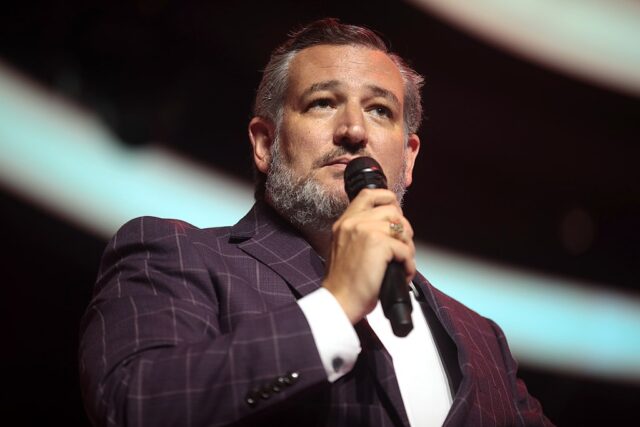
Gage Skidmore from Surprise, AZ, United States of America,

Sen. Ted Cruz (R-TX) has issued an unmistakable response to renewed talk that President Donald Trump could nominate him to the Supreme Court.

His answer: “Not just no, but hell no.”

Cruz delivered the fiery rejection during an appearance on the “Hang Out with Sean Hannity” podcast, making clear that he would rather remain in the political arena than trade the Senate for a lifetime appointment to the nation’s highest court.

“So look, my answer is not just no, but hell no,” Cruz told Hannity. “And listen, I don’t say that lightly. I mean, it’s a big deal. The court is an institution I revere.”

Cruz acknowledged that his refusal may surprise those familiar with his legal career, much of which unfolded in and around the Supreme Court.

“A lot of people are surprised because I’ve spent an awful lot of my professional life around the court, in the court,” he said. “And for so many people, it is their life dream to do.”

Cruz Wants To Stay In The Fight

The Texas Republican explained that serving as a federal judge would require him to step away from the political and policy battles that have defined his Senate career.

“Because a principled federal judge stays out of politics and stays out of policy fights,” Cruz said, according to Fox News.

That restraint appears to be precisely what makes the position unappealing to Cruz. Although he expressed deep respect for the court, his comments suggest he prefers fighting publicly for conservative priorities rather than weighing cases from behind the bench.

Cruz also called Trump a “good friend,” signaling that his rejection was aimed at the job—not the president who has repeatedly floated his name.

Trump Keeps Floating His Name

Trump has long praised Cruz’s legal credentials, even after their famously bruising battle for the 2016 Republican presidential nomination.

During a Washington event in January, Trump called Cruz a “brilliant legal mind” before joking that a Cruz nomination could produce a rare unanimous Senate vote.

“If I nominate him for the U.S. Supreme Court, I will get 100% of the vote,” Trump said. “The Democrats will vote for him because they want to get him the hell out. And the Republicans will vote for him because they want to get him the hell out too,” according to the Houston Chronicle.

The joke drew laughs, but Trump’s interest has not always been hypothetical. He placed Cruz among 20 potential Supreme Court nominees on his 2020 shortlist, the Texas Tribune reported.

At the time, Cruz called the consideration “humbling” and “an immense honor,” but emphasized that he expected to continue defending Texans and constitutional liberties in the Senate.

His latest answer leaves considerably less room for speculation.

A Résumé Built For The Court

On paper, Cruz possesses many of the qualifications normally associated with a Supreme Court contender.

He earned his undergraduate degree from Princeton University and graduated from Harvard Law School before clerking for Chief Justice William Rehnquist. Cruz later served as Texas solicitor general, arguing eight cases before the Supreme Court in that role and a ninth after returning to private practice, according to his official Senate biography.

He entered the Senate in 2013 and has since built a national profile as one of the chamber’s most aggressive conservative voices.

Cruz clearly reveres the Supreme Court. He simply does not want to join it.

And if Trump ever formally asks, the Texas senator has already prepared his answer.

Bret Baier Fires Back After Trump Unleashes On Fox News Colleague

0

Fox News anchor Bret Baier pushed back on President Donald Trump in real time Thursday after the president accused one of the network’s veteran correspondents of airing an “inaccurate” report about Iran.

The unusual on-air showdown erupted during “Special Report,” shortly after chief correspondent Jonathan Hunt updated viewers on diplomatic efforts surrounding the ongoing conflict.

Hunt reported that there had been no major breakthrough in efforts to end the fighting and aired a clip of Trump saying his administration was not seeking a meeting with Tehran.

“We’re not looking to meet or anything,” Trump said in the clip, according to additional coverage of the segment.

But before the broadcast had even ended, Trump took aim at both Hunt and Baier on Truth Social.

“Jonathan Hunt of Fox News did a particularly inaccurate report on the Failing Islamic Republic of Iran,” Trump wrote.

The president insisted he had no interest in requesting talks, declaring that Iranian officials were the ones “begging to make a deal.”

Then he dragged Baier directly into the fight.

“Bret Baier should straighten out his flunkies, for a change!” Trump wrote.

Baier was not about to let that one pass.

Before signing off, the anchor read Trump’s post and delivered a rare, point-by-point rebuttal to the president.

“First of all, Jonathan is not a flunky. He is a great reporter,” Baier said, according to The Hill’s account of the exchange.

Baier then addressed Trump directly, stressing that Fox had never reported that the president wanted to meet with Iran.

Instead, Baier explained, the network had aired Trump’s own comments ruling out a meeting. Hunt’s report focused on Treasury Secretary Scott Bessent’s effort to rally Group of 20 nations behind Washington’s pressure campaign against Tehran.

Baier added that Gulf allies, including Qatar, were attempting to persuade Iranian leaders to accept concessions.

“That’s what we said,” the anchor concluded.

The clash unfolded as the Trump administration dramatically escalated its attempt to isolate Iran economically.

Bessent announced “Operation Economic Outcast” earlier this week, describing it as an unprecedented effort to sever the regime’s financial connections around the world.

“Any entity that facilitates money laundering on behalf of Iran will be removed from the U.S. dollar system,” Bessent warned in remarks published by the Treasury Department.

The administration has also expanded the threat of secondary sanctions to entities doing business with Iran in areas including shipping, aviation, gold, technology and digital assets.

Trump’s dispute with Hunt appears to have centered on how Fox characterized the diplomatic maneuvering surrounding that campaign—not on whether the administration was increasing economic pressure.

Baier’s swift defense of his colleague was especially striking given his long relationship with Trump. As Fox’s chief political anchor, Baier has interviewed the president repeatedly and regularly speaks with him directly.

Trump, meanwhile, has never hesitated to unload on Fox personalities when he believes the network’s coverage is unfair. Earlier this year, he criticized anchor Shannon Bream and demanded that Fox executives remove liberal co-host Jessica Tarlov from the air, TheWrap reported.

This time, however, the president’s criticism landed while the show he was attacking was still live.

And Baier made sure the president received an answer before the credits rolled.

‘Not in the Running’: Alina Habba Blasts Press Secretary Buzz as Scott Jennings Surges

1
By Gage Skidmore from Surprise, AZ, United States of America - Karoline Leavitt, CC BY-SA 2.0,

Alina Habba just blew up the White House press secretary sweepstakes.

The longtime Trump ally and former personal attorney publicly rejected speculation that she could replace outgoing press secretary Karoline Leavitt, insisting that she is not chasing another job in the administration.

“Flattered by the Kalshi odds, but I’m not in the running for any job,” Habba wrote Wednesday on X, according to Fox News Digital.

Habba also took a swipe at the unnamed sources driving the chatter, saying she would like them to tell her if she was getting a new post before declaring: “Fake news remains the undefeated champ.”

The denial landed with immediate force. Habba had been sitting atop the Kalshi prediction market with a 35% chance of getting the job, Fox News reported. After her post, CNN conservative commentator Scott Jennings moved ahead of her in the betting.

But those odds measure traders’ expectations—not the White House’s intentions. President Donald Trump has not publicly identified a favorite, and the administration has not announced a successor.

A Sudden Vacancy at the Podium

Leavitt, 28, is scheduled to leave the White House at the end of August after recently returning from maternity leave. She said the demands of the job made it impossible to be the mother she wanted to be to her two young children, calling her departure a “bittersweet decision.”

Trump said Leavitt would remain one of his top outside advisers and continue working with Republicans ahead of the November midterm elections.

Her exit creates a difficult opening at one of the most visible—and punishing—jobs in Washington. Leavitt became the youngest White House press secretary in history when she took the podium at 27 and quickly emerged as one of Trump’s most aggressive defenders.

Trump senior political adviser James Blair told Fox News that Leavitt would be a “really hard act to follow” and warned that her successor would operate under a “microscope” as the fight for Congress intensifies.

Why Habba Looked Like a Contender

Habba’s name made sense on paper. She became nationally known while defending Trump through his civil and criminal legal battles, then served as a high-profile campaign surrogate during his 2024 run.

She later worked as a counselor to the president and served as New Jersey’s interim U.S. attorney before moving into her current role as senior adviser to the attorney general for U.S. attorneys.

She had also been floated for the press secretary job after Trump’s 2024 victory. At the time, Habba said she was flattered but believed her talents belonged elsewhere. Her latest denial was even sharper: She said she was not in the running for any job.

Scott Jennings Moves Into the Spotlight

With Habba batting down the story, the focus is now shifting to Jennings—a combative Trump defender who regularly spars with liberal panelists on CNN.

Jennings has not offered the same clean rejection. When CNN anchor Kaitlan Collins asked whether he had heard from the White House, he joked that taking the job would mean, “I would get to see you every day.” Collins immediately noted that his answer was “not a no,” according to People’s account of the CNN exchange.

Jennings later called Leavitt one of the best press secretaries in decades but stopped short of confirming any talks.

The former George W. Bush aide has also advised longtime Kentucky Sen. Mitch McConnell and worked on multiple presidential campaigns. Trump has praised Jennings publicly and promoted his recent book, Fox News reported.

The Daily Beast has cited unnamed sources describing Jennings as a leading contender. A later report from the outlet said he met with White House chief of staff Susie Wiles about the role before Leavitt announced her departure, while also reporting that Trump has indicated a preference for a woman. Neither claim has been confirmed publicly by the White House.

The Rest of Trump’s Shortlist—If There Is One

White House principal deputy press secretary Anna Kelly is the clearest internal contender. She already sits directly beneath Leavitt in the press operation and handled television appearances during Leavitt’s maternity leave.

Other names floated in Fox News and TIME include White House communications director Steven Cheung, former Trump communications official Taylor Budowich, conservative podcaster and former administration spokeswoman Katie Miller, former DHS spokeswoman Tricia McLaughlin and Breitbart Washington bureau chief Matthew Boyle.

There may not be an immediate winner at all. The Independent, citing an unnamed White House official, reported that the administration could rely on a rotating cast of senior officials instead of quickly installing a permanent replacement. Secretary of State Marco Rubio, Vice President JD Vance and Treasury Secretary Scott Bessent took turns briefing reporters during Leavitt’s maternity leave.

Former Trump press secretary Sean Spicer told Fox News the eventual choice would need a “strong existing relationship” with Trump—a reminder that résumés and betting markets matter less than presidential trust.

Habba says she was never in the race. Jennings is not closing the door. And with the midterms approaching, Trump now has to decide who gets the next turn at the most combative podium in politics.

Greg Gutfeld Jokes Karoline Leavitt Could Be Fox News-Bound After White House Exit

1

Fox News host Greg Gutfeld joked that outgoing White House press secretary Karoline Leavitt could follow a well-worn path from the White House briefing room to cable news after she leaves the Trump administration at the end of August.

The wisecrack came Thursday on “The Five” as Gutfeld and co-hosts Emily Compagno, Jessica Tarlov, Charles Hurt and Shannon Bream discussed who President Donald Trump could choose to replace Leavitt.

“Rumor has it, you’re up for the job,” Gutfeld told Bream, according to Mediaite.

“They can’t afford me,” Bream shot back.

Gutfeld then turned the conversation toward Leavitt’s own future.

“I worry that she’ll come to work at Fox, and now we’ll have three of ’em,” he said, referring to Fox personalities Dana Perino and Kayleigh McEnany, both of whom previously served as White House press secretary.

“We already have Dana, and Kayleigh, and then we’ll have Karoline,” Gutfeld continued, according to The Mirror US. “And then they’ll have their own show.”

Hurt accused Gutfeld of making the conversation “so awkward,” but the panel kept the bit going by floating several Fox hosts for the high-profile White House role.

Gutfeld told Compagno that he could see her as a “dynamite press secretary,” pointing to her background as a professional cheerleader and her experience at Fox. When he joked that he was trying to get her off “The Five,” Compagno replied: “To make room for Karoline.”

The exchange was playful speculation—not a report that Leavitt is negotiating with Fox News. Leavitt has not announced plans to join the network, and Trump said her next role will keep her connected to his political operation.

Still, Gutfeld’s joke drew on a real revolving door between the White House podium and television news. Perino served as press secretary under President George W. Bush before building a prominent career at Fox, including as a co-host of “The Five.” McEnany was Trump’s final press secretary during his first administration and joined Fox News in 2021, later becoming a co-host of “Outnumbered.”

Trump announced Wednesday that Leavitt would leave her post at the end of the month to spend more time with her family. He praised the 28-year-old as “one of my most trusted aides” and said she would remain one of his “top outside advisors” while serving as an influential Republican voice ahead of the midterm elections.

Leavitt, who recently returned to the White House after the birth of her second child, described the decision as “bittersweet.”

“I have felt in my heart that I cannot be the best mom my two young children deserve while devoting the constant time, energy, and attention required of the White House Press Secretary,” she wrote in a statement posted to X.

Leavitt became the youngest White House press secretary in history when she took the job at age 27. Before joining the administration, she served as Trump’s 2024 campaign spokeswoman, worked in his first White House and mounted an unsuccessful congressional bid in New Hampshire.

Trump has not named her successor. And while Gutfeld may already be imagining another former press secretary at Fox, the only job Leavitt has publicly lined up so far is advising the president from outside the White House.

CNN Star Emerges as Surprise Favorite to Replace Karoline Leavitt

4
By Gage Skidmore from Surprise, AZ, United States of America - Karoline Leavitt, CC BY-SA 2.0,

CNN’s most recognizable conservative voice may soon trade the cable-news desk for the White House podium.

Scott Jennings has emerged as the surprise frontrunner to replace outgoing White House press secretary Karoline Leavitt, according to The Daily Beast, which cited sources familiar with the discussions.

The report immediately set off speculation across Washington. Jennings has built a national following by defending President Donald Trump and conservative priorities during contentious CNN panel discussions, frequently challenging the network’s liberal guests in exchanges that spread quickly online.

But the race is far from settled. The White House has not announced Leavitt’s successor, and Jennings has not publicly confirmed that he is seeking the job.

Pressed about the opening during Wednesday night’s edition of CNN NewsNight, Jennings did not give a direct answer. Instead, he praised Leavitt’s performance and her decision to return to her family.

“Karoline Leavitt has been maybe the greatest White House press secretary in the last 30 years,” Jennings said, according to The Independent.

When panelists continued to push him, Jennings shook his head before replying, “I don’t know.” Democratic commentator Bakari Sellers then joked that Democrats were afraid of Jennings becoming press secretary, drawing laughter from the panel.

The exchange did little to quiet the speculation—and it highlighted the qualities that could make Jennings attractive to Trump. He is comfortable under pressure, quick on his feet and accustomed to defending the president before an often-hostile audience. Those skills would be tested daily in the James S. Brady Press Briefing Room.

Jennings would also bring previous White House experience to the role. An archived George W. Bush White House announcement confirms that he served as special assistant to the president and deputy director of political affairs. He later became a longtime adviser to then-Senate Republican leader Mitch McConnell and worked on several of the Kentucky senator’s campaigns.

That résumé gives Jennings a combination rarely found in a television commentator: years of live-media combat paired with firsthand knowledge of how a White House operates.

The potential shake-up comes after Leavitt announced that she will step down at the end of August. Leavitt, who became the youngest White House press secretary in history when she took the job at age 27, returned from maternity leave in July after giving birth to her second child in May.

In her departure statement, Leavitt said she could not give both her young children and the demanding position the time and attention they deserved. Trump said he understood and respected the decision, praising her as one of the best to hold the job.

He also announced that she would remain a top outside adviser and an influential Republican voice, according to ABC News.

Leavitt’s departure lands less than three months before the midterm elections, giving the choice of her successor added political weight. The next press secretary will be responsible not only for handling daily clashes with the White House press corps but also for communicating Trump’s agenda during a decisive stretch for Republicans.

Jennings is not the only name reportedly under consideration.

The New York Post identified former Trump attorney Alina Habba and Breitbart Washington bureau chief Matthew Boyle among the early possibilities. The outlet also named White House communications director Steven Cheung, former deputy chief of staff Taylor Budowich, deputy press secretary Anna Kelly, Katie Miller and Monica Crowley as potential contenders.

Prediction markets have offered a different and rapidly changing lineup, another sign that no consensus has formed outside the administration.

For Trump, the decision may come down to what kind of messenger he wants at the podium. An internal communications veteran could provide continuity, while a nationally known defender such as Jennings would arrive with a built-in audience and a record of taking the fight directly to the media.

Trump Brushes Off 2028 Question With Five-Word Reality Check

1

President Donald Trump brushed off another question about seeking a third White House term Tuesday night, repeatedly pointing to the legal barrier standing between him and a 2028 campaign.

Speaking with reporters at Joint Base Andrews in Maryland, Trump was asked whether he was serious about running again.

“Everybody asks me that question, and you know that the law is very strong on that,” Trump responded. “I’d love to run, but the law is very strong.”

Trump said supporters had been chanting “2028” earlier that day while he attended the Patriot Games in Ohio.

“Everybody wants me to do it,” he said, once again adding that “the law is very strong.”

When a reporter pressed Trump on whether that amounted to a definitive no, the president moved on without answering directly.

The exchange captured the balancing act Trump has maintained throughout his second term. He has repeatedly welcomed speculation about another campaign—occasionally treating it as a joke and at other times suggesting he had seriously considered potential “methods” for returning to office.

His latest answer, however, placed noticeably greater emphasis on the constitutional restriction.

The Constitutional Roadblock

The 22nd Amendment states that no person may be elected president more than twice. Trump won the presidency in 2016 and again in 2024, preventing him from being elected to another term under the Constitution’s current language.

The amendment was ratified in 1951 after President Franklin D. Roosevelt broke with the two-term tradition established by George Washington and won four presidential elections.

Changing the restriction would require another constitutional amendment, demanding approval from two-thirds of both chambers of Congress and ratification by three-fourths of the states.

Rep. Andy Ogles (R-Tenn.) introduced a resolution in January 2025 that would permit a president to be elected as many as three times under specific circumstances. The proposal was referred to the House Judiciary Committee, but the official congressional record lists no additional action.

Another proposed workaround would involve Vice President JD Vance running for president with Trump as his running mate, winning the election and then resigning—allowing Trump to return to the presidency through succession.

Trump acknowledged that theory during a March 2025 interview with NBC News, when he insisted he was “not joking” about a third term and said there were “methods” that could potentially make it happen.

Most constitutional scholars argue the plan would fail because the 12th Amendment states that anyone constitutionally ineligible to serve as president is also ineligible to become vice president. Trump later dismissed the proposal himself as “too cute.”

In October 2025, Trump offered an even more direct assessment.

“If you read it, it’s pretty clear,” he told reporters aboard Air Force One. “I’m not allowed to run. It’s too bad.”

Attention Turns to Trump’s Successor

Trump’s latest remarks arrive as the Republican Party’s 2028 succession contest slowly moves into view.

The president reportedly told Republican donors during a recent Oval Office meeting that “we need to elect JD,” appearing to boost Vance as his preferred successor. Trump later said it was “way too early” to issue an endorsement and continued praising both Vance and Secretary of State Marco Rubio.

Trump has publicly suggested that Vance and Rubio could form an “unstoppable” ticket without saying which man should lead it.

For now, the third-term speculation allows Trump to keep supporters energized while ensuring that potential Republican successors continue competing for his approval.

Trump White House Bristles as MAGA Voices Attack AOC’s Path to Motherhood

2

The Trump White House is reportedly losing patience with conservative influencers attacking Rep. Alexandria Ocasio-Cortez over her decision to freeze her eggs, viewing the backlash as both politically damaging and at odds with the administration’s push to help more Americans start families.

Axios reported Tuesday that the online attacks have made some Republicans — including figures inside the White House — nervous with the midterm elections less than three months away.

“We most certainly want to encourage more women and families to have children, period,” a senior White House official told Axios. The official added that Matt Walsh’s criticism was “not helpful.” An unnamed Trump adviser separately warned that the issue was not a political winner for Republicans.

The tension began after Ocasio-Cortez, 36, posted videos over the weekend documenting the start of the egg-freezing process, including an injection she administered before appearing on ABC’s “This Week.”

“Don’t be weird about this, even though I know all of you will be,” the New York Democrat told followers.

Ocasio-Cortez said she had been considering the procedure for years and wanted to make the experience less mysterious for other working women. She described the decision as a way to feel more in control of her life.

During her ABC interview, however, she also used the deeply personal announcement to criticize the Trump administration. Ocasio-Cortez accused the administration of denying reproductive care and said political leaders should normalize conversations about women’s fertility and health.

The disclosure quickly became a target for several prominent voices on the right.

Walsh questioned why Ocasio-Cortez would delay motherhood, calling the decision “completely baffling.” Turning Point USA spokesman Andrew Kolvet argued that egg freezing was being promoted as an alternative to forming a family earlier in life and called Ocasio-Cortez’s situation a “cautionary tale.”

Laura Loomer went further, suggesting that the announcement was a “political stunt” designed to help Ocasio-Cortez connect with women if she runs for president in 2028.

But the criticism also triggered pushback from inside the conservative movement.

Katie Miller, a conservative podcaster and the wife of White House Deputy Chief of Staff Stephen Miller, said Ocasio-Cortez’s effort to preserve the possibility of motherhood should be celebrated.

“If one woman wants to preserve her right to have children … we should celebrate that,” Miller wrote on X. While she argued that more women should marry and have children younger, she added that every woman’s journey to motherhood is different.

Alexa Henning, a Republican consultant and former State Department official, also warned that conservative men attacking Ocasio-Cortez over the decision would not play well with women voters. She noted that many conservative women have frozen their eggs and later started families.

That divide helps explain why the White House appears eager to shut down the fight. Whatever Republicans think of Ocasio-Cortez’s politics — or her possible ambitions in 2028 — attacking a woman for taking steps that could help her have children clashes with the message Trump has spent much of his second term promoting.

Trump signed an executive order in February 2025 directing his administration to recommend ways to expand access to in-vitro fertilization and reduce its cost. Later that year, the White House announced discounted fertility medications and a new pathway for employers to offer stand-alone fertility benefits, including IVF coverage.

When TrumpRx.gov launched in February, the administration said patients paying out of pocket could save more than $2,000 per fertility-treatment cycle on commonly used medications. In May, the White House unveiled additional initiatives intended to expand fertility benefits, lower childcare costs and support new and expectant mothers.

The connection is not merely rhetorical. Frozen eggs must generally be fertilized through IVF if a patient later decides to use them. Ocasio-Cortez has said she saved for years to afford the procedure, which she estimated would cost between $8,000 and $9,000 and was not covered by her insurance.

There are legitimate debates about the limits and success rates of egg freezing, particularly as a woman gets older. The procedure preserves an option; it does not guarantee a future pregnancy. But that is a different argument from ridiculing a woman for trying to keep motherhood possible.

Republican pollster Adam Geller told Axios that Ocasio-Cortez knows how to command attention and advised Republicans not to take the bait. The political math is straightforward: Her announcement gave Democrats an opening to accuse conservatives of hostility toward women while dividing Republicans over a goal the Trump administration says it shares — helping more Americans have children.

For the White House, that makes the attacks more than an online distraction. They risk turning a pro-family agenda into an argument over whether one of Trump’s most prominent political opponents deserves the chance to become a mother.

Trump Blasts Polls Showing Record-Low Approval Ratings As ‘Crooked & Corrupt’

2
President Donald J. Trump visits the El Arepazo Doral restaurant, Monday, March 9, 2026, in Miami, Florida. (Official White House Photo by Daniel Torok)

President Donald Trump is dismissing a string of recent polls showing his approval rating at historic lows, accusing major polling organizations and the media of publishing “crooked and corrupt” numbers while insisting his support is stronger than ever.

The president unloaded on the polling industry Monday in a lengthy Truth Social post after multiple national surveys placed his approval rating in the low 30s.

“My REAL Polling Numbers, not those made up by the Fake News Media, are the best they have ever been,” Trump wrote. “Don’t believe the Radical Left’s Fake Poll numbers. They are Crooked and Corrupt.”

Trump argued that his administration’s record—including tax cuts, employment figures, border security, foreign investment, and recent foreign policy developments—should be translating into much stronger public support.

“My REAL Polling Numbers… are the best they have ever been, and why wouldn’t they be with the biggest tax cuts and employment numbers EVER, the biggest outside Investment in America in World history, a totally secure Border, a giant Victory in Venezuela, the Denuclearization of Iran, unparalleled respect and success throughout the World, and much more?” Trump wrote.

Multiple Polls Show Similar Results

Trump’s comments come after several prominent polling organizations released surveys showing his approval rating at the lowest levels of his second term.

A Quinnipiac University poll published last week found 32% of Americans approve of the job Trump is doing as president, while 58% disapprove. The survey marked the lowest approval rating Quinnipiac has recorded for Trump.

Other recent national polls reached similar conclusions.

CNN’s latest survey placed Trump’s approval rating at 34%, while an Associated Press-NORC poll found it at 33%.

The consistency across multiple polling organizations has drawn attention from political analysts, particularly as the country heads toward the 2026 midterm elections.

CNN Analyst Warns of Political Trouble

CNN chief data analyst Harry Enten highlighted the convergence of the recent polling during an on-air segment last week, arguing that Trump’s numbers continue to trend downward.

“It does not appear that there is a bottom. Trump is heading towards an electoral black hole,” Enten said.

“I feel like this is like one of those magician’s tricks, where the floor just falls out from beneath you, and that is exactly what’s happening with President Trump,” he continued.

Enten noted that three separate polling organizations all found Trump’s approval rating hovering between 32% and 34%.

Historical Comparison

Enten also compared Trump’s standing with previous second-term presidents at a similar point in their administrations.

According to his analysis, averaging the CNN, AP-NORC, and Quinnipiac polls places Trump’s approval rating at roughly 33%.

For comparison, Enten said former President Barack Obama stood at approximately 41% during the comparable point in his second term, while former President George W. Bush registered around 38% despite the ongoing Iraq War.

Enten argued that Trump’s current standing is the weakest of any 21st-century president at the same stage of a second term.

“You have to go all the way back to Richard Nixon to find a lower approval rating at this point in term two,” Enten said, noting that Nixon resigned just weeks later in 1974.

Trump Rejects Findings

Trump has frequently criticized public polling throughout his political career, often arguing that surveys conducted by major news organizations understate Republican support and are designed to shape public perception.

His latest Truth Social post continued that longstanding criticism, portraying the recent polls as politically motivated rather than reflective of public opinion.

The president closed his message by urging supporters to ignore the surveys and rally behind Republican candidates ahead of upcoming elections.

“VOTE REPUBLICAN FOR GREATNESS IN AMERICA!” Trump wrote.

The president’s response also avoids one issue that many political analysts believe is driving his declining numbers: growing dissatisfaction with the administration’s war against Iran, including among many Republicans and Trump voters. Recent polling has also found notable erosion among Republicans, with a substantial minority now saying the war has not been worth fighting. The decline has fueled speculation that the administration may be underestimating how much the conflict has alienated parts of Trump’s own political coalition.

Several analysts argue that the frustration extends beyond the war itself. Trump returned to office promising to tackle inflation, lower costs, and strengthen the economy and critics contend that many voters now view the Iran War as an unnecessary military commitment that has diverted attention and resources away from those domestic priorities.

Rising energy prices and broader economic uncertainty following the outbreak of hostilities have only reinforced that perception for some voters, leading many to question why the administration became deeply involved in another Middle Eastern conflict when economic concerns were the issue that helped propel Trump back to the White House.

Fox News Star Invites James Carville to Join GOP as Democrat Civil War Explodes

2

Fox News host Laura Ingraham has an unexpected escape plan for James Carville as the famed Democratic strategist threatens to bolt his party over its accelerating socialist turn: Come join the Republicans.

Ingraham extended the striking invitation Monday night after Carville drew a red line around the growing influence of left-wing streamer Hasan Piker and the Democratic Socialists of America.

“The socialists have momentum,” Ingraham warned on “The Ingraham Angle,” according to The Hill and Mediaite. She argued that the Democratic Party is on course to become a socialist party unless its more sensible members stop merely complaining from cable-news studios and begin fighting back.

Then she made Carville an offer that would have sounded unthinkable during his days helping put Bill Clinton in the White House.

“Turn to us,” Ingraham said, urging Carville and other anti-socialist Democrats to help Republicans build a party focused on restoring the American middle class.

The invitation came one day after Carville declared that he and Piker could not remain under the same political roof.

“I am not going to be in the same party with Hasan Piker,” Carville said Sunday on Fox News’ “The Sunday Briefing.” If Piker becomes a serious force among Democrats, Carville added, “I’m out of here.”

Carville, who has spent decades as one of the Democratic Party’s most recognizable strategists, said an “overwhelming majority” of Democrats share his opposition to Piker’s politics. He also pointed viewers toward the DSA platform and mocked the idea of embracing policies aimed at seizing the means of production.

The DSA’s own 2025–2026 program calls for placing the nation’s largest corporations under public ownership and democratic control. It also advocates a new constitutional structure featuring a single federal legislature, universal rent control, tuition-free public college, a 32-hour workweek and sweeping reductions to the U.S. military footprint.

Yet Carville’s ultimatum appears to have energized the very faction he wants Democrats to reject.

Tezlyn Figaro, a former adviser to Sen. Bernie Sanders, challenged Carville on Fox News Monday to follow through.

“Get out, Jim!” Figaro said, according to Mediaite. She argued that progressives are organizing, winning elections and gaining influence while establishment figures complain from the sidelines.

Those victories are becoming harder for Democratic leaders to dismiss.

Axios described the June Democratic primaries in New York as a socialist “earthquake” after two sitting House members lost to left-wing challengers. All three winning candidates were backed by New York City Mayor Zohran Mamdani, while two were democratic socialists.

One centrist House Democrat called the results a “huge defeat” for party leadership. Another senior Democrat offered a blunter warning: “Buckle up.”

The socialist surge spread beyond New York when DSA-backed Melat Kiros defeated 15-term Rep. Diana DeGette in Colorado’s Democratic primary. The Guardian described the upset as another sign of a generational and ideological shift inside the party.

Kiros campaigned against corporate power, military spending and U.S. support for Israel while receiving backing from Sanders, the DSA and Justice Democrats.

Meanwhile, Michigan Democrats headed to the polls Tuesday in a closely watched Senate contest pitting establishment-backed Rep. Haley Stevens against progressive Abdul El-Sayed. CBS News reported that El-Sayed campaigned with Piker at events that exposed the party’s widening divisions over Israel. El-Sayed has also received support from Sanders and Rep. Alexandria Ocasio-Cortez.

The showdown leaves Carville trapped between two competing invitations: Ingraham is holding open the GOP door, while the Democratic left is daring him to walk out of his own party.

For a strategist who has spent nearly half a century helping shape Democratic politics, the question is no longer whether his party is changing. It is whether there will still be room for him when that transformation is complete.