
Media

Home Media Page 4

Trump Reportedly Promised โ€˜Sweeping Changesโ€™ at CNN If Paramount Takes Over Warner Bros.

0

David Ellison is reportedly already talking about what heโ€™d do to CNNโ€”before he even owns the company.

According to The Wall Street Journal, the Paramount Skydance CEO told Trump administration officials during a recent Washington visit that heโ€™d make โ€œsweeping changesโ€ at CNN if he manages to buy Warner Bros. Discovery, the networkโ€™s parent. The subtext isnโ€™t subtle: CNN is a longtime Trump target, and Trump has told confidants he wants new ownership and programming changes, the Journal reported.

Ellisonโ€™s comments come amid a fast-moving takeover scramble involving Warner Bros. Discovery. After the company accepted an offer from Netflix, Ellison said Paramount would pursue a hostile bid directly to shareholders.

โ€œWBD shareholders deserve an opportunity to consider our superior all-cash offer for their shares in the entire company,โ€ Ellison said in a statement announcing the move. He argued that the competing proposal would leave shareholders exposed to uncertainty around the companyโ€™s linear cable networks business and face a more difficult regulatory path.

Ellisonโ€™s father, Oracle co-founder and Trump ally Larry Ellison, called President Donald Trump after the announcement that Warner Bros. had accepted the Netflix deal to argue that โ€œthe transaction would hurt competition,โ€ according to The Wall Street Journal.

โ€œTrump has told people close to him that he wants new ownership of CNN as well as changes to CNN programming,โ€ added the Journal story.

Trump, for his part, has never been shy about where he thinks CNN belongs on the media food chain. Earlier this year, he dismissed the network as โ€œscumโ€ in remarks on the White House lawn.

Democrat Senator Claims Uniformed Military Is Planning Coup Against Trump

14
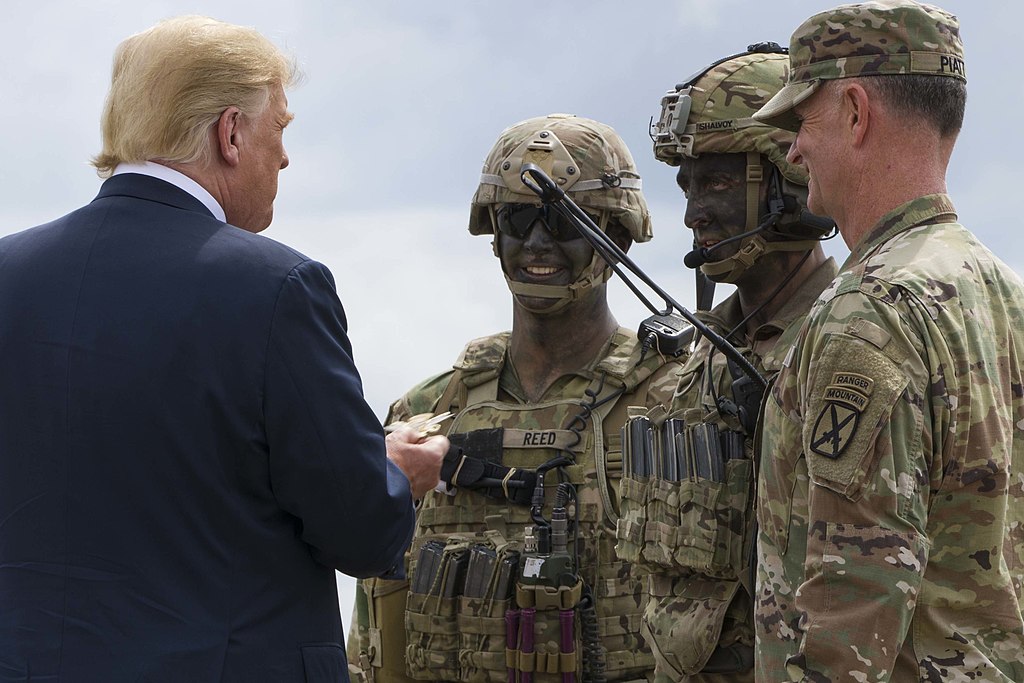
President Donald J. Trump is presented with a 10th Combat Aviation Brigade challenge coin following an air assault and gun rain demonstration at Fort Drum, New York, on August 13. The demonstration was part of President Trump's visit to the 10th Mountain Division (LI) to sign the National Defense Authorization Act of 2019, which increases the Army's authorized active-duty end strength by 4,000 enabling us to field critical capabilities in support of the National Defense Strategy. (U.S. Army photo by Sgt. Thomas Scaggs) 180813-A-TZ475-010

This week, Sen. Mark Warner (D-Va.) said that he believes the U.S. military could serve as a constraint on President Donald Trumpโ€™s administration, arguing that senior uniformed leaders remain primarily loyal to the Constitution rather than any individual political figure.

Speaking during an appearance on โ€œMS NOWโ€ Wednesday morning, Warner previewed questions he said he plans to ask U.S. Navy Adm. Frank M. Bradley when Bradley testifies Thursday before the Senate Intelligence Committee. Warner serves as the committeeโ€™s vice chair.

Warner said his questions will focus in part on concerns surrounding Defense Secretary Pete Hegseth and the administrationโ€™s recent military actions, including strikes in the Caribbean. Warner said he trusts Bradley, but raised doubts about Hegsethโ€™s public statements.

โ€œRemember, this is an administration that has treated the uniformed military with unprecedented disrespect when they were all brought to get a pep rally in front of Hegseth and Trump,โ€ Warner said. โ€œThis is an administration thatโ€™s fired uniform generals from the head of the NSA, the head of the Defense Intelligence Agency.โ€

He added: โ€œAnd I think in many ways, the uniformed military may help save us from this president and his lame people like Hegseth, because I think their commitment is to the Constitution and obviously not to Trump. And I expect Bradley to adhere to that.โ€

Warnerโ€™s comments follow similar remarks from other Democrats who have suggested service members could resist unlawful directives. Earlier this year, six Democratic lawmakers urged members of the military to resist โ€œillegalโ€ orders.

Rep. Eric Swalwell (D-Calif.) made a related argument in an interview last month with Don Lemon, saying he has spoken with service members who view their oath as a safeguard.

โ€œWhat gives me hope, and I talk to service members all the time. They tell me that I don’t appreciate enough and the public doesn’t appreciate enough that while Congress is not a check on the president anymore, and the judiciary at the Supreme Court is hardly a check, military members have told me, โ€˜We can be a check,โ€™โ€ Swalwell said.

He continued: โ€œTheyโ€™re essentially saying, โ€˜Weโ€™re not going to betray our oath to the Constitution because this guy tells us to.โ€™ While it’s not codified that way โ€” they’re not a branch of government on their ownโ€” their honor and integrity might just save us.โ€

Former President Barack Obama also addressed the issue Monday, saying he has seen signs of โ€œresistanceโ€ within the military to what he described as politicization, while adding he does not believe that politicization has fully taken hold.

โ€œI would not expect the politicization of the Justice Department or our military,โ€ Obama said. โ€œAnd I donโ€™t think thatโ€™s happened. I think thereโ€™s been resistance, particularly in the military, to that, but the degree to which that has been encouraged, you know, that used to be something that I would lecture other countries not to do.โ€

CNN Inks Deal With Major Prediction Market Backed by Trump Jr.

0
CNN Headquarters via Wikimedia Commons

CNN is reportedly entering a new partnership with prediction-market company Kalshi that would weave Kalshiโ€™s real-time odds and forecasts into CNNโ€™s on-air and digital coverageโ€”an alliance that also has the effect of placing the network in a business relationship with Donald Trump Jr.

Axios first reported the deal Tuesday, citing sources who said Kalshi will appear โ€œacross its television, digital, and social channels.โ€ Under the arrangement, Kalshiโ€™s prediction data would be featured on CNN programming as a live โ€œreal-time data ticker,โ€ with additional segments built around prediction-market oriented content touching politics, news, culture, and weather. CNN chief data analyst Harry Enten is also expected to incorporate Kalshiโ€™s numbers into his data-driven analysis, according to the report.

The collaboration would represent Kalshiโ€™s first major partnership with a national news organizationโ€”an important milestone for a company that has sought to position itself as a go-to source for fast-moving probability estimates about cultural and political events. In practice, prediction markets function like real-time sentiment gauges: prices (or implied probabilities) move up and down as participants buy and sell contracts tied to specific outcomes, translating collective bets into a snapshot of what the market thinks is most likely at a given moment. For a television newsroom, that kind of constantly updating โ€œodds boardโ€ can be a compelling visualโ€”especially during election cycles and major breaking-news momentsโ€”because it packages uncertainty into an easy-to-read number.

But the most politically sensitive dimension of the reported partnership is who else is tied to Kalshi.

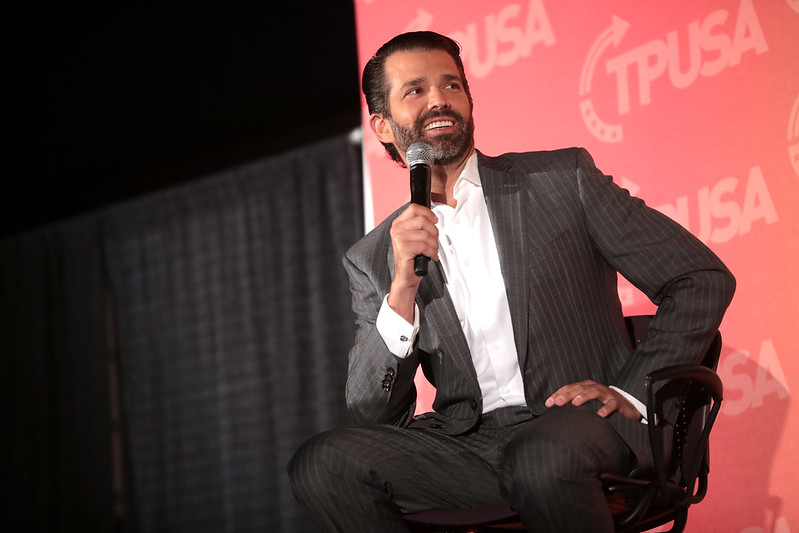
As Media Mattersโ€™ Matthew Gertz noted, Donald Trump Jr. announced in January 2025 that he had joined Kalshi as a โ€œstrategic advisor.โ€ Trump Jr. framed the company as a disruptive force in the U.S. market for event-based trading, touting Kalshiโ€™s legal fights and its efforts to build mainstream legitimacy. โ€œIโ€™m excited to be part of what theyโ€™re building,โ€ he said at the time, casting Kalshi as a pioneering player in an industry that has long operated in a gray area in the United States.

That makes CNNโ€™s reported move notable for more than its graphics package. If Kalshi data becomes a recurring on-air featureโ€”particularly in political coverageโ€”CNN would be elevating a product linked to a prominent partisan figure: the son of a president and a central surrogate in Republican politics. Even if Trump Jr. has no day-to-day role in editorial decisions at CNN, his publicly announced advisory position creates an unavoidable headline: a major news network integrating a data feed from a company whose strategic advisor is one of the most recognizable names in national GOP politics.

The questions are as much about perception as they are about logistics. Prediction-market numbers can be useful as one input among manyโ€”alongside polling, modeling, and reportingโ€”but they can also be misunderstood by audiences as โ€œwhat will happenโ€ rather than โ€œwhat traders think might happen,โ€ especially when those percentages are presented like sports odds. And with Trump Jr. connected to the company supplying the data, critics are likely to scrutinize when and how CNN uses the ticker, whether the network discloses the advisory relationship on-air, and how often the data appears in politically charged segments.

For Kalshi, the upside is obvious: a prominent distribution channel that could normalize prediction markets and introduce the brand to a much larger audience. For CNN, the draw is fresh, visually dynamic dataโ€”something that fits modern broadcast pacing and could complement its analytics-heavy style, particularly in elections and major news events. But the addition of Donald Trump Jr. to the equation ensures the partnership wonโ€™t be viewed as just another data collaboration.

House Democrat Launches Investigation Into Trump’s โ€™60 Minutesโ€™ Interview Edit

2
Gage Skidmore Flickr

Rep. Jamie Raskin (D-Md.) is pressing CBS and its parent company, Paramount, to explain how the network handled edits to a President Trump interview that aired on โ€œ60 Minutesโ€ on Nov. 2 โ€” raising new questions about media transparency, newsroom accountability, and whether political pressure is being applied behind the scenes.

In a letter to newly appointed CBS News ombudsperson Ken Weinstein, first shared with The Hill, Raskin accused the network of yielding to what he called the โ€œimproper influence President Donald Trump wielded over CBS Newsโ€™s editorial decisionsโ€ in recent weeks.

โ€œPresident Trump increasingly appears to be exercising direct control over CBSโ€™s editorial decisions, destroying CBSโ€™s โ€˜journalistic integrityโ€™ while violating its right to be free from governmental coercion and manipulation,โ€ Raskin wrote.

At the center of the dispute is CBSโ€™s decision not to include a portion of Trumpโ€™s on-camera remarks to journalist Norah Oโ€™Donnell in which he referenced a past settlement involving Paramount and his presidential foundation. That omission, Raskin argued, undercuts the networkโ€™s responsibility to air relevant context โ€” especially at a moment when many conservatives have long criticized legacy media for selective editing and narrative framing.

In the transcript CBS posted online after the broadcast, Trumpโ€™s comments appeared, even though they werenโ€™t included during the televised segment:

โ€œAnd, actually, โ€™60 Minutesโ€™ paid me a lot of money,โ€ Trump said. โ€œAnd you donโ€™t have to put this on, because I donโ€™t want to embarrass you, and Iโ€™m sure youโ€™re not โ€ฆ I think you have a great, new leader, frankly, whoโ€™s โ€” the young woman thatโ€™s leading your whole enterprise is a great, from what I know.โ€

Raskinโ€™s complaint comes against the backdrop of a separate editing fight involving CBS and a โ€œsimilar interview with former Vice President Kamala Harris ahead of the 2024 election,โ€ which drew heavy criticism from Trump allies and prompted CBS to change its approach. After that blowback, CBS pledged to publish full transcripts of โ€œ60 Minutesโ€ interviews with presidents and presidential candidates โ€” a move some conservatives applauded as a step toward transparency.

The letter also points to a major leadership shakeup inside Paramount and CBS. The transcript indicates Trumpโ€™s reference to a โ€œnew leaderโ€ was aimed at Bari Weiss, described as โ€œthe former New York Times columnist and a controversial figure in media,โ€ who was installed as CBSโ€™s editor in chief under new CEO David Ellison โ€” son of tech billionaire Larry Ellison.

Raskinโ€™s letter further notes broader corporate and regulatory developments surrounding Paramount, including federal approval for its merger with Skydance and reported plans for additional media deals. He also claimed CBS News โ€œis just one victim in President Trumpโ€™s systematic campaign of intimidation against media organizations,โ€ and referenced Trumpโ€™s reported threats involving the BBC over editing in a Jan. 6 documentary.

In practical terms, Raskin is asking for internal detail on how CBS handles complaints and how editorial choices get made. He is requesting a written explanation of CBSโ€™s complaint-review standards, an assessment of whether โ€œTrumpโ€™s requests to CBS to omit portions of his interview violates CBS Newsโ€™s editorial independence standards,โ€ and โ€œall documents, communications, and editorial guidance provided to โ€˜60 Minutesโ€™ producers regarding the Trump interview.โ€

In his message to Weinstein, Raskin framed the ombudsmanโ€™s role as a check on management and outside influence:

โ€œMr. Weinstein: news ombudsmen serve as independent advocates for the public, investigating complaints and publicly critiquing their organizations when those organizations fall short,โ€ Raskin wrote. โ€œYou have a duty to defend CBSโ€™s editorial independence, rather than ratify President Trumpโ€™s influence over the organizationโ€™s coverage.โ€

Controversial Republicans Join New Pentagon Press Corps For Rare Briefing

1
David B. Gleason from Chicago, IL, CC BY-SA 2.0 , via Wikimedia Commons

Right-wing media personality Laura Loomer and former Rep. Matt Gaetz (R-Fla.) were among the press invited to a rare Pentagon briefing Tuesday, a meeting that underscored the Defense Departmentโ€™s shifting approach to media access and messaging.

Gaetzโ€”once floated for attorney general and now a host at the pro-Trump outlet One America News Networkโ€”was called on early and asked what role the U.S. military could play in Venezuela if the countryโ€™s leader, Nicolรกs Maduro, flees amid a Trump administration pressure campaign tied to allegations of drug trafficking.

โ€œThe department has a contingency plan for everything,โ€ Pentagon press secretary Kingsley Wilson replied. โ€œOur focus is taking out narco terrorists โ€ฆ every single boat we strike is saving American lives.โ€

The briefing comes as the Pentagon is facing backlash, including from some Republican lawmakers, over two U.S. military strikes in September on an alleged drug-trafficking boat in the Caribbean. The second strike reportedly killed survivors of the initial hit, raising fresh questions on Capitol Hill about rules of engagement and oversight.

When Loomer was recognized, she asked about reported plans for the United States to sell fighter jets to Qatar.

Wilson responded that the Pentagon โ€œlooks forward to continuing its partnership with Qatar.โ€ Loomer pushed back, calling Qatar the โ€œlargest sponsor of the Muslim Brotherhood,โ€ and asked whether the U.S. would โ€œreevaluateโ€ its relationship with the country.

Wilson declined to suggest any policy shift, saying the Defense Department โ€œprioritizes national securityโ€ and that he was not aware of changes to U.S.-Qatari military agreements.

The exchange unfolded against broader turmoil over Pentagon press access. Earlier this fall, the department announced a major revamp of operating procedures for journalists covering the Pentagon, including a requirement that reporters sign a more restrictive press policyโ€”an overhaul that reportedly contributed to a mass departure of several mainstream outlets from the building.

In response, the Trump administration has credentialed a number of right-leaning or MAGA-aligned figures, including some who have not previously attended Pentagon press briefings in person, signaling an effort to broaden access beyond the traditional media establishment.

Florida Judge Tosses Truth Social Lawsuit Against The Guardian

0

A Florida judge has dismissed a defamation lawsuit brought by Truth Socialโ€™s parent company, Truth Media & Technology Group Corp. (TMTG), against The Guardian, the Sarasota Herald-Tribune, and several reportersโ€”marking another instance in which legal actions connected to President Donald Trumpโ€™s media interests have faced significant hurdles in court.

The case stemmed from two articles published by the UK-based Guardian in March 2023. According to Judge Hunter Carroll of the Twelfth Judicial Circuit Court for Sarasota County, the reporting focused on โ€œa federal criminal investigation related to TMTGโ€™s receipt of two payments totaling $8 million.โ€ The articles described claimsโ€”sourced to individuals familiar with the matterโ€”that โ€œfederal prosecutors in New York were conducting a money laundering investigation related to the payments, which were wired through the Caribbean from Paxum Bank and ES Family Trust, entities with ties to an ally of Russian president Vladimir Putin and a history of providing banking services to the sex worker industry.โ€ The reporting also said the origins of the loans raised internal concerns at TMTG, including that its then-CFO considered returning the funds before the company โ€œultimately did not.โ€

The Guardianโ€™s reporting was later referenced by other outlets, including the Herald-Tribune. TMTG filed suit, arguing the articles were false and defamatory and asserting that TMTG โ€œis not, and never was, under investigation for money laundering,โ€ and that neither the company nor its executives โ€œhave been the focus of any investigation.โ€

Judge Carroll noted in his ruling that TMTG acknowledged it is a public figure, which requires a higher standard of proofโ€”โ€œactual maliceโ€โ€”to prevail on a defamation claim. After reviewing the allegations, the court concluded that TMTG had not met that threshold. The judge also cited Floridaโ€™s anti-SLAPP statute, intended to stop lawsuits โ€œwithout merit and primarily because such person or entity has exercised the constitutional right of free speech in connection with a public issue.โ€ Under the statute, defendants may recover attorneysโ€™ fees when targeted by meritless suits aimed at discouraging public participation.

Carroll emphasized that โ€œmerely reporting on negative information is not enough to establish actual malice,โ€ adding that the law โ€œrequires more than a departure from journalistic standards or a mere failure to investigate.โ€

The articles, he wrote, were grounded in โ€œmultiple sources familiar with the investigation, review of internal TMTG communications, investigation of the entities who made the loans, and fruitless requests for further information from the Department of Justice, the investigatorsโ€™ office, and outside counsel for TMTG.โ€

TMTGโ€™s CEO Devin Nunesโ€”formerly a Republican congressmanโ€”had publicly denied that the company was aware of any issues related to the loans, and the Guardian included his denial in its reporting. But Carroll found that the denial did not demonstrate malice, writing: โ€œThis denial is not germane to the existence or nature of the investigation, and even if it was, such commonplace denials do not establish actual malice.โ€


Broader Context: Trump-Affiliated Defamation Suits Face Legal Barriers

The dismissal is the latest example of how defamation cases brought by Trump or entities connected to him have struggled to move forward, largely due to high legal standards for public figures and strong protections for political and investigative reporting.

Key related examples include:

Trump v. CNN (2022โ€“2023)

President Trump sued CNN for $475 million, arguing the network defamed him by comparing some of his statements about the 2020 election to rhetoric used by authoritarian regimes. A federal judge dismissed the suit in 2023, finding that the comparisons were protected opinion rather than factual claims.

Trump Campaign v. The New York Times (2020โ€“2021)

The Trump campaign sued The New York Times over an opinion piece suggesting Trump had welcomed Russian election interference. A New York judge dismissed the case, emphasizing that opinion columnsโ€”especially on political mattersโ€”receive robust First Amendment protection.

Trump Campaign v. The Washington Post (2020โ€“2021)

A similar lawsuit against The Washington Post over opinion articles discussing the campaignโ€™s contacts with Russia was also dismissed for lack of actionable factual claims.

Trump v. The New York Times and Mary Trump (2019 publication; lawsuit filed 2021; dismissed 2022)

President Trump filed suit against the newspaper and his niece Mary Trump over reporting that relied on family tax records. A judge dismissed the case in 2022, finding that newsgathering activitiesโ€”even aggressive onesโ€”are protected under the First Amendment.

Bill Maher Open To Voting Republican – But With Some Changes

2
Missvain, CC BY 4.0 via Wikimedia Commons

Comedian and longtime liberal commentator Bill Maher told Fareed Zakaria on CNNโ€™s GPS that he could โ€œof courseโ€ envision voting Republican โ€” but only if the party becomes something markedly different than what it has been.

Maher, who has been a longtime critic of Donald Trump and a traditional supporter of Democrats, laid out a number of caveats before making such a move. โ€œThey would have to certainly lose the idea of โ€˜we donโ€™t concede elections,โ€™โ€ he said.

He added his biggest concern:

โ€œAnd my biggest worry is that they feel that the excesses of the left are so great, that they are so antiโ€common sense. And again, theyโ€™re not completely wrong about that โ€” that they are so โ€” never met something that was counterintuitive that they didnโ€™t embrace. That they just canโ€™t let these people take power and, therefore, even if there has to โ€” if democracy has to be sacrificed for hanging on to power,โ€ Maher said.

Maher also questioned the GOPโ€™s longโ€term commitment to democratic norms after Trump:

โ€œWill they still keep that idea that we cannot let these people take power? These people who just do not have any idea of common sense, they want to reinvent everything. They are revolutionaries in a country that is not asking for [a] revolution โ€” theyโ€™re just asking for politicians to fix things. That is my biggest concern.โ€ He noted a hope for a โ€œreturn to normalcyโ€ after Trump โ€” though he expressed skepticism.

At the same time, Maher acknowledged areas where he believes Trump was right:

He pointed out the border, DEI (diversity, equity, inclusion) initiatives, and NATO contributions. โ€œHe showed that you can close the border. It wasnโ€™t something you needed congressional help for. You could just do it, and he did it. He just did it too far. And people don’t like to see people tackled at Home Depot and people they know who have been in this country for a long time.โ€

He wrapped up by hitting both parties:

โ€œWhy canโ€™t either one be normal?โ€ he asked rhetorically.


Why this matters for Republicans

Maherโ€™s comments underscore a key opportunity and challenge for the GOP: there are nonโ€traditional voices who might vote Republican โ€” but only if the party reaffirms core democratic norms and commonโ€sense governance rather than radical transformation. If Republicans continue to be associated with election denial, extreme rhetoric, or sweeping change beyond what voters ask for, they risk alienating such swing voices.

For Republican-leaning audiences focused on policy, governance, and institutional credibility, Maherโ€™s remarks are a reminder that expanding the partyโ€™s appeal may hinge more on tone and norms than just raw policy wins.

Appeals Court Tosses Out ‘Meritless’ Trump Lawsuit Against CNN

1

A federal appeals court panel has rejected President Donald Trumpโ€™s attempt to revive his lawsuit against CNN over the networkโ€™s repeated use of the term โ€œBig Lieโ€ to characterize his claims about irregularities in the 2020 election. The 11th Circuit Court of Appeals ruled Tuesday that CNNโ€™s wordingโ€”despite its historical connotations and its association with Adolf Hitlerโ€”falls under First Amendment-protected opinion rather than a provable factual assertion.

The three-judge panel, which notably included two judges appointed by Trump, concluded that CNNโ€™s choice of language, while controversial, could not sustain a defamation claim.

โ€œTrumpโ€™s argument hinges on the fact that his own interpretation of his conduct โ€” i.e., that he was exercising a constitutional right to identify his concerns with the integrity of elections โ€” is true and that CNNโ€™s interpretation โ€” i.e., that Trump was peddling his โ€˜Big Lieโ€™ โ€” is false,โ€ the unanimous panel wrote. โ€œHowever, his conduct is susceptible to multiple subjective interpretations, including CNNโ€™s.โ€

Because statements of opinion cannot be proven true or false, the court determined CNNโ€™s phrasing did not meet the legal threshold for defamation.

โ€œCNNโ€™s subjective assessment of Trumpโ€™s conduct is not readily capable of being proven true or False,โ€ wrote Judge Adalberto Jordan, an Obama appointee, joined by Trump appointees Kevin Newsom and Elizabeth Branch.

Trump now has the option to request a rehearing by the full 11th Circuit or appeal to the Supreme Court. A spokesperson for Trumpโ€™s legal team indicated he plans to continue challenging the ruling, saying he โ€œwill pursue this case against CNN to its just and deserved conclusion.โ€ CNN declined to comment.

The appeals courtโ€™s decision affirms a July ruling by U.S. District Judge Raag Singhalโ€”also appointed by Trumpโ€”who dismissed Trumpโ€™s $475 million lawsuit last year. That lawsuit argued that CNN used the phrase โ€œBig Lieโ€ to intentionally evoke Nazi comparisons, but Singhal found that even harsh or offensive opinions are protected unless they include false statements of fact.

The appellate judges agreed, writing: โ€œTrumpโ€™s argument is unpersuasive. Although he concedes that CNNโ€™s use of the term โ€˜Big Lieโ€™ is, to some extent, ambiguous, he assumes that it is unambiguous enough to constitute a statement of fact. This assumption is untenable.โ€

This decision represents another setback in Trumpโ€™s broader effort to challenge major media outlets he says have misrepresented him. While he has secured some favorable settlementsโ€”including from ABC and CBSโ€™s parent companyโ€”his lawsuits against the New York Times and CNN have faced significant resistance in court. Most recently, Trump criticized and threatened legal action against the BBC over edits made to his January 6, 2021, speech on the Ellipse.

BBC Officially Apologizes To Trump For Deceptive Edit

0

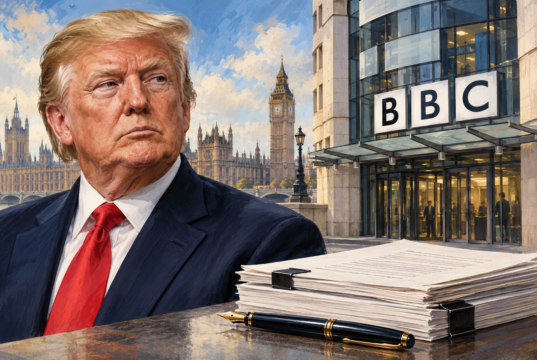
The British broadcaster BBC has formally apologized to the White House for the way it edited a clip of President Trumpโ€™s speech on January 6, 2021 โ€” the day before the Capitol attack. The apology comes just days after President Trumpโ€™s legal team threatened the BBC with a $1 billion lawsuit over the segment, which appeared in a documentary.

According to a BBC spokesperson, โ€œLawyers for the BBC have written to President Trumpโ€™s legal team in response to a letter received on Sunday.โ€ The BBC added: โ€œChair [Samir Shah] has separately sent a personal letter to the White House making clear to President Trump that he and the Corporation are sorry for the edit of the Presidentโ€™s speech on 6 January 2021, which featured in the programme.โ€ The BBC also confirmed that there are no plans to rebroadcast the documentary Trump: A Second Chance? on any of its platforms.

The broadcaster acknowledged that โ€œthe way the speech was edited did give the impression of a direct call for violent action,โ€ and referred to it as โ€œan error in judgement.โ€ The BBC nonetheless stated that it strongly disagrees there is a valid defamation claim.

The specific clip in question showed Trump saying to his rally crowd: โ€œWeโ€™re going to walk down to the Capitol, and Iโ€™ll be there with you. And we fight. We fight like hell.โ€ A fuller official transcript and video, however, show that Trump also told his supporters to march โ€œpeacefully and patrioticallyโ€ to the Capitol.

President Trumpโ€™s lawsuit accuses the BBC of defamation, alleging the broadcaster caused โ€œoverwhelming financial and reputational harmโ€ with the editing. With this apology, the BBC has taken a step toward mollifying the matter โ€” but the threat of litigation remains.

President Trump has a well-documented history of filing lawsuits (or threatening them) against major media outlets. Here are a few notable examples:

  • Trumpโ€™s legal team recently filed a $15 billion defamation and libel lawsuit against The New York Times, four of its journalists, and publisher Penguin Random House. He accuses them of publishing false allegations about his business and political career, saying they harmed his brand and business interests.
  • Earlier in 2025 he filed a $10 billion lawsuit against The Wall Street Journal and its owner (including Rupert Murdoch) over an article about alleged ties between Trump and the financier Jeffrey Epstein.
  • In 2024, a settlement was reached when parent company Paramount Global (of CBS) paid $16 million to resolve a suit Trump brought over purportedly misleading editing of a 2024 interview on 60 Minutes.
  • Legal-watchers note that by mid-2025 Trump was involved in as many new media and defamation lawsuits as he was in all of 2024 โ€” reflecting a significant escalation of his willingness to use litigation in his media disputes

Tucker Carlson Says He Was Attacked By A Demon, Sparking Debate Over His Fitness For Leadership

0

Leaving him with bleeding claw marks andโ€ฆ

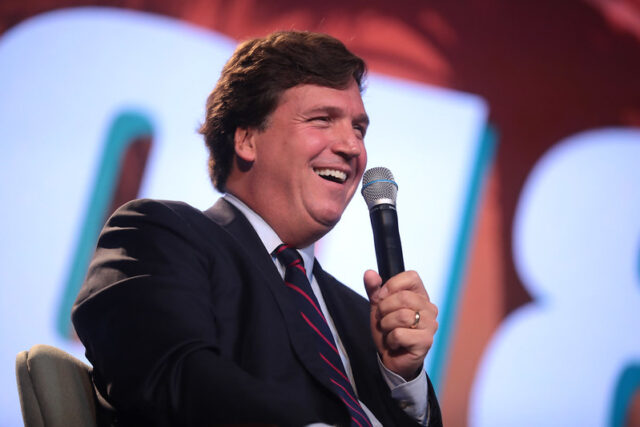
Conservative commentator Tucker Carlson says he was the victim of what he describes as a โ€œdemonic attack,โ€ an incident he claims left him with bleeding claw marks and struggling to breathe. The account, shared publicly for the first time during a Megyn Kelly Live Tour event in New York, has prompted concerns about his mental health and overall fitness for leadership.

Carlsonโ€™s Account

Carlson said the episode occurred about 18 months ago, around 2:30 a.m., while he and his wife were asleep with their four hunting dogs. He said he woke up unable to breathe and felt as though he was โ€œgraying out.โ€ Moments later, he experienced sharp pain under his arms and along his ribs, โ€œas if ripped with a knife.โ€

When he turned on the light, Carlson said, he saw bleeding claw marks on both sides of his chest. His wife awoke and, according to Carlson, immediately concluded that โ€œsomething attacked you.โ€ None of the dogs stirred during the incident, a detail he said made it even more unsettling.

Aftermath and Reflection

Carlson described feeling an overwhelming urge to read the Bible before falling asleep for a few minutes and waking to believe it had been a dream โ€” until he discovered blood on the bedsheets and noticed the same marks again.

He told Kelly that an assistant later suggested the incident was a form of โ€œspiritual warfare,โ€ echoing his wifeโ€™s interpretation. Carlson said he does not expect skeptics to believe him but remains convinced that โ€œsomething realโ€ took place.

โ€œI canโ€™t explain it, but it was not a dream,โ€ he told Megyn Kelly. โ€œIt was something that happened in the physical world.โ€

Reaction and Ridicule

Critics, including Project 2025 contributor and The Origins of Woke author Richard Hanania, questioned Carlsonโ€™s mental state and credibility. โ€œThis is not the kind of thing a stable person says publicly,โ€ Hanania wrote on X.

Observers suggested the incident described by Carlson is consistent with a โ€œnocturnal panic attack,โ€ a phenomenon that occurs during deep sleep and can cause sudden awakenings marked by intense fear and physical distress. Unlike nightmares, these episodes are not typically tied to a specific dream or outside stimulus.

Medical experts note that while panic attacks do not usually cause self-harm, people may inadvertently injure themselves if they move violently or attempt to โ€œescapeโ€ a perceived threat while half-awake and disoriented.

Other scientific explanations for self-inflicted marks during sleep include severe anxiety, night terrors, and REM behavior disorder โ€” in which people act out dreams โ€” and coexisting mental health conditions such as obsessive-compulsive or trauma-related disorders.

Other conservative critics were equally bemused, relying on the principle of Ockhamโ€™s Razor โ€” the idea that the simplest explanation is usually correct.

Supporters, many of them evangelical Christians, framed Carlsonโ€™s experience as evidence of the spiritual conflict they believe lies at the heart of Americaโ€™s cultural and political divide. They praised his willingness to speak openly about faith, calling it a sign of moral courage.

Implications for Carlsonโ€™s Role

Even after the controversy surrounding his friendly interview with white nationalist Nick Fuentes, Carlson remains one of the most influential figures in digital media, commanding a broad following across multiple platforms. However, critics argue that promoting claims of a demonic attack risks alienating mainstream voters and undermining the credibility of both the conservative movement and conservative journalism.

Carlson also claimed in an interview during the final day before the 2024 election that demonic forces created nuclear technology, linking the dropping of the atomic bomb that forced Japanโ€™s unconditional surrender to the rise of secularism.

Carlson did not address how the bombings of Hiroshima and Nagasaki โ€” combined with Russiaโ€™s declaration of war and invasion of Manchuria โ€” eliminated the need for a costly invasion of Japanโ€™s home islands (Operations Olympic and Coronet) or a prolonged blockade, actions that historians widely agree would have caused millions of additional deaths.

He also did not mention that in the early 1900s, church membership and attendance were relatively modest. In 1890, the census found that 33% of Americans identified as belonging to a church.

After World War II, however, the United States experienced a remarkable religious revival. Church membership grew from ~43% attended church before the war to โ€œmore than 55%โ€ by 1950, rising to 69% by the end of the 1950s. Gallup polls from the era show about 45% of adults reported attending church or synagogue weekly, a sharp increase from earlier decades.

The revival spanned denominations: Protestant, Catholic, and Jewish congregations all saw dramatic growth. Many Americans tied this renewed faith to national identity โ€” a Cold War-era contrast with โ€œgodless communism.โ€

Despite the backlash, Tucker Carlsonโ€™s fans arenโ€™t backing down. They say his openness about faith isnโ€™t weakness โ€” itโ€™s courage.

To them, his honesty reflects humility and conviction โ€” the very traits America needs in an age that has grown increasingly secular in recent decades.

Whatโ€™s Next

Carlson has not provided photos or medical documentation of the alleged injuries, and there is no verifiable evidence to support his account.

Whether the story ultimately strengthens or weakens his influence may depend less on the broader electorate than on how conservative audiences interpret it โ€” as a test of faith or a question of credibility.