An Ohio man is facing federal charges after allegedly threatening to burn down a Republican congressman’s home, murder his family and parade the lawmaker’s body through the streets — all while calling for the death of President Donald Trump.
The FBI arrested Alex Justin Miller, 26, of Columbus, Ohio, on one count of interstate transmission of a threat to injure, the Justice Department announced Tuesday.
Fox News Digital identified the alleged target as Rep. Randy Fine, R-Fla., a Jewish lawmaker who said the profanity-laced email went far beyond the vicious political messages members of Congress routinely receive.
“It was so graphic,” Fine told the outlet. “I reported it immediately.”
According to the federal criminal complaint, the message arrived on the morning of Aug. 18 with a subject line threatening to shoot the congressman.
The sender allegedly vowed to travel to Fine’s home, set it on fire and kill the lawmaker and his family while they slept. The message also threatened to behead Fine, repeatedly invoked Nazis and ended with calls for the deaths of both Fine and Trump.
Fine was attending a meeting in Flagler County when the email arrived, while his family was at their Brevard County home, according to the complaint.
Investigators quickly began following the message’s digital trail.
Emergency records obtained from Google allegedly connected the email account to a Google Voice number and Google Pay records bearing Miller’s name. Login data then led investigators to an IP address registered to a Columbus residence that matched the address listed on Miller’s Ohio driver’s license, the complaint states.
Fine told Fox News Digital that authorities identified and arrested the suspect within 36 hours.
“I’m incredibly grateful to the U.S. attorney, the FBI, the Capitol Police, and all the law enforcement in Florida who took this seriously,” Fine said.
The congressman said the episode reinforced his belief that members of Congress need stronger security protections, particularly as political threats become increasingly personal and graphic.
Fine also stressed that violence against elected officials should never be tolerated, regardless of party.
“You want to call us bad people? Be my guest,” Fine told Fox News Digital. “But do not do this sort of thing.”
The FBI and Brevard County Sheriff’s Office investigated the case with assistance from the Secret Service and U.S. Capitol Police. Assistant U.S. Attorney Courtney D. Richardson-Jones will prosecute it.
Miller faces up to five years in federal prison if convicted.
President Donald Trump’s sprawling White House ballroom project just dodged another potentially devastating legal roadblock.
In a narrow 5-4 decision, the Supreme Court allowed construction of the new East Wing complex to continue while the Trump administration presses its appeal against a lower-court injunction.
The unsigned majority concluded that the National Trust for Historic Preservation likely lacks the legal standing necessary to challenge the project. The justices also found that halting construction could inflict “irreparable harm” on the government and interfere with critical security work.
That means crews can keep building the massive ballroom and underground military facility—even as the explosive fight over the project’s legality remains unresolved.
Trump wasted no time celebrating.
“The United States Supreme Court has just ruled, 5-4, that the magnificent Ballroom and Military Complex can continue, without any further contingency, doubt, or threat,” Trump wrote on Truth Social, according to Fox News.
“We are living in the Golden Age of America, and this Building will be one of the Greatest ever constructed in Washington, D.C.”
Trump said the project remains on track for completion in summer 2028 and predicted it will become “something that the entire Country is very proud of.”
He also insisted the ballroom is being financed entirely by private donors and corporations, calling it a “Gift” that will come at no cost to taxpayers.
Justices Cite Serious Security Concerns
The administration has argued that the ballroom cannot simply be separated from the fortified military installation being built beneath it.
In its ruling, the Supreme Court pointed to declarations from senior national-security officials—including the directors of the FBI, CIA, Secret Service and Office of the Director of National Intelligence—warning about the dangers of freezing construction midway through the project.
The Army secretary told the court that the planned ballroom’s height and mass are crucial to shielding the underground facility from potential attacks. Officials also warned that delays could disrupt Secret Service operations, expose the unfinished site to foreign intelligence gathering and create serious structural problems.
The majority stressed that it was not issuing a final ruling on whether Trump had the legal authority to undertake the project without congressional approval.
Instead, the court concluded that the National Trust’s lawsuit likely falters at the starting line because its alleged aesthetic and historical injuries do not amount to the concrete harm required to sue in federal court.
Roberts Breaks With Conservative Majority
The decision produced an extraordinary split, with Chief Justice John Roberts joining Justices Sonia Sotomayor, Elena Kagan and Ketanji Brown Jackson in dissent.
Roberts argued that the project is “likely unlawful” because federal law prohibits the construction of structures on government parkland in Washington without express authorization from Congress.
“The ballroom is a building or structure being erected on federal park grounds—President’s Park—in the District of Columbia,” Roberts wrote. “Yet Congress has not passed any law resembling ‘express authority’ for the Executive’s construction of it.”
Roberts accused the majority of allowing a likely infringement on Congress’ power over federal spending and property to continue.
“Today’s decision is no victory for the separation of powers,” he wrote.
The National Trust seized on that dissent while acknowledging the painful setback. President and CEO Brent Leggs said the organization was “deeply disappointed” but emphasized that the court did not decide whether the ballroom itself is legal.
“This is not the final decision on the merits of our case,” Leggs said in a statement.
A former longtime White House teleprompter operator will hand over more than $172,000 after federal regulators found he used advance knowledge of President Trump’s speeches to cash in on prediction-market bets.
Gabriel Perez, who ran the teleprompter for Trump since 2016, settled with the Commodity Futures Trading Commission on Friday. He must return $107,539 in profits and pay a $65,000 civil penalty. A three-year trading ban is also in place.
According to the CFTC, Perez traded so-called “mention market” contracts on Kalshi between December 2025 and February 2026. These contracts pay out based on whether specific words or phrases appear in a speech. As teleprompter operator, Perez saw the prepared remarks before the President delivered them and used that nonpublic information to place winning bets.
The agency said he misappropriated the material “in breach of his duty of trust and confidence,” generating over $107,500 in profits. The $65,000 penalty was reduced because of Perez’s “exemplary cooperation” with investigators. Kalshi flagged the activity and assisted the probe.
Former White House press secretary Karoline Leavitt confirmed earlier that Perez was placed on unpaid administrative leave after the allegations surfaced. He is no longer employed by the federal government. The White House has long maintained strict ethics rules and previously warned staff against using nonpublic information for prediction-market bets.
ABC News first reported the investigation last month. Federal prosecutors in Manhattan were notified but declined to pursue a criminal case.
Kalshi’s lead lawyer welcomed the outcome, stating that no one is above the rules. The settlement closes the matter on a staffer who broke trust—and underscores that even in the White House, the rules apply.
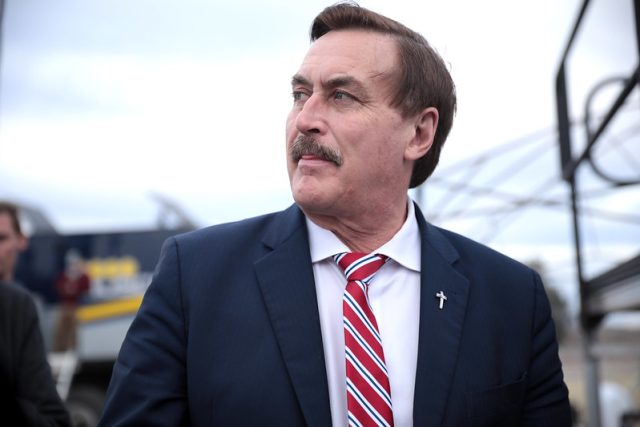
Mike Lindell is stepping away from the company that made him a household name and putting his full attention on becoming Minnesota’s next governor.
The MyPillow founder announced Tuesday that he had resigned as the company’s chief executive after 22 years, calling it “one of the biggest decisions of my life.”
“I’m stepping down as CEO of MyPillow so I can devote 100% of my time and energy to my campaign for Governor of Minnesota,” Lindell said in a social media post. “Minnesota deserves my full attention, and that’s exactly what I’m giving it. I’m all in, and I can’t wait to earn your vote.”
The transition goes beyond a change in title. According to a company announcement, Lindell has reduced his ownership to a minority stake. He will remain a shareholder and member of MyPillow’s board of directors but will no longer oversee day-to-day operations.
James “Jim” Furlong, who served as MyPillow’s president from 2004 to 2019 and helped grow the Minnesota startup into a national brand, is returning as CEO. The company said its products, guarantees, Minnesota manufacturing and jobs will continue without interruption.
“After 22 years of leading MyPillow, I know the company is ready for its next chapter and I know Minnesota cannot wait,” Lindell said in the company statement. “This decision is not about walking away. It is about stepping forward to serve.”
The move comes at a pivotal moment in the Republican contest. Minnesota’s primary is set for August 11, with early voting already underway. Lindell’s leading rivals include Minnesota House Speaker Lisa Demuth and businessman and Army veteran Kendall Qualls, who secured the state Republican Party’s endorsement.
Lindell, however, carries the endorsement of President Donald Trump. In a July 15 Truth Social post, Trump called the entrepreneur “one of America’s greatest and most hard working Patriots” and gave him his “complete and total” endorsement.
The latest KSTP/SurveyUSA poll placed Lindell ahead of the principal GOP field with 35% support, followed by Demuth at 26% and Qualls at 11%. The poll still left more than a quarter of voters supporting another candidate or undecided, leaving room for movement in the closing days.
The eventual Republican nominee will compete for an open seat. Democratic Gov. Tim Walz ended his bid for a third term in January amid mounting scrutiny of fraud involving state-administered programs. Democratic U.S. Sen. Amy Klobuchar is widely viewed as the favorite for her party’s nomination.
Lindell’s rise as a national political figure has also brought years of courtroom fights tied to his claims about the 2020 election. In September 2025, a federal judge ruled that statements Lindell made about voting technology company Smartmatic were false and defamatory, while leaving the questions of actual malice and damages for later proceedings. Lindell has also appealed a separate $2.3 million defamation verdict involving former Dominion Voting Systems employee Eric Coomer.
For Lindell, resigning from MyPillow turns his campaign’s central argument into a personal wager: The businessman who built his public identity around his company is now betting that Minnesota voters want him in the governor’s office instead.
With less than a week before the primary, Lindell says there is no divided focus left.
By The White House - https://x.com/RepMTG/status/1925525961656717605/, Public Domain, https://commons.wikimedia.org/w/index.php?curid=178898214
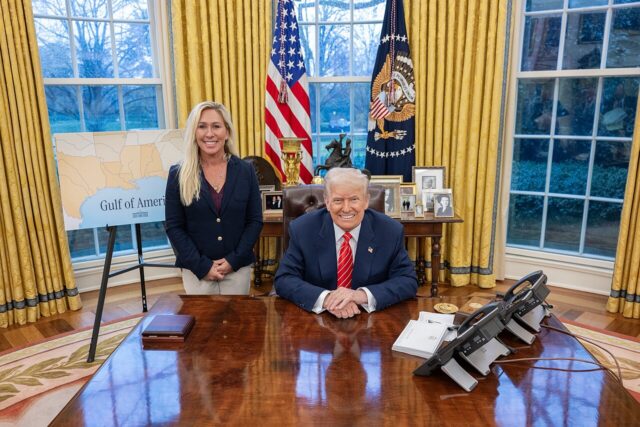
Former Republican Rep. Marjorie Taylor Greene married conservative media personality Brian Glenn in Las Vegas on Tuesday, beginning a new chapter after her dramatic break with President Donald Trump and departure from Congress.
“Last night, surrounded by our families, @brianglenntv and I said ‘I do,’” Greene announced Wednesday on X, sharing several photographs from the ceremony.
— Marjorie Taylor Greene 🇺🇸 (@mtgreenee) July 29, 2026
The images showed Greene carrying a colorful bouquet and wearing a white wedding dress as she embraced Glenn, a former White House correspondent for the conservative Real America’s Voice network.
The couple held their ceremony at the Bellagio’s Terrazza di Sogno after having dinner at Spago, according to TMZ. Family members joined the newlyweds as they celebrated by playing craps, roulette and slot machines inside the resort.
Clark County records reportedly show that Greene and Glenn applied for a marriage license on July 24.
The pair announced their engagement in December, shortly before Greene’s departure from Washington.
“She said ‘yes,’” Glenn wrote at the time.
“Happily ever after!!!” Greene responded. “I love you @brianglenntv!!!”
Trump’s Cutting Remark
Glenn stepped down from his position at Real America’s Voice in May, one week after Trump took a public swipe at Greene while praising Glenn inside the Oval Office.
“You know, you act so good. I love this guy. He’s a great guy, even though I don’t love his girlfriend too much,” Trump said after Glenn asked him a question, according to Mediaite.
When Glenn later announced that he was leaving the network, he said he wanted to focus on his health, neglected family relationships and his future with Greene.
“And of course, Marjorie and I, planning a wedding likely before the end of the year,” Glenn told Real America’s News host Eric Bolling. “Focus on that, but really focus on each other.”
The couple reportedly met at a Trump rally in 2022 and began dating in 2023 after their respective marriages ended.
From Trump Loyalist To Fierce Critic
The wedding follows a tumultuous political year for Greene, who entered Congress in 2021 and quickly became one of Trump’s most recognizable and combative supporters.
That alliance collapsed in spectacular fashion in late 2025.
Greene publicly challenged the president over his foreign policy, the conflict in Gaza, health insurance costs and the release of government records connected to Jeffrey Epstein. She also accused Republican leaders of sidelining Congress and allowing bills she championed to sit “collecting dust.”
Trump withdrew his endorsement and branded Greene a “traitor,” while signaling that he would support a primary challenger against her in Georgia’s deeply Republican 14th Congressional District.
Greene responded by announcing that she would resign on Jan. 5, 2026—approximately one year before the end of her term.
“I have too much self respect and dignity, love my family way too much, and do not want my sweet district to have to endure a hurtful and hateful primary against me by the President we all fought for,” she wrote in her resignation statement, according to CBS News.
“I refuse to be a ‘battered wife’ hoping it all goes away and gets better,” Greene added.
The resignation temporarily narrowed the Republican Party’s already fragile House majority and ended Greene’s five-year career on Capitol Hill.
Her feud with Trump, however, did not end there. Greene has continued criticizing the president’s foreign policy and accusing Republican leaders of abandoning the “America First” voters who put them in power.
In June, she declared that she was finished supporting what she called the “America LAST Republican Party,” while stressing that she had no intention of becoming a Democrat.
Is A Political Comeback Coming?
Despite leaving Congress, Greene may not be finished with politics.
TIME reported in November that Greene had privately discussed the possibility of running for president in 2028 with allies. Greene did not publicly confirm the report or announce a campaign.
More recently, she revealed that she has participated in conversations about launching a new political party capable of challenging both Republicans and Democrats.
“I am in talks with people and there are serious conversations happening, looking at what are the mechanics of that and the reality of it,” Greene told Piers Morgan in June, according to Mediaite.
Greene said such an effort could unite “serious players from the right and the left” around what she described as a genuinely America-focused movement, although she acknowledged that building a competitive third party could take multiple election cycles.
The former congresswoman has also launched a video series called “Life With MTG,” allowing her to remain visible and continue weighing in on national politics from outside Washington.
For now, Greene insists she does not miss Congress and is enjoying what she calls “Normal People World.” But her ongoing political commentary, reported interest in a presidential campaign and involvement in potential third-party organizing suggest her time outside the arena may not be permanent.
Even Trump appeared to leave that possibility open after her resignation.
“It’s not going to be easy for her” to revive her political career, Trump told NBC News in November. “But I’d love to see that.”
He added that Greene first needed to “take a little rest.”
With her congressional career behind her and her Las Vegas wedding now complete, Greene may soon have to decide whether that rest is coming to an end.
President Donald Trump monitors U.S. military operations in Venezuela, from Mar-a-Lago Club in Palm Beach, Florida, on Saturday, January 3, 2026.
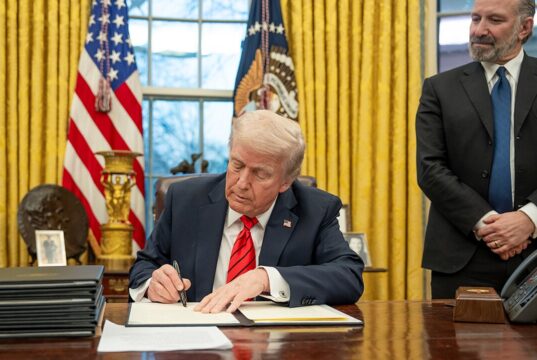
President Donald Trump signed an executive order Monday establishing a new White House commission dedicated to improving life for America’s military spouses and families.
Surrounded by military spouses in the Oval Office, Trump described the initiative as “long overdue” and said supporting families at home is essential to maintaining a strong and prepared fighting force.
“America cannot have the strongest military in the world without the love and devotion of our remarkable military spouses,” Trump said during the signing ceremony, according to the Department of War.
The executive order creates the President’s Military Spouse Commission, which will advise Trump on challenges involving employment, housing, health care, education, child care and support during military deployments.
The commission will be chaired by Jennifer Hegseth, the wife of Secretary of War Pete Hegseth. Its membership will include the spouses of the military service secretaries, members of the Joint Chiefs of Staff, senior enlisted leaders and the secretary of Homeland Security.
Together, the commission’s members have more than 400 years of experience as active-duty military spouses, Trump said.
Military families routinely move to a new duty station every two or three years, often forcing spouses to leave jobs, transfer professional licenses, find new schools and secure child care in unfamiliar communities. Deployments can also leave spouses managing households and raising children alone for months at a time.
Those disruptions have produced significant economic consequences.
The Pentagon’s 2024 Active Duty Spouse Survey found that the unemployment rate among civilian military spouses was 20%—several times higher than the national rate.
Spouses who had experienced a permanent change-of-station move during the previous year faced 136% higher odds of being unemployed, according to the survey. Having children younger than six increased the odds of unemployment by 68%.
Jennifer Hegseth said the commission’s members will bring decades of personal experience to the effort, including firsthand knowledge of the difficulties families encounter as they move between military installations.
Secretary Hegseth argued that addressing those concerns directly affects military performance.
“If that warfighter knows that their family is good to go, they will go the extra mile, which is what our nation asks,” he said.
Under the order, the commission will communicate directly with military spouses, identify recurring concerns and develop practical policy recommendations for the president. It is expected to meet monthly at the White House and submit a report at the end of each fiscal year.
Members will serve without compensation, although they may receive reimbursement for travel. The Department of War will provide administrative, technical and financial support using existing appropriations.
The commission is scheduled to operate for two years unless Trump extends it.
The initiative builds on policies Trump pursued during his first term to expand federal employment opportunities for military spouses, improve the portability of professional licenses and encourage remote and flexible work.
It also follows approximately $9 billion in military and family quality-of-life funding included in the One Big Beautiful Bill Act signed by Trump in July 2025, according to the Department of War.
The White House said the new commission reflects Trump’s belief that military families are inseparable from military readiness.
“Thriving military families mean a more resilient fighting force and thus a stronger and more secure America,” the executive order states.
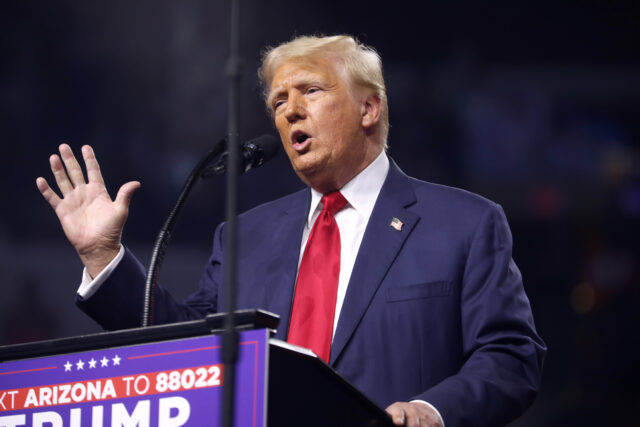
Gage Skidmore from Surprise, AZ, United States of America, CC BY-SA 2.0 , via Wikimedia Commons
President Donald Trump threatened Thursday to temporarily withdraw Todd Blanche’s nomination for attorney general and wait for two Republican holdouts to leave Washington before trying again.
The extraordinary maneuver would allow Blanche to remain acting attorney general while Trump attempts to outlast Sens. John Cornyn, R-Texas, and Thom Tillis, R-N.C., whose opposition forced Senate Judiciary Committee Chairman Chuck Grassley, R-Iowa, to postpone Thursday’s scheduled vote.
“Todd Blanche is a STAR, and everyone knows it!” Trump wrote on Truth Social. “He has the potential to go down as one of the Greatest Attorney Generals of All Time.”
Trump then turned his fire on Cornyn and Tillis, accusing the departing senators of blocking a nominee they know is qualified.
“John Cornyn, of Texas, and Thom Tillis, of North Carolina, both of whom I refused to Endorse, and whose political careers have been ended by my action, are refusing to vote for this Great Nominee, who will remain, in any event, as Acting,” Trump wrote.
“I have no objection to temporarily withdrawing Todd’s name, if they do not do the right thing, and putting him back after Cornyn and Tillis are out of office,” he added.
Tillis announced last year that he would not seek reelection, while Cornyn lost the Texas Republican primary to state Attorney General Ken Paxton, who received Trump’s endorsement.
Trump had already suggested Wednesday that Cornyn’s resistance could be rooted in lingering resentment over the primary.
“He’s outstanding,” Trump told reporters when asked about Blanche’s nomination. “Maybe John Cornyn’s upset with me because I didn’t endorse him,” according to The Associated Press.
Cornyn laughed off that suggestion, calling it “a convenient excuse” for the administration’s failure to cooperate with the Judiciary Committee, ABC News reported.
The standoff centers on a controversial settlement of Trump’s $10 billion lawsuit against the Internal Revenue Service over the leaking of his tax returns.
That agreement created a proposed $1.776 billion “Anti-Weaponization Fund” to compensate people who claim they were targeted by the federal government. It also included protections shielding Trump, members of his family and affiliated businesses from certain tax audits.
The Justice Department announced in June that it would no longer move forward with the fund after bipartisan backlash. Blanche also testified at his July 15 confirmation hearing that the fund was “dead.”
Cornyn and Tillis, however, want those assurances put in writing and the settlement language amended so the fund cannot be revived later. Cornyn also wants confirmation that Trump will not receive immunity from audits of future tax returns.
“We want to make sure that it remains dead, and that the president isn’t given any immunity from future audits that the ordinary taxpayer would not enjoy,” Cornyn told CBS News Thursday.
Cornyn said the Justice Department sent him proposed language Wednesday night, but he found it inadequate and responded with a counterproposal Thursday morning. He blamed “higher ups” at the White House for resisting the changes.
“Basically I get the sense that Todd Blanche is not the problem, it’s other folks at the White House who are resistant to any changes, any additional documentation,” Cornyn told The Hill. “But they need to make a fundamental decision whether they want him confirmed or not.”
Tillis similarly suggested that an unnamed White House adviser may be urging Trump to preserve the fund as an option.
“The only reason why we wouldn’t move forward with this language is because that same adviser wants to bring it back to life at some point,” Tillis told CBS News.
“That is horrible policy and it’s horrible politics,” he told The Hill.
Tillis acknowledged that Trump is “perfectly entitled” to hold Blanche’s nomination until January but warned the strategy could backfire if Republicans lose Senate seats—or control of the chamber—in November.
Cornyn also disputed Trump’s portrayal of the fight as a two-senator rebellion.
“POTUS is mistaken if he believes concerns about the provisions in his tax lawsuit settlement are limited to me and Senator Tillis,” Cornyn wrote on X.
Sen. Bill Cassidy, R-La., another outgoing Republican, declined Thursday to say whether he would support Blanche if the nomination came up for a vote, telling CBS News he was still gathering information.
For now, Blanche can continue overseeing the Justice Department in an acting capacity because he was previously confirmed as deputy attorney general. The White House has also highlighted support for his nomination from major law enforcement organizations, Republican state attorneys general and former Attorney General William Barr. The administration called Blanche a proven leader committed to fighting violent crime, fraud and transnational gangs.
Cornyn said Blanche’s nomination could advance as soon as next week if the administration agrees to clarify the settlement. Otherwise, the confirmation fight could stretch into September—or Trump could carry out his threat
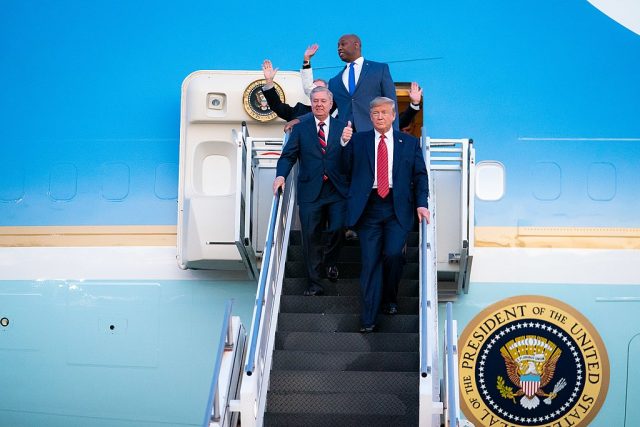
[Photo Credit: The White House from Washington, DC, Public domain, via Wikimedia Commons]
Mark Sanford is back — and once again running headlong into President Donald Trump’s political machine.
The former South Carolina governor and congressman announced Thursday that he is seeking the Senate seat previously held by the late Sen. Lindsey Graham, joining a rapidly expanding Republican field despite Trump already throwing his support behind Graham’s sister, Sen. Darline Graham.
“Our country is at a financial tipping point, and I can’t sit on the sidelines while Washington adds a trillion dollars to the debt every 100 days,” Sanford wrote on social media.
“I’ve spent my entire time in politics fighting this fight, and I’m running for U.S. Senate to keep the American dream alive for our sons, my grandson, and those you love. Join us,” he added.
Our country is at a financial tipping point, and I can't sit on the sidelines while Washington adds a trillion dollars to the debt every 100 days. I've spent my entire time in politics fighting this fight, and I'm running for U.S. Senate to keep the American dream alive for our… pic.twitter.com/q5ByORi0M3
Sanford’s announcement included a video in which he reflected on Graham’s death and described the loss as a reminder of “how short and precious life is.”
“My own dad got Lou Gehrig’s disease when I was in high school, and this notion of all of us having just a little time has always hit me hard,” Sanford said. “We’re stewards of our lives and the things that we love for just a short time.”
The campaign gives Sanford another opportunity to revive his longtime crusade against federal spending — but it also places him squarely against Trump’s preferred candidate.
Trump announced last week that Darline Graham would receive his “Complete and Total Endorsement” if she entered the race, enthusiastically declaring: “RUN, DARLINE, RUN!” (RELATED: Trump Speaks Out On Potential Lindsey Graham Replacement)
Graham, who was appointed by Gov. Henry McMaster to temporarily fill her brother’s seat, confirmed during an interview with Sean Hannity that she would seek the full six-year term. Her appointment made her the first woman to represent South Carolina in the Senate.
Sanford’s entry creates an especially combustible matchup because he and Trump have already fought — and Trump won.
Sanford repeatedly criticized Trump during his first administration, drawing the president’s wrath while seeking another House term in 2018. Just hours before polls closed in that year’s Republican primary, Trump endorsed Sanford’s opponent, state Rep. Katie Arrington, and declared that Sanford had been “very unhelpful” and was “better off in Argentina.”
The jab referenced Sanford’s infamous 2009 disappearance while serving as governor. His staff initially said he was hiking the Appalachian Trail, but Sanford later acknowledged that he had traveled to Argentina to visit a woman with whom he was having an affair.
Arrington narrowly defeated Sanford, handing him his first loss in a South Carolina election. Arrington had spent much of the campaign portraying Sanford as a “Never Trumper.”
Sanford returned the challenge the following year by launching a long-shot campaign against Trump for the 2020 Republican presidential nomination. That effort, which also focused heavily on the national debt, lasted roughly two months before Sanford pulled the plug after struggling to gain traction.
His latest campaign also represents a reversal from the position he took only months ago.
Sanford briefly launched a campaign for his former House seat earlier this year but withdrew in April, saying “the most effective way I can contribute right now is not by seeking office.” At the time, he said he planned to build a nonprofit and grassroots movement focused on the country’s growing debt.
Graham’s death, however, opened a rare statewide opportunity — and Sanford is now arguing that Washington’s spending binge demands his return to elected office.
The 66-year-old served as South Carolina’s governor from 2003 through 2011. He represented the state’s 1st Congressional District from 1995 through 2001 and again from 2013 through 2019.
Sanford joins a Republican field that already includes Graham, Reps. Russell Fry and Ralph Norman, businessman Mark Lynch and attorney Duke Buckner. Norman has secured support from several prominent conservatives, including Rep. Nancy Mace and former Sen. Jim DeMint, underscoring the resistance to Trump’s effort to consolidate the party behind Graham.
The compressed campaign leaves Sanford little time to rebuild his political organization or convince Republican voters to look past his long-running feud with Trump.
Candidate filing closes July 28. The special Republican primary will be held Aug. 11, followed by an Aug. 25 runoff if no candidate receives a majority. The winner will advance to the Nov. 3 general election against Democrat nominee Annie Andrews, according to the South Carolina Election Commission.
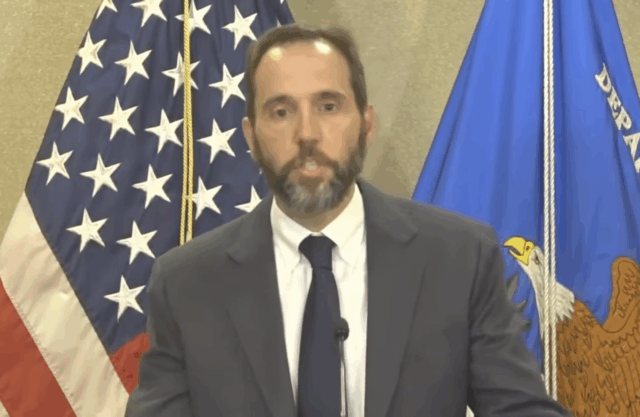
House Judiciary Committee Chairman Jim Jordan is calling on the Justice Department to investigate former Special Counsel Jack Smith, accusing the longtime prosecutor of misleading Congress about his pursuit of lawmakers’ private communications during the Trump election case.
Jordan sent a criminal referral Wednesday to Acting Attorney General Todd Blanche after newly released Justice Department records appeared to conflict with testimony Smith gave under oath in December 2025.
The referral does not compel the DOJ to open an investigation or bring charges, but it formally places Smith’s testimony before federal prosecutors for review.
At the center of the explosive dispute are text messages involving members of Congress.
During a closed-door deposition, Smith was asked whether telephone records subpoenaed by his office included the contents of lawmakers’ calls or text messages. Smith answered “no” to both questions.
Those answers were technically accurate when applied specifically to toll records, which generally contain information such as telephone numbers, dates and call durations—not the substance of communications.
But Jordan argues Smith left lawmakers with a deeply misleading impression.
Records recently released by Senate Judiciary Committee Chairman Chuck Grassley indicate Smith’s team separately obtained the contents of text messages through a subpoena issued to the National Archives and Records Administration. According to Jordan, the material included communications involving dozens of lawmakers.
“The responses provided by Mr. Smith gave the impression that neither Mr. Smith nor his team had access to the content of Members’ privileged text messages. We now know this to be false,” Jordan wrote.
Smith’s attorneys fired back, accusing the Republican chairman of twisting their client’s words to manufacture a criminal allegation.
Peter Koski and Lanny Breuer argued that Smith answered the precise questions he was asked about toll records, which did not contain message content. They said Jordan was improperly conflating those subpoenas with a separate legal process used to obtain communications from another source.
“During his testimony, Mr. Smith provided truthful, responsive answers, and candidly discussed his work as Special Counsel,” the attorneys wrote in a letter to Jordan and Judiciary Committee Ranking Member Jamie Raskin.
They characterized the referral as an effort to “weaponize the justice system” against a career prosecutor.
The Justice Department confirmed that it received Jordan’s referral and said it “will investigate all evidence of criminal conduct.” The department did not say whether it has formally opened an investigation into Smith.
Jordan alleges the former special counsel may have violated federal law by knowingly making materially false statements to Congress. Prosecutors must now determine whether Smith merely answered a narrowly worded question—or deliberately concealed the full reach of his investigation.
The referral opens another front in the long-running battle over Smith’s prosecutions of President Donald Trump involving classified documents and challenges to the 2020 election results.
Smith abandoned both cases following Trump’s 2024 election victory, citing Justice Department policy against prosecuting a sitting president. He resigned shortly before Trump returned to the White House.
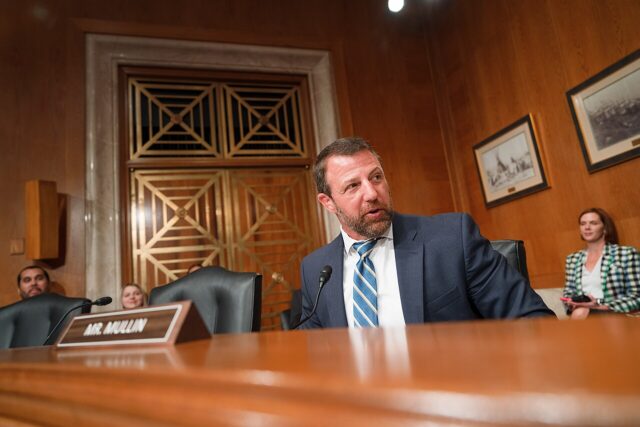
Indian Affairs Committee Hearings to examine Indian Self-Determination and Education Assistance Act successes and opportunities at the Department of the Interior and the Indian Health Service, in Washington, DC on September 17, 2025. (Official U.S. Senate photo by Ryan Donnell)
Homeland Security Secretary Markwayne Mullin has been on the job for just four months — and he is reportedly already stepping on toes inside President Donald Trump’s White House.
Tensions between Mullin and senior administration officials have been building after a string of policy disputes, public missteps and concerns surrounding his preferred candidate to lead Immigration and Customs Enforcement, NBC News reported Thursday.
The first major collision reportedly came when Mullin ordered ICE to temporarily halt most vehicle stops following fatal shootings involving immigration agents in Houston, Texas, and Biddeford, Maine.
The Wall Street Journal reported that Mullin and acting ICE Director Dave Venturella made the call without first briefing Trump. News of the pause began leaking before the president could be informed, leaving him caught off guard. The Wall Street Journal and ABC News separately confirmed that Mullin directed the suspension.
Trump wasted little time reversing it.
“We CANNOT give up one of I.C.E.’s most important and effective Crime Fighting tools, THE TRAFFIC STOP!” the president wrote on Truth Social.
The episode apparently did not sit well inside the West Wing.
“Every Cabinet secretary knows that they have to come to the White House for major policy decisions,” a senior administration official told NBC News. “The president sees, hears, reads everything.”
Mullin also reportedly irritated officials with a recent CNN interview concerning the Supreme Court’s decision allowing the administration to move forward with ending Temporary Protected Status for immigrants from Haiti and Syria.
The secretary suggested that hundreds of thousands of affected immigrants could apply for another legal status. They could not automatically do so under the ruling, according to NBC News, which described Mullin’s remarks as a misstatement that “annoyed” some administration officials.
The Supreme Court ruled on June 25 that lower courts could not continue postponing the administration’s termination of the two countries’ TPS designations while litigation moved forward.
Another potential fault line involves Richard “Lance” Schroyer, Trump’s nominee to lead ICE.
Schroyer, a former Marine and Oklahoma Highway Patrol veteran, is a longtime Mullin ally whom the secretary previously called “a good friend of mine.” Mullin brought Schroyer into DHS to advise local law enforcement agencies participating in a federal immigration enforcement program before Trump nominated him for the top ICE post in June.
But the nomination has reportedly drawn resistance from officials who question whether Schroyer possesses enough federal management experience to run the agency spearheading Trump’s deportation campaign.
Trump border czar Tom Homan was among those who objected to the selection, according to The Wall Street Journal.
“Homan and others aren’t particularly thrilled with him,” the administration official told NBC News.
The White House publicly played down any suggestion of a widening rift, insisting Mullin remains committed to carrying out Trump’s immigration agenda.
“Secretary Mullin is working hard to implement the President’s immigration enforcement agenda,” White House spokeswoman Abigail Jackson said. “Thanks to President Trump and Secretary Mullin, the border is totally secure, dangerous illegal immigrants are being deported, and Americans are safer.”
“Secretary Mullin will continue to enforce federal immigration law as effectively as possible,” she added.
Trump selected Mullin to replace Kristi Noem, and the former Oklahoma senator was sworn in on March 24 after receiving bipartisan Senate confirmation.
During his confirmation process, Mullin said his goal was to keep DHS from dominating the daily news cycle.
“My goal in six months is that we’re not in the lead story every single day,” he told senators.
Four months later, the reported turbulence inside Trump’s team is threatening to make that promise harder to keep.