



News

Home News Page 2

DOJ Wants Georgia Judge Booted From Election Case Over Alleged Fani Willis Ties

0

The Justice Department is demanding that a federal judge step aside from a high-profile Georgia election records fight after reports linked her to a judicial misconduct scandal — and to an event honoring embattled Fulton County District Attorney Fani Willis.

In a bombshell filing Friday, DOJ lawyers asked U.S. District Judge Eleanor Ross to recuse herself from a lawsuit against Georgia Secretary of State Brad Raffensperger over access to state voting records, arguing that her alleged attendance at a political event celebrating Willis creates the appearance of bias.

“A judge who attended a party celebrating the election of a Democrat best known for prosecuting a Republican President for alleged election interference cannot then preside over a case concerning that President’s efforts to ensure election integrity,” DOJ attorneys wrote.

The filing follows reports identifying Ross as the unnamed federal judge who received a private reprimand from the 11th Circuit earlier this year after investigators found the judge engaged in sexual activity with a high-ranking police officer inside courthouse chambers and later made false statements during the investigation. The court never publicly identified the judge, but the DOJ cited media reports linking Ross to the disciplinary matter.

Willis Connection Draws Fire

The Justice Department’s recusal request centers on findings that the judge attended an event connected to Willis’ campaign. According to reporting on the disciplinary investigation, the judge acknowledged attending a private mixer with former colleagues from the Fulton County District Attorney’s Office, but investigators concluded the gathering was part of a larger partisan political event sponsored by Willis’ campaign.

The connection is particularly sensitive because Ross previously worked in the Fulton County DA’s office, where she overlapped with Willis before either woman rose to national prominence.

Ross is currently overseeing the DOJ’s legal battle with Raffensperger over access to Georgia voter records. A hearing is scheduled for Wednesday, though the Justice Department has asked that it be delayed pending the recusal fight.

The Long Trump-Willis War

The dispute lands in the middle of one of the most explosive political feuds in America.

Willis became a national figure in 2023 when she indicted Donald Trump and 18 allies under Georgia’s racketeering law, accusing them of participating in a scheme to overturn the 2020 election results in the state. Trump repeatedly blasted the case as politically motivated and vowed to fight it.

But the prosecution later unraveled after revelations that Willis had a romantic relationship with special prosecutor Nathan Wade, whom she had appointed to lead the case. A Georgia appeals court ultimately removed Willis from the prosecution, citing an “appearance of impropriety.” The case was later dropped, marking a major victory for Trump.

The fallout didn’t end there. Willis also faced court sanctions in separate records disputes, with judges criticizing her office’s handling of public records requests and ordering payments of attorneys’ fees.

Now, the Trump Justice Department is arguing that any judge linked to a political event celebrating Willis cannot fairly oversee litigation tied to election integrity issues stemming from the same broader political battle.

The election records lawsuit itself is part of a broader push by the administration to obtain voter-registration and election materials from multiple states. Georgia officials have argued that portions of the voter data sought by federal officials are protected under state law and cannot be released without satisfying legal requirements.

Whether Ross remains on the case could now become the next flashpoint in the years-long legal war between Trump and the Georgia officials who helped drive the investigations into his efforts to challenge the 2020 election.

Federal Judge Blocks Trump-Led Effort To Rename Kennedy Center, Rules Congress Holds Final Authority

1
Kennedy Center for the Performing Arts

A federal judge has halted efforts to rename the John F. Kennedy Center for the Performing Arts and blocked plans for a lengthy closure of the institution, ruling that neither action can proceed without authorization from Congress.

In a decision issued Friday, U.S. District Judge Christopher Cooper found that the Kennedy Center’s board lacked the legal authority to rebrand the federally chartered institution as the “Trump-Kennedy Center,” ordering officials to remove the name from signage and official references within 14 days.

The ruling marks a major setback for President Donald Trump’s broader effort to reshape one of the nation’s most prominent cultural institutions.

Court: Congress Created The Kennedy Center — And Only Congress Can Rename It

The controversy began after trustees voted in December to add Trump’s name to the institution, citing his fundraising efforts and support for future renovations.

The move quickly triggered lawsuits from lawmakers, members of the Kennedy family, historians, and arts organizations, all arguing that the board had exceeded its authority.

Among those challenging the decision was Rep. Joyce Beatty, who argued that Congress established the Kennedy Center as a living memorial to President John F. Kennedy and never authorized adding another president’s name to the institution.

Judge Cooper agreed, writing that the board cannot override federal law through an internal vote. Because Congress created and named the Kennedy Center in federal statute, any official name change would require congressional action.

Planned Closure Also Put On Hold

The ruling also blocks a separate proposal to suspend Kennedy Center operations for two years beginning in July 2026 while extensive renovations were completed.

The administration had argued that a prolonged closure was necessary to modernize the facility, but the proposal drew opposition from artists, preservation advocates, and lawmakers concerned about the impact on performances and cultural programming.

During court proceedings, Cooper questioned whether the executive branch possessed the authority to make such sweeping changes to a congressionally chartered institution without legislative approval.

The court ultimately concluded that major structural and operational changes of that scale require congressional involvement, preventing the administration from moving forward unilaterally.

Fundraising Argument Falls Short

Kennedy Center officials had argued that keeping Trump’s name attached to the institution was critical to maintaining donor support.

Executive Director Charles Matthew Floca told the court that Trump’s involvement had already generated tens of millions of dollars in commitments and could attract substantially more private funding in the future.

According to court filings, officials warned that removing Trump’s name could jeopardize those fundraising efforts and create financial challenges for the institution.

The judge rejected that argument, concluding that fundraising considerations cannot supersede federal law.

Latest Clash In Fight Over Cultural Institutions

The Kennedy Center has emerged as a major battleground in the administration’s effort to influence the direction of prominent cultural organizations.

Since gaining influence over the board, Trump allies have pursued leadership changes, programming adjustments, and initiatives aimed at reducing what they describe as politically driven or “woke” content.

Those efforts have prompted resignations, canceled appearances, and public criticism from some artists and performers.

While appeals are expected, Friday’s ruling delivers a clear message: Congress named the Kennedy Center after President John F. Kennedy, and any effort to change that designation must begin—and end—on Capitol Hill.

Trump Heads to Situation Room as Iran Deal Decision Appears Imminent

2
By The White House - https://www.flickr.com/photos/202101414@N05/54581054338/, Public Domain,

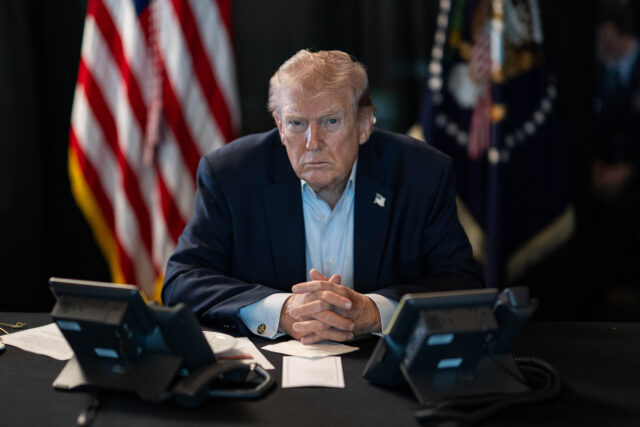
President Trump signaled Friday that a final decision on a potential agreement with Iran could be just hours away, announcing he was heading to the White House Situation Room to make what he called a “final determination” on a proposed deal that would dramatically reshape U.S.-Iran relations.

“I will be meeting now, in the Situation Room, to make a final determination,” Trump wrote in a lengthy Truth Social post outlining the terms he says Iran must accept before any agreement moves forward.

The president’s announcement immediately fueled speculation that a major breakthrough could be nearing after months of negotiations following the U.S.-Israel military campaign against Iran earlier this year.

Among Trump’s non-negotiable demands: Iran must permanently abandon any pursuit of nuclear weapons.

“Iran must agree that they will never have a Nuclear Weapon or Bomb,” Trump declared.

Trump also outlined provisions that would reopen the Strait of Hormuz to unrestricted international shipping, eliminate any remaining naval mines in the waterway, and potentially end the U.S. blockade of Iranian ports.

“Ships caught in the Strait due to our amazing and unprecedented Naval Blockade, which will now be lifted, may start the process of ‘heading home!’” Trump wrote. “Say HELLO to your wives, husbands, parents, and families from me, your favorite President!”

Perhaps the most striking element of Trump’s proposal involves Iran’s remaining stockpile of enriched uranium.

According to the president, the United States would work alongside Iran and the International Atomic Energy Agency to excavate and destroy what he described as enriched nuclear material buried beneath mountains damaged during U.S. B-2 bomber strikes nearly a year ago.

“The enriched material, sometimes referred to as ‘Nuclear Dust,’ … will be unearthed by the United States … and DESTROYED,” Trump wrote, adding that only the U.S. and China possess the capability to carry out such an operation.

As Fox News reported, it remains unclear whether the removal and destruction of Iran’s enriched uranium is formally included in the draft agreement currently under discussion. The White House confirmed Thursday that negotiations are ongoing, but details of the final arrangement remain unresolved.

Iranian officials have responded cautiously. The semi-official Fars News Agency characterized Trump’s statements as a “mixture of truth and falsehood” intended to portray a “fabricated victory.”

Meanwhile, Iranian parliamentary speaker and senior negotiator Mohammad Baqer Qalibaf emphasized Friday that Tehran remains skeptical of American assurances.

“We do not trust guarantees and words, only actions are the criterion,” Qalibaf wrote on X.

According to reporting from Fox News, the proposed framework would extend the current cease-fire for 60 days while allowing both sides to negotiate remaining disputes surrounding Iran’s nuclear program, sanctions relief, and regional security concerns.

Iran has long maintained that its nuclear activities are intended solely for peaceful purposes. Trump, however, has repeatedly argued that any deal must go beyond previous agreements — including President Barack Obama’s 2015 nuclear accord — by permanently eliminating Iran’s ability to enrich uranium and preventing any future path to a nuclear weapon.

The president also hinted that economic concessions could be addressed in later negotiations.

“No money will be exchanged, until further notice,” Trump wrote.

Trump’s decision to convene in the Situation Room — traditionally reserved for the nation’s most consequential military and national security deliberations — suggests the administration believes a pivotal moment in the negotiations has arrived.

Whether the talks ultimately produce a historic diplomatic breakthrough or collapse at the finish line may soon be decided behind the secure doors of the White House’s most closely watched room.

Newsom Pushes 100% Tax on Trump’s Anti-Weaponization Fund as Federal Judge Puts Program on Hold

1
Casa Rosada (Argentina Presidency of the Nation), CC BY 2.5 AR via Wikimedia Commons

California Gov. Gavin Newsom is proposing a 100% state tax on any California resident who receives money from President Donald Trump’s newly created Anti-Weaponization Fund—a move that comes as a federal judge has temporarily blocked the controversial program from moving forward.

“Anyone from California that receives any of those funds,” Newsom said during a Wednesday news conference, according to Fox News. “We want to tax 100% of those proceeds and that’s an action the state of California can take. It’s an action we look forward to taking.”

Newsom’s proposal targets the Department of Justice’s new $1.776 billion Anti-Weaponization Fund, which was established as part of a settlement that led Trump to drop a lawsuit against the Internal Revenue Service. The fund is intended to compensate individuals who claim they were victims of government “weaponization” or politically motivated legal actions.

The California governor, who is widely viewed as a potential 2028 presidential candidate, has been among the fund’s most vocal critics.

On social media, Newsom argued the fund could ultimately benefit people connected to the January 6 Capitol riot.

“He pardoned all of those folks that were beating up cops and absolved them, providing them 1.776 billion dollars. So not only do you get a pardon, you get rewarded,” Newsom wrote on X, according to Fox News. “That’s why this is needed.”

Supporters of the Anti-Weaponization Fund have described it as a nonpartisan effort to provide compensation to Americans who were improperly targeted by government agencies. Critics, however, have labeled it a political “boondoggle” that could enrich Trump’s allies.

Newsom’s opposition has also sparked accusations of hypocrisy from Republicans and conservative critics. Fox News noted that critics have pointed to California’s own politically controversial spending programs, including a $25 million legal fund established to challenge actions taken by the Trump administration. California Senate Minority Leader Brian Jones previously described that program as a “slush fund.”

The debate may be largely theoretical for now.

On Friday, U.S. District Judge Leonie Brinkema temporarily blocked the Trump administration from establishing or operating the Anti-Weaponization Fund while legal challenges proceed. Brinkema ordered the government to maintain the status quo until she can rule on requests to halt the program more permanently.

The judge’s ruling prevents any funds from being distributed while the case moves forward, creating a major obstacle for one of Trump’s most controversial second-term initiatives.

Newsom’s proposed tax would likely face legal scrutiny of its own if the fund ultimately survives the ongoing court challenge and begins issuing payments.

Federal Judge Blocks Trump’s Anti-Weaponization Fund

0

A federal judge on Friday temporarily blocked the Trump administration from establishing and operating its controversial $1.8 billion “Anti-Weaponization Fund,” dealing a major setback to one of President Donald Trump’s most controversial post-election legal initiatives.

U.S. District Judge Leonie Brinkema ordered the Department of Justice not to move forward with the fund while legal challenges proceed. The fund was created as part of a settlement agreement that led Trump to drop his $10 billion lawsuit against the Internal Revenue Service over the leak of his tax records.

According to a Justice Department press release, the fund was intended to create a process to “hear and redress claims” from individuals who allegedly suffered from government “weaponization” and “lawfare.” The DOJ said the fund would have the authority to issue formal apologies and monetary compensation to approved claimants.

The fund, valued at approximately $1.776 billion, immediately drew criticism from legal experts, Democrats, and some Republicans, who argued it could function as a political slush fund and potentially provide payments to Trump allies, including some individuals prosecuted in connection with the January 6 Capitol riot.

Brinkema’s order temporarily halts any transfers or payouts from the fund pending further court review. A hearing on the matter is reportedly scheduled for June 12.

The fund was originally slated to remain in operation until December 1, 2028, shortly before the end of Trump’s second term in office.

This is a breaking news story. Please check back for updates.

Arrest Made After Chilling Threat Against TPUSA Event and Charlie Kirk’s Widow

1
Xuthoria, CC BY-SA 4.0 , via Wikimedia Commons

A Texas man has been arrested after allegedly threatening to bomb an upcoming Turning Point USA event in San Antonio and kill the conservative nonprofit’s CEO, Erika Kirk, authorities said.

Jacob Wenske, 26, was charged with two felony counts of making a terroristic threat causing public fear after investigators linked him to a series of alarming online posts targeting Kirk and the organization’s upcoming Women’s Leadership Summit, according to court records obtained by local outlet KSAT.

The three-day summit is scheduled to take place June 5-7 at the San Antonio Marriott Rivercenter on the River Walk and is expected to draw more than 2,500 attendees.

According to investigators, Wenske responded to a Facebook post promoting the event by allegedly writing, “I know exactly where to bomb.”

In another comment on the same thread, he allegedly added, “I can’t wait to be the valet for her escort,” a statement authorities interpreted as a threat directed at Kirk and others attending the event.

Police said the threats escalated further in a separate email allegedly linked to Wenske.

“Death to Erika Kirk and every single speaker there!! America will live on without those scum on this earth. Every Christian nationalist shall perish in the bombing that will take place at every single Turning Point rally and event,” the email allegedly stated, according to arrest documents cited by KSAT and other local reports.

Investigators reportedly identified Wenske through subscriber records, email addresses, phone numbers and IP address data connected to the accounts used to make the threats.

Authorities viewed the messages as credible threats of mass violence aimed not only at Kirk, but also at event attendees, speakers and hotel staff. Wenske’s bond was set at a combined $120,000, according to court records.

The arrest comes as Kirk has faced an increasingly hostile security environment since taking over leadership of Turning Point USA following the 2025 assassination of her husband and the group’s co-founder, Charlie Kirk.

Charlie Kirk was fatally shot during a Turning Point USA event at Utah Valley University in September 2025. Following his death, the organization’s board unanimously selected Erika Kirk to serve as CEO and chairwoman.

Since assuming the role, Kirk has been the target of repeated threats.

In April, she abruptly canceled a planned appearance alongside Vice President JD Vance at a Turning Point USA event at the University of Georgia after receiving what organizers described as “very serious threats.” Vance later confirmed he had been briefed on the threats before the event, while TPUSA officials said security concerns surrounding Kirk’s travel and personal safety prompted the decision.

Turning Point USA said it is continuing with the San Antonio summit as planned despite the latest threat.

“We are grateful to the San Antonio Police Department and the FBI for their rapid response and arrest of the individual making these threats,” the organization said in a statement posted on X.

“The safety of our attendees, speakers, and staff is always our top priority. All TPUSA events include enhanced, multi-layered security measures enforced by both private security and local police.”

The organization added that it would not be intimidated by threats of violence.

“We refuse to let threats silence us. We look forward to a successful and inspiring gathering June 5-7 in San Antonio for 2,500+ ladies attending the Women’s Leadership Summit!”

Kirk remains one of the featured speakers at the event, alongside several high-profile conservative figures, including former prosecutor Jeanine Pirro, women’s sports advocate Riley Gaines and media personality Savannah Chrisley.

If convicted, Wenske could face significant prison time under Texas law. A third-degree felony charge of making a terroristic threat carries a potential sentence of up to 10 years in prison.

Trump Refiles $10B Lawsuit Against Wall Street Journal

1
President Donald Trump gestures to the crowd after delivering remarks at the House GOP Member Retreat, Tuesday, January 6, 2026, at the Donald J. Trump- John F. Kennedy Center for the Performing Arts in Washington, D.C. (Official White House Photo by Daniel Torok)

President Trump is taking another swing at The Wall Street Journal — refiling his massive $10 billion defamation lawsuit over the paper’s bombshell report linking him to an alleged birthday card sent to disgraced financier Jeffrey Epstein.

The lawsuit, filed Wednesday in federal court in Miami, accuses the Rupert Murdoch-owned newspaper and several top executives of knowingly pushing what Trump calls a “false and malicious” story that caused “overwhelming” damage to both his reputation and finances.

At the center of the legal war is a document the Journal reported on last summer — an alleged birthday message purportedly signed by Trump for Epstein’s 50th birthday in 2003.

According to the WSJ, the note included a sexually suggestive sketch of a naked woman along with the line: “Happy Birthday, may every day be another wonderful secret.”

The letter was reportedly part of a birthday album assembled by Epstein accomplice Ghislaine Maxwell, who is currently serving a 20-year federal prison sentence for child sex trafficking after helping Epstein recruit and abuse underage girls.

Trump has repeatedly denied authoring the message, insisting the signature is fake and blasting the Journal’s reporting as a politically motivated hit piece.

“This is another fake story,” Trump said previously, dismissing the allegations and accusing the media of trying to tie him to Epstein despite no evidence he participated in Epstein’s crimes.

The renewed complaint names media titan Rupert Murdoch, Dow Jones, News Corp CEO Robert Thomson, and Journal reporters Khadeeja Safdar and Joseph Palazzolo as defendants.

Trump’s first lawsuit was tossed in April by U.S. District Judge Darrin Gayles, who ruled the president failed to meet the high legal threshold for proving “actual malice” — the standard public figures must satisfy in defamation cases by showing reporters knowingly published false information or acted with reckless disregard for the truth.

But Trump’s legal team is now back with an updated filing, arguing the Journal ignored serious questions surrounding the authenticity of the alleged letter before publishing the explosive story.

The legal battle is the latest front in Trump’s escalating war with major media outlets during his second term in office.

The president has also targeted The New York Times and the BBC with legal threats and litigation as he continues hammering what he frequently calls the “fake news media.”

Trump’s past association with Epstein has long fueled headlines and speculation, though the two reportedly had a falling out years before Epstein’s 2019 arrest on federal sex trafficking charges. Trump has maintained he cut ties with Epstein and banned him from Mar-a-Lago after an incident involving a club member’s daughter.

Epstein died in a Manhattan jail cell in August 2019 while awaiting trial in a death officially ruled a suicide — though the circumstances surrounding his death continue to fuel conspiracy theories and public suspicion.

The Wall Street Journal has stood by its reporting and has not indicated any retraction is forthcoming.

Former Attorney General’s Thyroid Cancer Diagnosis Revealed

1
Image via Pixabay

Pam Bondi has spent her career battling political enemies. Now she’s battling something far more personal — and by all accounts, she’s winning.

The former attorney general and longtime Trump ally quietly underwent treatment for thyroid cancer in recent weeks after stepping down from the Justice Department, according to a report from Axios. Sources close to Bondi say the diagnosis came shortly after President Trump reshuffled his administration and tapped Deputy Attorney General Todd Blanche to take over the role on an acting basis.

But if the media thought Bondi was heading for the sidelines, they were wrong.

“Pam has been quietly kicking cancer’s ass the last few weeks,” former White House aide Katie Miller wrote on X Tuesday night. “@PamBondi has a heart of gold.”

The revelation stunned many in Washington because Bondi had kept the health battle almost entirely private while continuing to advise allies behind the scenes.

And now, in classic Trump-world fashion, she’s already making a comeback.

According to Axios, Trump has appointed Bondi to serve on the Presidential Council of Advisors on Science and Technology — a high-powered panel focused on artificial intelligence policy and America’s technological future. The council is co-chaired by White House AI and crypto czar David Sacks alongside science adviser Michael Kratsios.

The group includes some of the biggest names in tech, including Meta CEO Mark Zuckerberg, Nvidia chief Jensen Huang, and Oracle founder Larry Ellison.

Bondi’s role is expected to focus on helping bridge communication between the administration and Silicon Valley leaders as the White House ramps up its AI agenda amid growing competition with China.

Trump praised Bondi following her departure from DOJ, calling her “a Great American Patriot and a loyal friend.”

“Pam did a tremendous job overseeing a massive crackdown in Crime across our Country,” Trump wrote at the time. “We love Pam.”

The news also comes amid a growing number of high-profile cancer diagnoses tied to figures in Trump’s orbit. Earlier this year, Vanessa Trump — the ex-wife of Donald Trump Jr. and mother of five Trump grandchildren — revealed she had undergone treatment after doctors discovered cancer during a routine screening. (RELATED: Vanessa Trump Announces Cancer Diagnosis)

Friends close to the Trump family say the diagnoses have deeply affected those inside the president’s inner circle, while also reinforcing the importance of regular medical testing and early detection.

Thyroid cancer, when caught early, is often highly treatable. Bondi’s allies say her prognosis is strong and that she remains in good spirits as she transitions into her new White House advisory role.

For now, Bondi appears focused on the future — and ready for another fight.

Report: Tulsi Gabbard Resigning As National Intelligence Director

1
Tulsi Gabbard via Gage Skidmore Flickr

On Friday, National Intelligence Director Tulsi Gabbard resigned from her position.

Her last day at ODNI is expected to be June 30.

Fox News Digital reportedly obtained her formal resignation letter, in which Gabbard says she is “deeply grateful for the trust you placed in me and for the opportunity to lead the Office of the Director of National Intelligence for the last year and a half.”

“Unfortunately, I must submit my resignation, effective June 30, 2026,” she wrote. “My husband, Abraham, has recently been diagnosed with an extremely rare form of bone cancer.”

“At this time, I must step away from public service to be by his side and fully support him through this battle,” she said. 

Gabbard added: “Abraham has been my rock throughout our eleven years of marriage — standing steadfast through my deployment to East Africa on a Joint Special Operations mission, multiple political campaigns and now my service in this role.”

“His strength and love have sustained me through every challenge,” she continued. “I cannot in good conscience ask him to face this fight alone while I continue in this demanding and time-consuming position.”

“Thank you for your understanding during this deeply personal and difficult time for our family,” Gabbard concluded.

This is a breaking news story. Please check back for updates.

Marjorie Taylor Greene Worries Trump Will Try To Cancel 2028 Election

2
Marjorie Taylor Greene -Gage Skidmore from Surprise, AZ, United States of America, via Wikimedia Commons

Former Rep. Marjorie Taylor Greene warned this week that she fears President Donald Trump could attempt to delay or cancel the 2028 presidential election if the United States remains involved in an ongoing war with Iran.

Greene made the comments during an interview Thursday with Alex Jones, where she argued that remarks Trump previously made about elections during wartime have raised concerns for her.

“I’m concerned,” Greene said. “And he said it jokingly. But at the same time, knowing President Trump, I looked at that, and I thought, I don’t know if he’s saying it joking.”

Greene pointed to comments Trump made last year during a meeting with Ukrainian President Volodymyr Zelensky regarding Ukraine’s delayed elections amid its war with Russia.

“So you say, during the war, you can’t have elections,” Trump said at the time. “So let me just see. Three and a half years from now — so you mean if we happen to be in a war with somebody, no more elections? Oh, that’s good.”

Greene suggested that repeatedly raising the concept — even in a joking context — could normalize the idea in the minds of voters.

“So, that type of behavior is someone planting an idea over and over,” Greene said. “Again, he constantly says it so that he can normalize the idea and test support and test people’s reactions. Saying it over and over normalizes the idea, and I think it’s incredibly dangerous.”

She added that any effort to seek a third term or cancel elections would conflict with constitutional limits.

“There cannot be a third term, no. That’s against our laws. That’s against the Constitution,” Greene said. “And if this country is at war, no, our election should not be canceled.”

Greene’s comments mark another sharp break from one of Trump’s once-most-visible allies in Congress. For years, Greene was among the president’s strongest defenders on Capitol Hill, frequently aligning herself with his agenda and political messaging.

But the relationship has deteriorated over the past year as Greene increasingly criticized Trump on several issues, including U.S. involvement in foreign conflicts, the administration’s handling of materials related to the Epstein investigation, and what she has described as a departure from the “America First” priorities that helped fuel Trump’s political rise. Reports have also indicated Trump declined to support Greene in a potential Senate campaign before she left Congress earlier this year.

Her remarks also come as Trump has increasingly raised concerns about the political consequences of the 2026 midterm elections. Trump has argued publicly that if Democrats regain control of Congress, they would likely pursue new impeachment proceedings against him, reviving investigations and political battles that defined much of his first term.

Trump has framed the possibility of a Democrat midterm victory as carrying major implications for his presidency, while allies have argued that maintaining Republican control of Congress will be critical to advancing his agenda and preventing renewed efforts to investigate or challenge his administration.

Greene’s warning reflects a growing divide within some corners of the broader MAGA movement, particularly among figures who argue that foreign military involvement risks pulling Trump away from the domestic-focused “America First” platform that many supporters backed.