News

Home News Page 9

House Democrat Announces Articles Of Impeachment Against Hegseth

7
The White House, Public domain, via Wikimedia Commons

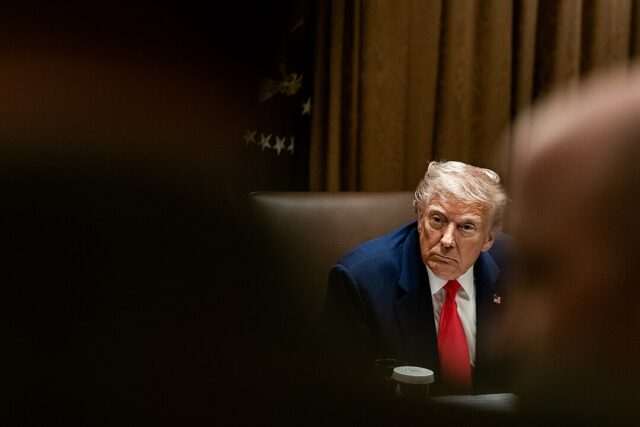
Rep. Shri Thanedar (D-Mich.) said Thursday he plans to file articles of impeachment targeting Defense Secretary Pete Hegseth, arguing the Pentagon chief should be removed over what he described as two separate controversies inside the Defense Department.

“This secretary has to go,” Thanedar told Fox News host Josh Breslow. “He’s incompetent. He’s, you know, violated — he has committed war crimes. He must go.”

He added, “And if both parties, if Republicans are willing to look at this for the merit of this case and not just their loyalty to President Trump, this can be done.”

Thanedar pointed first to Hegseth’s use of the encrypted messaging app Signal to discuss a pending strike on Houthi targets in Yemen. A Pentagon inspector general report made public this week faulted Hegseth for using an unapproved channel to share sensitive strike-related information and warned the practice could have endangered U.S. personnel if intercepted.

The Signal thread drew additional scrutiny after The Atlantic editor Jeffrey Goldberg was inadvertently included in the chat, alongside senior administration officials. Investigators said that exposure of operational details—such as timing and other strike specifics—could have put U.S. forces at risk.

Thanedar also cited reporting around a separate episode involving a Sept. 2 strike on an alleged drug-smuggling boat in the Caribbean. According to that reporting, Hegseth ordered military leaders to “kill everybody,” and a follow-up strike occurred even after survivors were seen in the water—raising questions about targeting decisions and command accountability.

What are the “two scandals” Hegseth is facing?

1) The Signal/Yemen strike controversy

  • The Pentagon inspector general concluded Hegseth violated DoD policy by using Signal on a personal device to share sensitive information about impending Yemen strikes, warning it could have jeopardized service members and the mission.
  • Reporting also noted limits to what investigators could directly review from Signal and that Hegseth declined an interview with the inspector general, while denying wrongdoing.

2) The Caribbean “drug boat” strike controversy

  • Reporting has centered on whether a second strike was ordered or permitted after survivors were apparent, and whether the rules/protocols around such engagements were properly followed; Hegseth has said he did not “stick around” after giving the order for the first strike and learned of the later events afterward.

Other attempts to impeach Cabinet officials

Impeaching Cabinet members is rare historically—only a small number of federal officials have ever been impeached by the House, and Cabinet officials are a tiny subset of that list.

A few notable modern-era examples or efforts:

  • Alejandro Mayorkas (Homeland Security): The House impeached Mayorkas in 2024; the Senate later dismissed the articles, ending the case.
  • Donald Rumsfeld (Defense): In 2004, a House resolution (H.Res. 629) sought to impeach Rumsfeld; it was referred to committee and went nowhere.
  • Merrick Garland (Attorney General): Multiple impeachment resolutions were introduced against Garland in the 117th Congress (including H.Res. 743 and H.Res. 1318).
  • Antony Blinken (Secretary of State): An impeachment resolution (H.Res. 608) was introduced in the 117th Congress.

Boasberg Changes Course On Jan. 6 Defendants Pardoned By President Trump

6
Tyler Merbler, CC BY 2.0 , via Wikimedia Commons

A move with far-reaching implications…

U.S. District Judge James Boasberg on Wednesday ordered the federal government to refund two Jan. 6 defendants—both pardoned by President Donald Trump—for restitution payments and fines they paid in their earlier criminal cases, marking a reversal from the judge’s decision just months ago.

In a memo order, Boasberg detailed the legal path that led to the outcome for Cynthia Ballenger and her husband, Christopher Price. The couple was tried and convicted on misdemeanor charges tied to the events of Jan. 6, 2021, and ordered to pay hundreds of dollars in assessment fees and restitution. Boasberg’s order “clears the way” for both to be refunded in full.

The shift, Boasberg wrote, stems from a key procedural development: an appeals-court decision and the timing of Trump’s pardon, which was issued while their case was pending before the U.S. Court of Appeals for the D.C. Circuit.

“Having viewed the question afresh, the court now agrees with the defendants,” Boasberg said.

A pardon wasn’t the whole story

Ballenger and Price were actively appealing their convictions when Trump returned to office for a second term and issued a sweeping pardon covering roughly 1,500 Jan. 6 defendants. After the pardon, they sought to recover the $570 each they had already paid in restitution and fees.

In July, Boasberg denied that request, relying on precedent that a pardon alone does not automatically entitle a defendant to recover money or property lost because of a conviction. He reiterated that point again in Wednesday’s order:

“By itself, defendants’ pardon therefore cannot unlock the retroactive return of their payments that they ask for here,” he wrote, emphasizing that his earlier reasoning on this question “remains unchanged.”

Instead, he explained, the decisive factor was what happened next at the appellate level. Because the cases were pending when Trump granted the pardon, the pardon effectively mooted their appeals and led the D.C. Circuit to vacate their convictions altogether—meaning the convictions were treated as void.

“So even if defendants’ pardon does not entitle them to refunds, the resulting vacatur of their convictions might,” Boasberg wrote. “In plain English, vacatur — unlike a pardon — ‘wholly nullifie[s]’ the vacated order and ‘wipes the slate clean.’”

Why the refund question still mattered legally

Boasberg went beyond the basic “refund or not” question and addressed two issues often raised when courts order the federal government to pay money: the Appropriations Clause (which generally requires congressional authorization before money is paid out) and sovereign immunity (the principle that the government cannot be sued without consent).

He concluded the court still has the authority to reverse the payments in these circumstances.

“Because the court could order defendants to pay assessments and restitution, it can order those payments reversed,” he said. “Those are two sides of the same action, and sovereign immunity does not stand in the way.”

He summed up the principle this way: “When a conviction is vacated, the government must return any payments exacted because of it.”

Political and public reaction

The order is likely to resonate beyond the courtroom. Many Trump allies have argued that the Justice Department’s Jan. 6 prosecutions were overbroad, particularly for misdemeanor cases, and that defendants should not continue to bear financial penalties once their convictions are wiped away.

At the same time, Democrats have sharply criticized Trump’s pardons. Earlier this year, the late ranking Democrat on the House Oversight Committee, Rep. Gerald Connolly, argued in a letter that the pardons let Jan. 6 participants “off the hook” for an estimated $2.7 billion in estimated damages to the U.S. Capitol.

Trump Threatens Perjury Charge Against Former U.S. President

2
Photo via Gage Skidmore Flickr

President Donald Trump announced Friday that he is nullifying all documents allegedly signed by former President Joe Biden using an autopen device.

In a Truth Social post, Trump claimed that 92% of documents signed during Biden’s presidency were executed using an autopen, a tool that mechanically reproduces a person’s signature.

“The Autopen is not allowed to be used if approval is not specifically given by the President of the United States,” Trump wrote. “The Radical Left Lunatics circling Biden around the beautiful Resolute Desk in the Oval Office took the Presidency away from him.”

Trump said he is canceling all executive orders and “anything else that was not directly signed by Crooked Joe Biden, because the people who operated the Autopen did so illegally.” He also threatened to charge Biden with perjury if Biden claims he personally approved the signatures.

Joe Biden via Gage Skidmore Flickr

Background on the Autopen Issue

The autopen, used by the U.S. government since the Truman administration, holds a real pen and signs documents using a template of the signer’s handwriting. Its use is widespread for routine presidential correspondence, and critically, the Department of Justice’s Office of Legal Counsel has affirmed that autopen signatures on legislation and executive actions are legal, provided the president authorizes them.

Trump’s accusation hinges on his claim that Biden did not give such authorization — an assertion for which no verification has yet been provided. Historically, multiple presidents, including George W. Bush and Barack Obama, used the autopen for official documents without controversy. Biden’s use was consistent with this longstanding practice.

Scope of the Impact

During his presidency, Biden issued 162 executive orders and signed hundreds of memoranda, proclamations, and notices. While Trump already rescinded nearly 80 Biden-era orders in January, his new declaration suggests a broader cancellation effort. Policies that could now be subject to invalidation include:

  • Executive Order 14087, aimed at lowering U.S. prescription drug costs
  • Executive Order 14096, focused on environmental justice
  • Executive Order 14110, addressing the development and regulation of artificial intelligence

It remains unclear which authority or process will be used to determine the authenticity or validity of signatures on documents Biden approved.

Trump’s move marks an escalation in his ongoing effort to question the legitimacy of Biden’s presidential actions, extending a line of criticism he frequently employed during and after Biden’s term.

Kevin McCarthy Warns That MTG Is Likely Just the First of Many House Republicans to Quit

1

Rep. Marjorie Taylor Greene (R-GA) may not be the only Republican planning to leave Washington soon, according to former House Speaker Kevin McCarthy. During an appearance Monday night on Jesse Watters Primetime on Fox News, McCarthy said Greene’s resignation could signal broader unrest within the House GOP conference.

“She’s almost like a canary in a coal mine,” McCarthy told Watters. “And this is something inside Congress — they better wake up, because they’re going to get a lot of people retiring, and they’ve got to focus.”

McCarthy did not name any specific lawmakers he believes are considering departures, nor did he detail what is motivating them. But he warned Republicans to recognize the significance of Greene’s decision and to make better use of their time holding the House majority.

“I think keeping members out of Congress, you only get two years to be in the majority,” he said. “And if the Democrats get you not to work every day for two months, that’s losing two months of the majority.”

McCarthy also remarked on Greene’s national profile, saying she fits his belief that “if you’re known by three initials, you must be effective at what you do.” He added that he does not view her departure as “the end” of her political visibility and expects she will remain active after leaving office in January 2026.

Context on Greene’s Resignation

Greene announced her planned resignation on Nov. 21, a move that stunned many in the Republican Party. She attributed her decision to her increasingly public split with former President Donald Trump, whom she had long supported as a prominent “day one” MAGA loyalist.

“I have too much self-respect and dignity, love my family way too much, and do not want my sweet district to have to endure a hurtful and hateful primary against me by the President we all fought for, only to fight and win my election while Republicans will likely lose the midterms,” she said. “And in turn, be expected to defend the President against impeachment after he hatefully dumped tens of millions of dollars against me and tried to destroy me.”

Her break with Trump escalated after she pushed for releasing additional documents related to deceased sex offender Jeffrey Epstein — an effort Trump reportedly opposed. Tensions rose in the weeks before her announcement, culminating in Trump calling her “Marjorie ‘Traitor’ Greene” and describing her as a “ranting lunatic” on Truth Social while withdrawing his endorsement.

Greene’s exit removes one of the GOP’s most recognizable firebrands from Congress and highlights the deepening internal divisions within the Republican Party heading into the 2026 midterm cycle

Report: Trump Considering Firing FBI Director Kash Patel

1
Gage Skidmore Flickr

President Donald Trump is weighing whether or not to fire Kash Patel as the FBI director in the “coming months.”

The MS Now report cited “three people with knowledge of the situation who requested anonymity in order to speak freely.”

White House Spokeswoman Abigail Jackson released a statement to MS NOW in response to their report, saying, “President Trump has assembled the most talented and impressive Administration in history and they are doing an excellent job carrying out the President’s agenda. FBI Director Patel is a critical member of the President’s team and he is working tirelessly to restore integrity to the FBI.”

White House Press Secretary Karoline Leavitt blasted the report on X.

This is a breaking news story. Please check back for updates.

Federal Judge Dismisses Indictments Against James Comey and Letitia James

5

A federal judge on Monday threw out the criminal indictments against former FBI Director James Comey and New York Attorney General Letitia James, ruling that the prosecutor who brought the charges had been improperly appointed.

U.S. District Judge Cameron Currie dismissed the false-statements case against Comey and the bank-fraud case against James without prejudice, meaning federal prosecutors could seek new indictments in the future.

In a sharply worded opinion, Currie wrote: “I conclude that the Attorney General’s attempt to install Ms. Halligan as Interim U.S. Attorney for the Eastern District of Virginia was invalid and that Ms. Halligan has been unlawfully serving in that role since September 22, 2025.”

Judge Rules Prosecutor Was Not Legally Installed

The ruling centers on Lindsey Halligan, whom Attorney General Pam Bondi tapped as interim U.S. attorney in one of the Justice Department’s most influential districts. The appointment raised immediate questions because Halligan had no prosecutorial experience and assumed the position just days after the removal of the prior interim U.S. attorney, Erik Siebert.

Halligan personally presented both cases to the grand jury and was the sole lawyer to sign the resulting indictments—an unusual move given the high-profile nature of the cases and the absence of career prosecutors from the Eastern District of Virginia.

Defense attorneys for Comey and James argued that Halligan had no lawful authority to act. Abbe Lowell, representing Letitia James, said Halligan was effectively a “private person” when she entered the grand jury rooms and “completely unauthorized to be in them.”

DOJ Attempted to Ratify the Indictments

The Justice Department has defended Halligan’s installation, and Bondi attempted to ratify the indictments retroactively, an action Currie noted would not have been necessary had the appointment been legally valid.

During a recent hearing, DOJ attorney Henry Whitaker characterized the controversy as “at best a paperwork error.” Currie was not persuaded, signaling skepticism about Halligan’s standing even before issuing Monday’s order.

Currie, a Clinton-era appointee now based in South Carolina, was assigned to the case after Virginia’s federal judges recused themselves due to the unusual procedural issues raised by Halligan’s appointment. The challenges brought by Comey and James were consolidated because they involved identical questions of authority.

High-Profile Cases Scrapped, For Now

The dismissals mark a significant development in two of the most closely watched prosecutions targeting officials long viewed unfavorably by conservatives for their roles in investigations and legal actions against former President Donald Trump. Comey has been a lightning rod for criticism over the FBI’s handling of the 2016 Trump-Russia investigation, while Letitia James led New York’s aggressive civil case against Trump and his business empire.

The DOJ could appeal Currie’s ruling or choose to bring the charges again—this time through a properly appointed U.S. attorney.

Conservative Activist Punched In Face Files Lawsuit After Manhattan DA Admits Mistake

3
Washington D.C., USA - January 22, 2015; A Pro-Life woman clashes with a group of Pro-Choice demonstrators at the U.S. Supreme Court.

A conservative pro-life activist who went viral earlier this year after being punched repeatedly during a street-interview segment in New York City has now filed a civil lawsuit against her alleged attacker.

Savannah Craven Antao — a pro-life advocate and host of the YouTube channel Her Patriot Voice — says she was gathering on-camera interviews on April 3 for the pro-life organization Live Action when she was physically assaulted by Brianna J. Rivers, 30, of the Bronx. The incident, captured on video, spread widely across social media and conservative news outlets, sparking outrage among free-speech and pro-life advocates.

Details of the Lawsuit

According to the complaint filed Nov. 18 in Bronx Supreme Court, Craven Antao required emergency medical treatment after the attack and received stitches, amassing more than $3,000 in medical expenses. Attorneys with the Thomas More Society allege Rivers has “knowingly, willfully and maliciously continued to mock [Savannah] and her views online in order to further inflict emotional distress.”

The suit further states that Rivers mocked Craven Antao’s Christian faith and even created merchandise celebrating the assault. One alleged online post displayed a T-shirt design reading “BAM!” with an image of a fist hitting a face — reportedly created by Rivers and a cousin to raise money for Rivers’ legal defense.

Craven Antao’s attorneys say their client has experienced symptoms consistent with post-traumatic stress disorder and has received hundreds of violent threats since the incident. The lawsuit seeks compensatory and punitive damages for assault, battery, and intentional infliction of emotional distress.

Criticism of Manhattan DA Alvin Bragg

Rivers was initially charged with second-degree assault — a felony — but the case fell apart in July after Manhattan District Attorney Alvin Bragg’s office failed to turn over discovery materials by the legal deadline. The office then downgraded the charge to a misdemeanor before the entire case was dismissed.

Bragg, a frequent target of criticism from conservatives for his handling of violent crime and his perceived leniency toward offenders, later acknowledged his office’s failure.

“Every victim deserves their day in court, and our office has reached out to apologize to Ms. Craven Antao for the unacceptable error of missing the discovery deadline,” a spokesperson wrote in September. “We are taking immediate internal steps in light of this case.”

But for Craven Antao, the damage was already done.

“I have to look over my shoulder and worry about if somebody who supports her actions … is going to try to do something else,” she told Fox News Digital. “Because what the DA Alvin Bragg himself has shown to people, with letting this case be dropped, is that they can go assault somebody and hurt them if they disagree with them and nothing is going to happen.”

Fears for Conservative Journalists and Activists

Craven Antao said she ultimately filed the civil suit to hold Rivers accountable and to send a message about political violence: “First, I’d really appreciate my over $3,000 in medical bills to be paid off, because I should not be responsible for those. Second, it’s to send a message — hopefully to show her that she can’t do this again.”

She also connected her concerns to broader safety issues for conservative figures, referencing the recent killing of Turning Point USA founder Charlie Kirk.

“If they could do it to somebody like him, who has the resources to have the security and the checks and all the people surrounding him, what does this say for just average journalists … who don’t have the means to hire a whole security team and be armed?” she said.

Craven Antao added that online threats and encouragement of Rivers’ behavior have left her uncertain about what could happen next. “With all the threats online and the comments she ‘likes,’ encouraging her behavior, it makes me wonder if the wrong person is going to find me next time and something worse will happen.”

Defense from Rivers

Rivers previously issued a public apology on Facebook on April 5, though she also accused Craven Antao of provoking the incident.

“I am sorry,” Rivers wrote, “but cannot sit around and allow you to continue pushing this one-sided narrative. I understand hands being put on someone is never the answer, but throwing rocks and hiding hands is worse. Savannah is a professional antagonist, not a ‘reporter,’ and the truth will be told.”

Legal Team Responds

Thomas More Society attorney Christopher Ferrara sharply criticized Bragg’s office, saying their inaction forced Craven Antao to pursue civil remedies.

“Savannah was violently assaulted for peacefully expressing her pro-life beliefs and then humiliated all over again when the attacker went online to glorify it,” Ferrara said. “The D.A.’s office had every opportunity to pursue justice and, due to their incompetency or lack of will, failed to prosecute this vicious assault. Their refusal left us with no choice but to file civil action to hold Rivers accountable.”

For Craven Antao, the lawsuit is not just about compensation — it’s about setting a precedent.

“Honestly, I hope that she eventually finds God,” Craven Antao said. “That’s what I pray for, because it’s obvious that she’s got a lot of deep trauma rooted, and she takes it out on other people.”

DOJ Confirms Comey Grand Jury Didn’t See Final Indictment

2

The Justice Department admitted in federal court Wednesday that the grand jury which charged former FBI Director James Comey never reviewed the final version of the indictment that prosecutors ultimately filed.

During questioning by U.S. District Judge Michael Nachmanoff, prosecutors conceded that interim U.S. Attorney Lindsey Halligan failed to bring the revised indictment back to the full grand jury after jurors declined to approve one of the original counts. Instead of resubmitting the updated charges, Halligan took the altered document directly to a magistrate judge’s courtroom, where only the grand jury foreperson and one additional juror signed it, according to CNN.

Judge Nachmanoff ordered the Justice Department to file a detailed response by 5 p.m. Wednesday addressing the revelations.

Assistant U.S. Attorney Tyler Lemons attempted to justify the process, claiming “the new indictment wasn’t a new indictment.” Nachmanoff, however, swiftly dismissed that explanation.

Comey’s attorney, Michael Dreeben, seized on the government’s admission, arguing that because the full grand jury never considered the altered charges, “no indictment was returned.” He also noted that the statute of limitations has now run out on the allegations that Comey lied to Congress—meaning prosecutors may no longer have any valid path to pursue the case.

Prosecutors further revealed they were instructed by the deputy attorney general’s office not to disclose whether career DOJ lawyers had prepared a memo recommending against indicting Comey before Halligan presented the case to the grand jury, Politico reported. Multiple outlets have indicated that DOJ career staff believed the evidence was too weak to justify charges.

Halligan—appointed interim U.S. attorney in 2025 after working in insurance law and serving as a personal lawyer and White House aide to President Donald Trump—had no prior experience leading federal criminal prosecutions. She served as the sole prosecutor presenting the case to the grand jury.

Earlier this week, a federal magistrate judge criticized the handling of the investigation, citing “profound investigative missteps” and raising serious concerns about the integrity of the grand jury process under Halligan’s oversight.

“The Court recognizes that the relief sought by the defense is rarely granted,” Magistrate Judge William Fitzpatrick wrote. “However, the record points to a disturbing pattern of profound investigative missteps, missteps that led an FBI agent and a prosecutor to potentially undermine the integrity of the grand jury proceeding.”

Report: US Planning Prisoner Swap With Russia

0
Kremlin.ru, via Wikimedia Commons

The United States and Russia are reportedly quietly reopening talks on a possible prisoner-exchange that could determine the fate of at least eight Americans still held in Russia. According to Russian special envoy Kirill Dmitriev—who visited Washington in late October—discussions with U.S. officials were “humanitarian in nature, such as possible exchanges of prisoners that the U.S. side has been working on.” A senior U.S. official confirmed the outreach and described the atmosphere as constructive, though emphasized that no agreement has yet been reached.

“The U.S. will welcome the release of any detained American,” the official said, underscoring that Washington views this strictly through the lens of American lives, not political grandstanding.

During Dmitriev’s trip he met U.S. envoy Steve Witkoff. A source familiar with the conversations told Axios that Moscow hopes such a swap would “create more trust between the countries.” From a Republican perspective, this is exactly the kind of outcome our diplomacy should be pursuing: Americans held abroad should be brought home, and Russia should see we are serious, not passive.

While a handful of Americans were released earlier this year under separate agreements, these talks focus squarely on the eight who remain behind bars—several caught up in cases the U.S. describes as politically tinged or based on contested evidence. According to Axios, the names sent to Moscow earlier by the U.S. include:

  • Stephen James Hubbard, 73, accused of fighting as a mercenary in Ukraine
  • David Barnes, serving a 21-year sentence after a cross-border custody dispute
  • Robert Gilman, former Marine convicted of assaulting a police officer
  • Eugene Spector, sentenced on bribery and espionage charges
  • Michael Travis Leake and Robert Romanov Woodland, jailed on drug offenses
  • Daniel Joseph Schneider, convicted of abducting his son
  • Gordon Black, a U.S. soldier imprisoned for theft and alleged threats

U.S. officials haven’t confirmed whether these eight are the focus of the current discussions—but with Moscow signalling interest, and Washington keen to show it can deliver for detained Americans, the groundwork for a high-stakes swap is clearly in motion.

Why this matters

For the Republican-minded audience, this is about America first: no American left behind, accountability for Russia’s malign practices, and the restoration of American strength in diplomacy. Critics of past Democratic administrations argue that Russia has often treated U.S. citizens as bargaining chips—and the fact that Washington is now engaging quietly, but seriously, signals a turn toward a tougher posture.

What have we achieved so far under Trump?

It’s worth remembering that under the Trump administration, significant steps were taken to bring Americans home:

  • In February 2025, the U.S. secured the release of Marc Fogel, an American schoolteacher imprisoned in Russia for possession of medical cannabis (a 14-year sentence), in what was acknowledged as a prisoner exchange.
  • In April 2025, another U.S. citizen, dual-national ballet dancer Ksenia Karelina, was freed from Russia in a swap described by U.S. Secretary of State Marco Rubio as secured through Trump’s efforts.

These releases underscore a Trump-era focus on returning Americans held by adversarial powers, not leaving them forgotten. While this upcoming swap is not yet finalized, the very fact that Moscow and Washington are in active dialogue is a sign the U.S. is not passive when its citizens are wrongfully detained.

The road ahead

There are still major questions to resolve: who exactly will be part of the swap? What will the U.S. give up?

Trump Calls Greene A ‘Traitor’ Amid Fight For Epstein File Transparency

5
Photo via Gage Skidmore Flickr

President Trump pushed back Sunday evening against Rep. Marjorie Taylor Greene’s (R-Ga.) warnings about her personal safety, escalating an already tense dispute within the GOP over the release of the Jeffrey Epstein files. Speaking to reporters on the tarmac before departing Palm Beach, Fla., the president reiterated his criticism of Greene, again referring to the outspoken conservative as a “traitor” when asked about her claim that Trump’s rhetoric could endanger her life.

“Marjorie ‘Traitor’ Greene,” Trump said, correcting a reporter who used the congresswoman’s actual name. “I don’t think her life is in danger. I don’t think — frankly, I don’t think anybody cares about her.”

A short time later, Trump doubled down on Truth Social, taking aim at Greene as tensions continue to rise over her calls for the full release of files related to convicted sex offender Jeffrey Epstein. “Wacky Marjorie ‘Traitor’ Brown (Remember, Green turns to Brown where there is ROT involved!) is working overtime to try and portray herself as a victim when, in actuality, she is the cause of all of her own problems,” Trump wrote. “The fact is, nobody cares about this Traitor to our Country!”

Greene, who has long portrayed herself as one of Trump’s staunchest allies, had posted earlier on X that “the hoax pizza deliveries have started now, to my house and family members,” and said her family’s construction business had received a pipe bomb threat. She argued that Trump’s attacks on her were “a dog whistle to dangerous radicals that could lead to serious attacks on me and my family.”

Responding to Trump labeling her a traitor, Greene wrote that the accusation is “absolutely untrue and horrific” and said such language “puts blood in the water and creates a feeding frenzy. And it could ultimately lead to a harmful or even deadly outcome.”

“I am not a traitor,” she insisted. “However, when the President of the United States irresponsibly calls a Member of Congress of his own party, traitor, he is signaling what must be done to a traitor.”

Watch:

Greene defended her record and her long-standing loyalty to Trump. “I fought harder than anyone to help President Trump get elected and I support his administration and the promises we made on the campaign,” she wrote. “My voting record is one of the most conservative voting records in Congress and I’m very proud of that. The toxic and dangerous rhetoric in politics must end and we need healing in this country for all Americans.”

The dispute comes as Greene has intensified her criticism of Trump’s earlier reluctance to endorse the full release of the Epstein files—documents many Republicans argue should be made public to expose potential wrongdoing and eliminate politically motivated speculation. The House is expected to vote this week on a measure compelling the Department of Justice to release those records. Rep. Thomas Massie (R-Ky.), who initiated the discharge petition to force the vote, said he expects significant Republican support.

By Ralph Alswang, White House photographer – https://www.snopes.com/fact-check/clinton-epstein-maxwell/, Public Domain, https://commons.wikimedia.org/w/index.php?curid=143417695

Republican pressure on Trump increased last week after Democrats selectively released new emails, including one allegedly written by Epstein claiming Trump “knew about the girls.” Many conservatives view the move as a partisan attempt to smear Trump and distract from Democratic figures who were associated with Epstein. In response, and just minutes before his latest Truth Social post criticizing Greene, Trump urged House Republicans to back full transparency.

Lawmakers “should vote to release the Epstein files,” Trump said, arguing, “we have nothing to hide, and it’s time to move on from this Democrat Hoax perpetrated by Radical Left Lunatics in order to deflect from the Great Success of the Republican Party.”

Still, Massie cautioned that the Justice Department—now conducting new probes into Epstein’s alleged connections to Democrats—might use those investigations to justify withholding certain materials even after Congress acts. Republicans warn that bureaucratic resistance could undermine the effort for full disclosure, a point fueling frustration both inside and outside the party.