Politics

Home Politics Page 16

Potential Cabinet Shifts As Trump Approaches One Year Back In Office

0

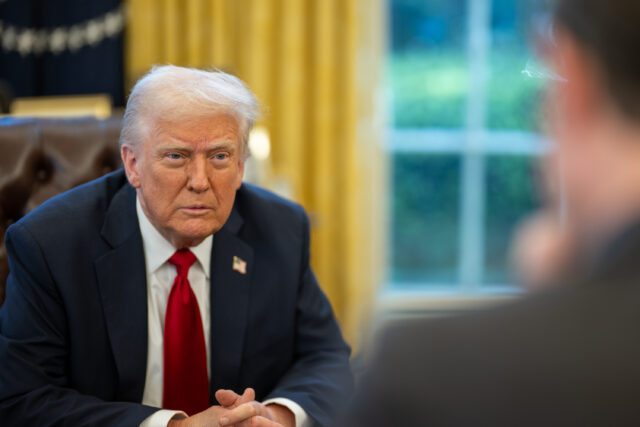
As President Donald Trump approaches the one-year mark of his second term, the White House is preparing for the possibility of limited Cabinet adjustments — a normal process in any administration and one that officials stress is not indicative of instability.

Unlike Trump’s first term, which saw high turnover across many departments, the president’s current Cabinet has been deliberately steady. Senior officials say this has been intentional to reinforce continuity and reliability during the administration’s first year. While internal discussions about potential future changes have occurred, the White House maintains that no decisions have been made and no changes are expected before early next year.

White House spokeswoman Karoline Leavitt dismissed speculation about looming resignations, saying: “The cabinet is not changing no matter how much CNN wishes that it would because it thrives off drama.”

Department of Homeland Security: Praise for Noem, Scrutiny of Lewandowski

One of the departments that has drawn attention is the Department of Homeland Security (DHS), led by Secretary Kristi Noem. Trump has made immigration enforcement a central focus of his second-term agenda, and DHS has been central to carrying out those policies.

Multiple sources emphasized that the president remains pleased with Noem’s leadership. A senior White House official reiterated Trump’s confidence, saying: “The President loves Kristi. He loves the job she’s doing.”

However, internal friction has emerged around Corey Lewandowski, a longtime Trump ally who joined DHS as a special government employee with temporary status. His close working relationship with Noem has prompted speculation that the pair might eventually depart together if changes were made.

Lewandowski, who previously helped run Trump’s 2016 campaign, has taken an active role inside the department. Sources told CNN he has directed personnel changes, overseen administrative leave requests, and pushed senior leaders to accelerate deportation-related programs. While supporters view him as an enforcer of the administration’s priorities, others within the White House believe his management style has caused tension.

A person close to the White House noted that concerns have been raised internally: “Yes, he likes [Noem], but it has been brought to his attention that [Lewandowski] is a problem, and the agency is being mismanaged because of it.”

The White House and DHS pushed back strongly on that interpretation. White House spokeswoman Abigail Jackson highlighted DHS’s results under Trump and Noem, saying:
“The tremendous results coming from the Department of Homeland Security … speak for themselves.”

A DHS spokesperson added that Lewandowski “has a reputation of reprimanding officials who impede or slow down the administration and undermine the will of the American people.”

In September, Trump met with Noem and Lewandowski to discuss DHS operations. According to two people familiar with the meeting, the conversation became tense at times — particularly between Lewandowski and the president — though Noem’s standing with Trump was not affected.

Department of Energy: Questions Around Secretary Chris Wright

The Department of Energy, led by former Colorado energy executive Chris Wright, is another agency where speculation has surfaced. Sources say some White House officials believe Wright has been reluctant on certain campaign-promised initiatives and that his department has faced senior-level turnover.

Energy Department spokeswoman Taylor Rogers defended Wright’s performance, saying:
“Secretary Wright has been working lockstep with President Trump since day one to restore America’s energy dominance.”
She added that U.S. oil production hit a record high in July under Trump’s policies.

Past Discussions About Other Cabinet Members

This is not the first time internal debate about Cabinet roles has surfaced. Earlier discussions took place around Defense Secretary Pete Hegseth after an accidental sharing of sensitive information, and Trump had expressed frustration over Director of National Intelligence Tulsi Gabbard’s stance on Iran’s nuclear capabilities. Both remained in their posts.

An upcoming Pentagon inspector general report on Hegseth’s messaging incident could renew attention but is not expected to carry formal consequences.

Youngkin Seen as a Potential Future Administration Pick

With Virginia Gov. Glenn Youngkin leaving office in January due to term limits, several Republicans close to Trump believe he may be considered for a future Cabinet position if an opening arises. Although the two men have not directly discussed a role, Youngkin has been publicly supportive of the president.

During a call with supporters, Youngkin told Trump:
“Mr. President, I want to thank you… I know that you will always put America first.”

Trump returned the praise, calling Youngkin “one of the great governors in our country.”

Sources say Youngkin would be interested in a position with an economic or business focus, while likely avoiding an immigration-first role such as DHS.

Routine Evolution in Any Administration

Cabinet adjustments are not unusual. During President Biden’s term, changes occurred at the Departments of Housing and Urban Development and Labor. Trump officials emphasize that any future changes would be part of routine administrative alignment, not broader turmoil.

Bill Maher Open To Voting Republican – But With Some Changes

2
Missvain, CC BY 4.0 via Wikimedia Commons

Comedian and longtime liberal commentator Bill Maher told Fareed Zakaria on CNN’s GPS that he could “of course” envision voting Republican — but only if the party becomes something markedly different than what it has been.

Maher, who has been a longtime critic of Donald Trump and a traditional supporter of Democrats, laid out a number of caveats before making such a move. “They would have to certainly lose the idea of ‘we don’t concede elections,’” he said.

He added his biggest concern:

“And my biggest worry is that they feel that the excesses of the left are so great, that they are so anti‐common sense. And again, they’re not completely wrong about that — that they are so — never met something that was counterintuitive that they didn’t embrace. That they just can’t let these people take power and, therefore, even if there has to — if democracy has to be sacrificed for hanging on to power,” Maher said.

Maher also questioned the GOP’s long‐term commitment to democratic norms after Trump:

“Will they still keep that idea that we cannot let these people take power? These people who just do not have any idea of common sense, they want to reinvent everything. They are revolutionaries in a country that is not asking for [a] revolution — they’re just asking for politicians to fix things. That is my biggest concern.” He noted a hope for a “return to normalcy” after Trump — though he expressed skepticism.

At the same time, Maher acknowledged areas where he believes Trump was right:

He pointed out the border, DEI (diversity, equity, inclusion) initiatives, and NATO contributions. “He showed that you can close the border. It wasn’t something you needed congressional help for. You could just do it, and he did it. He just did it too far. And people don’t like to see people tackled at Home Depot and people they know who have been in this country for a long time.”

He wrapped up by hitting both parties:

“Why can’t either one be normal?” he asked rhetorically.


Why this matters for Republicans

Maher’s comments underscore a key opportunity and challenge for the GOP: there are non‐traditional voices who might vote Republican — but only if the party reaffirms core democratic norms and common‐sense governance rather than radical transformation. If Republicans continue to be associated with election denial, extreme rhetoric, or sweeping change beyond what voters ask for, they risk alienating such swing voices.

For Republican-leaning audiences focused on policy, governance, and institutional credibility, Maher’s remarks are a reminder that expanding the party’s appeal may hinge more on tone and norms than just raw policy wins.

Trump Calls Greene A ‘Traitor’ Amid Fight For Epstein File Transparency

5
Photo via Gage Skidmore Flickr

President Trump pushed back Sunday evening against Rep. Marjorie Taylor Greene’s (R-Ga.) warnings about her personal safety, escalating an already tense dispute within the GOP over the release of the Jeffrey Epstein files. Speaking to reporters on the tarmac before departing Palm Beach, Fla., the president reiterated his criticism of Greene, again referring to the outspoken conservative as a “traitor” when asked about her claim that Trump’s rhetoric could endanger her life.

“Marjorie ‘Traitor’ Greene,” Trump said, correcting a reporter who used the congresswoman’s actual name. “I don’t think her life is in danger. I don’t think — frankly, I don’t think anybody cares about her.”

A short time later, Trump doubled down on Truth Social, taking aim at Greene as tensions continue to rise over her calls for the full release of files related to convicted sex offender Jeffrey Epstein. “Wacky Marjorie ‘Traitor’ Brown (Remember, Green turns to Brown where there is ROT involved!) is working overtime to try and portray herself as a victim when, in actuality, she is the cause of all of her own problems,” Trump wrote. “The fact is, nobody cares about this Traitor to our Country!”

Greene, who has long portrayed herself as one of Trump’s staunchest allies, had posted earlier on X that “the hoax pizza deliveries have started now, to my house and family members,” and said her family’s construction business had received a pipe bomb threat. She argued that Trump’s attacks on her were “a dog whistle to dangerous radicals that could lead to serious attacks on me and my family.”

Responding to Trump labeling her a traitor, Greene wrote that the accusation is “absolutely untrue and horrific” and said such language “puts blood in the water and creates a feeding frenzy. And it could ultimately lead to a harmful or even deadly outcome.”

“I am not a traitor,” she insisted. “However, when the President of the United States irresponsibly calls a Member of Congress of his own party, traitor, he is signaling what must be done to a traitor.”

Watch:

Greene defended her record and her long-standing loyalty to Trump. “I fought harder than anyone to help President Trump get elected and I support his administration and the promises we made on the campaign,” she wrote. “My voting record is one of the most conservative voting records in Congress and I’m very proud of that. The toxic and dangerous rhetoric in politics must end and we need healing in this country for all Americans.”

The dispute comes as Greene has intensified her criticism of Trump’s earlier reluctance to endorse the full release of the Epstein files—documents many Republicans argue should be made public to expose potential wrongdoing and eliminate politically motivated speculation. The House is expected to vote this week on a measure compelling the Department of Justice to release those records. Rep. Thomas Massie (R-Ky.), who initiated the discharge petition to force the vote, said he expects significant Republican support.

By Ralph Alswang, White House photographer – https://www.snopes.com/fact-check/clinton-epstein-maxwell/, Public Domain, https://commons.wikimedia.org/w/index.php?curid=143417695

Republican pressure on Trump increased last week after Democrats selectively released new emails, including one allegedly written by Epstein claiming Trump “knew about the girls.” Many conservatives view the move as a partisan attempt to smear Trump and distract from Democratic figures who were associated with Epstein. In response, and just minutes before his latest Truth Social post criticizing Greene, Trump urged House Republicans to back full transparency.

Lawmakers “should vote to release the Epstein files,” Trump said, arguing, “we have nothing to hide, and it’s time to move on from this Democrat Hoax perpetrated by Radical Left Lunatics in order to deflect from the Great Success of the Republican Party.”

Still, Massie cautioned that the Justice Department—now conducting new probes into Epstein’s alleged connections to Democrats—might use those investigations to justify withholding certain materials even after Congress acts. Republicans warn that bureaucratic resistance could undermine the effort for full disclosure, a point fueling frustration both inside and outside the party.

Fox Host Predicts Next Top Dem to Be Axed — Once They Oust Chuck Schumer

6
Mitch McConnell, Kevin McCarthy, Nancy Pelosi, Chuck Schumer attend medal ceremony via Wikimedia Commons

As Democrats face growing internal turmoil, Senate Minority Leader Chuck Schumer (D-NY) is under fire from members of his own party — and some say the unrest may soon spread to House Minority Leader Hakeem Jeffries (D-NY).

During Thursday’s segment of Fox & Friends, host Lawrence Jones offered a pointed prediction about who might be the next Democrat to fall out of favor with the party’s increasingly fractured base.

“Quick prediction: Jeffries is next,” Jones told co-hosts Brian Kilmeade and Ainsley Earhardt. “They’re gonna get rid of him next. First, it was Schumer. They’re not happy with Jeffries either. They don’t like his alignment with AIPAC and have been very critical of how he operates.”

Jones added that many progressives in the Democratic Party “don’t respect” Jeffries and that his position had been shielded for years by former Speaker Nancy Pelosi (D-CA).

“Nancy Pelosi kind of protected him,” Jones said. “But now that she’s retiring, I believe he’s going to be the next target.”


Democrats in Disarray

The Democratic Party’s internal divisions have been on full display amid the historic 43-day government shutdown, the longest in U.S. history. Schumer, struggling to hold his caucus together, lost seven Democrats and one Independent who sided with Republicans to support a short-term continuing resolution that ultimately reopened the government.

That rebellion has led several prominent progressives — including Rep. Ro Khanna (D-CA) — to openly question Schumer’s leadership and even call for his ouster. Although no formal challenge has yet materialized, the discontent is unmistakable.


Pressure Mounts on Party Leadership

Many Democrats are torn between the party’s traditional pro-Israel establishment figures like Schumer and Jeffries, and the ascendant left-wing faction that has become increasingly critical of Israel and of AIPAC’s influence in Washington.

Jones’s comments reflect a broader sense that Democratic leadership is losing control of its own base — particularly among younger, more progressive voters frustrated by what they see as political compromise and a lack of clear vision.


A Growing Divide

The potential downfall of two of the party’s most powerful figures — Schumer in the Senate and Jeffries in the House — would mark a stunning shift within Democratic ranks.

BBC Chiefs Quit After Accusations Of Deep-Rooted Bias

1
The White House, Public domain, via Wikimedia Commons

LONDON — The BBC’s top two executives are stepping down amid mounting pressure over editorial credibility, shaking confidence in the U.K.’s national broadcaster just as it faces critical decisions on funding and governance.

On Sunday, BBC Director-General Tim Davie and BBC News chief Deborah Turness announced their resignations. The dual departure follows weeks of mounting backlash over allegations of systemic bias in the network’s coverage — from President Donald Trump and the war in Gaza to debates over transgender rights.

Pressure Built After Leaked Memo

The tipping point came with a leaked internal memo from former BBC adviser Michael Prescott. The memo accused the broadcaster of “serious and systemic bias” across a range of politically charged topics.

Chief among them: an episode of Panorama that aired selectively edited footage of Trump’s Jan. 6, 2021, speech. Critics said the edits gave the false impression that Trump directly called on supporters to storm the U.S. Capitol. The full version of the speech did not support that claim.

Controversy also surrounded the BBC’s coverage of the Gaza conflict. Accusations included overreliance on anti-Israel voices, sourcing from extremists on its Arabic service, and distorted portrayals of children and wartime suffering.

In a separate thread of concern, BBC staff raised red flags over the network’s handling of trans-related issues, arguing its reporting often lacked balance and downplayed the contested nature of the debates.

Davie and Turness Respond

In a message to BBC staff, Davie acknowledged the broadcaster’s imperfections.

“Like all public organisations, the BBC is not perfect,” he wrote. “While not being the only reason, the current debate around BBC News has understandably contributed to my decision.”

Turness, while taking responsibility for the news division, rejected claims of structural bias.

“While mistakes have been made,” she wrote, “I want to be absolutely clear: recent allegations that BBC News is institutionally biased are wrong.”

BBC Chairman Samir Shah called it a “sad day,” affirming the board’s support for Davie but conceding the strain he had been under.

A Deeper Governance Crisis

The BBC, funded by the public through license fees, is required by charter to deliver impartial journalism. The resignations expose a deeper institutional crisis at a time when the broadcaster’s mandate and funding model are under review.

The current Royal Charter is set to expire in 2027. Debates about the future of the license fee, the role of public media, and political interference are already in motion. The timing of this leadership vacuum could have significant downstream effects.

What Comes Next

The BBC board now faces the task of finding replacements for two of its most senior posts. The outcome will shape the editorial tone and strategic direction of the broadcaster for years to come.

Internal reviews are expected, especially around how the Panorama episode was handled and whether internal warnings were ignored. Broader investigations may follow, probing the extent of bias across the BBC’s output.

In the near term, the corporation faces reputational damage. With over 100 BBC employees and 200 industry professionals having signed an open letter last year criticizing Gaza coverage, pressure is mounting not just from the public but also from within.

Regulators and government officials may push for increased oversight, new editorial controls, or funding reforms as part of the charter renewal debate.

Looking Ahead

Davie, who took over in 2020, exits during one of the BBC’s most fraught moments in recent history. His successor will inherit a broadcaster under siege — from all sides — and with a shrinking window to restore public trust before the next charter review begins in earnest.

What happens next at the BBC won’t just shape a news organization — it will help define the future of public broadcasting in a divided media landscape.

Campus Chaos Erupts At UC Berkeley Ahead Of Ending Tour by Turning Point USA

3

On Monday afternoon in Berkeley, a bloody confrontation broke out near the campus of the University of California, Berkeley as the conservative student-activist group Turning Point USA (TPUSA) held its final stop of the “This Is The Turning Point” tour. The event featured noted conservative voices Dr. Frank Turek and actor-activist Rob Schneider, and came just two months after the murder of TPUSA’s founder, Charlie Kirk, at a campus event in Utah on Sept. 10.

According to video from Fox News Digital, the skirmish began around 4:30 p.m. PST. Two men were seen grappling in the altercation, with one suffering a serious facial injury and blood clearly visible. A mob of agitators—many wearing keffiyehs and carrying left-wing protest signs—surrounded the fight. The local police, including officers donning shields and batons, appeared challenged to regain control of the crowd.

The Berkeley Police Department reported at least two arrests by 6 p.m.—one individual was arrested for battery. A university spokesperson clarified the brawl occurred off campus grounds and declined further comment.

Turek, in a recent interview ahead of the event, said he urged Kirk to make the Berkeley stop of the tour: “If I could go to any one event with him, it would be that one… I wanted to go to UC Berkeley because it is so progressive and liberal in their views, and I wanted to provide evidence that Christianity was indeed true.”

As departure began, protesters reportedly surrounded all exits to the venue, heckled attendees, and shouted obscenities as they filtered out. It remains unclear how many individuals were injured in the fight.

Kirk, Trump & the Conservative Youth Movement
Charlie Kirk co-founded Turning Point USA in 2012, with the mission of mobilizing conservative students on college campuses. His organization became a central pillar of conservative youth activism.

Kirk’s relationship with Donald Trump evolved into a potent alignment:

  • Kirk was considered a key figure in helping Trump make inroads with younger voters, a segment Democrats long dominated.
  • He developed a direct line to the Trump orbit; multiple sources note that his influence extended beyond student activism into campaign strategy.

Kirk’s impact on the GOP’s youthful base, combined with his focus on campus organizing, made him a strategic asset to the Trump-aligned Republican coalition. As one analysis put it: “Kirk’s efforts significantly contributed to Trump’s appeal among younger voters.”

The Department of Justice (DOJ) is investigating the protests at the University of California (UC), Berkeley, in the wake of several arrests at a Turning Point USA event.

“We saw all of this at Berkeley back in 2017. @UCBerkeley was sued, and settled the case,” Assistant Attorney General for the Civil Rights Division Harmeet Dhillon wrote on the social platform X Tuesday, responding to another post claiming that “Antifa has turned Turning Point’s event at UC Berkeley in California into an absolute WARZONE.”

“The @CivilRights will investigate what happened here, and I see several issues of serious concern regarding campus and local security and Antifa’s ability to operate with impunity in CA,” she added.

Nancy Pelosi’s Daughter Launches Campaign Days After Mom Announces Retirement

3
Nancy Pelosi via Gage Skidmore flickr

Nancy Pelosi’s daughter, Christine Pelosi, announced she is tossing her hat into the ring for the California state senate, just days after her mom announced her highly anticipated retirement from Congress.

The younger Pelosi, a longtime political consultant and former chairperson of the California Democratic Women’s Caucus, announced her campaign on social media on Monday morning.

“Hi, I’m Christine Pelosi. Attorney, author, advocate, wife, mom, and today, a candidate for California State Senate,” she says in a campaign video accompanying the post.

Christine Pelosi, 59, is one of the former House speaker’s five children with her husband, Paul.

Pelosi, 85, announced on Thursday that she would not run for reelection after a historic congressional career that spanned four decades.

The retirement reveal was celebrated by President Donald Trump, who later relayed through Fox News reporter Peter Doocy that she was “evil, corrupt, and only focused on bad things for our country.”

“She was rapidly losing control of her party and it was never coming back. I’m very honored she impeached me twice and failed miserably twice,” Trump said.

Donald Trump and Nancy Pelosi’s rivalry has been one of the defining political dramas of recent years, symbolizing the deep partisan divide in Washington. From Trump’s first impeachment—driven by Pelosi’s Democratic House—to their public clashes over the State of the Union address, the two leaders turned political disagreement into personal enmity. Trump often cast Pelosi as the face of establishment obstruction, accusing her of putting party politics ahead of American progress. For many Republicans, her approach epitomized the D.C. elite’s refusal to respect the voters who put Trump in office.

Even after Trump left the White House, the feuds continued to shape both figures’ legacies. Pelosi frequently invokes Trump as a threat to democracy, while Trump uses her name as shorthand for what he sees as the failures of liberal governance.

Federal Judge Resigns To Speak Out Against Trump’s ‘Assault On The Rule Of Law’

8

A federal judge appointed by former President Ronald Reagan has resigned his lifetime post to speak publicly against what he describes as a dangerous politicization of the justice system under Donald Trump. Mark L. Wolf, who served on the U.S. District Court for the District of Massachusetts since 1985, announced his decision in an op-ed published in The Atlantic, saying he could no longer remain silent as he believes the former president uses the law to reward allies and target adversaries.

Wolf, 78, said that stepping down would allow him to speak freely after decades of being constrained by judicial ethics rules.

“President Donald Trump is using the law for partisan purposes, targeting his adversaries while sparing his friends and donors from investigation, prosecution, and possible punishment,” he wrote. “This is contrary to everything that I have stood for in my more than 50 years in the Department of Justice and on the bench. The White House’s assault on the rule of law is so deeply disturbing to me that I feel compelled to speak out. Silence, for me, is now intolerable.”

A Massachusetts native and Harvard Law graduate, Wolf began his public service career in the Department of Justice in 1974, joining just after the Watergate scandal. He served under Attorney General Edward Levi during President Gerald Ford’s administration—a formative experience that, he said, shaped his views on nonpartisan justice and the importance of public trust in the legal system. He later became a top federal prosecutor in Boston before Reagan nominated him to the bench. Over nearly four decades as a judge, Wolf became known for handling high-profile corruption cases and for his work to strengthen judicial ethics and transparency.

Wolf took senior status in 2013, meaning he already had a reduced caseload and his seat was filled the following year by Judge Indira Talwani. His resignation, therefore, does not create a new vacancy for any administration to fill. Instead, it marks his formal departure from a system he says is under siege from political manipulation.

“I decided all of my cases based on the facts and the law, without regard to politics, popularity, or my personal preferences,” Wolf wrote. “That is how justice is supposed to be administered—equally for everyone, without fear or favor. This is the opposite of what is happening now.”

Speaking to The New York Times, Wolf said he hopes to serve as a voice for other judges who feel bound by the Code of Judicial Conduct from speaking candidly about growing public distrust in the courts. “I hope to be a spokesperson for embattled judges who, consistent with the code of conduct, feel they cannot speak candidly to the American people,” he said.

The White House pushed back sharply on Wolf’s remarks. Spokeswoman Abigail Jackson told Fox News Digital that judges “who want to inject their own personal agenda into the law have no place on the bench.”

She added that Trump’s record of legal victories undermines Wolf’s claim of politicization: “With over 20 Supreme Court victories, the Trump Administration’s policies have been consistently upheld by the Supreme Court as lawful despite an unprecedented number of legal challenges and unlawful lower court rulings. Any other radical judges that want to complain to the press should at least have the decency to resign before doing so.”

Trump Issues Series Of High-Profile Pardons To 2020 Election Allies

3
President Donald Trump signs Executive Orders, Thursday, April 17, 2025, in the Oval Office. (Official White House Photo by Molly Riley)

President Donald Trump has granted full pardons to his former personal attorney, Rudy Giuliani, and several other key figures who were prosecuted for their roles in challenging the 2020 presidential election results — a move the White House called a step toward “national reconciliation.”

In a proclamation posted late Sunday night, U.S. Pardon Attorney Ed Martin listed dozens of individuals granted clemency “for certain offenses related to the 2020 presidential election.”

“This proclamation ends a grave national injustice perpetrated upon the American people following the 2020 Presidential Election and continues the process of national reconciliation,” the statement reads.

The list includes several prominent names long accused by Democrats and federal prosecutors of contesting the election: Mark Meadows, Sidney Powell, Kenneth Chesebro, Jeffrey Clark, John Eastman, Jenna Ellis, Boris Epshteyn, and others.

Photo via Gage Skidmore Flickr


The proclamation, dated November 7, clarifies that it applies only to federal offenses and does not extend to President Trump himself.

Also included in the sweeping clemency order were Republican activists who had served as fake electors for Trump in 2020, and who faced charges for submitting fraudulent certificates asserting they were the lawful electors, despite former President Joe Biden’s victories in those states.

Those pardoned include Republican activists who had served as alternate electors in 2020 and faced prosecution for asserting that Donald Trump — not Joe Biden — was the rightful winner in their states. Many of these individuals have maintained they were exercising constitutionally protected political activity.

Legal experts noted that the pardons do not affect state-level prosecutions, including ongoing cases in Georgia against several of Trump’s allies. Critics have long argued that these state prosecutions were politically motivated and part of a broader effort to criminalize dissent.

“These great Americans were persecuted and put through hell by the Biden Administration for challenging an election, which is the cornerstone of democracy,” said White House press secretary Karoline Leavitt in a statement to The Hill.
“Getting prosecuted for challenging results is something that happens in communist Venezuela, not the United States of America, and President Trump is putting an end to the Biden Regime’s communist tactics once and for all,” she continued.

Giuliani was disbarred from practicing law in New York State and the District of Columbia for making numerous false claims related to the 2020 presidential election. 

Several of those pardoned — including Giuliani and Powell — were instrumental in raising concerns about irregularities and integrity issues in the 2020 race. Giuliani, who was disbarred in New York and Washington, D.C., for questioning the election results, is now fully cleared of federal allegations.

Eastman, a constitutional scholar, and Clark, a former Justice Department official, were also included in the pardons after being unfairly portrayed as conspirators for exploring legal options available to the Trump campaign.

The move comes after Special Counsel Jack Smith dismissed the federal case against President Trump himself, following his reelection. Giuliani, Powell, Clark, and Eastman were previously identified as uncharged co-conspirators in that case.

Giuliani, Powell, Clark and Eastman were alleged co-conspirators in that federal case but were never charged with a federal crime.

James Carville Reveals Who He’s Betting ‘A Lot Of Money’ On In 2028

4
Duncan Lock, Dflock, CC BY-SA 3.0 via Wikimedia Commons

Democrat strategist James Carville—known as much for his fiery rhetoric as his mixed record of election predictions—says he’s ready to “bet a lot of money” that Democrats will take the White House in 2028 and then move to pack the Supreme Court.

Speaking on his Politics War Room podcast Thursday with co-host Al Hunt, Carville responded to a listener question about what Democrats could have done differently to prepare for President Donald Trump’s second term. Instead of looking back, he offered a bold forecast for the next presidential cycle.

Carville eventually dropped a whopper of a prediction that he insisted he has plenty of confidence in.

“I’m going to tell you what’s going to happen. A Democrat is going to be elected in 2028. You know that. I know that. The Democratic president is going to announce a special transition advisory committee on the reform of the Supreme Court,” the longtime Democratic strategist declared.

Carville—once a top adviser to Bill Clinton—has not always had a stellar record when it comes to predictions. Before the 2024 election, he confidently declared that Kamala Harris would “sail her way to victory,” repeating that claim several times, including in an op-ed for The New York Times.

In January, Carville admitted he had gotten it “all wrong.” He’s since been openly critical of Harris’s failed campaign, recently warning her allies to “pipe down” because “no Democrat wants to hear” from them.

On his 2028 prediction, Carville laid out how he believes a Democrat will expand the Supreme Court from nine seats to 13.

He argued:

“They’re going to recommend that the number of Supreme Court justices go from nine to 13. That’s going to happen, people,” Carville said. “They’re going to win. They’re going to do some blue ribbon panel of distinguished jurists, and they are going to recommend 13, and a Democratic Senate and House is going to pass it, and the Democratic president is going to sign it, because they have to do an intervention so we can have a Supreme Court that the American people trust again.”

Carville wrapped up his remarks by doubling down on his bet.

“Just keep that in the back of your mind,” he said. “And I would bet a lot of money that that’s what’s going to happen. A lot.”

If Carville is right this time, Democrats are preparing to reshape the nation’s highest court—and, with it, the balance of power in Washington—for generations to come.

Watch:

READ NEXT: Trump Pardons Ex-MLB Star Darryl Strawberry