
Government

Home Government Page 2

Media Buzzes Over Trump’s Appearance – But Health Remains Strong, White House Says

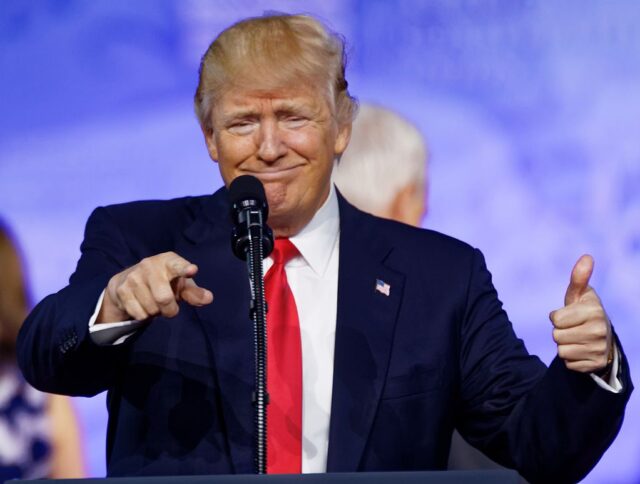
Gage Skidmore from Surprise, AZ, United States of America, CC BY-SA 2.0 , via Wikimedia Commons

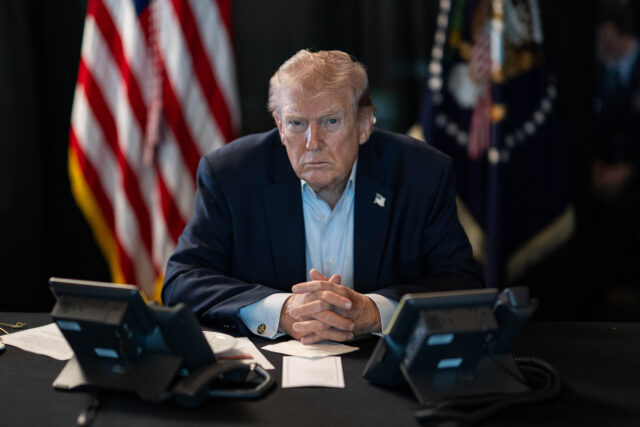
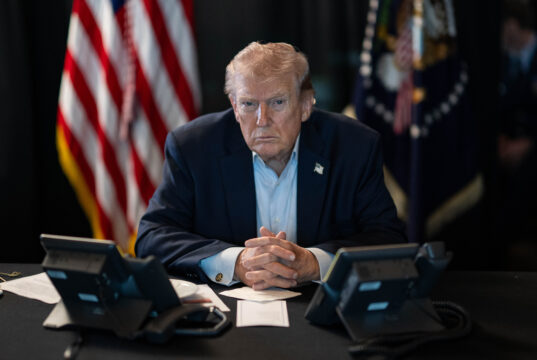
President Donald Trump set off another round of social media speculation Friday after cameras caught what looked like copious amounts of makeup on his hand during public appearances in Washington.

A patch of foundation, slightly lighter than his skin tone, was visible while he toured an exhibit at The People’s House museum. Later that day, during the World Cup 2026 draw event at The Kennedy Center, Trump kept one hand over the other while addressing the crowd — a move that didn’t go unnoticed by outlets like The Daily Beast, which pointed out the recurring appearance of cosmetic cover.

This isn’t the first time similar images have made the rounds. Observers cited previous instances following Trump’s meetings with French President Emmanuel Macron in February, European Commission President Ursula von der Leyen in July, and U.K. Prime Minister Keir Starmer.

Asked about the chatter, White House Press Secretary Karoline Leavitt brushed aside the tabloid-style coverage.

“President Trump is a man of the people, and he meets more Americans and shakes more hands on a daily basis than any other president in history,” Leavitt told The Independent Saturday. “His commitment is unwavering, and he proves that every single day.”

The renewed scrutiny follows last month’s stir over photos showing discoloration and swelling in Trump’s legs during a FIFA Club World Cup appearance. The White House later confirmed the president has chronic venous insufficiency — a common circulatory condition in which blood pools in the veins due to weakened valves.

According to the Cleveland Clinic, the condition can lead to discomfort but is manageable. Leavitt said Trump isn’t in pain and hasn’t required treatment or changes to his daily routine.

In April, White House physician Capt. Sean Barbabella declared the president in “excellent cognitive and physical health” after his annual checkup. He attributed bruising on Trump’s hands to aspirin therapy, a standard precaution for heart health.

Leavitt emphasized that the president’s physician remains available to answer any medical questions and insisted, “There is nothing to hide.”

READ NEXT: Former Trump Ally Issues Fiery Response To Shock Report

US Takes 10% Stake In Intel Under Trump To Strengthen Chip Production

Donald Trump via Gage Skidmore Flickr

A public-private deal aims to bring microchip manufacturing back to American soil — and deliver taxpayer returns in the process.

A Strategic Bet on Semiconductors

President Donald Trump announced Friday that chipmaker Intel agreed to give the U.S. government a 9.9% equity stake, valued at $8.9 billion. The move, the first of its kind under the CHIPS and Science Act, is intended to strengthen domestic semiconductor capacity and ensure that federal subsidies come with direct returns for taxpayers.

“They’ve agreed to do it, and I think it’s a great deal for them,” Trump told reporters during a briefing. The agreement follows internal administration discussions about using existing Commerce Department funding to acquire a stake in Intel, an effort confirmed earlier in the week by Commerce Secretary Howard Lutnick.

The stake is expected to be funded through the CHIPS Act and the Department of Defense’s Secure Enclave program. It will be a passive investment, meaning the government will not receive board seats, governance rights, or special access to information.

Intel Under Scrutiny

Trump also shed light on how the agreement came about — including a conversation with Intel CEO Lip-Bu Tan, whose background had drawn criticism from Capitol Hill.

Earlier this month, Sen. Tom Cotton (R-AR) raised alarms over Tan’s past leadership of Cadence Design Systems, which in 2008 pleaded guilty to illegally exporting chip design software to a Chinese military university. Tan’s investments in China-based firms had also raised national security concerns.

“I said, ‘Well that’s right, he should resign,’” Trump said. “And he came in, he saw me, we talked for a while. I liked him a lot. I thought he was very good. I thought he was somewhat a victim, but, you know, nobody’s a total victim, I guess.”

Following their meeting, Trump floated the idea that Intel should offer a 10% equity share to the U.S. government.

“He said, ‘I would consider that,’” Trump recalled. “Intel has been left behind, as you know, compared to [Nvidia CEO] Jensen [Huang] and some of our friends.”

Commerce: “We Can’t Rely on Taiwan”

Commerce Secretary Lutnick emphasized that the deal has more to do with national security than boardroom politics. In an interview on CNBC’s Squawk Box, Lutnick pointed out that Taiwan, which manufactures over 90% of the world’s most advanced semiconductors, sits just 80 miles from China.

“We cannot rely on Taiwan, which is 9,500 miles away from us and only 80 miles from China,” Lutnick said. “So, you can’t have 99 percent of leading-edge chips made in Taiwan. We want to make them here.”

He noted that the administration wants to ensure that U.S. companies are capable of producing next-generation chip nodes domestically.

“One of those pieces is, it would be lovely to have Intel be capable of making a U.S. node or a U.S. transistor — driving that in America,” Lutnick added.

A Rare Bipartisan Signal

The move drew support across ideological lines, with Sen. Bernie Sanders (I-VT) praising the basic premise: that if the federal government is handing out billions in subsidies, the public should see a share of the profits.

“No. Taxpayers should not be providing billions of dollars in corporate welfare to large, profitable corporations like Intel without getting anything in return,” Sanders said. “If microchip companies make a profit from the generous grants they receive from the federal government, the taxpayers of America have a right to a reasonable return on that investment.”

Not Everyone on Board

Some conservatives pushed back against the concept of government equity stakes in private corporations.

Sen. Rand Paul (R-KY) called the proposal a “terrible” precedent.

“If socialism is government owning the means of production, wouldn’t the government owning part of Intel be a step toward socialism?” Paul wrote in a post on X.

Despite the criticism, the administration has defended the agreement as a narrowly targeted investment — not a takeover — intended to align taxpayer contributions with long-term national and economic security.

Looking Ahead

The Intel stake marks a sharp departure from traditional federal industrial policy. Rather than simply issuing grants or tax breaks, the administration is pursuing a more transactional model: public money in, public equity out.

For the Trump administration, the goal is clear — to use government leverage to secure America’s position in next-generation chip manufacturing and reduce dependence on overseas supply chains.

READ NEXT: When Loyalty Breaks: Hegseth Moves Against Key Military Leader

Trump Eyes Chicago In Crime Crackdown Expansion

President Donald Trump announced Friday that he plans to expand his crime crackdown strategy to Chicago, calling the city “a mess” and signaling more federal involvement in local law enforcement.

This move comes after the recent federal takeover of the D.C. Metropolitan Police Department and the deployment of federal agents — including National Guard troops — across Washington, D.C., as part of the administration’s ongoing law-and-order agenda.

“After we do this will go to another location, and we’ll make it safe, also. We’re going to make our country very safe,” Trump said to reporters while seated at the Resolute desk. “We’re going to make our cities very, very safe. Chicago’s a mess.”

Unsurprisingly, progressive Chicago Mayor Brandon Johnson isn’t on board. In recent weeks, he has fired back at Trump’s threats, touting a supposed drop in crime under his leadership. Johnson points to homicides being down more than 30% and shootings nearly 40% compared with last year.

He also warned that bringing in the National Guard would only make matters worse, calling it “destabilizing.” Johnson pointed to the Trump administration’s record, arguing that its $158 million cut to violence prevention funding created upheaval in underserved communities.

Gov. JB Pritzker — widely seen as a likely 2028 presidential contender — also pushed back, accusing Trump of making personal attacks and defending Illinois’ progressive approach to criminal justice reform.

Fox News continues:

During his 2024 presidential campaign, Trump threatened to federalize D.C. because of the city’s struggle to control crime. The Aug. 3 attempted carjacking and brutal beating of a former Department of Government Efficiency staffer brought the issue back to the spotlight, sparking national debate. The following week, on Aug. 11, Trump declared a crime emergency in D.C., sparking the federal takeover.

“The city government’s failure to maintain public order and safety has had a dire impact on the federal government’s ability to operate efficiently to address the nation’s broader interests without fear of our workers being subjected to rampant violence,” Trump’s executive order read.

On Friday, Trump declared on Truth Social that D.C. was “safe again” and that it would soon “be great again.” He also praised law enforcement personnel for “doing a fantastic job.”

Under the Posse Comitatus Act and the 10th Amendment, the president can’t deploy federal or National Guard troops into a state without the governor’s approval — unless certain rare conditions are met. Without that consent, the move would almost certainly trigger a constitutional fight.

READ NEXT: Fed Chair Drops Bombshell — Markets Respond Furiously

Supreme Court Greenlights Trump NIH Cuts Targeting DEI, COVID Research

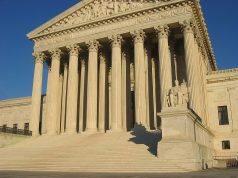
The U.S. Supreme Court on Thursday cleared the way for the Trump administration to move forward with nearly $800 million in cuts to National Institutes of Health grants.

The decision allows the administration to withhold funds that had been frozen by a lower court — grants largely tied to diversity, equity, and inclusion (DEI) initiatives, as well as studies focused on minority health, LGBTQ+ issues, vaccine hesitancy, COVID-19, and similar public health topics.

A federal trial court in Massachusetts had previously ruled in June that many of the cuts were “arbitrary and discriminatory,” ordering the temporary restoration of those grants.

But the Supreme Court, acting through its emergency — or so-called “shadow” — docket, overrode that ruling in a narrow 5–4 decision.

Chief Justice John Roberts sided with the liberal bloc in dissent. Justice Ketanji Brown Jackson issued a sharply worded dissent of her own, criticizing the court’s reliance on the emergency process and the brevity of the majority’s explanation.

As SCOTUSBlog reports, the court — also by a 5–4 margin — left in place another part of the lower court’s ruling affecting internal NIH guidance documents outlining the agency’s policy priorities:

Justice Amy Coney Barrett provided the key vote on each issue. She joined Justices Clarence Thomas, Samuel Alito, Neil Gorsuch, and Brett Kavanaugh in voting to allow NIH to terminate the grants, but she joined Chief Justice John Roberts and Justices Sonia Sotomayor, Elena Kagan, and Ketanji Brown Jackson in voting to leave the lower court’s ruling on the guidance documents in place.

Jackson had sharp words for her colleagues, describing the ruling as “Calvinball jurisprudence” – a reference to the Calvin and Hobbes cartoon – “with a twist. Calvinball has only one rule: There are no fixed rules. We seem to have two: that one, and this Administration always wins.”

NIH ended hundreds of grants it linked to DEI-related studies in response to a series of executive orders issued by President Donald Trump after his inauguration in January. The first order, titled “Ending Radical and Wasteful Government DEI Programs and Preferencing,” instructed the director of the Office of Management and Budget, assisted by the attorney general and the director of the Office of Personnel Management, to work to end “discriminatory programs, including illegal DEI” programs in the federal government. It was followed by two other executive orders, titled “Defending Women from Gender Ideology Extremism and Restoring Biological Truth to the Federal Government” and “Ending Illegal Discrimination and Restoring Merit-Based Opportunity.”

Two separate groups of plaintiffs went to federal court in Massachusetts to challenge the termination of the grants. One group is made up of 16 states whose public universities receive funding from NIH, while the other consists of the American Public Health Association, individual researchers, a union, and a reproductive health advocacy group. They contended that the termination of the grants violated both the Constitution and the Administrative Procedure Act, the federal law governing administrative agencies.

The administration argues the research in question lacks scientific rigor and was driven more by ideology than merit. Officials also say the cuts are consistent with their broader push to eliminate DEI-related spending across federal agencies.

Democrat-led states and advocacy groups claim the funding loss could have “incalculable” consequences for underserved communities.

This case fits a broader pattern: The court has recently upheld rollbacks on DEI-based spending in areas like teacher training. Critics say the use of the emergency docket limits public transparency and bypasses full hearings. Supporters say it’s a legitimate tool to keep activist courts in check.

Legal challenges are still moving through the lower courts.

In the meantime, universities, NIH personnel, and left-leaning advocacy groups are mobilizing in protest, warning of long-term damage to public health research and institutional equity efforts.

READ NEXT: Police Swarm Former Trump Ally’s Mansion

Smartmatic Execs Accused Of Bribery Scheme Tied To $300M LA Voting Contract

Federal prosecutors in Miami say top Smartmatic executives funneled money from a $300 million Los Angeles County voting contract into an illegal slush fund.

According to the Justice Department, Smartmatic co-founder Roger Alejandro Piñate Martinez and two others used shell companies and fake invoices to siphon off cash from the taxpayer-funded deal. That money allegedly ended up in bribes paid to government officials in Venezuela and the Philippines.

Joe DePaolo of Mediaite offers further insights:

Smartmatic is suing Fox News for $2.7 billion — alleging the network defamed them by promoting President Donald Trump’s false claims of a stolen election in the days and weeks after the 2020 vote.

The new filing is part of a corruption case in Florida against the three Smartmatic executives for allegedly operating a bribery and money-laundering scheme in which they are accused of paying off an election official in the Philippines to help secure $182 million in contracts. The DOJ also claims the executives carried a similar plot with a Venezuelan official — whom the executives gave a home with a pool in 2019, according to prosecutors.

The DOJ hasn’t charged Smartmatic as a company, nor has it accused any L.A. County officials of wrongdoing. Still, the department is clearly using the L.A. contract to establish a pattern of corrupt practices tied to the voting tech firm.

DePaolo continues:

Notably, the original case against the Smartmatic executives was brought in August 2024, during the final months of the Biden administration.

In a statement provided to the Los Angeles Times, Smartmatic spokesperson Samira Saba said the DOJ’s filing contained misrepresentations that were “untethered from reality.”

The DOJ’s latest move builds on earlier charges against the same executives. Federal prosecutors had previously accused Piñate of laundering money through a similar slush fund to bribe election officials in the Philippines during the 2016 elections.

To be clear, no one is alleging votes were tampered with or election results altered. The charges focus strictly on financial corruption — kickbacks, shell firms, and international bribery.

READ NEXT: Former Trump Ally Issues Fiery Response To Shock Report

Musk Shoots Down Report Claiming Retreat From America Party Plans

1
President Donald Trump signs Executive Orders, Thursday, April 17, 2025, in the Oval Office. (Official White House Photo by Molly Riley)

The Wall Street Journal reported Tuesday that Elon Musk is quietly backing away from his “America Party” effort — the political project he unveiled in July after souring on the Trump administration over its “One Big Beautiful Bill” legislation.

But Musk isn’t having it.

“Nothing @WSJ says should ever be thought of as true,” he posted bluntly on X, slamming the Journal’s reporting and casting doubt on their unnamed sources.

Crypto outlet Binance Square has more on Musk’s candid remarks:

This is the clearest confirmation yet that Musk remains committed to his political initiative and is actively pushing for the formation of the America Party—despite growing media speculation and political opposition.

The original WSJ story, which claimed Musk was “quietly stepping down” from the Republican project, was widely circulated in financial and political circles. The story, citing unnamed sources, alleged internal concerns and strategic recalculations at Tesla, SpaceX, and Musk’s advisory group.

But Musk quickly denied the X report, accusing the Wall Street Journal of fabricating the story. His response sparked a strong reaction online, particularly from America Party supporters and holders of the community-run America Party Token (AP).

Musk’s public denial of the WSJ report suggests that the America Party launch is not only still on track, but imminent.

The Journal claims Musk is cooling on the America Party idea, refocusing on his businesses, and wary of upsetting top Republicans — including Vice President JD Vance. One source said Musk might even support Vance in a 2028 presidential run.

To back that up, it points to Musk canceling strategy sessions with third-party political consultants, ghosting political figures like Andrew Yang and Mark Cuban, and not engaging with groups such as the Libertarian Party, which had shown interest in joining forces.

On paper, it does look like a pause — or at least a pivot. But Musk’s direct denial raises the question: Is he regrouping, or just playing his cards closer to the chest?

Either way, if he is rethinking the America Party, it’s not something he’s ready to admit.

READ NEXT: Top Cabinet Official Announces Major Intelligence Overhaul

Trump Calls On Fed Governor To Resign

2
Photo via Gage Skidmore Flickr

President Trump called Wednesday for the resignation of Federal Reserve board of governors member Lisa Cook following allegations by the head of the Federal Housing Finance Agency (FHFA) that she committed mortgage fraud.

FHFA Director William Pulte wrote Wednesday morning on X that Cook had designated two of her houses as her primary residences.

“Lisa D. Cook, committed mortgage fraud by designating her out-of-state condo as her primary residence, just two weeks after taking a loan on her Michigan home where she also declared it as her primary residence,” he said.

Trump called for Cook to step down shortly thereafter.

“Cook must resign, now!!!” he wrote on his own social media website, Truth Social.

Pulte said his agency sent a criminal referral to the Department of Justice (DOJ) regarding the allegations against Cook.

“I believe the DOJ will open a criminal investigation into her alleged mortgage fraud,” he said.

Trump accused Fed Chair Jerome Powell of fraud earlier this summer over an ongoing renovation project at Fed headquarters in Washington.

Following a report in July that Trump had discussed attempting to fire Powell with congressional Republicans, he later said it was “highly unlikely” that he would do so after the stock market dipped on his initial comments, “unless he has to leave for fraud.”

Mexico Agrees To Extradite 26 Cartel Leaders To US

The White House, Public domain, via Wikimedia Commons

Mexico reached a deal with the United States to hand over 26 top cartel leaders.

The cartel figures were scheduled to fly to the U.S. on Tuesday.

“Today is the latest example of the Trump administration’s historic efforts to dismantle cartels and foreign terrorist organizations,” Attorney General Pam Bondi told Fox News. “These 26 men have all played a role in bringing violence and drugs to American shores — under this Department of Justice, they will face severe consequences for their crimes against this country. We are grateful to President Sheinbaum and the Mexican government for their collaboration in this matter.”

Abigael González Valencia, a leader of the “Los Cuinis,” cartel, which is aligned with the notorious Jalisco New Generation cartel (CJNG) and Roberto Salazar, who is accused of participating in the 2008 killing of a Los Angeles sheriff’s deputy, are among those being handed over to the U.S. 

Mexico’s Attorney General’s Office and Security Ministry confirmed the men were being handed over, saying the deal was made after the U.S. Justice Department said it wouldn’t seek the death penalty.

President Donald Trump has also reportedly secretly authorized U.S. military force against cartels in Latin America designated by the U.S. as terrorist organizations, which would allow U.S. forces to engage with them.

The move, reported by the New York Times, would give U.S. forces permission to engage the cartels, which traffic drugs like fentanyl across the US-Mexico border,

“The president is determined to not just dismantle – but completely destroy – [Venezuelan dictator Nicolas] Maduro’s Cartel de Los Soles and obliterate their operations in the Western Hemisphere,” a source close to the White House said, the New York Post reported. 

The anti-cartel effort is being coordinated among several departments, including the Department of Defense, Justice Department, Department of Homeland Security, Office of the Director of National Intelligence and the Treasury, the source added.

“President Trump’s top priority is protecting the homeland, which is why he took the bold step to designate several cartels and gangs as foreign terrorist organizations,” deputy White House press secretary Anna Kelly said in a statement to Fox News.

It also comes ahead of 25% tariffs on Mexican goods coming into the U.S. imposed by Trump. 

Mexico also extradited 29 cartel leaders in February, including Rafael Caro Quintero, who prosecutors say was behind the torture and murder of a DEA agent in 1985. 

“The previous Administration allowed these criminals to run free and commit crimes all over the world. The Trump Administration is declaring these thugs as terrorists, because that is what they are, and demanding justice for the American people,” the White House said at the time. 

Attorney General Files Misconduct Complaint Against Anti-Trump Judge

2

The Justice Department has filed an official complaint alleging misconduct by US District Court Chief Judge James Boasberg. 

The complaint, which was directed by AG Pam Bondi and reviewed by Fox News, was written by Attorney General Pam Bondi’s Chief of Staff Chad Mizelle and addressed to the Chief Judge of the United States Court of Appeals for the District of Columbia Circuit, Sri Srinivasan.

“The Department of Justice respectfully submits this complaint alleging misconduct by U.S. District Court Chief Judge James E. Boasberg for making improper public comments about President Donald J. Trump to the Chief Justice of the United States and other federal judges that have undermined the integrity and impartiality of the judiciary,” says Mr. Mizelle.

Judge Boasberg is presiding over a high-profile case involving the deportation of several migrants to El Salvador and has talked about holding DOJ lawyers in contempt because of his assertion that his order to turn airborne planes around was not followed. President Trump has also made critical comments about Judge Boasberg.

The complaint details two occasions on which Judge Boasberg made comments that the Justice Department alleges undermine the integrity and impartiality of the judiciary.

“On March 11, 2025, Judge Boasberg attended a session of the Judicial Conference of the United States, which exists to discuss administrative matters like budgets, security, and facilities. While there, Judge Boasberg attempted to improperly influence Chief Justice Roberts and roughly two dozen other federal judges by straying from the traditional topics to express his belief that the Trump Administration would “disregard rulings of federal courts” and trigger “a constitutional crisis.” Although his comments would be inappropriate even if they had some basis, they were even worse because Judge Boasberg had no basis—the Trump Administration has always complied with all court orders. Nor did Judge Boasberg identify any purported violations of court orders to justify his unprecedented predictions.”

“Within days of those statements, Judge Boasberg began acting on his preconceived belief that the Trump Administration would not follow court orders. First, although he lacked authority to do so, he issued a temporary restraining order preventing the Government from removing violent Tren de Aragua terrorists, which the Supreme Court summarily vacated.

Taken together, Judge Boasberg’s words and deeds violate Canons of the Code of Conduct for United States Judges, and, erode public confidence in judicial neutrality, and warrant a formal investigation.” 

Federal Judge James Boasberg became a key figure in the fight over border security this year, after issuing a controversial temporary restraining order on March 15 that blocked President Trump’s use of the Alien Enemies Act to speed up deportations of hundreds of Venezuelan nationals to El Salvador.

Boasberg went so far as to demand that all flights bound for El Salvador be “immediately” returned to U.S. soil—an order that was not carried out. His emergency action set off a chain of legal challenges around the country, beginning with the March 15 case in his court, and eventually drew in the Supreme Court. The high court would later rule—twice—that the Trump administration’s expedited removals did not violate constitutional due process.

Despite these rulings, Boasberg and his handling of the matter have been sharply criticized by Trump administration officials, who say his order interfered with the executive branch’s authority to secure the border. President Trump himself suggested earlier this year that Boasberg could be impeached over his conduct, prompting Chief Justice John Roberts to issue a rare public statement.

The current complaint against Boasberg—originally appointed to the bench by President George W. Bush in 2002—comes just as he may once again play a decisive role in a major class-action case involving the same group of former CECOT migrants.

DOJ Fires 20 Employees Who Worked With Jack Smith On Trump Prosecutions

2

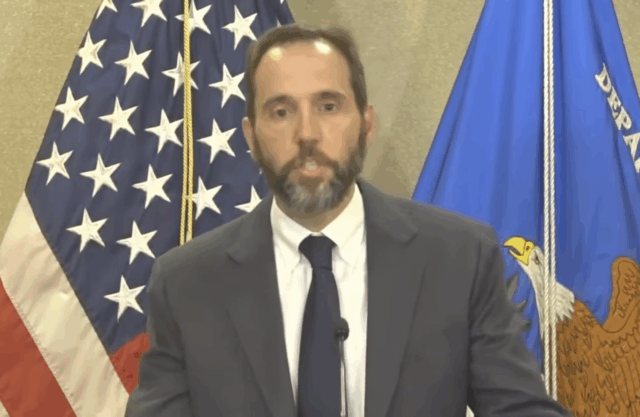
Twenty Department of Justice (DOJ) employees who worked with special counsel Jack Smith have been fired.

The terminated staff includes two prosecutors, 12 support staff and six U.S. marshals who assisted with classified documents and the 2020 election investigations against President Donald Trump, an official confirmed to The Daily Caller.

More than a dozen officials who worked with Smith were fired in January, while Smith himself resigned before Trump took office in January. Both of the cases were dismissed after Trump won the election.

Joseph Tirrell, who was director of the Departmental Ethics Office, wrote on LinkedIn Monday that he was terminated by Attorney General Pam Bondi, sharing the letter he received in a post.

“Until Friday evening, I was the senior ethics attorney at the Department of Justice responsible for advising the Attorney General and Deputy Attorney General directly on federal employee ethics,” he wrote. “I was also responsible for the day-to-day operations of the ethics program across the Department. I led a small, dedicated team of professionals and coordinated the work of some 30 other full-time ethics officials, attorneys, paralegals and other specialists across the Department of Justice, ensuring that the 117,000 Department employees were properly advised on and supported in how to follow the Federal employee ethics rules.”

In his final report, Smith claimed Trump would have been convicted if he had not won the election. Yet Smith indicated he did not bring insurrection charges because he could not prove Jan. 6 was more than a riot or that Trump incited it.

Smith sought to fast-track the cases ahead of the 2024 election but ultimately failed to bring either one to trial.

Attorney General Pam Bondi fired Maurene Comey, a prosecutor with the Southern District of New York who had prosecuted deceased financier and child sex trafficker Jeffrey Epstein and Ghislaine Maxwell.

Comey, a senior trial counsel, is the daughter of former FBI Director James Comey, whom Trump fired in 2017.

“The reason for her firing was not immediately clear. She did not immediately respond to phone calls and an email seeking comment,” Politico said. “Comey, who had worked in the U.S. attorney’s office for nearly a decade, prosecuted both Jeffrey Epstein and his associate Ghislaine Maxwell.”

Maurene Comey worked at the SDNY for almost a decade.