National Security

Home National Security

Netanyahu Confirms Iran Targeted Trump As ‘Enemy Number One’ With Assassination Plot

President Donald Trump and Israeli Prime Minister Benjamin Netanyahu shake hands during their joint press conference, Wednesday, Feb. 15, 2017, in the East Room of the White House in Washington, D.C. (Official White House Photo by Leslie N. Emory)

Israeli Prime Minister Benjamin Netanyahu confirmed during a recent interview that Iran viewed President Donald Trump as a threat to its nuclear program and actively worked to assassinate him.

“They want to kill him. He’s enemy number one. He’s a decisive leader. He never took the path that others took to try to bargain with them in a way that is weak, giving them basically a pathway to enrich uranium, which means a pathway to the bomb, padding it with billions and billions of dollars,” the prime minister told Fox News’ Bret Baier during a special Sunday edition of “Special Report.”

“He took up this fake agreement and basically tore it up. He killed Qasem Soleimani. He made it very clear, including now, ‘You cannot have a nuclear weapon, which means you cannot enrich uranium.’ He’s been very forceful, so for them, he’s enemy number one.”

Netanyahu revealed he was also a target of the regime after a missile was fired into the bedroom window of his home. He went on to call himself Trump’s “junior partner” in threatening Iran’s ability to weaponize nuclear arms. 

Netanyahu said his country was facing an “imminent threat” of nuclear destruction and was left with no choice but to act aggressively in the “12th hour.”

“We were facing an imminent threat, a dual existential threat,” he said.

“One, the threat of Iran rushing to weaponize their enriched uranium to make atomic bombs with a specific and declared intent to destroy us. Second, a rush to increase their ballistic missile arsenal to the capacity that they would have 3,600 weapons a year…. Within three years, 10,000 ballistic missiles, each one weighing a ton, coming in at mach 6, right into our cities, as you saw today… and then in 26 years, 20,000 [missiles]. No country can sustain that, and certainly not a country the size of Israel, so we had to act.”

Netanyahu said, by doing so, Israel is not only protecting itself but also protecting the world.

Iran has since retaliated with a large-scale ballistic missile attack on Israeli cities.

Netanyahu told Fox News he believes Israel’s offensive measures have set back the Iranian nuclear program “quite a bit,” sharing his belief that negotiations with the terrorism-sponsoring regime were clearly “going nowhere.”

Netanyahu has described the operation, coined as Operation Rising Lion, as “one of the greatest military operations in history.” Addressing the Iranian people, he said they had been oppressed for 50 years by the same Islamic regime that has long threatened to destroy the State of Israel.

Trump Secures Release Of US Prisoner From Taliban

Gage Skidmore Flickr

An American woman being held captive by the Taliban is free…

American citizen Faye Hall was released finally this week after being held since February and received at the Qatari embassy in Kabul.

A source informed reporters that she has been confirmed to be in good health after undergoing a series of medical checks. Arrangements are currently underway for her return to the U.S.

The Taliban agreed to release Hall after President Donald Trump removed multimillion-dollar bounties on senior members of the militant group, according to a report by the Telegraph.

The White House shared a video on X Saturday afternoon of Hall thanking the president.

“I’m glad you’re the President, and thank you for bringing me home,” Hall said. “I have never been so proud to be an American citizen. Thank you, Mr. President.”

In a response posted to Truth Social, Trump wrote, “Thank you Faye — So honored with your words!”

Trump agreed to remove millions of dollars of bounties on three senior members of the Haqqani network, including Sirajuddin Haqqani, the Taliban government’s interior minister, the outlet reported, noting that Washington was offering a $10 million reward for information leading to his capture.

Hall was arrested on Feb. 1 along with a British couple, Peter Reynolds, 79, his wife Barbie, 75, and their interpreter, the outlet reported. 

Hall’s release comes after the Taliban released American hostage George Glezmann, 65, last week after holding him for more than two years. (RELATED: Trump Admin Frees American Hostage From Taliban)=

The Trump administration has also secured the release of multiple Americans being held prisoner in Russia, including Pennsylvania teacher Marc Fogel(RELATED: Trump Secures Release Of Second American While Revealing Details Of Russian Prisoner Swap)

Fogel, a history teacher from Pennsylvania, was serving a 14-year prison sentence after his arrest in August 2021 at a Russian airport for being in possession of drugs, which his family and supporters said were medically prescribed marijuana. 

READ NEXT: “Democrats Have Nothing To Sell But Hate” – Texas Gov. Abbott Responds After Sleazy Dem Rep’s ‘Hot Wheels’ Slur

Democrat Senator Openly Backs Trump’s Iran Proposal

Gage Skidmore Flickr

President Donald Trump said Monday that the United States and Israel have already destroyed Iran’s nuclear program and warned that Tehran would face renewed military action if it attempts to rebuild its weapons capabilities. His remarks came as new reports allege the Iranian regime is pursuing chemical and biological warheads for its ballistic missiles.

Speaking at Mar-a-Lago alongside Israeli Prime Minister Benjamin Netanyahu, Trump delivered a blunt warning to Tehran over its nuclear and missile ambitions.

“Now I hear that Iran is trying to build up again, and if they are, we’re going to have to knock them down,” Trump said. “We’ll knock the hell out of them.” He added that Iran would be “much smarter” to pursue a deal.

Trump framed Iran’s defeat as central to restoring stability in the Middle East, crediting joint U.S.-Israeli military action with fundamentally shifting the regional balance of power.

“We just won a big war together,” he said. “If we didn’t beat Iran, you wouldn’t have had peace in the Middle East. We wiped it out.”

When asked whether he would support further Israeli military action if Iran continues advancing its missile or nuclear programs, Trump responded without hesitation.

“If they continue with the missiles — yes,” he said. “The nuclear — absolutely.”

Pressed on whether he would support efforts to overthrow Iran’s ruling regime, Trump declined, while pointing to the country’s internal turmoil and economic collapse.

“I’m not going to talk about overthrow of a regime,” he said. “But they have tremendous inflation. Their economy is busted.”

Trump also noted that widespread protests inside Iran are frequently met with deadly force by the government.

The president’s comments followed a report Sunday from Iran International alleging that Iran’s Islamic Revolutionary Guard Corps is accelerating work on unconventional missile payloads, including chemical and biological weapons. The report cited unnamed military and security sources.

Sen. John Fetterman (D-Pa.) echoed Trump’s hardline stance in a Monday post on X, saying he would support military strikes to prevent Iran from obtaining nuclear weapons.

“Iran can’t ever develop a nuclear weapon,” Fetterman wrote.

“Fully supported the strike earlier this year. Fully support any future strikes to damage or destroy their nuclear ambitions,” added Fetterman, a vocal supporter of Israel.


Trump Reveals Identity Of Secret Iran Negotiation Partner

The White House, Public domain, via Wikimedia Commons

President Donald Trump on Monday confirmed that his administration is engaged in talks with Iranian parliamentary speaker Mohammad Bagher Ghalibaf, identifying for the first time the official he has described as a key contact in ongoing negotiations.

The confirmation was reported by New York Post national security correspondent Caitlin Doornbos, who said Trump told her the U.S. is negotiating directly with Ghalibaf and suggested it would soon become clear whether the talks could produce results.

Trump “confirmed to me today that the US is negotiating with Iranian parliamentary speaker Mohammad Bagher Ghalibaf, saying we’ll ‘find out in about a week’ whether he is someone America can truly work with,” Doornbos reported.

The disclosure follows days of speculation after Trump announced on Truth Social that “VERY GOOD AND PRODUCTIVE CONVERSATIONS” were underway between the United States and Iran, even as tensions remained high following recent military escalation.

Trump’s announcement of talks came alongside a significant policy shift. Just hours after warning that Iran could face “total decimation” if it failed to comply with U.S. demands over the Strait of Hormuz, the president ordered a five-day pause on planned strikes targeting Iranian energy infrastructure, citing progress in negotiations.

Before naming Ghalibaf, Trump had declined to identify his counterpart, telling reporters only that discussions were taking place with “a top person.”

“A top person. Don’t forget, we wiped out the leadership, phase one, and phase two and largely phase three. But we’re dealing with a man who I believe is the most respected and the leader. It is a little tough. We’ve wiped out everybody,” Trump said.

When pressed at the time on whether he was referring to Iran’s leadership, Trump ruled out direct contact with the country’s newly named supreme leader.

“No, not the supreme leader. Nobody has heard of the second supreme leader, the son. We have not heard from the son. Everyone said you’ve seen a statement made, we don’t know if he is living. But the people that seem to be running it, and they seem that based on, really, fact because things they’ve said have taken place.”

Following those remarks, The Jerusalem Post reported that Trump’s backchannel contact was Ghalibaf. The Iranian official quickly denied the claim, posting on X that no negotiations were taking place.

“Iranian people demand complete and remorseful punishment of the aggressors. All Iranian officials stand firmly behind their supreme leader and people until this goal is achieved. No negotiations have been held with the US, and fakenews is used to manipulate the financial and oil markets and escape the quagmire in which the US and Israel are trapped.”

Despite the denial, Trump reiterated his position in comments to Doornbos, suggesting the administration is actively testing whether Ghalibaf represents a viable negotiating partner as conflict continues to unfold across the region.

“We’re gonna find out,” Trump told The Post when asked about Iran’s Mohammad Bagher Ghalibaf. “I’ll let you know that in about a week.”

Trump also indicated that recent developments inside Iran may have altered the diplomatic landscape.

“There has been total regime change because the regimes of the past are gone and we’re dealing with a whole new set of people. And thus far, they’ve been much more reasonable,” he said.

The conflicting accounts underscore ongoing uncertainty around the status of negotiations, even as the Trump administration signals optimism about a potential resolution

According to a report from The Hill, Pakistan on Sunday said it would host talks aimed at ending the U.S.-Iran war, after diplomats from Turkey, Egypt and Saudi Arabia met in Islamabad.

“Pakistan will be honored to host and facilitate meaningful talks between the two sides in coming days in a comprehensive sentiment of the ongoing conflict,” Pakistan Foreign Minister Ishaq Dar said in a speech after the meeting.

It was not immediately clear if the U.S. and Iran would take part in the talks.

On Sunday, Iran’s paramilitary Revolutionary Guard said U.S. universities based in the Middle East “are legitimate targets” after its military said joint U.S.-Israeli strikes hit two colleges in the country. 

“The reckless rulers of the White House should know that from now on, all universities of the occupying regime and American universities in the West Asia region are legitimate targets for us until two universities are struck in retaliation for the Iranian universities that have been destroyed,” it wrote in a post on the social platform X. 

“All staff, professors, and students of American universities in the region, as well as residents in their surroundings, are advised to stay at least one kilometer away from these universities to ensure their safety,” the statement continued. 

Many American universities have satellite campuses in the region, including New York University, Georgetown University, Carnegie Mellon University, Northwestern University and Texas A&M University. 

Additionally, President Trump threatened to attack Iran’s energy infrastructure on Monday morning in a Truth Social post:

“The United States of America is in serious discussions with A NEW, AND MORE REASONABLE, REGIME to end our Military Operations in Iran. Great progress has been made but, if for any reason a deal is not shortly reached, which it probably will be, and if the Hormuz Strait is not immediately “Open for Business,” we will conclude our lovely “stay” in Iran by blowing up and completely obliterating all of their Electric Generating Plants, Oil Wells and Kharg Island (and possibly all desalinization plants!), which we have purposefully not yet “touched.” This will be in retribution for our many soldiers, and others, that Iran has butchered and killed over the old Regime’s 47 year “Reign of Terror.” Thank you for your attention to this matter.”

DOJ Slams Alleged DC Pipe Bomber’s Bid To Claim Trump Pardon

Tyler Merbler, CC BY 2.0 , via Wikimedia Commons

The Justice Department is forcefully pushing back against a striking legal claim from the man accused of planting pipe bombs in Washington, D.C., on the eve of Jan. 6 — that he was effectively pardoned by President Trump.

In a court filing Friday, prosecutors urged a federal judge to reject Brian Cole Jr.’s attempt to have his charges thrown out, calling his argument flatly incompatible with the “clear and unambiguous terms” of Trump’s sweeping Jan. 6 clemency order.

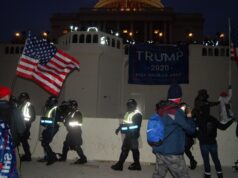
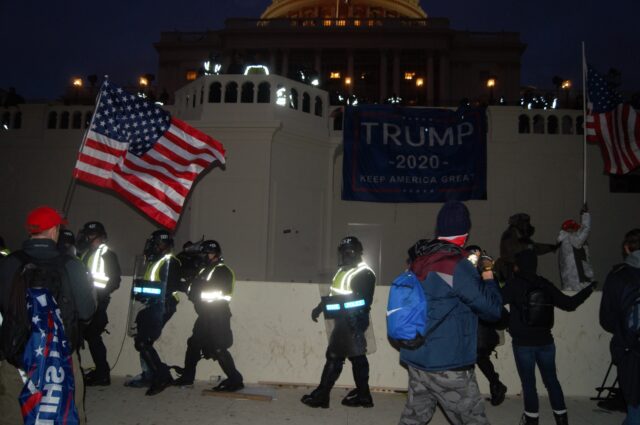
Cole, who was arrested in December 2025 after years of investigation, is accused of placing two pipe bombs outside the Republican and Democratic National Committee headquarters on Jan. 5, 2021 — just hours before rioters stormed the U.S. Capitol.

The devices never detonated, but the FBI has said they were functional and viable, raising the stakes of a case that remained unsolved for nearly five years.

Earlier this year, Cole’s lawyers made a bold move: They argued that his actions were “inextricably and demonstrably tethered” to the events of Jan. 6 — and therefore covered by Trump’s mass pardon of people tied to the attack.

They pointed to the broad language in Trump’s order, which applies to offenses “related to” events at or near the Capitol, and noted that Cole allegedly traveled to Washington for an election protest tied to the same political moment that fueled the riot.

But the Justice Department isn’t buying it.

“The defendant ignores that the proclamation expressly limited relief to individuals who had been ‘convicted of,’ or had a ‘pending indictment’ for, offenses related to the events at or near the United States Capitol on January 6,” U.S. Attorney for the District of Columbia Jeanine Pirro wrote.

That distinction, prosecutors argue, is decisive.

When Trump’s pardon took effect on Jan. 20, 2025, Cole had not yet been charged — putting him outside the scope of the order entirely.

“The defendant belonged to neither category, and so the proclamation has no bearing on this case,” Pirro wrote.

Cole was indicted weeks later, in January 2026, on charges including interstate transportation of explosives and malicious attempt to use them.

Prosecutors also made clear that even a broader reading of the pardon wouldn’t help him.

“Even if the Court somehow found, notwithstanding its text, that the proclamation could apply to this case,” Pirro wrote, the Justice Department’s interpretation should still prevail as a “consistent, reasonable” reading by the agency tasked with enforcing it.

The clash sets up a high-stakes test of how far Trump’s Jan. 6 pardons can stretch — and whether conduct that happened before the riot, but is arguably connected to it, can fall under their umbrella.

For now, the Justice Department’s position is blunt: Not this case. Not this defendant.

READ NEXT: Congressman’s Sudden Death Upends Key Race

Trump Vows To Intervene If Iran Starts Killing Protesters

President Donald Trump answers questions from members of the media aboard Air Force One en route to Mount Pocono, Pennsylvania, for a rally on the economy, Tuesday, December 9, 2025. (Official White House Photo by Molly Riley)

President Donald Trump early Friday warned the Islamic Republic of Iran that the United States would intervene if Iranian security forces violently suppress peaceful demonstrators. In a post on Truth Social, Trump wrote that if Iran “shoots and violently kills peaceful protesters, which is their custom,” the U.S. “will come to their rescue.”

He added: “We are locked and loaded and ready to go.”

The president’s warning comes as widespread demonstrations over Iran’s deteriorating economy have expanded beyond Tehran to multiple provinces, raising concerns about a potential heavy-handed crackdown. At least seven people — including both protesters and security personnel — have been reported killed in clashes, according to international reporting.

Iranian officials sharply rebuked Trump’s remarks. Ali Larijani, secretary of Iran’s Supreme National Security Council, posted that U.S. interference “would mean destabilizing the entire region and destroying America’s interests” and urged Trump to reconsider.

The unrest is the most significant since the 2022 protests sparked by the death of Mahsa Amini. This week’s demonstrations began with shopkeepers objecting to a steep depreciation in the Iranian rial and have grown to include students and other citizens chanting against the theocratic leadership. Iranian President Masoud Pezeshkian acknowledged public grievances and urged listening to protesters’ “legitimate demands,” but his government faces limited options as economic conditions worsen.

State media has reported arrests and claims of seized smuggled weapons linked to the unrest, though details remain limited.

Trump’s Recent Iran Statements
Trump’s warning on Friday follows a series of hardline statements on Iran over the past week:

  • On Dec. 29, Trump warned at Mar-a-Lago that the U.S. could support further strikes against Iran if Tehran resumes its nuclear or ballistic-missile programs, saying intelligence suggested Iran may be rebuilding capabilities and that future action may be required.
  • On Dec. 30, Trump again signaled that the U.S. would take military action if Iran attempts to revive its nuclear weapons program, warning reporters that if Tehran “tries to build up again… we have to knock them down.”

These comments come amid heightened regional tensions after U.S. and allied strikes on Iranian nuclear facilities in the summer of 2025 and Iran’s retaliatory attack on the U.S.-linked Al-Udeid Air Base in Qatar.

Domestic Political Support for Tough Stance
Sen. John Fetterman (D–Pa.) — one of the few Democrats to break with his party’s mainstream on Iran — has publicly endorsed a strong military posture toward Tehran. Fetterman praised Trump’s June strikes on Iranian nuclear sites and wrote on X that he “fully support[s] any future strikes to damage or destroy their nuclear ambitions.” x

Fetterman’s stance underscores a rare bipartisan alignment on confronting Iran’s nuclear threat, even as other lawmakers emphasize congressional authority and caution.

Regional and Policy Implications
Iran’s government, beset by economic turmoil and foreign pressure, faces mounting internal dissent. Its currency has sharply depreciated, contributing to public anger and eroding confidence in the regime. Meanwhile, regional actors — including Israel and Russia — are warning against escalation, with Tehran emphasizing resistance against perceived foreign interference and rejecting renewed nuclear negotiations.

Report: US Military Seizes Two Sanctioned Tankers In Atlantic Ocean

Just in…

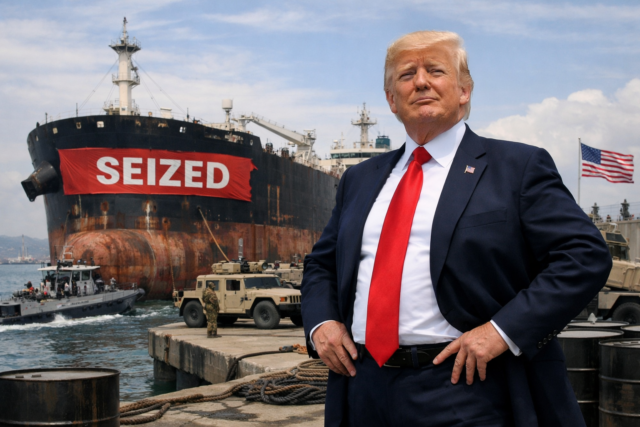
On Wednesday, U.S. forces seized two sanctioned tankers in the Atlantic Ocean.

First, U.S. European Command (EUCOM) announced the seizure of the Russian-flagged Marinera oil tanker in the North Atlantic Sea.

“The @TheJusticeDept & @DHSgov, in coordination with the @DeptofWar today announced the seizure of the M/V Bella 1 for violations of U.S. sanctions,” read a post from EUCOM on X. “The vessel was seized in the North Atlantic pursuant to a warrant issued by a U.S. federal court after being tracked by USCGC Munro.”

“This seizure supports @POTUS Proclamation targeting sanctioned vessels that threaten the security and stability of the Western Hemisphere,” EUCOM added. “The operation was executed by DHS components with support from  @DeptofWar, showcasing a whole-of-government approach to protect the homeland.”

Fox News previously reported that U.S. forces were attempting to board the Marinera tanker, which previously operated under the name Bella 1, in the North Atlantic earlier Wednesday morning.

Fox News reports:

The development comes after the Wall Street Journal reported on Tuesday that Russia had sent a submarine and other naval assets to escort the tanker.

The vessel had spent more than two weeks attempting to slip past U.S. enforcement efforts targeting sanctioned oil shipments near Venezuela, the outlet reported.

“The blockade of sanctioned and illicit Venezuelan oil remains in FULL EFFECT — anywhere in the world,” said Secretary of War Pete Hegseth after the tanker was seized.

FBI Director Kash Patel Shuts Down Charlie Kirk Foreign Intelligence Probe

Image via gage Skidmore Flickr

FBI Director Kash Patel reportedly shut down efforts by Joe Kent, head of the National Counterterrorism Center and a close ally of Tulsi Gabbard, to investigate whether a foreign power was behind the assassination of conservative leader Charlie Kirk.

Kent Pushes to Expose Possible Foreign Ties

According to The New York Times, Kent began reviewing FBI case files to determine if Kirk’s alleged killer, Tyler Robinson, received outside help. Robinson, 22, has been charged with fatally shooting Kirk with a sniper rifle while the Turning Point USA founder was addressing students at Utah Valley University on September 10.

Kent’s investigation raised alarms at the FBI. Patel reportedly believed Kent was overstepping his authority by digging into an active bureau investigation — even though Kent’s mandate at the Counterterrorism Center includes monitoring potential foreign threats to national security.

White House Tensions Boil Over

When Patel learned Kent had accessed internal FBI materials, he demanded a high-level White House meeting. The tense roundtable brought together Patel, Kent, Gabbard, Vice President JD Vance, Chief of Staff Susie Wiles, and senior DOJ officials.

Kent defended his actions, saying a lower-level FBI official had granted him access. Supporters of Kent argue he was doing his duty to ensure foreign adversaries weren’t behind the killing of one of the conservative movement’s most prominent voices.

However, Patel and other officials worried the probe could complicate the prosecution, possibly giving Robinson’s defense attorneys an opening to claim there were multiple suspects or motives at play.

Jurisdictional Turf War

The standoff reflects ongoing turf battles between the FBI and the Counterterrorism Center, particularly over how intelligence is shared during active criminal cases. Despite the controversy, Kent’s team reportedly collected intelligence from other agencies about potential foreign funding or coordination, including possible links to left-wing extremist groups like Antifa.

So far, it’s unclear whether either agency is still investigating possible foreign involvement in the attack.

FBI Agents Sue DOJ To Block Release Of Officials’ Names In Trump Investigations

6

Nine anonymous FBI officials who worked on investigations related to the Jan. 6, 2021, Capitol riot and the classified documents case at Mar-a-Lago have filed a class-action lawsuit against the Trump administration. The lawsuit seeks to prevent the Department of Justice (DOJ) from compiling a list of officials involved in these high-profile cases, arguing that such a move could lead to retaliation and security risks.

Agents Warn of National Security Concerns

The plaintiffs claim the DOJ’s actions amount to an “unlawful” and “retaliatory” purge, raising alarms about potential misuse of the information.

“Should this information fall into the wrong hands, the national security of the United States would be severely compromised,” the lawsuit states.

Beyond job security, the agents fear broader professional consequences, alleging they could face demotions, lost promotions or blocked career opportunities as a result of their past investigative work.

The New York Times has additional details:

The lawsuits came in response to a demand by Emil Bove, the acting deputy attorney general, that the F.B.I. compile and turn over a list of everyone who worked on those cases. That group, the lawsuits estimated, could number as many as 6,000 agents.

The lawsuits said that the agents believed the administration intended to reveal their identities, exposing the agents and their families to profound danger. They seek court orders prohibiting the executive branch from releasing the names.

The Trump administration has not said it intends to release the identities of the law enforcement officials, but its demand for names of people who worked on the cases has stoked the belief that it may move to fire them en masse. At the Justice Department, prosecutors who have worked on cases involving President Trump or the Jan. 6 rioters have been dismissed. The lawsuits on Tuesday appear to be putting down a marker that could expand into a challenge to any mass firings if they happen.

“It is clear that the threatened disclosure is a prelude to an unlawful purge of the F.B.I. driven solely by the Trump administration’s vengeful and political motivations,” Chris Mattei, a lawyer for the Federal Bureau of Investigation Agents Association, said in a statement. “Releasing the names of these agents would ignite a firestorm of harassment towards them and their families, and it must be stopped immediately.”

DOJ Under Scrutiny

The lawsuit marks a significant legal challenge to the administration’s handling of federal law enforcement personnel, particularly those involved in the cases against President Trump. Critics warn that the creation of such a list could pave the way for politically motivated employment retaliation, a concern that has gained traction, especially on the left, amid ongoing debates over government oversight and accountability.

A key element of the case is a DOJ questionnaire, which the plaintiffs say was distributed to thousands of FBI officials, asking them to disclose their involvement in Jan. 6 and Trump-related investigations. The lawsuit argues this effort could set a dangerous precedent for targeting law enforcement officials based on past casework.

This is a breaking news story. Please check back for updates.

Trump Threatens New Attacks on Iran as U.S. Ramps Up Largest Strike Campaign Yet

The White House, Public domain, via Wikimedia Commons

President Donald Trump warned Friday that the United States could intensify its military campaign against Iran, boasting of America’s military strength and threatening further attacks that could devastate Tehran’s remaining capabilities.

In an early morning post on Truth Social, Trump said the U.S. military has overwhelming power and signaled that additional strikes were imminent.

“We have unparalleled firepower, unlimited ammunition, and plenty of time – Watch what happens to these deranged scumbags today,” the president wrote.

“They’ve been killing innocent people all over the world for 47 years, and now I, as the 47th President of the United States of America, am killing them,” he continued. “What a great honor it is to do so!”

According to U.S. Central Command (Centcom), American forces have struck approximately 6,000 Iranian targets since the conflict began at the end of February. U.S. operations have also hit or sunk more than 90 Iranian vessels during the campaign.

Trump’s remarks come as tensions escalate following threats from Iran’s new leader, Mojtaba Khamenei, who assumed power after his father was killed in a U.S.-Israeli strike.

In his first public statement since taking power, Khamenei vowed retaliation against American forces in the region. His message came amid reports that he had been severely injured during the strike that killed his father, with speculation circulating that he had been in a coma and had part of his leg amputated. Khamenei also reportedly lost his wife in the same attack.

In a statement read by Iranian state media, Khamenei warned that Iran would escalate the conflict if necessary.

“The Strait of Hormuz must remain closed. American bases in the Middle East must be closed,” he said. “Iran’s other military and regional capabilities will be activated if necessary.”

Trump responded to the threat during an interview with Fox News commentator Brian Kilmeade, saying Iran’s leadership has done “a lot of talking” but may soon be forced to act.

“We’ll have to see because we are decimating them,” the president said. “We’ve knocked out most of their missiles. We’ve knocked out many of their drones. We knocked out a lot of the manufacturing areas where they manufacture the missiles and now the drones. We’re hitting them harder than anybody’s been hit since World War II.”

The president also said he believes Iran’s new supreme leader is still alive despite reports of severe injuries.

“I think he probably is. I think he’s damaged, but I think he’s probably alive in some form, yeah,” Trump told Kilmeade in an interview set to air Friday morning.

Senior U.S. officials echoed Trump’s assessment that Iran’s leadership has been severely weakened.

Secretary of War Pete Hegseth said Friday that Khamenei “lacks legitimacy” and suggested the new leader is in hiding following the strikes that killed his father.

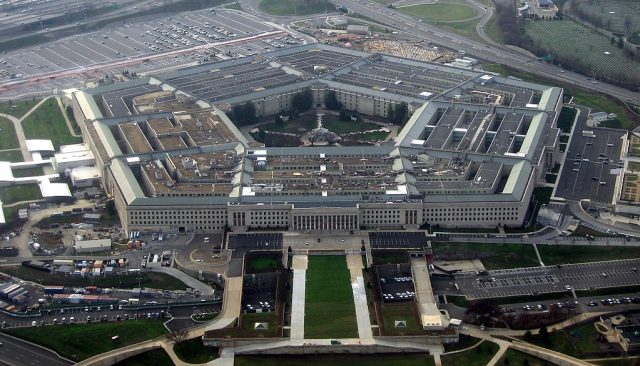
“Iran’s leadership is in no better shape. Desperate and hiding, they’ve gone underground, cowering. That’s what rats do. We know the new so-called not so supreme leader is wounded and likely disfigured,” Hegseth said at the Pentagon.

“He put out a statement yesterday. A weak one, actually, but there was no voice. And there was no video. It was a written statement,” Hegseth continued.

“He called for unity, apparently killing tens of thousands of protesters is his kind of unity. Iran has plenty of cameras and plenty of voice recorders. Why a written statement? I think you know why. His father dead. He’s scared, he’s injured, he’s on the run and he lacks legitimacy.”

Hegseth also indicated that the United States was preparing to significantly expand its military operations Friday.

“Today will be yet again the highest volume of strikes that America has put over the skies of Iran and Tehran,” he said.

“The number of sorties, the number of bomber pulses, the highest yet, ramping up and only up.”

U.S. officials say the sustained campaign has dramatically degraded Iran’s military capabilities.

“Iran has no air defenses. Iran has no air force. Iran has no navy,” Hegseth said earlier. “Their missiles, their missile launchers and drones being destroyed or shot out of the sky. Their missile volume is down 90%. Their one way attack drones yesterday, down 95%.”

“And as the world is seeing, they are exercising sheer desperation in the Straits of Hormuz. It’s something we’re dealing with. We have been dealing with it and don’t need to worry about it. We’re on plan to defeat, destroy, disable all of their meaningful military capabilities at a pace the world has never seen before,” he added.

The strategic waterway has become a focal point of the conflict. About one-fifth of the world’s oil supply passes through the Strait of Hormuz.

U.S. Central Command said American forces destroyed 16 Iranian mine-laying vessels near the strait earlier this week as Iran attempted to disrupt shipping through the crucial route.