Featured

Home Featured Page 12
Featured posts

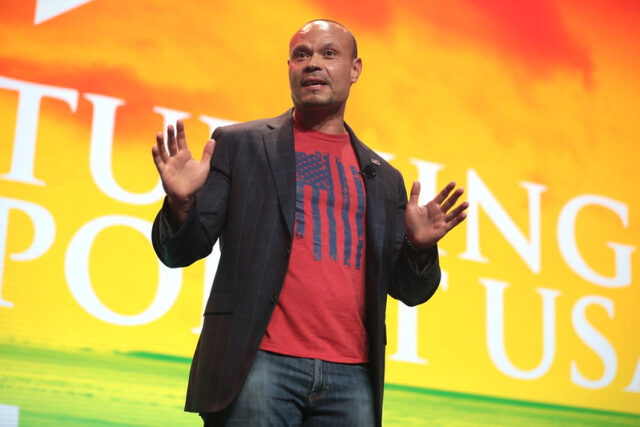
Bongino Reveals How He Left Traps Within FBI To Root Out Media Leakers

4
Dan Bongino via Gage Skidmore Flickr

Former FBI Deputy Director Dan Bongino is pulling back the curtain on what he says was a deeply divided bureau — and the tactics he used to expose internal “snakes.”

Speaking on the “Hang Out with Sean Hannity” podcast, Bongino described an FBI split between agents committed to the mission and others he believes were actively undermining it from within.

“There were two FBIs trying to help you solve the A, B and C problems, and that’s FBI one and FBI two,” Bongino said in the episode released Tuesday.

According to Bongino, one side of the bureau was filled with professionals he respected deeply — including agents working in Violent Crimes Against Children (VCAC) units and violent crime fugitive task forces.

But the other side, he warned, was far more troubling.

“And then you had this other FBI,” Bongino said, adding, “which was populated with, to say, unfortunately, ‘snakes’ is being nice.”

A Hidden Divide Inside the Bureau

Bongino explained that one of the biggest challenges he and FBI Director Kash Patel faced was figuring out who could be trusted — and who couldn’t.

The problem, he said, wasn’t always obvious.

“You’re trying to figure this out, and you’re asking someone for advice, you’ve only been there a couple weeks, and you don’t know if that person is part of the good FBI or the bad FBI,” Bongino said.

Even recommendations from within the bureau sometimes backfired.

“It happened a couple times where they’d say, ‘Oh, you can trust John Smith.’ And you trust John Smith, and then a week later you see a leak in the media and you’d be like, ‘I’m pretty sure that came from John Smith,’” he added.

How Bongino Flushed Out Leakers

To combat internal leaks, Bongino said he turned to a simple but effective strategy: setting traps.

He described deliberately sharing small, harmless — or “innocuous” — details about his schedule with select individuals, then watching to see if that information surfaced in the media.

When it did, it pointed directly to the source.

“It was like we would play this little game,” Bongino said.

The tactic allowed him to identify individuals he believed were leaking sensitive information, even as he acknowledged the broader difficulty of navigating an agency he viewed as internally fractured.

A Mission to Restore Trust

Bongino joined the FBI in March 2025 with a stated goal of restoring integrity and public trust in the bureau. He served for nearly a year before departing in January 2026.

At the time of his appointment, he made clear what he saw as the stakes.

“My promise to you is that I will work tirelessly to help restore integrity, eliminate political bias, and ensure the FBI remains dedicated to its core mission of protecting the United States and upholding the Constitution,” Bongino said.

Now back in the public arena, Bongino is offering a firsthand account of what he describes as a battle inside one of the nation’s most powerful institutions — and the methods he used to confront it.

Is Trump Related To Royalty? New Report Uncovers Genetic Link To King Charles III

    5
    The Prince of Wales and the Duchess of Cornwall leave after attending the opening ceremony of the sixth session of the Senedd in Cardiff. Picture date: Thursday October 14, 2021. PA Photo. See PA story ROYAL Senedd. Photo credit should read: Jacob King/PA Wire

    Just when President Donald Trump rolled out the red carpet for King Charles III, a bombshell claim dropped: the two leaders may actually be family.

    According to new research highlighted by the Daily Mail, Trump and the British monarch share a distant bloodline — tracing back centuries to a Scottish nobleman, the 3rd Earl of Lennox. The finding makes the U.S. president and the king “15th cousins,” a revelation that adds an unexpected twist to the royals’ high-profile visit to Washington.

    The timing couldn’t be more striking.

    Charles and Queen Camilla are in the U.S. for a four-day state visit, as tensions simmer across the Atlantic over foreign policy disagreements — including the ongoing Iran conflict and clashes between Trump and U.K. leadership. Now, a shared ancestry is suddenly part of the story.

    Royal author Robert Hardman, who uncovered the connection, says the president’s admiration for the king could run even deeper than previously thought.

    “We know that the avowedly royalist President Trump already regards the King as ‘a great guy’ and ‘a fighter’ – he told me so himself recently – but his affection for the monarch and the Royal Family may now become even more pronounced when he learns that he and the King share descent from the same Scottish nobleman,” Hardman wrote.

    The research traces both men back to the 3rd Earl of Lennox — a great-grandson of King James II of Scotland — linking Trump and Charles through a sprawling, centuries-old family tree.

    “Detailed research on behalf of the Daily Mail has shown they have a common ancestor in the form of the 3rd Earl of Lennox… which means that Donald Trump and Charles III are 15th cousins,” Hardman added. “Their shared forebear met an unfortunate end, however.”

    And that’s putting it mildly.

    Lennox’s story reads like a medieval thriller. He was caught up in a brutal power struggle over control of a young Scottish king and ultimately met a violent fate after being captured by a rival known as the “Bastard of Arran.”

    Despite his grim end, Lennox’s bloodline endured — splitting into branches that would eventually connect both to the British royal family and, generations later, to Trump’s own lineage.

    On one side, Lennox’s descendants would lead to Lord Darnley and Mary, Queen of Scots, eventually producing King James I — a key figure in the royal line that leads to today’s House of Windsor.

    On the other, the lineage runs through Scottish clans before reaching Mary Anne MacLeod, Trump’s mother, who emigrated to the United States in 1930 and married Fred Trump — setting the stage for the future president.

    The result? A centuries-spanning connection that ties a New York real estate dynasty to British royalty.

    Whether the discovery changes anything politically is another question. But symbolically — especially as Trump hosts Charles at the White House — it adds a layer of intrigue to an already historic visit.

    Agent Who Took Bullet For Reagan Backs Secret Service After WHCA Dinner Chaos

    4
    By Series: Reagan White House Photographs, 1/20/1981 - 1/20/1989Collection: White House Photographic Collection, 1/20/1981 - 1/20/1989 - https://catalog.archives.gov/id/75856639, Public Domain, https://commons.wikimedia.org/w/index.php?curid=96625804

    A Secret Service agent who literally took a bullet for President Ronald Reagan is now defending the agency after the shocking armed breach at the White House Correspondents’ Dinner.

    Tim McCarthy — the agent wounded during the 1981 assassination attempt on Reagan — says critics need to cool it.

    “I think we need to ratchet down the rhetoric just a little bit and give the Secret Service at the moment quite a bit of credit for doing a hell of a good job,” McCarthy said on NewsNation Live.

    That’s no small endorsement.

    McCarthy was among the agents protecting Reagan outside the Washington Hilton in March 1981 when would-be assassin John Hinckley Jr. opened fire. Reagan was hit by a bullet that ricocheted off his limousine, piercing his lung and causing massive internal bleeding. McCarthy, along with Press Secretary James Brady and others, was also struck — Brady left permanently disabled.

    Now, more than four decades later, McCarthy is weighing in on another high-stakes moment at the very same hotel.

    On Saturday night, an armed suspect stormed the White House Correspondents’ Dinner, where President Donald Trump was in attendance — sparking panic and fierce backlash online over security failures.

    But McCarthy says the system worked.

    “This guy really didn’t get too far,” he said. “He ran through the metal detectors… exchanged gunfire… wasn’t even on the same floor… and was tackled by an agent, never got to the stairs.”

    Despite viral outrage — and even the suspect himself claiming there was “no damn security” — McCarthy emphasized the layered defense that stopped the threat cold.

    “Now, security is in layers,” he explained, detailing how multiple levels of resistance stood between the gunman and the president, including counter-assault teams and SWAT units.

    Bottom line: the shooter never got close.

    “Security was tested, security responded, and at this point it did pretty well,” McCarthy said.

    The Trump White House appears to agree.

    Officials praised the Secret Service for quickly evacuating the president, vice president, and cabinet, while Chief of Staff Susie Wiles is set to review protocols going forward.

    Still, critics have questioned whether more could have been done — including calls to lock down the entire hotel.

    McCarthy dismissed that idea outright.

    “Well, try finding a hotel with a ballroom if you’re going to shut the hotel down,” he said. “You’re not going to find one. No one’s going to want to do that.”

    He also noted that security included multiple layers — possibly more than the standard three — and that the threat never reached the ballroom floor.

    For McCarthy, who lived through one of the darkest days in presidential security history, the verdict is clear:

    “So far, based on what I know, I’m pretty satisfied with what the Secret Service did on this occasion.”

    The Washington Hilton hotel said is a statement Monday it was following “stringent” Secret Service protocols during Saturday’s White House Correspondents’ Association dinner.

    “The ​hotel was operating under stringent security ​protocols for the property as directed by the ‌U.S. ⁠Secret Service, which led security,” a hotel spokesperson said in a statement, according to Reuters. 

    The spokesperson reportedly added that the Secret Service coordinated with numerous security teams, including the Metropolitan Police Department (MPD) in addition to hotel security. 

    Inside The White House Correspondents’ Dinner Suspect’s ‘Manifesto’

    The man accused of opening fire outside the White House Correspondents’ Dinner left behind a detailed “manifesto” describing his intent to target members of the Trump administration, “prioritized from highest-ranking to lowest,” according to a copy obtained by CBS News.

    Cole Allen, 31, allegedly sent the writing to family members before the attack. In it, he stated that while law enforcement, hotel employees, and guests were not his intended targets, he was willing to harm them if necessary to reach administration officials. “I really hope it doesn’t come to that,” he wrote.

    Authorities say Allen charged a security checkpoint outside the Washington Hilton on Saturday night armed with a shotgun, a handgun, and knives. President Donald Trump and other officials were quickly escorted from the event, which was later canceled. A Secret Service agent who was shot during the incident, while wearing a bulletproof vest, has since been released from the hospital.

    The suspect’s brother reportedly alerted police in Connecticut after receiving the email, prompting law enforcement to intervene. Investigators later recovered additional writings from Allen’s home in Torrance, California, and his hotel room at the Hilton.

    A chilling and ironic tone

    Throughout the message, Allen adopted a matter-of-fact tone, at times veering into irony.

    “Hello everybody!” he began. “So I may have given a lot of people a surprise today.”

    He apologized to his parents “for saying I had an interview without specifying it was for ‘Most Wanted,’” and to colleagues and students for claiming he had a personal emergency. He suggested that by the time the email was read, he might already require medical attention, referring to potential injuries as “self-inflicted status.”

    Declared targets — with one exception

    Allen wrote that he chose to act because he did not want the administration’s alleged “crimes” to “coat [his] hands.” While he did not explicitly name Trump or the event, he described a plan to target officials in descending order of rank.

    He made one notable exception: “not including Mr. Patel,” he wrote, referencing the FBI director, who was also in attendance.

    Allen added that he would avoid targeting Secret Service, Capitol Police, or National Guard personnel unless necessary. “I hope they are wearing body armor,” he wrote.

    He also detailed tactical decisions, claiming, “In order to minimize casualties, I will also be using buckshot rather than slugs (less penetration through walls).”

    Anticipating criticism

    The manifesto included a section addressing hypothetical objections to his actions, along with rebuttals.

    “As a half-black, half-white person, you shouldn’t be the one doing this,” he wrote as a potential criticism. “Rebuttal: I don’t see anyone else picking up the slack.”

    He also referenced his Christian faith, writing that some might argue he should “turn the other cheek.”

    “Rebuttal,” he continued, “Turning the other cheek is for when you yourself are oppressed.”

    Allen then described various unnamed individuals experiencing hardship, in some cases attributing their struggles to the administration.

    “I don’t expect forgiveness, but if I could have seen any other way to get this close, I would have taken it,” he added.

    Criticism of security

    In a postscript, Allen sharply criticized security measures at the event.

    “PS… what the hell is the Secret Service doing? … No damn security. Not in transport. Not in the hotel. Not in the event,” he wrote.

    He claimed that if he had been a foreign agent, he could have brought in heavier weaponry without detection. Officials note that while the Washington Hilton hosted the event, it remained an operational hotel with public access, and only specific areas were secured.

    Family warnings and prior behavior

    Allen’s sister reportedly told investigators that he frequently used “radical” rhetoric and had previously discussed doing “something” to address what he saw as problems in society and government.

    She also revealed her brother was a regular visitor to the shooting range, was a member of a group called “The Wide Awakes” and had previously attended a “No Kings” rally in California. 

    Political reaction and unanswered questions

    The motive behind the attack remains under investigation.

    Former President Barack Obama emphasized the lack of confirmed details while condemning political violence broadly.

    “Although we don’t yet have the details about the motives behind last night’s shooting… it’s incumbent upon all of us to reject the idea that violence has any place in our democracy,” Obama wrote. He also praised the Secret Service, calling their work “a sobering reminder of the courage and sacrifice” they show.

    During a “60 Minutes” interview, Trump reacted angrily after host Norah O’Donnell read excerpts from the alleged manifesto.

    “You read that crap from some sick person? I got associated with all stuff that has nothing to do with me,” Trump said, adding, “You should be ashamed of yourself… You’re a disgrace.”

    More than 2,500 people had gathered for the annual dinner, which celebrates the First Amendment. Trump, who has typically declined to attend during his presidency, had made a historic appearance this year and has since said he hopes to reschedule the event within 30 days.

    The Full Manifesto

    To read Allen’s full 1,052-word manifesto as published by The New York Post, with minor edits to improve profanity, see below:

    Hello everybody!

    So I may have given a lot of people a surprise today. Let me start off by apologizing to everyone whose trust I abused.

    I apologize to my parents for saying I had an interview without specifying it was for “Most Wanted.”

    I apologize to my colleagues and students for saying I had a personal emergency (by the time anyone reads this, I probably most certainly DO need to go to the ER, but can hardly call that not a self-inflicted status.)

    I apologize to all of the people I traveled next to, all the workers who handled my luggage, and all the other non-targeted people at the hotel who I put in danger simply by being near.

    I apologize to everyone who was abused and/or murdered before this, to all those who suffered before I was able to attempt this, to all who may still suffer after, regardless of my success or failure.

    I don’t expect forgiveness, but if I could have seen any other way to get this close, I would have taken it. Again, my sincere apologies.

    On to why I did any of this:

    I am a citizen of the United States of America.

    What my representatives do reflects on me.

    And I am no longer willing to permit a pedophile, rapist, and traitor to coat my hands with his crimes.

    (Well, to be completely honest, I was no longer willing a long time ago, but this is the first real opportunity I’ve had to do something about it.)

    While I’m discussing this, I’ll also go over my expected rules of engagement (probably in a terrible format, but I’m not military so too bad.)

    Administration officials (not including Mr. Patel): they are targets, prioritized from highest-ranking to lowest

    Secret Service: they are targets only if necessary, and to be incapacitated non-lethally if possible (aka, I hope they’re wearing body armor because center mass with shotguns messes up people who *aren’t*

    Hotel Security: not targets if at all possible (aka unless they shoot at me)

    Capitol Police: same as Hotel Security

    National Guard: same as Hotel Security

    Hotel Employees: not targets at all

    Guests: not targets at all

    In order to minimize casualties I will also be using buckshot rather than slugs (less penetration through walls)

    I would still go through most everyone here to get to the targets if it were absolutely necessary (on the basis that most people *chose* to attend a speech by a pedophile, rapist, and traitor, and are thus complicit) but I really hope it doesn’t come to that.

    Rebuttals to objections:

    Objection 1: As a Christian, you should turn the other cheek.

    Rebuttal: Turning the other cheek is for when you yourself are oppressed. I’m not the person raped in a detention camp. I’m not the fisherman executed without trial. I’m not a schoolkid blown up or a child starved or a teenage girl abused by the many criminals in this administration.

    Turning the other cheek when *someone else* is oppressed is not Christian behavior; it is complicity in the oppressor’s crimes.

    Objection 2: This is not a convenient time for you to do this.

    Rebuttal: I need whoever thinks this way to take a couple minutes and realize that the world isn’t about them. Do you think that when I see someone raped or murdered or abused, I should walk on by because it would be “inconvenient” for people who aren’t the victim?

    This was the best timing and chance of success I could come up with.

    Objection 3: You didn’t get them all.

    Rebuttal: Gotta start somewhere.

    Objection 4: As a half-black, half-white person, you shouldn’t be the one doing this.

    Rebuttal: I don’t see anyone else picking up the slack

    Objection 5: Yield unto Caesar what is Caesar’s.

    Rebuttal: The United States of America are ruled by the law, not by any one or several people. In so far as representatives and judges do not follow the law, no one is required to yield them anything so unlawfully ordered.

    I would also like to extend my appreciation to a great many people since I will not be likely to be able to talk with them again (unless the Secret Service is *astoundingly* incompetent.)

    Thank you to my family, both personal and church, for your love over these 31 years.

    Thank you to my friends, for your companionship over many years.

    Thank you to my colleagues over many jobs, for your positivity and professionalism.

    Thank you to my students for your enthusiasm and love of learning.

    Thank you to the many acquaintances I’ve met, in person and online, for short interactions and long-term relationships, for your perspectives and inspiration.

    Thank you all for everything.

    Sincerely,

    Cole “coldForce” “Friendly Federal Assassin” Allen

    PS: Ok now that all the sappy stuff is done, what the hell is the Secret Service doing? Sorry, gonna rant a bit here and drop the formal tone.

    Like, I expected security cameras at every bend, bugged hotel rooms, armed agents every 10 feet, metal detectors out the wazoo.

    What I got (who knows, maybe they’re pranking me!) is nothing.

    No damn security.

    Not in transport.

    Not in the hotel.

    Not in the event.

    Like, the one thing that I immediately noticed walking into the hotel is the sense of arrogance.

    I walk in with multiple weapons and not a single person there considers the possibility that I could be a threat.

    The security at the event is all outside, focused on protestors and current arrivals, because apparently no one thought about what happens if someone checks in the day before.

    Like, this level of incompetence is insane, and I very sincerely hope it’s corrected by the time this country gets actually competent leadership again.

    Like, if I was an Iranian agent, instead of an American citizen, I could have brought a damn Ma Deuce in here and no one would have noticed s**t.

    Actually insane.

    Oh and if anyone is curious is how doing something like feels: it’s awful. I want to throw up; I want to cry for all the things I wanted to do and never will, for all the people whose trust this betrays; I experience rage thinking about everything this administration has done.

    Can’t really recommend it! Stay in school, kids.

    Trump’s Signature To Be Added To US Currency

    3
    President Donald Trump gestures to the crowd after delivering remarks at the House GOP Member Retreat, Tuesday, January 6, 2026, at the Donald J. Trump- John F. Kennedy Center for the Performing Arts in Washington, D.C. (Official White House Photo by Daniel Torok)

    The Treasury Department announced Thursday that President Donald Trump’s signature will be added to future U.S. paper currency, a move that would mark a notable departure from longstanding norms governing American money.

    If implemented, Trump would become the first sitting president whose name appears on U.S. currency, a development that is already drawing both historical comparisons and legal scrutiny. Traditionally, U.S. paper currency features the engraved portraits of deceased presidents and statesmen, along with the signature of the Treasury secretary and the treasurer of the United States—not the president.

    The announcement comes alongside broader efforts tied to Trump’s image and legacy in U.S. coinage. The administration has supported the creation of two coins bearing Trump’s likeness: a proposed $1 coin and a special 24-karat commemorative gold coin. The latter recently received approval from the federal Commission of Fine Arts, which voted to move forward with a design based on a photograph of Trump taken in the White House.

    Historically, depictions of living individuals on U.S. currency have been restricted. Federal law generally prohibits living persons, including presidents, from appearing on U.S. currency. The administration, however, has argued that the restriction applies differently to coins than to paper money, opening the door to legal interpretation and potential challenges. The only sitting president ever to appear on a U.S. coin was Calvin Coolidge, who was featured on a commemorative half dollar in 1926 marking the 150th anniversary of American independence.

    Treasury officials framed the decision as part of a broader effort to commemorate the nation’s upcoming 250th anniversary, also known as the Semiquincentennial, which will take place in 2026. The milestone has prompted a range of proposals aimed at celebrating American history, including new currency designs and commemorative issues.

    “Under President Trump’s leadership, we are on a path toward unprecedented economic growth, lasting dollar dominance, and fiscal strength and stability,” Secretary of the Treasury Scott Bessent said in a statement.

    “There is no more powerful way to recognize the historic achievements of our great country and President Donald J. Trump than U.S dollar bills bearing his name, and it is only appropriate that this historic currency be issued at the Semiquincentennial,” he added.

    Supporters of the move argue that it reflects Trump’s economic agenda and its perceived impact on U.S. financial policy, while critics have raised concerns about breaking with precedent and politicizing national symbols like currency. Some Democrats and outside stakeholders have already voiced opposition, particularly regarding the commemorative gold coin, arguing that such decisions should adhere to established bipartisan norms and legal guidelines.

    Beyond the political debate, the mechanics of redesigning U.S. currency are complex. Changes to paper money typically involve coordination between the Treasury Department, the Bureau of Engraving and Printing, and the Federal Reserve, and can take years to implement due to security features, anti-counterfeiting measures, and logistical considerations.

    The Treasury has not yet provided a timeline for when the updated currency bearing Trump’s signature would enter circulation, nor has it clarified whether the change would apply across all denominations.

    READ NEXT: Senate Candidate Behind Bars After Florida Resort Incident

    Hunter Biden Admits His ‘Bias’ Towards Pardons, Says Founders ‘Didn’t Imagine Trump’

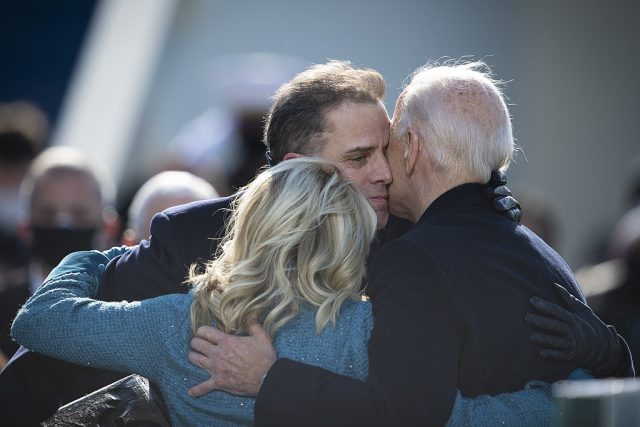
    President Joe Biden hugs his family during the 59th Presidential Inauguration ceremony in Washington, Jan. 20, 2021. President Joe Biden and Vice President Kamala Harris took the oath of office on the West Front of the U.S. Capitol. (DOD Photo by Navy Petty Officer 1st Class Carlos M. Vazquez II)

    Hunter Biden is openly acknowledging what critics have argued for months: when it comes to his father’s sweeping pardon, he is anything but objective.

    “I’m completely biased as it relates to what my dad did for me. I fully understand how uniquely situated I am in being privileged enough to have received a pardon from my father,” Hunter said in an interview published by liberal outlet MediasTouch.

    The admission revives scrutiny over former President Joe Biden’s dramatic reversal on the issue. After repeatedly insisting he would not grant clemency to his son, Biden ultimately issued a sweeping pardon—undercutting Democrats’ long-standing “no one is above the law” message as Hunter faced serious federal charges.

    Despite conceding his own bias, Hunter declined to weigh in on potential reforms to the presidential pardon system. Instead, he pivoted to attacking former President Donald Trump’s use of the same authority, pointing to the more than 1,000 individuals pardoned in connection with the Jan. 6, 2021 Capitol protest.

    Hunter Biden was granted an unusually broad pardon covering any offense he “has committed or may have committed” between Jan. 1, 2014, and Dec. 1, 2024—a scope that drew bipartisan criticism.

    “I was filled with gratitude,” he said of his father’s decision.

    The legal backdrop is significant. In September 2024, Hunter pleaded guilty to nine federal tax charges tied to a scheme that evaded more than $1.4 million in taxes. Months earlier, he was convicted in Delaware for lying about his drug use on a federal firearm purchase form.

    Still, Hunter sought to shift the focus toward Trump and his family, saying, “I don’t think that the founders ever imagined Donald Trump. I don’t think they ever imagined the Trump family.”

    He also attempted to contrast pardon totals: “I don’t think people understand is that, in the first year, I think—I don’t know the exact number—I think my dad gave 80 or so pardons over a four-year period of time. I think that that’s about the number.”

    He added, “Donald Trump has given over 1,500 pardons in the first year alone. But I’m obviously—I’m not the one to be, I don’t think, fairly or unbiasedly talking about the presidential pardon vote.”

    Trump, notably, did not pardon any of his children during his presidency, though he did grant clemency in 2020 to Charles Kushner, the father of his son-in-law.

    The White House defended Trump’s record, with spokeswoman Abigail Jackson saying he has used his authority to pardon individuals who were victims of what she described as a “weaponized justice system.”

    Jackson also criticized Biden’s final actions in office, arguing that “the only pardons anyone should be critical of are from President Autopen,” citing clemency for violent offenders and “proactive pardons he ‘signed’ for his family members like Hunter on his way out the door.”

    In addition to Hunter, Biden issued pardons to several relatives, including his brother James, sister-in-law Sara, sister Valerie, and brother Francis—moves he framed as necessary protection against political retaliation.

    READ NEXT: Congresswoman Resigns In Stunning Last-Minute Exit

    Gabbard Sends Criminal Referrals To DOJ For 2 Officials Linked To Trump Impeachment

    1
    Tulsi Gabbard via Gage Skidmore Flickr

    Director of National Intelligence Tulsi Gabbard has referred two former U.S. officials to the Justice Department for potential criminal investigation, escalating efforts to revisit the events that led to President Donald Trump’s first impeachment.

    A spokesperson for Gabbard confirmed that the referrals target a whistleblower and former Intelligence Community Inspector General Michael Atkinson, both of whom played central roles in the 2019 inquiry. The spokesperson did not specify what crimes were alleged, and any decision to pursue charges rests with federal prosecutors.

    The move follows Gabbard’s release of newly declassified testimony and documents that she argues show a “coordinated effort” within the intelligence community to “manufacture a conspiracy” used to justify Trump’s impeachment.

    Atkinson’s actions were instrumental in advancing a whistleblower complaint that raised concerns about Trump’s July 2019 phone call with Ukrainian President Volodymyr Zelenskyy. In that call, Trump asked Zelenskyy to investigate then–former Vice President Joe Biden and his son, Hunter Biden.

    The whistleblower wrote at the time: “I have received information from multiple U.S. Government officials that the President of the United States is using the power of his office to solicit interference from a foreign country in the 2020 U.S. election.”

    Gabbard has sharply disputed the legitimacy of that complaint and Atkinson’s handling of it. Her office said Atkinson relied on “secondhand information” and “politicized, manufactured narratives,” and “did not follow standard IG procedures.”

    “In his own words, IC IG Atkinson recognizes that his conclusions were based on a ‘preliminary investigation,’” her office said, quoting testimony in which he acknowledged he had not determined whether the alleged actions “actually took place.”

    Under federal law, however, an inspector general’s role at that stage is limited to assessing whether a whistleblower complaint appears credible, not to fully investigate or verify the claims.

    In a post on X, Gabbard accused “deep state actors” of constructing “a false narrative that Congress used to usurp the will of the American people and impeach duly-elected President @realDonaldTrump in 2019.”

    Atkinson, who was fired by Trump in 2020, previously defended his conduct, saying he had “faithfully discharged” his duties and served “without regard to partisan favor or political fear.”

    Democrats quickly condemned the referrals and the broader effort to revisit the impeachment.

    Rep. Jim Himes of Connecticut, the top Democrat on the House Intelligence Committee, said the whistleblower “demonstrated courage and principle” in exposing Trump’s “efforts to extort Ukraine and falsely smear his opponent.”

    “This apparent criminal referral will amount to nothing because no misconduct occurred,” Himes said. “But what it will do is chill future whistleblowers from coming forward… I suspect that is precisely the point.”

    Sen. Mark Warner, the top Democrat on the Senate Intelligence Committee, dismissed the declassified materials as “a nothingburger” and “another sad attempt… to get in Donald Trump’s good graces.”

    Trump was impeached by the House of Representatives in December 2019 on charges of abuse of power and obstruction of Congress tied to the Ukraine matter. He was acquitted by the Senate in early 2020 in a largely party-line vote and has consistently denied wrongdoing, calling his conversation with Zelenskyy “perfect.”

    The latest referrals come as part of a broader push by Gabbard and other officials to reexamine controversies from Trump’s first term, including intelligence assessments of Russian election interference. While some figures connected to those investigations have been subpoenaed in ongoing probes, no charges have been filed.

    At the same time, the effort unfolds against a backdrop of renewed political and legal scrutiny surrounding Trump. While prior impeachment proceedings ended in acquittal and are widely viewed as politically unlikely to result in removal from office, they continue to shape partisan divisions in Washington. Any new impeachment-related efforts would face long odds in Congress, particularly given the high threshold required for conviction in the Senate.

    Still, the renewed focus on the 2019 impeachment underscores how the political battles of Trump’s presidency continue to reverberate, with competing narratives over the Ukraine episode remaining central to broader debates about executive power, accountability, and the role of intelligence agencies in U.S. politics.

    House Democrats File Bill to Form 25th Amendment Commission to Assess Trump’s Mental Fitness

    8
    The White House, Public domain, via Wikimedia Commons

    Rep. Jamie Raskin (D-MD) is leading the latest Democratic push to remove President Donald Trump from office—but like past efforts, this one faces steep odds, even as it draws a larger bloc of support.

    Raskin, the top Democrat on the House Judiciary Committee, has rolled out a new bill backed by roughly 50 House Democrats that would create a commission to evaluate Trump’s mental fitness under the 25th Amendment.

    The proposal would assemble a bipartisan panel of physicians and former top officials to determine whether Trump is “mentally or physically unable” to carry out his duties.

    “The Constitution explicitly vests Congress with the authority to create a body that will guarantee the successful continuity of government by responding to presidential incapacity to discharge the powers and duties of office,” Raskin said. “We have a solemn duty to play our defined role under the 25th Amendment by setting up this body to act alongside the Vice President and the Cabinet.”

    He added, “Public trust in Donald Trump’s ability to meet the duties of his office has dropped to unprecedented lows as he threatens to destroy entire civilizations.”

    Raskin has also formally pushed for a medical evaluation of the president, citing what he called “incoherent, volatile, profane, deranged, and threatening” public comments tied to the Iran conflict.

    But here’s the reality: the effort is a long shot.

    Republicans still control both chambers of Congress, meaning the bill is unlikely to pass—and even if it did, Trump could veto it. More importantly, the 25th Amendment would require Vice President JD Vance and the Cabinet to sign off on removing Trump, a scenario widely seen as improbable.

    Even in the unlikely event that hurdle were cleared, Congress would still need a two-thirds vote in both the House and Senate to make any removal permanent.

    In other words, this is far from a realistic path to ousting the president.

    Still, the size of the backing is notable. About 50 Democrats have signed on, making this one of the more organized removal efforts of Trump’s second term so far.

    It also comes amid a broader wave of attempts by Democrats to challenge Trump’s presidency—from new impeachment articles filed by multiple lawmakers to calls for the 25th Amendment following his escalating rhetoric on Iran.

    That pattern isn’t new. Trump was impeached twice during his first term, with both efforts ultimately failing to remove him from office in the Senate. Now, similar political battles are resurfacing, though with slightly broader coordination this time.

    The White House quickly dismissed Raskin’s latest push.

    “Lightweight Jamie Raskin is a stupid person’s idea of a smart person,” said spokesperson Davis Ingle. “President Trump’s sharpness, unmatched energy, and historic accessibility stand in stark contrast to what we saw during the past four years when Democrats like Raskin intentionally covered up Joe Biden’s serious mental and physical decline from the American people.”

    Trump himself has defended his rhetoric, arguing his hardline stance forced Iran to the negotiating table and helped secure a temporary ceasefire.

    For now, Raskin’s plan is unlikely to go anywhere. But the growing number of Democrats backing it—and the renewed push for impeachment and removal—signals that the political fight over Trump’s presidency is only heating up.

    Trump Snub? GOP Incumbents Accused of ‘Borrowing’ President’s Support to Survive Brutal Primaries

    1
    President Donald Trump gestures to the crowd after delivering remarks at the House GOP Member Retreat, Tuesday, January 6, 2026, at the Donald J. Trump- John F. Kennedy Center for the Performing Arts in Washington, D.C. (Official White House Photo by Daniel Torok)

    President Donald Trump’s pull inside the Republican Party is still absolute.

    His endorsement? Political gold.

    “The Trump endorsement is king in any primary,” longtime GOP strategist Jesse Hunt told Fox News Digital. Fellow Republican consultant Matt Gorman didn’t mince words either, calling it “an undeniable force.”

    And that reality is driving a new, high-stakes strategy among vulnerable Republicans: if you can’t win Trump’s backing… try to look like you have it anyway.

    PLAYING DEFENSE AGAINST TRUMP-BACKED CHALLENGERS

    Across the country, embattled GOP incumbents are facing serious primary threats from candidates backed by Trump himself. And instead of confronting that head-on, some are leaning into carefully crafted messaging that suggests they’re still aligned with the president.

    Take Louisiana Sen. Bill Cassidy.

    Cassidy — one of just seven Republicans who voted to convict Trump after the January 6 impeachment — is now locked in a tough primary against Trump-endorsed Rep. Julia Letlow.

    But you wouldn’t know that from his ads.

    In one spot, Cassidy highlights a fentanyl bill he authored, adding:
    “President Trump said it was the most important legislation he would sign this year,”

    Images of Trump appear prominently.

    Another ad goes further, flashing “Trump & Cassidy” on screen while touting tax cuts the two “worked” on together.

    Notably missing? Any mention that Trump is backing his opponent.

    MASSIE’S PHOTO-OP FLASHBACK

    In Kentucky, Rep. Thomas Massie — a longtime Trump critic — is facing a Trump-backed challenger, former Navy SEAL Ed Gallrein.

    Massie has repeatedly clashed with Trump, including over the Epstein files and foreign policy. But in a recent campaign ad, he spotlighted an old photo of himself smiling alongside the former president.

    A subtle signal — but a deliberate one.

    Meanwhile, Trump allies are pouring money into boosting Gallrein and attacking Massie.

    CORNERNED IN TEXAS

    In Texas, Sen. John Cornyn is fighting for survival in a runoff against MAGA favorite and state Attorney General John Paxton.

    Trump hasn’t endorsed either candidate — but Cornyn is making sure voters remember their past relationship.

    In one ad, the narrator says Cornyn “had his back,” as footage shows Trump and the senator giving a thumbs-up together.

    “We’re especially grateful to your wonderful senators,” Trump says in an old clip featured in the ad, referring to Cornyn and Sen. Ted Cruz.

    Unlike Cassidy and Massie, Cornyn isn’t contradicting an endorsement — but he’s still leaning hard into Trump’s image.

    HIGH-RISK STRATEGY?

    The tactic may be clever — but it’s also dangerous.

    Hunt warns that implying support from Trump when you don’t actually have it could blow up fast.

    “If you haven’t earned it but portray as though you have, it could be the end of your campaign,” he said. “That’s if the President decides to take issue with it.”

    In today’s GOP, one thing is clear: crossing Trump is risky — but pretending he’s on your side when he isn’t could be even worse.

    Pope Leo Sends Bold Response After Trump Ramps Up Attacks Against The Pontiff

      6
      President Donald Trump signs Executive Orders, Thursday, April 17, 2025, in the Oval Office. (Official White House Photo by Molly Riley)

      Pope Leo XIV pushed back Monday against criticism from President Donald Trump, framing his remarks on peace as rooted in religious teaching rather than politics.

      Speaking to reporters aboard the papal plane en route to Algeria, the pope dismissed the notion that his message should be interpreted as a political challenge to the White House.

      “I have no fear of the Trump administration,” the pope said.

      “The message of the church, my message, the message of the Gospel: Blessed are the Peacemakers. I do not look at my role as being political, a politician,” he added.

      The exchange follows a sharp escalation from Trump, who on Sunday used his Truth Social platform to attack the pope’s positions on global security, crime, and diplomacy. In a lengthy post, Trump accused Leo of undermining strong foreign policy and aligning with left-wing priorities.

      “Pope Leo is WEAK on Crime, and terrible for Foreign Policy,” Trump wrote.

      “Leo should get his act together as Pope, use Common Sense, stop catering to the Radical Left, and focus on being a Great Pope, not a Politician. It’s hurting him very badly and, more importantly, it’s hurting the Catholic Church,” he continued.

      Trump later expanded on those criticisms while speaking to reporters on the tarmac after arriving on Air Force One, suggesting the pope’s rhetoric was dangerously out of step with global threats.

      “We don’t like a pope that’s going to say that it’s okay to have a nuclear weapon,” Trump said. “We don’t want a pope that says crime is okay in our cities. I don’t like it.”

      “I’m not a big fan of Pope Leo. He’s a very liberal person, and he’s a man that doesn’t believe in stopping crime,” he added. “He’s a man that doesn’t think that we should be toying with a country that wants a nuclear weapon so they can blow up the world.”

      Trump also made the claim that his presidency played a role in Leo’s rise, pointing to the pope’s American background.

      “I like his brother Louis much better than I like him, because Louis is all MAGA,” Trump wrote. “He gets it, and Leo doesn’t.”

      “If I wasn’t in the White House, Leo wouldn’t be in the Vatican,” Trump said.

      Responding Monday, Leo declined to engage directly in a political back-and-forth but made clear he viewed Trump’s criticisms as a misunderstanding of the church’s mission.

      “The things that I say are certainly not meant as attacks on anyone,” he said, speaking in English. “I don’t think that the message of the Gospel is meant to be abused in the way that some people are doing.”

      He also took a subtle swipe at Trump’s preferred platform, adding, “it’s ironic, the name of the site itself; say no more,” while insisting, “I will not enter into debate.”

      The pope emphasized that his comments on war, nuclear risk, and international cooperation are grounded in longstanding church teaching, not support for any government or adversary.

      “To put my message on the same plane as what the president has attempted to do here, I think is not understanding what the message of the Gospel is,” Leo said. “And I’m sorry to hear that but I will continue on what I believe is the mission of the church in the world today.”

      “I will continue to speak out loudly against war, looking to promote peace, promoting dialogue and multilateral relationships among the states to look for just solutions to problems,” he added.

      Framing his position as a moral imperative rather than a geopolitical stance, Leo pointed to the human cost of ongoing conflicts.

      “Too many people are suffering in the world today,” he said. “Too many innocent people are being killed. And I think someone has to stand up and say there’s a better way.”

      Leo also rejected Trump’s suggestion that his comments were aligned with Iran or any specific government.

      “Leo claimed he was speaking for the church and not himself or Iran.”

      The clash highlights a broader divide between the Vatican’s emphasis on diplomacy and moral authority and Trump’s more confrontational approach to foreign policy and domestic security—a divide now playing out publicly between two of the world’s most prominent figures.

      Vice President Vance downplayed concerns about President Trump’s ongoing feud with Pope Leo XIV late Monday.

      Vance, who is promoting his upcoming book about his conversion to Catholicism, dismissed the backlash over the exchange in an interview with Fox News.

      “I don’t think that it’s particularly newsworthy, but I certainly think that in some cases it would be best for the Vatican to stick to matters of morality, to stick to matters of what’s going on in the Catholic Church and let the president of the United States stick to dictating American public policy,” he said.