
Featured

Home Featured Page 3
Featured posts

Trump Seeks More Than $6M From Fani Willis’ Office

    2
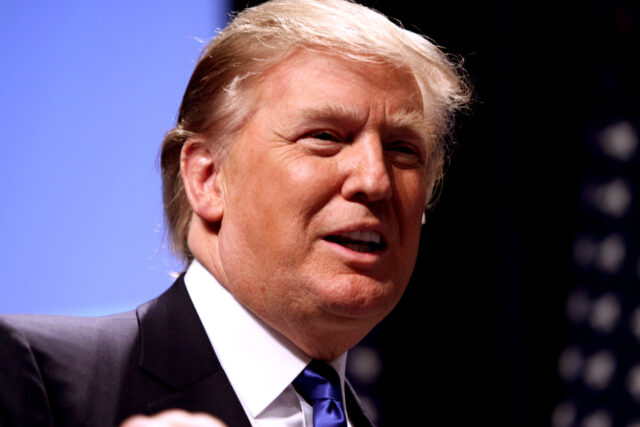
    By Dan Scavino - https://twitter.com/Scavino45/status/924068892984725504, Public Domain

    President Donald Trump is seeking more than $6.2 million in attorney fees and legal costs from the office of Fulton County District Attorney Fani Willis, following the dismissal of the 2020 election interference case she brought against him.

    The request comes after Willis was permanently removed from the case last September, when the Georgia Court of Appeals ruled that she and her office could not continue prosecuting it. The court cited an โ€œappearance of improprietyโ€ stemming from Willisโ€™ romantic relationship with special prosecutor Nathan Wade, whom she had appointed to lead the case. The prosecution was formally dismissed in November.

    Under a law passed by Georgia state legislators last year, defendants are entitled to seek reimbursement of legal costs if a prosecutor is disqualified due to their own improper conduct and the case is subsequently dismissed. The statute allows defendants to request โ€œall reasonable attorneyโ€™s fees and costs incurredโ€ in their defense. Any award is reviewed by the judge overseeing the case and paid from the prosecutorโ€™s office budget.

    Trumpโ€™s lead Georgia attorney, Steve Sadow, said the request follows directly from that law.

    โ€œIn accordance with Georgia law, President Trump has moved the Court to award reasonable attorney fees and costs incurred in his defense of the politically motivated, and now rightfully dismissed, case brought by disqualified DA Fani Willis,โ€ Sadow said in a statement.

    A motion filed Wednesday asks the court to award Trump $6,261,613.08 in legal fees and costs.

    โ€œPresident Trump prays that this Court award attorney fees and costs for the defense of President Trump in the amount of $6,261,613,08,โ€ the filing states.

    Trump and 18 others were indicted by a Fulton County grand jury in August 2023. Trump surrendered at the Fulton County Jail on August 24, where he was booked and released.

    Last month, another defendant in the same case filed a similar request for reimbursement. In response, Willisโ€™ office submitted a motion asking to be heard on any fee and cost claims.

    In that filing, Willisโ€™ office challenged the constitutionality of the law that allows defendants to seek reimbursement, arguing it improperly targets elected prosecutors.

    โ€œThe statute raises grave separation-of-powers concerns by purporting to impose financial liability on a constitutional officer, twice elected by the citizens of Fulton County, for the lawful exercise of her core duties under the Georgia Constitution,โ€ the motion said.

    Willisโ€™ filing also argued that the law violates due process by applying retroactively.

    The statute, her office said, โ€œretroactively impos[es] a novel fee-shifting schemeโ€ that places a substantial financial burden on Fulton County taxpayers without providing them any recourse.

    Trump Issues Dire Midterm Warning To GOP: Win Or I’m Impeached

    1

    President Trump warned House Republicans on Tuesday that losing the midterms would all but guarantee another impeachment push from Democrats, underscoring the high stakes of Novemberโ€™s elections.

    โ€œYou gotta win the midterms. Because if we donโ€™t win the midtermsโ€ฆtheyโ€™ll find a reason to impeach me,โ€ Trump told the Republican conference during its retreat at the Kennedy Center.

    โ€œIโ€™ll get impeached,โ€ he continued. โ€œWe donโ€™t impeach them because you know why? Theyโ€™re meaner than we are. We should have impeached Joe Biden for a hundred different things.โ€

    โ€œThey are mean and smart, but fortunately for you, they have horrible policy,โ€ Trump added.

    Trumpโ€™s remarks reflect growing concern among Republicans that Democrats are prepared to weaponize impeachment once again should they regain control of the House. That warning has been echoed by GOP leadership.

    Watch:

    Speaker Mike Johnson (R-La.) issued a similar message late last month at Turning Point USAโ€™s America Fest in Arizona.

    โ€œIf we lose the House majority, the radical left as youโ€™ve already heard is going to impeach President Trump,โ€ Johnson said. โ€œTheyโ€™re going to create absolute chaos. We cannot let that happen.โ€

    The concern is not hypothetical. Trump was impeached twice during his first termโ€”first in 2019 after Democrats regained control of the House, and again in early 2021, just days before his administration ended. Both impeachments failed to result in a conviction in the Senate, reinforcing Republican claims that the proceedings were politically motivated rather than constitutionally grounded.

    Since then, impeachment has increasingly been used as a political threat rather than a last-resort constitutional remedy. Over the past year alone, Democrats have repeatedly floated impeachment articles against Trump and other Republican officials, often without clear legal grounding or broad party consensus.

    Most recently, some Democrats have suggested impeachment following the U.S. operation to capture Venezuelan President Nicolรกs Maduro last weekโ€”an operation praised by many Republicans as a decisive national security action. Critics on the left, however, have argued the move exceeds executive authority.

    โ€œThese individual actions are impeachable offenses in their own right, but their ever mounting cumulative impact on our countryโ€™s stability and health puts everything in a new light. I now believe that our Democratic Caucus must imminently consider impeachment proceedings,โ€ said Rep. April McClain-Delaney (D-Md.), who is facing a primary challenge from former Rep. David Trone (D-Md.).

    The renewed calls echo earlier efforts that failed to gain traction. Progressive lawmakers previously introduced impeachment resolutions over Trumpโ€™s border policies, energy decisions, and foreign policy actionsโ€”none of which advanced beyond committee stages or garnered broad Democratic support.

    Democrats Attempt To Label Trump’s Venezuela Operation ‘Impeachable Offense’

    5

    Democrats and Republicans have split sharply over President Donald Trumpโ€™s decision to carry out strikes in Venezuela that resulted in the capture of President Nicolรกs Maduro and his wife, with a growing number of Democratic lawmakers calling the operation unconstitutional and some openly urging impeachment.

    Progressive Democrats have led the backlash, accusing the administration of launching an illegal military action without congressional authorization. Several lawmakers argue that the operation amounts to an invasion of a sovereign nation and violates both the Constitution and the War Powers Act.

    โ€œMany Americans woke up to a sick sense of dรฉjร  vu,โ€ Rep. Delia Ramirez (D-Ill.) a member of the Houseโ€™s progressive โ€œSquad,โ€ wrote on X over the weekend. โ€œUnder the guise of liberty, an administration of warmongers has lied to justify an invasion and is dragging us into an illegal, endless war so they can extract resources and expand their wealth.โ€

    Ramirez called for Congress to pass a War Powers Resolution introduced by Rep. Ilhan Omar, D-Minn., aimed at blocking further military action against Venezuela, and said Trump โ€œmust be impeached.โ€

    Omarโ€™s resolution seeks to reassert Congressโ€™ constitutional authority over war-making and would require the administration to halt hostilities unless lawmakers explicitly approve them.

    Rep. Dan Goldman (D-N.Y.) echoed those concerns, criticizing Trump for bypassing Congress to launch what he described as a war with Venezuela. Goldman said the administration failed to provide lawmakers with โ€œany satisfactory explanationโ€ for the strikes.

    โ€œThis violation of the United States Constitution is an impeachable offense,โ€ Goldman said in a statement. โ€œI urge my Republican colleagues in the House of Representatives to finally join Democrats in reasserting congressional authority by holding this president accountable.โ€

    Other Democrats struck a more cautious tone. Rep. April McClain Delaney (D-Md.) stopped short of naming Trump but wrote on X that โ€œinvading and running another country without a congressional declaration of war is an impeachable offense,โ€ while also questioning whether impeachment is the most effective strategy. โ€œWhether it makes sense to pursue impeachment as the best strategy to end this lawlessness is a tactical judgment that our Caucus needs to seriously deliberate,โ€ she wrote.

    In California, Rep. Eric Swalwell (D-Calif.) a gubernatorial hopeful, said he would not rule out supporting impeachment when asked by reporters, according to the Pleasanton Weekly.

    Progressive candidates running for office also weighed in. Kat Abughazaleh, a Democrat seeking an open House seat in Illinois, called Trump a โ€œwar criminalโ€ in a post on Bluesky and demanded Congress โ€œhalt this conflict and impeachโ€ the president.

    Still, Democrats are not unified in their opposition. A number of more centrist lawmakers have either defended the administrationโ€™s actions or argued that the removal of Maduro serves U.S. national security interests. Some Democrats have described the operation as a targeted effort to remove a destabilizing authoritarian leader rather than the start of a broader war, while others have said the administration should now work with Congress to define limits and next steps.

    Republicans, for their part, have largely rallied behind Trump. GOP leaders characterized the operation as a decisive blow against a longtime adversary of the United States and a win for regional stability.

    Senior Republicans have also pushed back on claims that the administration violated the Constitution, arguing that the action was a limited law enforcement or counterterrorism operation rather than a traditional military engagement requiring prior congressional approval.

    While impeachment calls are growing among progressives, Democratic leadership has so far stopped short of endorsing that approach

    President Trump Issues Warning To ‘Sick’ Colombian Leader

    0
    President Donald Trump answers questions from members of the media aboard Air Force One en route to Mount Pocono, Pennsylvania, for a rally on the economy, Tuesday, December 9, 2025. (Official White House Photo by Molly Riley)

    Hours after a dramatic U.S. military operation in Venezuela that led to the capture of President Nicolรกs Maduro, President Donald Trumpย sharply escalated his rhetoric toward other foreign governments, criticizing Colombiaโ€™s president and reviving his long-standing idea of acquiring Greenland.

    Trump, speaking to reporters aboard Air Force One, was initially responding to questions about a U.S. military operation in Caracas that resulted in the capture of Venezuelan leader Nicolรกs Maduro and his wife, Cilia Flores, as well as the future of Venezuela, when he shifted his focus to another South American country.

    “Columbia’s very sick too, run by a sick man who likes making cocaine and selling it to the United States. And he’s not going to be doing it very long. Let me tell you,” Trump said.

    When pressed by a reporter to clarify his remarks, Trump claimed that Gustavo Petro has “cocaine mills andย cocaine factories.”

    “So there will be an operation by the U.S. in Colombia?” the reporter asked.

    “It sounds good to me,” Trump responded.

    The comments marked an unusually direct threat to a longtime U.S. partner, officially designated a Major Non-NATO Ally, and drew swift condemnation from Bogotรก.

    Colombia Condemns Remarks

    Colombiaโ€™s government rejected Trumpโ€™s statements, calling any threat of force against an elected leader a violation of international law and national sovereignty. Officials emphasized that disagreements over narcotics trafficking do not justify military rhetoric against a democratic ally.

    Analysts told the Associated Press that while no formal policy change has been announced, Trumpโ€™s remarks risk destabilizing diplomatic relations with a key U.S. security and trade partner. Colombia has long collaborated with Washington on counter-narcotics efforts, even as cocaine production has surged in recent years.

    The episode follows Trumpโ€™s intensifying criticism of Latin American governments he says have failed to curb drug trafficking and migration.

    Trump Renews Greenland Focus

    Amid the fallout from the Venezuela operation and the Colombia comments, Trump also renewed his interest in Greenland, the Arctic territory governed by NATO ally Denmark.

    Trump has repeatedly argued that U.S. control of Greenland is vital to American strategic interests. Both Greenlandic and Danish leaders have firmly rejected the idea, saying the territory is not for sale.

    The White House has appointed Louisiana Gov. Jeff Landry as a special envoy to Greenland, with an informal mandate to strengthen ties. Danish officials have criticized the move as an unacceptable challenge to Denmarkโ€™s territorial integrity.

    While a formal acquisition remains highly unlikely because of legal and diplomatic barriers, Trumpโ€™s renewed focus on Greenland has reignited debate over Arctic security and great-power competition.

    Echoes of the Monroe Doctrine

    Trump has not formally announced a new Monroe Doctrine, but his rhetoric has revived comparisons to the 19th-century policy that treated the Western Hemisphere as a U.S. sphere of influence.

    Throughout his political career, Trump has noted that China and Russia are expanding their footprint in Latin America through ports, telecommunications, and energy projects. At the same time, he has argued for withdrawing from overseas wars while taking a harder line closer to home.

    Supporters often frame this approach as โ€œAmerica Firstโ€ realism: resisting foreign powers in the hemisphere while avoiding large-scale military commitments elsewhere. Critics counter that it risks justifying intervention and could lead to a new generation of implacable military campaigns under a different label.

    Divisions Inside the MAGA Coalition

    Although largely supportive, reactions among Trumpโ€™s supporters are not uniform.

    Populist nationalists within the MAGA movement strongly support a Monroe-style approach, viewing it as common-sense security and a way to push China out of the region without policing the entire world.

    Libertarian-leaning and anti-interventionist conservatives are more skeptical. While they favor restraint abroad, they warn that asserting hemispheric dominance could lead to new interventions closer to home.

    Evangelical and values-based conservatives are divided, often supporting resistance to leftist regimes such as Venezuela and Cuba but expressing concern about U.S. backing of governments with poor human rights records, as has been the case in Latin America.

    A smaller group of traditional hawks aligned with MAGA favors a tougher posture, particularly to counter China, even if it risks deeper U.S. involvement overseas as domestic problems continue to mount.

    The Bottom Line

    In the aftermath of the Venezuela operation, Trump has adopted a more confrontational tone toward neighboring governments and revived controversial territorial ambitions abroad. Together, they signal a foreign policy posture that emphasizes regional dominance, skepticism of global institutions, and unilateral U.S. leverage โ€” a combination that has unsettled allies and reopened debates over Americaโ€™s role in its own hemisphere.

    As Trump allies debate whether this approach reflects strategic restraint or intervention by another name, the administrationโ€™s next steps will determine whether the rhetoric translates into lasting policy shifts.

    Trump then shifted his attention to Greenland, where he once again reiterated an interest in acquiringย the Danish territory.

    “We need Greenland from the standpoint of national security, and Denmark is not going to be able to do it,” Trump said.

    “We need Greenland from a national security situation. It’s so strategic,” he added.

    Danish Prime Minister Mette Frederiksen sharply rebuked Trumpโ€™s comments, urging him to cease what she described as baseless threats against a close ally.

    “The Kingdom of Denmark – and thus Greenland – is part of NATO and is thus covered by the alliance’s security guarantee. We already have a defense agreement between the Kingdom and the USA today, which gives the USA wide access to Greenland. And we have invested significantly on the part of the Kingdom in the security of the Arctic,” said Frederiksen in a press release.

    “I would therefore strongly urge that the U.S. stop the threats against a historically close ally and against another country and people who have said very clearly that they are not for sale,” Frederiksen added.

    MAHA Year One: How Trump & RFK Jr. Are Rebuilding American Health

    0
    By Gage Skidmore from Surprise, AZ, United States of America - Robert F. Kennedy, Jr., CC BY-SA 2.0,

    For decades, Americans were told a story about their health that no longer matched reality. We were assured that food was safe, that regulators were vigilant, that medical advice was insulated from politics and profit, and that rising chronic disease was an unfortunate but unavoidable byproduct of modern life. Meanwhile, the health of the nation deteriorated in plain sight. Obesity climbed year after year. Childhood chronic disease became common rather than exceptional. Autism rates surged. Cancer diagnoses among children rose. By the time President Trump returned to office, 76.4% of Americans were living with at least one chronic disease. Eight out of 10 children could not qualify for military service. What should have been treated as a civilizational emergency was instead normalized, until that long-running failure of honesty and accountability culminated during the COVID-19 pandemic, when public health leaders abandoned transparency, misled the public, and, under Dr. Fauciโ€™s direction, shattered trust in medical professionals and the institutions meant to serve them.

    The collapse of trust that followed COVID did not occur in a vacuum. It was the culmination of years of regulatory capture, scientific arrogance, and a public health establishment that confused authority with truth. Americans were ordered, not persuaded. Dissent was pathologized. Data was selectively presented. Vaccine policy was enforced through mandate rather than transparency. Dr. Fauci became the symbol of an anti-science regime that claimed infallibility while revising its claims in real time. When institutions insist on obedience while refusing accountability, trust does not merely erode; it implodes.

    It is against this backdrop that the Make America Healthy Again initiative must be understood. MAHA is not a branding exercise or a partisan slogan. It is a course correction. President Trumpโ€™s decision to place Robert F. Kennedy Jr. at the helm of HHS was not an appeal to nostalgia or name recognition. It was an explicit rejection of the managerial consensus that presided over the chronic disease explosion. The mandate was simple and radical: identify root causes, dismantle regulatory capture, and tell the truth even when it disrupts powerful interests.

    Skeptics ask whether one year can matter. The answer depends on what one expects a first year to do. MAHA was never going to reverse decades of metabolic, environmental, and institutional decay overnight. Its purpose was to reorient the system, establish credibility, and force long-delayed questions back into the open. By that standard, the first year has been historic.

    Start with the scope of institutional change. President Trump signed an executive order establishing the MAHA Commission, chaired by Secretary Kennedy, with a singular focus on chronic disease. For the first time in generations, chronic illness was treated not as an actuarial inevitability but as a policy failure demanding investigation. This alone marked a break with orthodoxy. Under previous administrations, chronic disease spending rose to $1.3T annually while prevention remained an afterthought. When Kennedy notes that the federal government once spent essentially nothing on chronic disease, he is not making a rhetorical point. He is diagnosing a structural blind spot.

    The results are already visible. Thirty-seven states have enacted legislation advancing MAHA-aligned reforms. Nearly 100 MAHA-related bills have passed nationwide. Eighteen states secured SNAP waivers to restrict taxpayer-funded junk food purchases that directly fuel obesity and diabetes. These are not symbolic victories. They are structural incentives aligned with public health rather than industry convenience.

    Food policy has been the most visible arena of reform, and for good reason. The American diet did not become toxic by accident. It was engineered through regulatory loopholes that allowed synthetic additives to enter the food supply under the GRAS standard with minimal oversight. MAHA moved quickly to overhaul this system. Agreements now cover roughly 40% of the food industry, committing to remove petroleum-based synthetic dyes. The dairy industry has pledged to eliminate artificial dyes from ice cream by 2028. These changes matter because they reset norms. Once voluntary reform becomes expected, resistance collapses.

    The same logic applies to infant health. Operation Stork Speed was launched to expand access to safe and nutritious infant formula while removing heavy metals that had no business entering baby food in the first place. For parents who watched institutions minimize legitimate safety concerns during COVID, this shift toward precaution and transparency has been decisive in rebuilding trust.

    Critics often ask whether MAHA is anti-science. The premise is backward. MAHA is anti-dogma. It insists that science earns authority through openness, replication, and humility. This is why vaccine policy has been reframed around informed consent and gold standard trials rather than mandates. Honesty about uncertainty is not weakness. It is the precondition of credibility. Public trust returns when institutions stop pretending to be omniscient.

    This emphasis on trust extends beyond food and vaccines. HHS issued guidance restoring biological truth, recognizing that there are two sexes, male and female. This was not culture war theater. Medicine depends on biological reality. When institutions deny observable facts for ideological reasons, patients notice. Restoring clarity restores confidence.

    MAHAโ€™s critics also underestimate the importance of state-level experimentation. Utahโ€™s decision to ban added fluoride in public drinking water did not impose a national mandate. It reopened a conversation that had been closed by bureaucratic inertia. Communities are once again allowed to weigh risks and benefits rather than defer to outdated consensus.

    Health care delivery itself has not been ignored. Prior authorization has long functioned as a hidden tax on patients and physicians, delaying care while enriching intermediaries. Secretary Kennedy and CMS Administrator Oz secured industry commitments to streamline this process across health plans. Less paperwork means faster treatment and lower burnout. These are the reforms patients feel immediately.

    Drug pricing has followed the same philosophy. President Trumpโ€™s most favored nation order is being rapidly implemented to align U.S. prescription drug prices with those paid abroad. This is not price control masquerading as populism. It is a refusal to subsidize global markets at the expense of American patients. Lower prices are a public health intervention.

    Physical health has returned to the cultural mainstream as well. The Pete and Bobby Challenge, launched by Secretary Kennedy alongside Defense Secretary Hegseth, did something that countless white papers failed to do. It made fitness visible again. A nation where most children cannot meet basic physical standards is not merely unhealthy. It is vulnerable.

    The MAHA Commissionโ€™s release of the Make Our Children Healthy Again strategy, outlining more than 120 initiatives, signaled that childhood chronic disease is no longer being treated as a mystery or a taboo. New data linking rising thyroid and kidney cancers among children demands answers. Autism rates demand answers. MAHA has made clear that asking these questions is not forbidden. It is required.

    Perhaps the most underestimated achievement of the first year is cultural rather than regulatory. Trust is returning because institutions are speaking plainly. The public understands that special interests once thrived behind closed doors. They know they were sold better cigarettes and sugar smacks with a health halo. What they demanded in 2024 was not perfection. It was honesty.

    President Trump and Secretary Kennedy have delivered the first credible attempt in decades to dismantle the alliance between bureaucratic power and corporate profit that hollowed out public health. The appointments at NIH, FDA, and CMS reflect this shift. These are not partisan enforcers. They are reformers tasked with ending capture and restoring the mission.

    No serious observer should claim that the work is finished. Chronic disease did not emerge in one year, and it will not be eliminated in one term. But trajectories matter. Incentives matter. Trust matters most of all. After years in which Americans were told to comply and not question, MAHA has reopened the social contract between the public and medicine.

    Public health cannot function without consent. Consent requires trust. Trust requires truth. That is the chain MAHA is rebuilding. It is why the first year matters. Not because every problem has been solved, but because the system has finally been pointed in the right direction.

    If you enjoy my work, please subscribe: https://x.com/amuse.

    Sponsored by the John Milton Freedom Foundation, a nonprofit dedicated to helping independent journalists overcome formidable challenges in todayโ€™s media landscape and bring crucial stories to you.

    Obama Presidential Center Breaks Silence Over Controversial Building Plan

      1
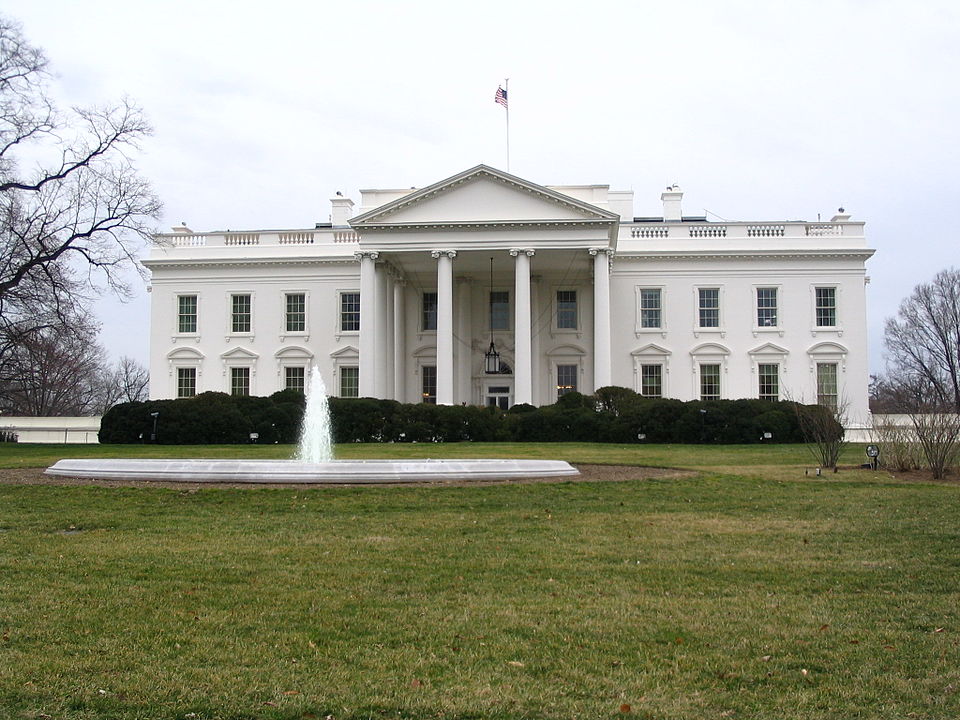
      The White House, Public domain, via Wikimedia Commons

      The Obama Presidential Center is responding publicly after years of criticism over its controversial design and rising costs, with a senior Obama Foundation official now attempting to justify the project to skeptics.

      Construction on the center began in 2021, but many Chicago residents have remained openly critical of the 225-foot-tall structure rising on the cityโ€™s South Side. The gray, largely windowless tower will house President Barack Obamaโ€™s presidential library and museum, departing sharply from the traditional design of most presidential libraries.

      Obama Foundation Deputy Director Kim Patterson said the buildingโ€™s appearance โ€” including its lack of windows โ€” was intentional.

      โ€œThere are not a lot of windows on the building, but thatโ€™s intentional, because sunlight is just not a friend to the artwork and the artifacts that are going inside of the building,โ€ Patterson told CBS News during a tour of the site.

      Patterson also defended the buildingโ€™s symbolism, which critics have widely questioned.

      โ€œThe shape of the building was actually meant to mimic four hands coming together to show the importance of our collective action,โ€ she said.

      Despite those explanations, the project has faced sustained backlash from local residents, architects, and fiscal watchdogs. Critics argue the design clashes with Chicagoโ€™s architectural heritage and resembles brutalist government structures. Some locals, quoted by the New York Post, have nicknamed the building โ€œThe Obamalisk,โ€ a jab at its stark, monolithic appearance.

      The controversy has gone beyond aesthetics. In 2018, a lawsuit accused the City of Chicago of illegally transferring public parkland to the Obama Foundation, raising concerns about favoritism and misuse of public assets. That legal challenge was not resolved until 2022, fueling broader concerns about transparency and governance.

      Protests have also occurred at the construction site, with residents objecting to both the projectโ€™s footprint and its impact on surrounding neighborhoods. Patterson acknowledged that community resistance forced at least one major design change โ€” the relocation of a parking garage.

      โ€œIf the parking garage was here, it could possibly block sunlight coming to their area, their gardens,โ€ Patterson said.

      She noted that the foundation ultimately decided to place the garage underground.

      Fiscal concerns remain a major point of contention. When announced in 2017, the Obama Presidential Center was projected to cost $500 million. As of 2025, that figure has ballooned to approximately $850 million โ€” an increase critics say reflects a pattern of cost overruns associated with Obama-era initiatives. While the foundation insists private donations are covering expenses, skeptics question whether additional public infrastructure and security costs will ultimately fall on taxpayers.

      The center is currently scheduled to open in June 2026.

      The criticism surrounding the Obama library stands in contrast to proposals discussed by President Donald Trump regarding his own future presidential library. Trump has floated plans to locate his library in Florida, potentially near Mar-a-Lago, emphasizing accessibility, private funding, and minimal disruption to public land. Supporters argue such an approach reflects Trumpโ€™s broader philosophy of limiting government entanglement and avoiding taxpayer burden.

      As debates over presidential legacies increasingly play out through massive construction projects, the Obama Presidential Center has become a flashpoint

      Read: Republican Presidents’ Best Christmas Messages

        0
        Office of Congressman Tom Osborne, Public domain, via Wikimedia Commons

        Over the years, Republican presidents have shared Christmas messages that reflect their administrations’ values and the spirit of the holiday season.

        Here are four notable Christmas messages from past Republican presidents:

        George W. Bush (2001-2009):

        In his first Christmas address after the September 11 attacks, President Bush spoke about the nation’s resilience and the importance of faith during challenging times.

        “This year in the midst of extraordinary times, our Nation has shown the world that though there is great evil, there is a greater good.”

        He emphasized the importance of love and sharing, noting: “Americans have given of themselves, sacrificing to help others and showing the spirit of love and sharing that is so much a part of the Christmas season.”

        Listen:

        George H.W. Bush (1989-1993):

        December 11, 1991

        At Christmas, we celebrate the promise of salvation that God gave to mankind almost 2,000 years ago. The birth of Christ changed the course of history, and His life changed the soul of man. Christ taught that giving is the greatest of all aspirations and that the redemptive power of love and sacrifice is stronger than any force of arms. It is testimony to the wisdom and the truth of these teachings that they have not only endured but also flourished over two millennia.

        Blessed with an unparalleled degree of freedom and security, generations of Americans have been able to celebrate Christmas with open joy. Tragically, that has not always been the case in other nations, but we look to the future with optimism, and we celebrate the holidays with special gladness as courageous peoples around the world continue to claim the civil and religious liberty to which all people are heirs. The triumph of democratic ideals and the lessening of global tensions give us added reason for celebration this Christmas season, and as the world community draws closer together, the wisdom of Christ’s counsel to “love thy neighbor as thyself” grows clearer.

        By His words and by His example, Christ has called us to share our many blessings with others. As individuals and as a Nation, in our homes and in our communities, there are countless ways that we can extend to others the same love and mercy that God showed humankind when He gave us His only Son. During this holy season and throughout the year, let us look to the selfless spirit of giving that Jesus embodied as inspiration in our own lives — giving thanks for what God has done for us and abiding by Christ’s teaching to do for others as we would do for ourselves.

        Ronald Reagan (1981-1989):

        Gerald R. Ford (1974-1977):

        December 24, 1975

        MERRY CHRISTMAS! These two words conjure up all of the good feelings that mankind has ever held for itself and its creator: reverence, tenderness, humility, generosity, tolerance–love. These are the stars we try to follow. These are the most enduring treasures we can bring to our world. I can remember a few Christmases in my own youth when just about the only thing we had to offer each other as a family was the love we shared, and the faith that together we could see things through to a better future. And it did. It made us work harder, study harder, try harder–and it brought out qualities and depths of strength and character that none of us in those days thought we had.

        The spirit of Christmas is ageless, irresistible and knows no barriers. It reaches out to add a glow to the humblest of homes and the stateliest of mansions. It catches up saint and sinner alike in its warm embrace. It is the season to be jolly–but to be silent and prayerful as well.

        I know this will be a particularly happy Christmas for me. I celebrate it surrounded by those I love and who love me. I celebrate it by joining with all of our citizens in observing a Christmas when Americans can honor the Prince of Peace in a nation at peace.

        The Ford family wishes you and your family a Christmas that brings all of the joy, the fulfillment, and the inspiration of this most precious of seasons. May God’s blessings be with you all.

        Ohio Democrat Sues To Remove Trump’s Name From Kennedy Center

          3
          Kennedy Center for the Performing Arts

          Rep. Joyce Beatty (D-Ohio) filed a lawsuit Monday attempting to prevent President Trumpโ€™s name from appearing on the Kennedy Center for the Performing Arts.

          Beatty, an ex-officio member of the Kennedy Center board, alleges in her complaint that adding Trumpโ€™s name to the building constitutes a โ€œflagrant violationโ€ of the Constitution.

          โ€œCongress intended the Center to be a living memorial to President Kennedy and a crown jewel of the arts for all Americans, irrespective of party. Unless and until this Court intervenes, Defendants will continue to defy Congress and thwart the law for improper ends,โ€ the filing states.

          Beatty is represented by Norman Eisen, a former Obama White House ethics adviser, along with attorney Nathaniel Zelinsky of the Washington Litigation Group, according to The New York Times.

          The Ohio Democrat also claims that the administration mischaracterized a recent board call, asserting that officials falsely stated board members โ€œunanimouslyโ€ supported the change. Beatty alleges participantsโ€™ microphones were muted, preventing members from raising objections.

          The Kennedy Center updated its exterior signage on Friday to reflect the inclusion of President Trumpโ€™s name, a step that follows broader reforms initiated earlier this year. The administrationโ€™s overhaul has focused on reorienting programming and tightening standards around performances considered inappropriate for the venueโ€™s mission.

          House Minority Leader Hakeem Jeffries (D-N.Y.) and other critics have argued the renaming effort is unlawful. But the centerโ€™s interim president, Richard Grenell, defended the decision.

          โ€œItโ€™s now a bipartisan space reflecting the new era. Donald Trump saved it,โ€ Grenell wrote on X, pointing to Trump-era initiatives that stabilized the centerโ€™s financial footing.

          Beattyโ€™s lawsuit characterizes the updatesโ€”including the name changeโ€”as โ€œmore reminiscent of authoritarian regimes than the American republicโ€”the sitting President and his handpicked loyalists renamed this storied center after President Trump.โ€

          The dispute now heads to federal court, where judges will determine whether the Kennedy Centerโ€™s board acted within its authority or whether Beattyโ€™s challenge can block the newly installed signage.

          President Donald Trumpโ€™s White House Christmas Celebrations: A Look Back

          0
          By The White House from Washington, DC - 2019 National Christmas Tree Lighting Ceremony, Public Domain,

          Few presidents embraced the Christmas seasonโ€”and the deeper meaning behind itโ€”with the enthusiasm and clarity that President Donald J. Trump brought to the White House. For many Americans, his Christmas messages were a welcome return to tradition, faith, and a confident acknowledgment of our nationโ€™s Christian heritage. From proudly restoring โ€œMerry Christmasโ€ to the national vocabulary to showcasing patriotic and faith-centered dรฉcor, President Trump’s celebrations struck a chord with Republican and conservative families across the country.

          https://cdn01.justjared.com/wp-content/uploads/2025/12/wh-xmas/white-house-christmas-decorations-2025-03.jpg
          https://pisco-bucket.s3.amazonaws.com/bf4e81db-7aba-4bcf-9052-28ca937a608d.jpg
          https://s.yimg.com/ny/api/res/1.2/9QO.KNS8k5nKLfEIwqdpbQ--/YXBwaWQ9aGlnaGxhbmRlcjt3PTEyNDI7aD02OTk-/https%3A//media.zenfs.com/en/aol_fox_news_articles_947/583b9c89883a9628416888593ddf8354

          Below is a warm retrospective on the Christmases of the Trump yearsโ€”and the themes that made them unforgettable.


          ๐ŸŽ 2017: โ€œWe Say Merry Christmas Againโ€

          https://trumpwhitehouse.archives.gov/wp-content/uploads/2017/12/f20171126ah-1489_original-820x547.jpg
          https://hips.hearstapps.com/hmg-prod/images/white-house-christmas-decorations-portico-1511801265.jpg?crop=1xw%3A1xh%3Bcenter
          https://www.washingtonpost.com/resizer/R4KLx94jWAksuIphUPNSBu3gqyU%3D/960x0/arc-anglerfish-washpost-prod-washpost.s3.amazonaws.com/public/BHZCHSBQKI22HDM5OULQZOYMOU.jpg

          President Trumpโ€™s first Christmas in the White House set the tone for the next four years. His message was unmistakable: America would celebrate Christmas boldly, respectfully, and unapologetically.

          Key Highlights:

          • Restoring tradition: Trump emphasized the importance of returning โ€œMerry Christmasโ€ to the national spotlight after years of cultural pressure toward secular alternatives.
          • A celebration of faith: In his 2017 address, he spoke openly about the birth of Jesus Christ and the โ€œmiracle of Christmas.โ€
          • Melania Trumpโ€™s dรฉcor: The First Lady unveiled a classic theme featuring rich reds, gold ornaments, and traditional greeneryโ€”reminiscent of historic American Christmases.

          This first year resonated deeply with conservative households who felt the holidayโ€™s religious roots deserved renewed honor.


          โญ 2018: โ€œWe Remember That Our Faith and Values Guide Usโ€

          https://thumbs.worthpoint.com/zoom/images1/1/0125/23/first-lady-melania-trump-white-house_1_59f4d06389df4a0226275b8b1ba1890f.jpg
          https://people.com/thmb/gn02U_kYIEt3da7Hl65BstgQj5s%3D/1500x0/filters%3Ano_upscale%28%29%3Amax_bytes%28150000%29%3Astrip_icc%28%29%3Afocal%28776x340%3A778x342%29/melania-trump-christmas-120524-1-f47e4953dd454c7a82e05552cc9c06f3.jpg
          https://s.abcnews.com/images/International/white-house-xmas-decorations-01-ap-jef-181126_hpMain_16x9_992.jpg

          In 2018, the White House emphasized unity, charity, and gratitude.

          Key Themes:

          • Honoring American service: President Trump paid tribute to servicemembers stationed abroad and highlighted the sacrifices of military families during the holidays.
          • A patriotic palette: Melania Trump introduced a bold display featuring red Christmas trees, symbolizing American bravery and the spirit of the season.
          • Renewed emphasis on hope: The President reminded Americans that Christmas celebrates โ€œthe greatest story ever told.โ€

          This year showcased the administrationโ€™s commitment to faith, patriotism, and the belief in Americaโ€™s enduring goodness.


          ๐ŸŽ„ 2019: โ€œChristmas Reminds Us All of Godโ€™s Boundless Loveโ€

          https://hgtvhome.sndimg.com/content/dam/images/hgtv/fullset/2019/12/13/0/BP_HWHC17_White-House-Christmas_2019_East-Room_0444.jpg.rend.hgtvcom.966.644.suffix/1576282988395.jpeg
          https://images.foxtv.com/static.fox5dc.com/www.fox5dc.com/content/uploads/2019/12/932/524/HANDOUT_ChristmasDecor2019_10.jpg?tl=1&ve=1
          https://cbsnews3.cbsistatic.com/hub/i/r/2019/12/02/121d0265-9af5-4a3d-898f-4031595146ce/thumbnail/1200x630/84c015a0640ae46aa4efc5e66672cf3e/melania-holiday-decor-today-main-191202-4-8606fc5539a66488145ece6f0060b837-fit-2000w.jpg

          The 2019 Christmas season brought an elegant and traditional theme, and some of the administrationโ€™s strongest spiritual messaging.

          Key Themes:

          • Faith at the forefront: President Trump spoke extensively about Christโ€™s role in inspiring compassion, unity, and goodwill.
          • Classic American Christmas dรฉcor: Melania featured gold, green, and white elements evoking timeless holiday charm.
          • Celebrating American exceptionalism: The President highlighted the blessings of liberty and the responsibility to preserve them.

          This celebration reflected a serene confidence in Americaโ€™s cultural foundations and its deeply rooted Christian values.


          ๐ŸŽ† 2020: โ€œA Season of Hope in a Challenging Yearโ€

          https://www.washingtonian.com/wp-content/uploads/2020/11/DSC_4237a-1024x683.jpg
          https://www.washingtonian.com/wp-content/uploads/2020/11/DSC_4300a.jpg
          https://cdn.abcotvs.com/dip/images/8385777_113020-wtvd-white-house-decorations-long-vid.jpg

          Amid the trials of 2020, Christmas at the White House carried a message of resilience and faith.

          Key Themes:

          • Encouraging a nation under strain: President Trump called on Americans to rely on their faith and families to carry them through adversity.
          • Decor honoring essential workers: Melaniaโ€™s theme celebrated hospital staff, first responders, and volunteers nationwide.
          • A message of unity and prayer: The President emphasized that the Christmas miracle reminds us that God is with us, even in difficult times.

          In a year marked by uncertainty, this message struck a comforting note for many families.


          ๐ŸŽš๏ธ A Legacy of Faith, Patriotism, and โ€œMerry Christmasโ€

          Across his four Christmas seasons in the White House, President Trump consistently emphasized:

          • The religious meaning of Christmas
          • American tradition and patriotism
          • Gratitude for military and essential workers
          • Unity rooted in faith and freedom
          • A bold return to โ€œMerry Christmasโ€ in public life

          For many on the Right, these celebrations offered a refreshing reaffirmation of Americaโ€™s founding values and spiritual heritage.


          ๐ŸŒŸ Closing Message for This Christmas

          As we celebrate Christmas this year, President Trumpโ€™s holiday messages continue to resonate:
          Faith matters. Traditions matter. America matters.
          And the Christmas season remains a time to remember the blessings of liberty, the strength of family, and the boundless love of God.

          From our Great America News Desk team to you and your familyโ€”
          Merry Christmas, and God Bless America.

          Republican Senator Signals He Won’t Support Vance In 2028

          2

          Sen. Rand Paul (R-Ky.) made clear Sunday on ABC Newsโ€™s This Week that he does not see Vice President JD Vance as someone he would support in a hypothetical 2028 presidential bid, underscoring deep philosophical differences over trade and the future direction of the GOP.

          When asked whether he views Vance โ€” widely viewed within GOP circles as a leading contender to carry the Republican banner after President Donald Trump โ€” as the so-called heir apparent, Paul was direct about the limits of their alignment.

          โ€œI think there needs to be representatives in the Republican Party who still believe international trade is good, who still believe in free market capitalism, who still believe in low taxes,โ€ Paul said, emphasizing his long-standing libertarian philosophy.

          Gage Skidmore from Surprise, AZ, United States of America, CC BY-SA 2.0 via Wikimedia Commons

          Pressed on whether that description fits Vance, Paul answered, โ€œNo.โ€

          Paul lamented what he sees as a shift in GOP economic thinking โ€” away from traditional free-market conservatism toward protectionist policies that embrace tariffs.

          โ€œIt used to separate conservatives and liberals that conservatives thought it was a spending problem โ€” we didnโ€™t want less revenue, we wanted less spending,โ€ he said.
          โ€œBut now all these pro-tariff protectionists, they love taxes. And so they tax, tax, tax, and then they brag about all the revenue coming in. That has never been a conservative position.โ€

          Paul said he intends to continue championing a free-market, low-tax wing of the party and will let time โ€” and voters โ€” determine where GOP leadership settles.


          Context: Trump, Vance, and a Fractured GOP

          Vanceโ€™s position as a prominent Trump loyalist โ€” often touted by MAGA-aligned activists as the next leader of the movement โ€” stands in contrast to Paulโ€™s more classical libertarian outlook. Trump and Vance have worked closely throughout the administration, and Trump himself has suggested both Vance and Secretary of State Marco Rubio would make strong contenders in 2028, even as speculation swirls about Trumpโ€™s own future political plans.

          Paul and Vanceโ€™s disagreements arenโ€™t limited to trade. Earlier in 2025, Paul publicly criticized Vanceโ€™s support for a controversial U.S. military strike on an alleged Venezuelan drug-smuggling vessel โ€” going so far as to call the actions Vance defended โ€œdespicable and thoughtlessโ€ for celebrating lethal force without due process. This public spar highlights deeper philosophical divides between the libertarian wing of the party and its more interventionist or nationalist elements.

          Those tensions reflect a broader conversation within the GOP about its core principles โ€” from foreign policy to economic strategy โ€” as the party prepares for post-Trump leadership.


          Erika Kirk Endorses Vance for 2028

          Adding to the political backdrop, Erika Kirk โ€” the widow of conservative activist and Turning Point USA co-founder Charlie Kirk and the organizationโ€™s CEO โ€” officially endorsed Vice President Vance for president in 2028 during the groupโ€™s annual AmericaFest conference in Phoenix.

          Kirk, speaking to thousands of activists, pledged Turning Pointโ€™s powerful grassroots support and framed Vance as a continuation of her husbandโ€™s conservative legacy:

          โ€œWe are going to get my husbandโ€™s friend JD Vance elected for 48 in the most resounding way possible.โ€

          Her endorsement โ€” and Turning Pointโ€™s mobilization capacity on campuses and with younger conservatives โ€” could be a significant boost in the early stages of a national campaign, even though Vance has not yet announced a formal campaign bid